
HINDU PHILOSOPHY

Understand the core principles of Sanatan Dharma including Dharma, Karma, Moksha, reincarnation, consciousness, and spiritual living.

Lord Trivikrama expanding across the universe while King Mahabali bows in surrender below

Vāmana Avatāra – The Divine Dwarf and the Measurement of the Universe

The Vāmana Avatāra reveals one of the most profound lessons in Sanātana Dharma: true greatness hides behind humility. Through the story of Mahābali and Trivikrama’s cosmic stride, discover how Lord Vishnu restored balance, proportion, and dharma across the universe.

Vāmana Avatāra – The Divine Dwarf and the Measurement of the Universe Read More »

Varaha Avatar lifting Bhudevi from the cosmic ocean while restoring the Earth to balance

Varāha Avatār of Lord Vishnu – The Divine Boar and the Salvation of Mother Earth

The third Avatār of Viṣṇu, the defeat of Hiraṇyākṣa, and the esoteric science of ecological theology. From Cosmic Ocean to Sacred Soil Imagine a pre-dawn Braj morning along the Yamunā.Mist hangs low over the water, temple bells ring in the distance, and the first priests step out barefoot onto the cool, damp stone. They touch

Varāha Avatār of Lord Vishnu – The Divine Boar and the Salvation of Mother Earth Read More »

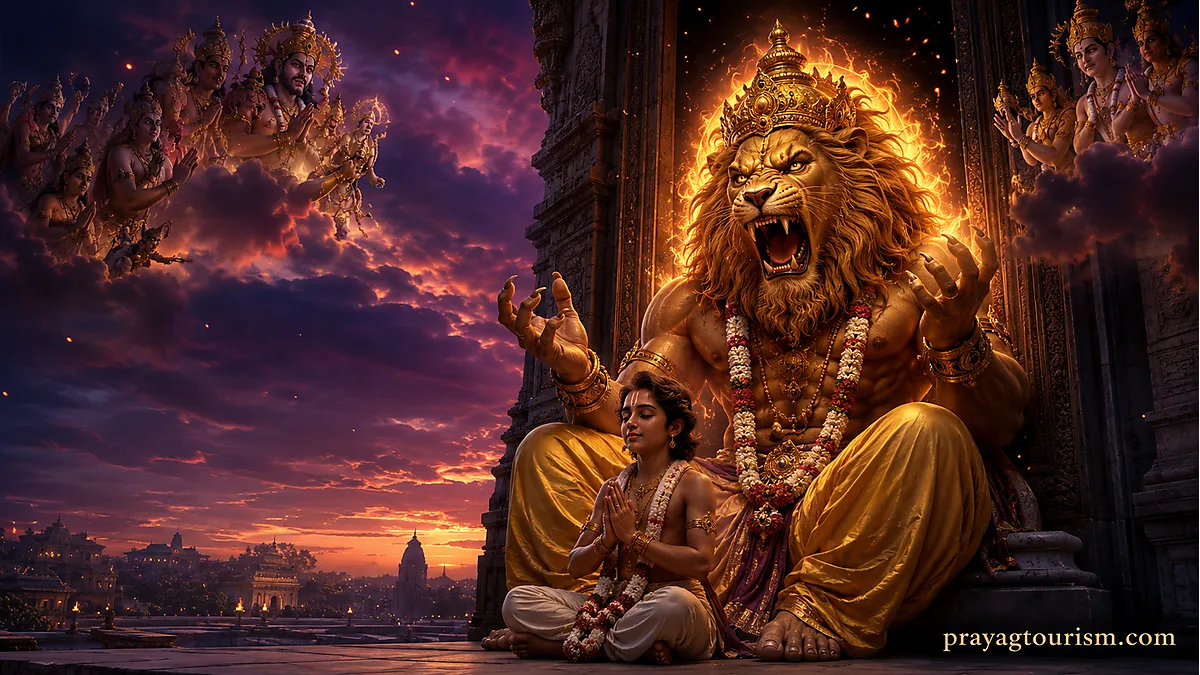
Lord Narasimha emerging from the pillar to protect Prahlada and defeat Hiranyakashipu

Narasiṃha Avatāra – The Lord Who Emerges from the Pillar

Narasimha Avatar is the fourth incarnation of Lord Vishnu. Appearing as a Man-Lion, He emerged from a pillar at twilight to protect Prahlada, defeat Hiranyakashipu, and restore dharma. His story symbolizes divine protection, justice, and the power of unwavering devotion.

Narasiṃha Avatāra – The Lord Who Emerges from the Pillar Read More »

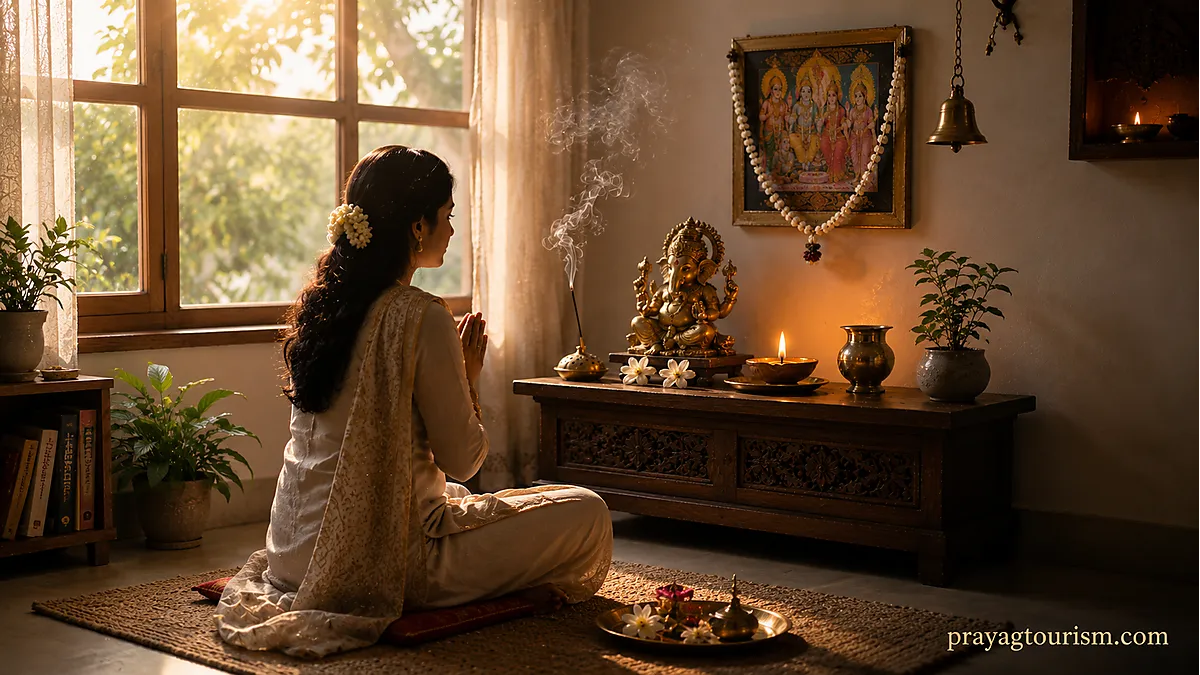
Simple home puja space with brass Ganesha idol, lit clay diya, incense, and jasmine flowers on wooden shelf — beginner Hindu home worship altar with morning light

The Pūjā — A Complete Beginner’s Guide to Home Worship

The word Pūjā (पूजा — from the Sanskrit root pūj, meaning to honor, to revere, to show respect) is most commonly translated as “worship.” But that translation, while not wrong, is a little thin. It suggests performance — going through the motions of religious obligation.

The Pūjā — A Complete Beginner’s Guide to Home Worship Read More »

Scroll to Top

Enquiry