
Table of Contents
Understanding Avatāra in Sanātana Dharma
There are truths in Sanātana Dharma that do not merely explain the world. They re-enchant it. The doctrine of the Avatār in Hinduism is one of those truths: the profound assurance that the Divine is not absent when the world darkens, but near, active, and capable of appearing in a form suited to the need of the age.
To speak of the Avatāra is to speak of compassion entering history. It is to say that the Supreme is not locked away in a distant heaven, indifferent to tears. When dharma weakens and suffering grows heavy, the Lord descends to protect the good, remove what obstructs righteousness, and restore the inner and outer order of life.
The meaning of descent
The Sanskrit word avatāra is commonly understood as “descent,” the Lord’s purposeful entry into the world for the sake of dharma. The word itself points to movement from the higher to the lower, not as loss, but as mercy. The Divine does not descend because He is forced; He descends because the world needs saving.
This is not the birth of a bound soul. An ordinary being enters the world due to karma, limitation, and inherited conditions. The Avatāra, by contrast, appears by sovereign will. He is not dragged into matter; He manifests within it without losing His transcendence.
That is why the Avatāra is not only theology. It is consolation. It tells the devotee that no age is abandoned, and no darkness is beyond reach.
The eternal source
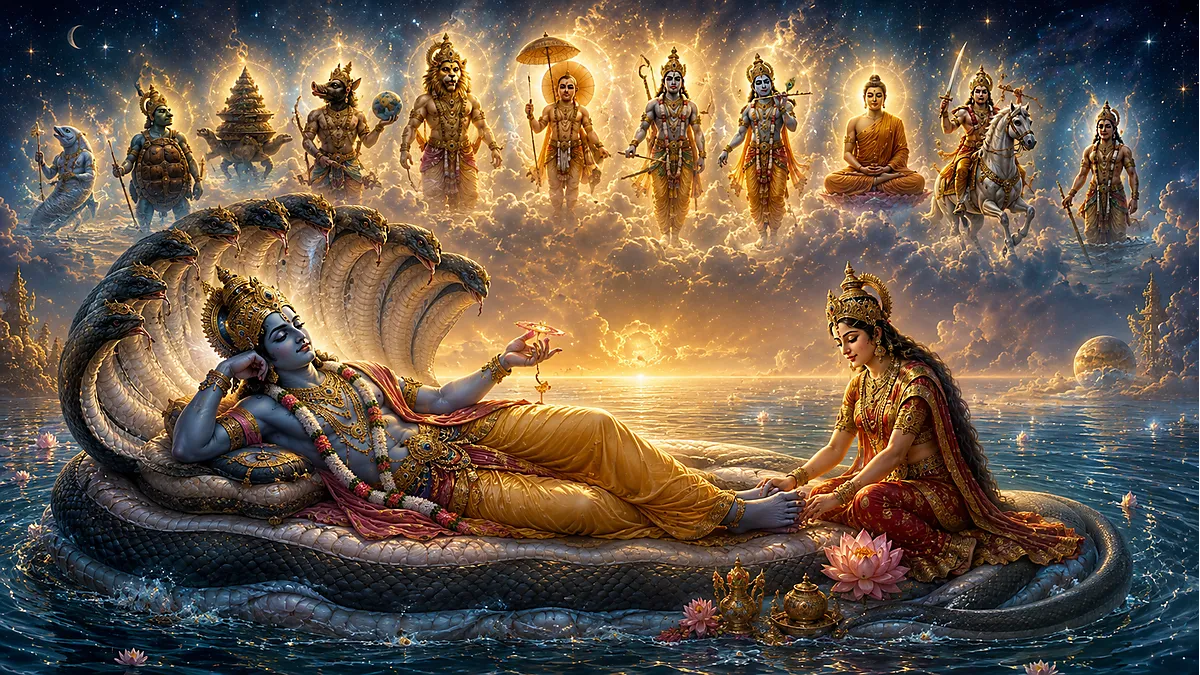
Before the Lord appears in a particular form, He is already complete. He is the source from which all forms arise. This is why Vaishnava tradition often speaks of the Lord resting in cosmic stillness, yet remaining fully active through divine intent.
The imagery of Viṣṇu on Ananta-śeṣa is not meant to be decorative. It communicates a deep truth: even in repose, the Supreme is not inactive. The cosmic sleep is not sleep as we know it. It is fullness, sovereignty, and effortless power. From that stillness the universe can arise, and into that stillness it can return.
The Lord rests, yet nothing is outside His awareness.
The Lord sleeps, yet the worlds move within His breath.
The Great Tradition preserves this vision not as abstraction, but as a living devotional certainty. That is why the theme of descent must always be understood from the standpoint of eternal divine completeness, not from the standpoint of human fragility alone.
The seed in Vedic vision
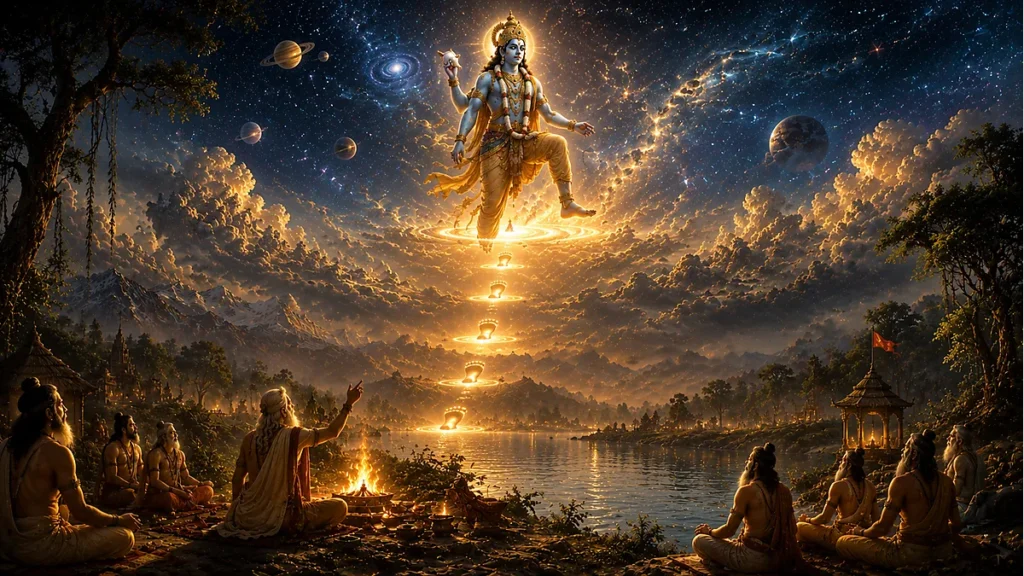
The Avatāra doctrine did not emerge overnight as a fully fixed list. It grew. Its earliest roots are already visible in the Vedic praise of Viṣṇu as the all-pervading deity who measures out the cosmos with His three strides. That ancient image later becomes one of the spiritual seeds from which the Vāmana story unfolds.
The Veda does not present a mechanical theology. It presents revelation in seed form. Later literature expands what earlier revelation implies. This is one of the great beauties of Sanātana Dharma: the same truth can appear first as a glimmer and later as a flame.
The Śrīmad Bhāgavatam gives the doctrine of incarnation its most influential devotional expression. In its opening discussions, it speaks of countless descents and presents the Lord as the source of all such manifestations. The text does not treat Avatāra as a rare anomaly. It presents it as the natural outpouring of divine fullness when the world requires intervention.
The Purāṇic flowering
As the tradition matured, the idea of divine descent became richly narrative. The Purāṇas took the seed of Vedic insight and made it into living story. They gave the world Matsya, Kūrma, Varāha, Narasiṃha, Vāmana, Paraśurāma, Rāma, Kṛṣṇa, Buddha in many traditional lists, and Kalki.
The ten major Avatāras became the most familiar way of naming this divine pattern, even though other texts preserve broader lists of manifestations. This is important to understand. The Daśāvatāra is not the only list of descents. It is the most beloved and symbolically complete one for devotional memory.
The Purāṇic world is a world in which history itself becomes sacred drama. Flood, forest, kingdom, exile, battlefield, and future age are all made into theaters where the Lord’s mercy appears in different costumes. The power of these stories is that they do not speak only to antiquity. They speak to the soul.
Why the Lord descends
The Bhagavad Gītā gives the Avatāra doctrine its clearest theological statement.
Devanagari:
यदा यदा हि धर्मस्य ग्लानिर्भवति भारत ।
अभ्युत्थानमधर्मस्य तदात्मानं सृजाम्यहम् ॥
IAST:
yadā yadā hi dharmasya glānir bhavati bhārata |
abhyutthānam adharmasya tadātmānaṃ sṛjāmy aham ||
Source: Bhagavad Gītā 4.7
Word-by-word meaning:
- यदा यदा (yadā yadā) — whenever
- हि (hi) — indeed
- धर्मस्य (dharmasya) — of dharma
- ग्लानिः (glāniḥ) — decline
- भवति (bhavati) — happens
- भारत (bhārata) — O descendant of Bharata
- अभ्युत्थानम् (abhyutthānam) — rise
- अधर्मस्य (adharmasya) — of adharma
- तदा (tadā) — then
- आत्मानम् (ātmānam) — Myself
- सृजामि (sṛjāmi) — I manifest
- अहम् (aham) — I
Simple translation: Whenever dharma declines and adharma rises, I manifest Myself.
Practical takeaway: The verse teaches a timeless confidence. It tells the devotee that divine action is not random, delayed, or absent. It is responsive and exact.
The next verse reveals the purpose of this descent.
Devanagari:
परित्राणाय साधूनां विनाशाय च दुष्कृताम् ।
धर्मसंस्थापनार्थाय सम्भवामि युगे युगे ॥
IAST:
paritrāṇāya sādhūnāṃ vināśāya ca duṣkṛtām |
dharma-saṃsthāpana-arthāya sambhavāmi yuge yuge ||
Source: Bhagavad Gītā 4.8
Word-by-word meaning:
- परित्राणाय (paritrāṇāya) — for protection
- साधूनाम् (sādhūnām) — of the good
- विनाशाय (vināśāya) — for destruction
- च (ca) — and
- दुष्कृताम् (duṣkṛtām) — of the wicked
- धर्मसंस्थापनार्थाय (dharma-saṃsthāpana-arthāya) — for the establishment of dharma
- सम्भवामि (sambhavāmi) — I appear
- युगे युगे (yuge yuge) — age after age
Simple translation: To protect the righteous, destroy evil, and establish dharma, I appear age after age.
Practical takeaway: This is the moral center of the Avatāra idea. The Lord’s first concern is the protection of the good. The restoration of balance is His purpose.
The ten great descents
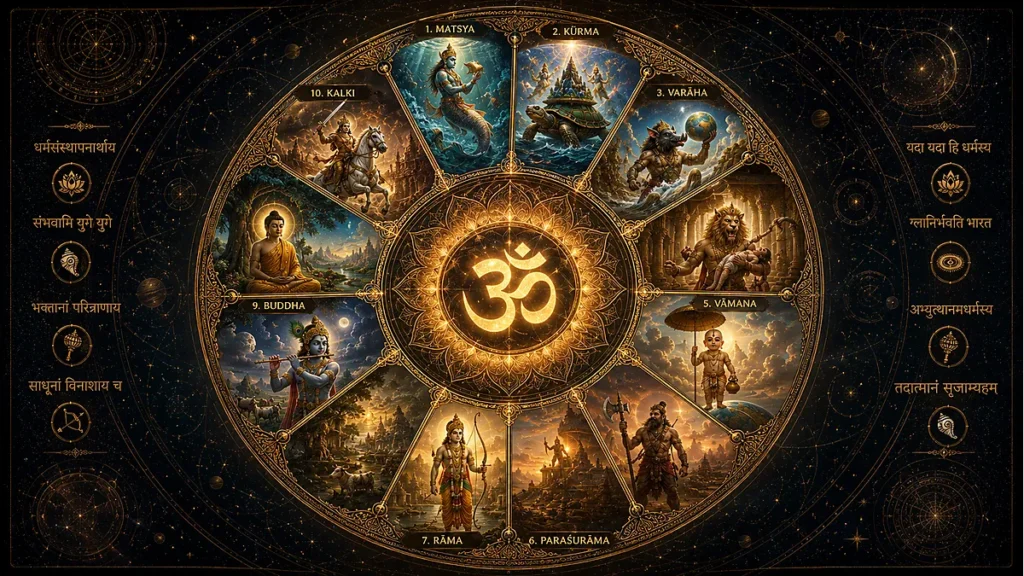
The Daśāvatāra is the most widely known devotional framework for understanding the Lord’s manifestations. Though details vary across traditions, the standard list beloved across much of Hindu culture is:
- Matsya.
- Kūrma.
- Varāha.
- Narasiṃha.
- Vāmana.
- Paraśurāma.
- Rāma.
- Kṛṣṇa.
- Buddha.
- Kalki.
These forms are not arbitrary. They move through a sacred logic.
Matsya begins in the waters, where life first sways in the flood. Kūrma stabilizes the world during cosmic churning. Varāha lifts the Earth from drowning. Narasiṃha breaks the terror of tyranny. Vāmana humbles the overreaching king. Paraśurāma corrects the abuse of power. Rāma establishes righteous kingship. Kṛṣṇa reveals divine intimacy, strategy, and transcendence. Buddha, in many traditions, calls the heart toward compassion and restraint. Kalki stands as the promise that justice is not abandoned to the end of time.
The sequence itself feels like a spiritual pilgrimage through the evolution of life, society, and consciousness. It begins in water and ends in future restoration. It moves from the elemental to the ethical, from the cosmic to the personal.
The story of Avatar in Hinduism that holds them together
To read the Avatāras properly, one must feel the larger cosmic drama behind them. In the Purāṇic imagination, the Earth is not dead matter. She is Bhūmi Devī, a living Mother. When adharma becomes too heavy, she groans under its burden.
In many Purāṇic tellings, the Earth takes the form of a grieving cow, trembling under the weight of cruelty, greed, and violence. She goes first to the highest celestial authorities, because the world’s disorder is now too deep for ordinary correction. The Devas listen. Brahmā listens. Śiva listens. And then the cry rises higher still, toward Viṣṇu Himself.
This is not myth in the trivial sense. It is myth as sacred structure. The world is depicted as morally consequential. When tyranny grows, reality itself begins to tremble. The gods do not answer with panic. They answer with prayer, patience, and alignment with the Supreme.
The Lord’s descent then becomes not merely a response to evil, but a response to the suffering of the innocent.
The Avatāra is mercy entering the story at the exact point where human power has reached its limit.
Matsya: the first rescue

The first of the great descents is Matsya, the Fish. The story begins with a small fish in the palm of a king and expands into a cosmic flood. The humility of the beginning is important. Divine rescue often arrives in disguised form, as something easy to overlook.
The fish grows, is protected, and eventually becomes the divine guide that carries sacred knowledge and life through the deluge. The image is unforgettable because it fuses preservation with instruction: the Lord does not only save bodies; He saves continuity.
Here the sea is not only water. It is chaos. It is the undifferentiated field in which form may vanish. Matsya moves through that chaos like a light that refuses to go out.
Kūrma: the hidden support
Kūrma, the Tortoise, teaches another kind of mercy. In the churning of the ocean, when gods and demons pull at the great mountain, the Lord becomes the support beneath all the strain. The mountain does not collapse because the Divine silently bears it.
This is one of the most powerful images in all Hindu mythology. The world often appears to function because of visible effort. But the tradition reminds us that support is often invisible. Kūrma says: what is sacred does not always stand in the spotlight. Sometimes it holds everything from below.
For the seeker, this is a deep lesson. Stability is itself a divine form.
Varāha: lifting the world
Varāha, the Boar, plunges into the depths to recover the Earth. The image is earthy, powerful, and deeply maternal. The Divine does not stand above the mud and call for rescue. He enters it.
This descent is especially beautiful because it refuses the false separation between the pure and the impure. The Lord lifts the world from the waters not by avoiding danger, but by embracing the terrain of danger and bringing the Earth back into the light.
The worshiper before Varāha learns that no being is too low to be reached, and no world too lost to be retrieved.
Narasiṃha: the wrath that protects
Narasiṃha appears at the breaking point of devotion and terror. When cruelty becomes total and a child devotee stands helpless before a tyrant, the Lord manifests in a form that defies every category.
Part man, part lion, Narasiṃha is not decorative ferocity. He is righteous fire. His appearance announces that divine love is not weak. It can be terrifying to evil precisely because it is pure.
For devotees, Narasiṃha is the assurance that no vow to protect the innocent is ever forgotten. The heart remembers Him in moments when fear is strong and courage seems impossible.
Vāmana: the beauty of humility
Vāmana comes as a small brahmacārī boy. He asks for only three steps of land. What looks like a simple act of charity becomes a cosmic revelation. In three steps, the Lord claims all worlds.
The beauty of this story lies in proportion. A giant king is defeated not by violence, but by sacred humility. The Lord reduces Himself in size, and in that very reduction reveals that no earthly power is final.
Vāmana teaches the seeker that true greatness may wear the appearance of smallness.
Paraśurāma: the correction of power
Paraśurāma appears when the warrior class loses restraint and power becomes arrogance. He is the fierce one who restores balance when the sword is no longer a servant of dharma.
His story reminds us that force without righteousness destroys the very order it claims to defend. Paraśurāma is severe because corruption is severe. He is not a model of gentleness; he is a warning that duty, when abandoned, must eventually be confronted.
This descent speaks strongly to rulers, leaders, and anyone entrusted with authority.
Rāma: the ideal of righteous living
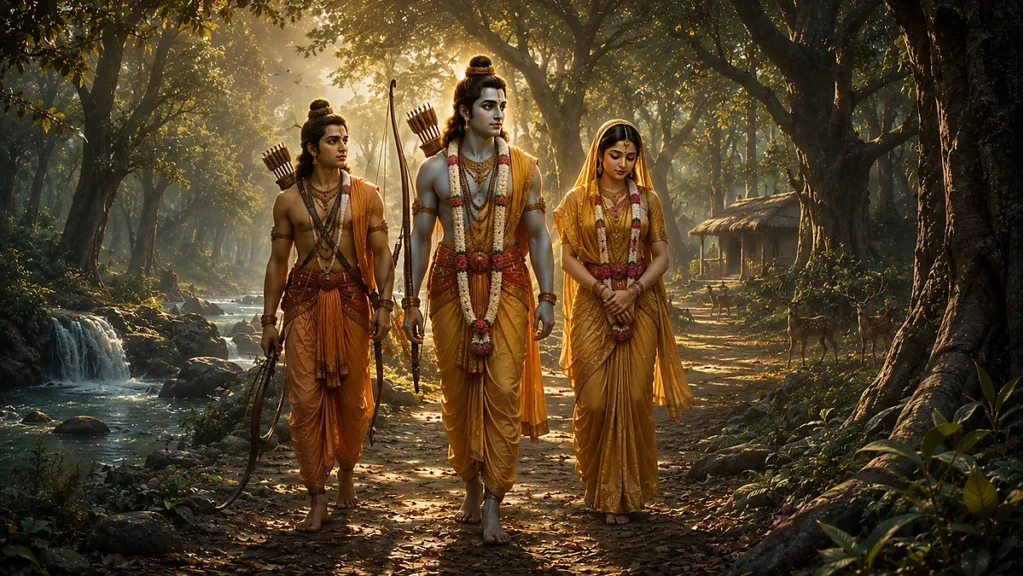
With Rāma, the Divine becomes the noble prince, the exile, the husband, the king, the son, the brother, the embodiment of maryādā, the keeper of limits. His life is one long teaching in restraint, honor, sorrow, loyalty, and steadfastness.
Rāma is beloved not because his path was easy, but because he walked it beautifully. He shows that righteousness is not an abstract rule. It is a lived posture.
For many devotees, Rāma remains the most human of divine forms and the most royal of human ideals.
Kṛṣṇa: intimacy with the infinite
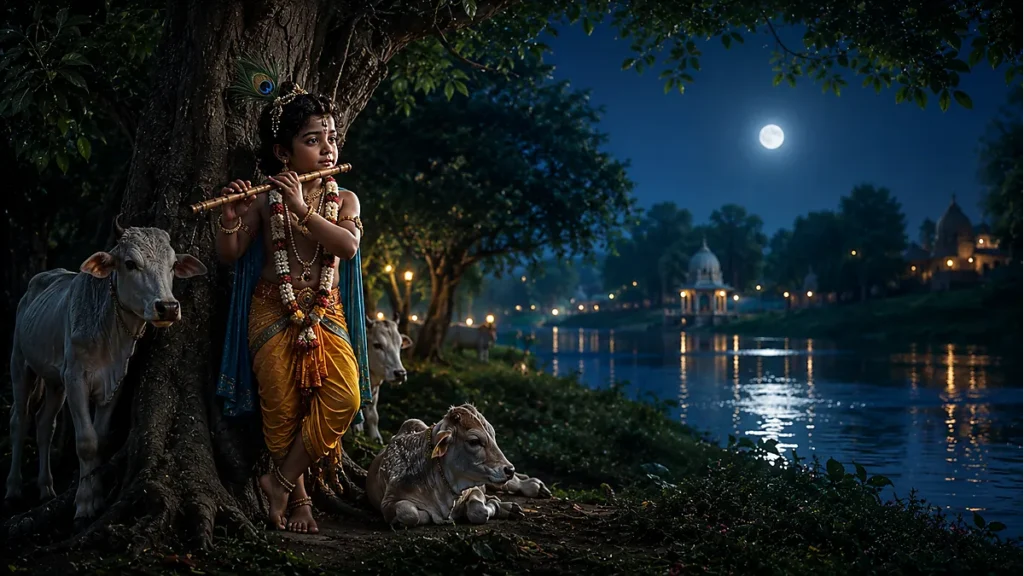
Kṛṣṇa is the heart of the Bhagavata vision. He is the divine child, the cowherd, the flute-player, the strategist of Kurukṣetra, and the revealer of cosmic truth. In Him, the infinite becomes intimate.
The Śrīmad Bhāgavatam culminates in the understanding that Kṛṣṇa is the source of all incarnations. This is not just a doctrinal claim. It is a devotional climax. The many forms are gathered into one original fullness.[14][6]
Kṛṣṇa teaches that God is not only to be feared or obeyed. He is also to be loved. That is why His life has such a hold on the devotional imagination of India.
Buddha and Kalki
In many Hindu lists, Buddha appears as a compassionate turning away from cruelty and delusion. Different traditions understand his place differently, but within the Daśāvatāra framework he is often remembered as a civilizational moral correction. His inclusion shows that the Avatāra idea is not frozen. It is responsive to time.
Kalki stands at the end of the age as the promise of restoration yet to come. He is the future face of divine intervention, the sign that the story is not over. Even in decline, the tradition keeps hope alive.
The presence of Kalki at the edge of the cycle matters deeply. It says that history does not spiral into meaninglessness. It moves toward renewal.
Sacred geography of the Avatāra
One of the most beautiful things about Sanātana Dharma is that its theology is not trapped in books. It is spread across the land in temples, rivers, hills, forests, and pilgrimage cities.
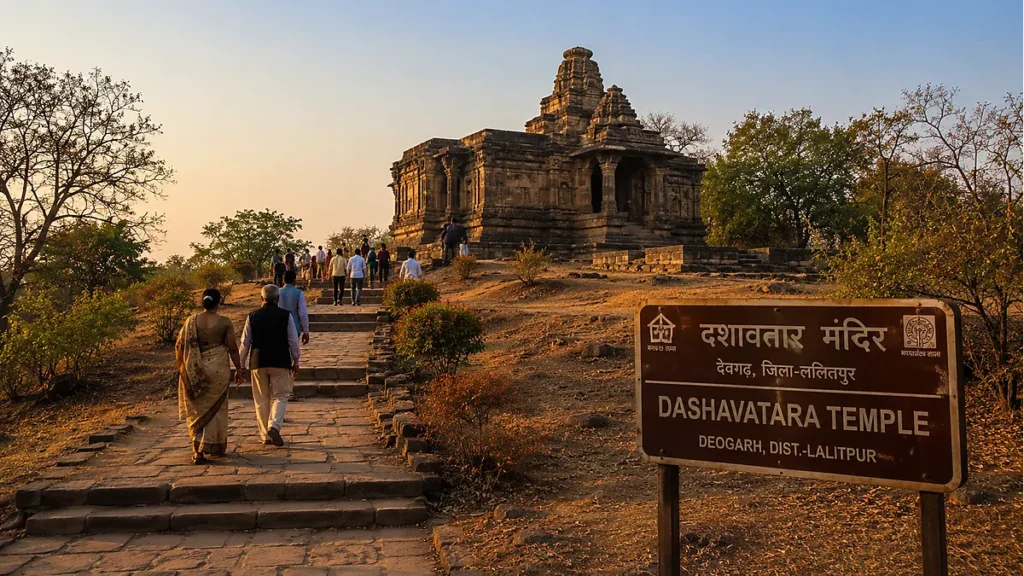
The Daśāvatāra Temple at Deogarh is a rare and precious witness to early Vaishnava stone art. Its reliefs allow the pilgrim to touch the material memory of avatar theology. In stone, one sees how early India imagined the Lord entering the world.
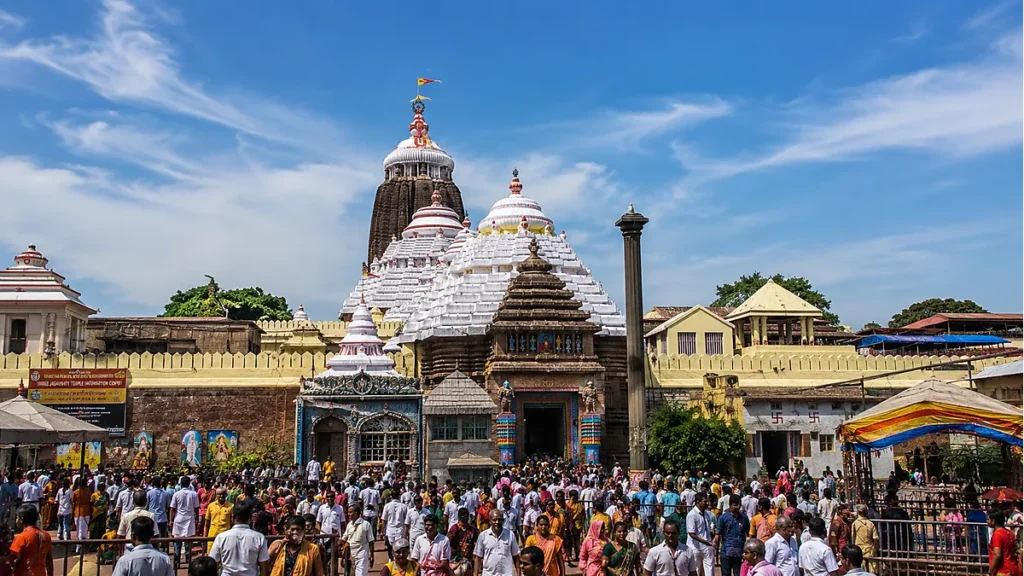
The Jagannath Temple in Puri is another sacred center where the source of all forms is honored in living devotion. Its festival life keeps theology moving, not static.
Ayodhya becomes essential for Rāma. Mathura and Vṛndāvana for Kṛṣṇa. Hampi and nearby regions preserve important associations with Rāma-bhakti and later temple memory. Shrines associated with Narasiṃha, Varāha, and Vāmana are found across the subcontinent, showing how widely this theology breathes through the land.
The inner meaning for today
For the modern seeker, Avatāra theology is profoundly practical. It says that when life becomes overwhelming, grace can still enter. It says that the human heart need not manage everything alone.
In psychological terms, the Avatāra principle teaches that transformation often arrives in a form suited to the seeker’s current capacity. Sometimes it comes as protection. Sometimes as wisdom. Sometimes as correction. Sometimes as comfort. The Divine knows what the soul can receive.
That is why nāma-japa is so central. To repeat the Lord’s name is to keep the inner door open. It is to say, gently but firmly, that the soul is willing to be helped.
This teaching is especially important in a fast, distracted age. The Avatāra reminds us that the sacred is not far away. It is responsive, near, and intimately concerned with the fate of dharma.
How to live this teaching
A reader may ask: how do I make this real in daily life?
Begin with remembrance. Before you open your phone, before you rush into work, before the noise of the day takes over, sit for one minute and remember the Lord’s promise: He appears when dharma declines.
Then choose a name. Om Namo Nārāyaṇāya. Śrī Rām. Hare Kṛṣṇa. Repeat it slowly. Let the sound gather your scattered mind. Let it become your inner pilgrim path.
When the day grows heavy, remember one avatar that speaks to your moment.
If you need courage, remember Narasiṃha.
If you need humility, remember Vāmana.
If you need steadiness, remember Kūrma.
If you need guidance through chaos, remember Matsya.
If you need intimacy with God, remember Kṛṣṇa.
The doctrine is vast, but its application is simple: place the Divine at the center again.
FREQUENTLY ASKED QUESTIONS ON DASHAVATARA
Q1. What is an Avatar in Hinduism?
An Avatar is a divine descent of God into the world to protect dharma, guide humanity, and restore balance when righteousness declines.
Q2. Who are the ten avatars of Vishnu?
The Dashavatara are Matsya, Kurma, Varaha, Narasimha, Vamana, Parashurama, Rama, Krishna, Buddha, and Kalki.
Q3. Why does Vishnu take avatars?
According to Bhagavad Gita 4.7–8, Vishnu manifests whenever dharma declines and adharma rises, to protect the righteous and restore cosmic order.
Q4. Is Krishna an Avatar of Vishnu?
Yes. Most Hindu traditions regard Krishna as an Avatar of Vishnu, while many Vaishnava traditions consider Him the original Supreme Personality from whom all avatars emerge.
Q5. What is the meaning of Dashavatara?
Dashavatara means “Ten Avatars” and refers to the ten principal incarnations of Lord Vishnu described in Hindu tradition.
Q6. Who is the final Avatar of Vishnu?
Kalki is the future and final Avatar in the traditional Dashavatara sequence, expected to appear at the end of Kali Yuga.
The path ahead
This article is only the doorway. The Daśāvatāra deserves to be explored in full, one descent at a time, with care and delight. Each avatar is a world of meaning, a temple of story, and a mirror for the soul.
The next chapters of this series can now begin properly — not as isolated legends, but as sacred episodes in a single, continuous revelation of mercy. From the flood of Matsya to the promise of Kalki, the Lord’s descent is one long assurance that the world is never beyond redemption.
Hari Om Tat Sat.
⁂
References:-
- https://www.holy-bhagavad-gita.org/chapter/4/verse/7/
- https://www.holy-bhagavad-gita.org/chapter/4/verse/8/
- https://www.gitasupersite.iitk.ac.in/srimad?ecsiva=1&etsiva=1&etpurohit=1&etgb=1&setgb=1&etssa=1&etassa=1&etradi=1&etadi=1&language=dv&field_chapter_value=4&field_nsutra_value=8
- https://en.wikipedia.org/wiki/Bhagavata_Purana
- https://southasia.ucla.edu/religions/avatars-divinities/avatars-of-vishnu/
- https://vedabase.io/en/library/sb/1/3/26/
- https://ebooks.inflibnet.ac.in/icp05/chapter/dasavatara-in-puranas/
- https://www.bhagavad-gita.us/bhagavad-gita-4-7/
- https://www.wisdomlib.org/hinduism/book/shrimad-bhagavad-gita/d/doc419863.html
- https://www.bhagavadgitaforall.com/verses/4-8