
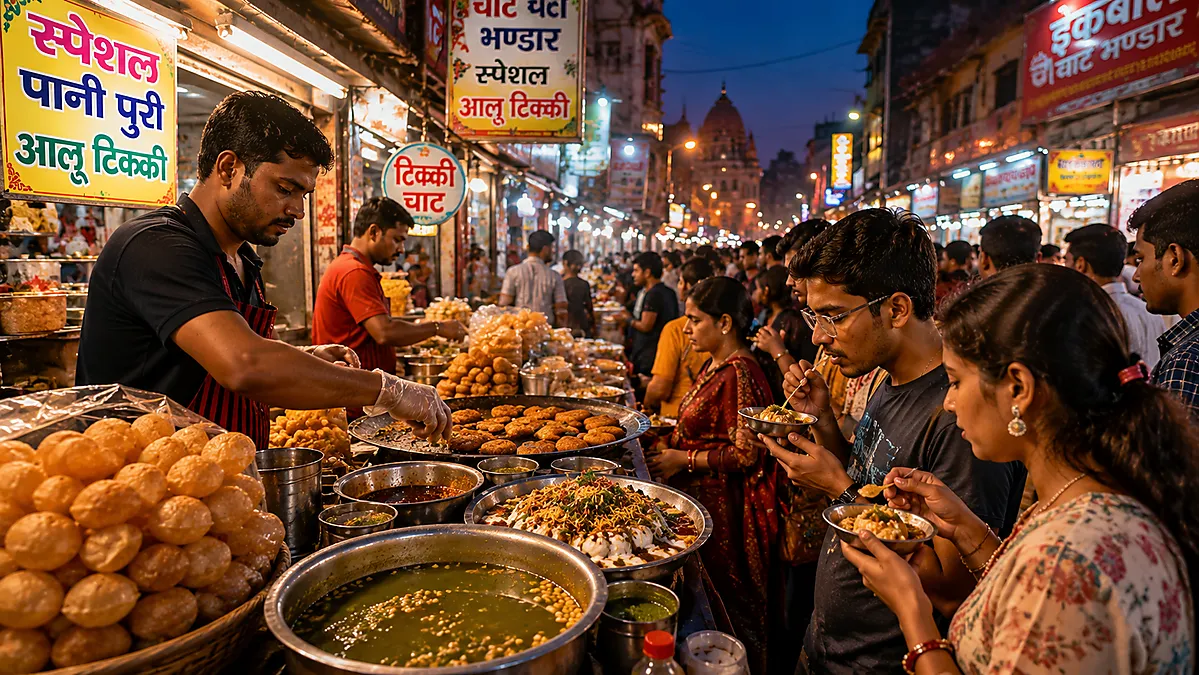
The winter sun dips low over the Triveni Sangam, painting the waters of the Ganga and Yamuna in shades of molten gold. Pilgrims, having completed their sacred dip and evening prayers at the ghats, slowly make their way back into the city. Their senses, awakened by the chants and the cool river breeze, now begin to notice something else — the irresistible aroma of cumin, coriander, and ghee wafting through the evening air.
Ahead, the narrow lanes of Chowk begin to glow with the warm light of a hundred food stalls. The sizzle of oil greets you at every turn. A vendor deftly flips golden samosas onto a plate. Another pours thick, sweet lassi into clay cups, while a third ladles steaming potato curry onto freshly fried kachoris. The air is thick with the fragrance of jalebis being soaked in sugar syrup and the tangy punch of chaat being assembled with a flourish. A young student negotiates the price of a plate of dahi vada, and an elderly couple shares a steaming cup of tandoori chai, their faces lit by the glow of the small clay oven beside them.
This is the other pilgrimage of Prayagraj — a delicious journey through its legendary streets, where every bite tells a story of tradition, community, and timeless flavour.
Can a sacred pilgrimage city also be a food lover’s paradise?
Welcome to the world of Street Food in Prayagraj.
Table of Contents
Why Street Food is an Essential Part of Prayagraj
Prayagraj, or Allahabad as it was once called, has always been a city where spirituality and gastronomy walk hand in hand. For centuries, pilgrims have arrived at the Triveni Sangam from every corner of India, bringing with them their own culinary traditions. Over time, these flavours blended with local ingredients and cooking styles, creating a unique food culture that is distinctly “Allahabadi.”
The city’s massive student population — nurtured by the historic Allahabad University — has also shaped its food landscape. Affordable, filling, and delicious, Prayagraj’s street food caters to hungry students, weary pilgrims, and curious travellers alike. Whether you’re seeking a hearty breakfast before visiting the Sangam or a late-night snack after a long day of temple-hopping, the city’s streets welcome you with open arms and sizzling woks.
As the locals say, “Loknath Gali is not just the heart of the market, but its stomach” — a sentiment that captures how deeply food is woven into the city’s identity.
A Brief History: The Faith Behind the Food
Before we dive into the specifics, it’s worth pausing to understand what makes Prayagraj’s street food so special. Much of it is rooted in the city’s Vaishnava traditions.
Many of the oldest eateries in Prayagraj serve pure vegetarian food prepared without onion or garlic — known as satvik cuisine. This tradition traces back to the Kumbh Mela itself. The founder of Netram Moolchand & Sons, for instance, was a Vaishnava from Maghora near Mathura who first set up a stall during the Kumbh Mela selling pure Vaishnava food. His humble cart evolved into what is today a 170-year-old culinary institution. This deep connection between faith and food means that even the street food here carries a spiritual resonance — it’s food prepared with devotion, served with pride, and consumed with gratitude.
Loknath Gali: The Stomach of the City
If any single lane can claim to be the epicentre of Prayagraj’s street food culture, it is Loknath Gali (also called Loknath Bazaar or Loknath Lane). Located in the heart of the Chowk area, this narrow, bustling lane is a sensory overload in the best possible way — a carnival of sights, sounds, and, above all, flavours that have been perfected over generations.
What to Eat in Loknath Gali
The lane is dotted with legendary establishments, each with its own devoted following:
- Netram’s Kachori Sabzi: Start your morning here. The crispy, puffed kachoris stuffed with spicy urad dal and deep-fried in desi ghee, served with a tangy potato curry, is the quintessential Prayagraj breakfast. This 170-year-old eatery is a culinary institution that has served everyone from students to prime ministers.
- Rajaram Lassi Wale (since 1897): After the spice of kachoris, cool down with a thick, creamy lassi served in traditional kulhads (earthen cups) and topped with a generous layer of malai (cream). This shop has been a local favourite for over 125 years.
- Hari Ram & Sons (since 1890): This 135-year-old legend is the place for desi ghee snacks. Their chota masala samosa (filled with a secret spice blend, not just potato) and dalmoth (crispy, spicy namkeen) are legendary. Even India’s first Prime Minister, Jawaharlal Nehru, was a fan. Pro tip: Their samosas have a shelf life of up to 25 days, making for a perfect edible souvenir.
- Loknath Gali’s Tamatar Chaat: Unlike the cold chaats of other cities, this one is served hot. Cooked and mashed tomatoes sautéed in ghee with green chillies and spices, this is a unique Prayagraj specialty.
Chowk Market: The King of Food Streets
Chowk is not just one street — it’s an entire district of narrow lanes, each with its own culinary personality. The area hums with activity from early morning until late at night.
Evening Delights in Chowk
As the sun sets, the chaat stalls of Chowk come alive. The aroma of tamarind chutney, fresh coriander, and fried puris fills the air.
- Shiva Chat Bhandar (Near Loknath Bazaar): A go-to spot for authentic chaat. Their pani puri and papdi chaat are local favourites.
- Matadin’s Petha: A tiny shop in Loknath Bazaar that has been serving the legendary petha (a translucent, sweet confection) for over 107 years. The shop is small, but its fame extends to Delhi, Jaipur, and beyond.
- Hira Halwai’s Imarti: Operating since the British era, this spot is famous for its rich, dense imarti (a sweet made from urad dal batter), often paired with rabri for an indulgent dessert.
Katra Market: The Student’s Food Paradise
For budget-conscious travellers and students, Katra Market is a haven. Located near Allahabad University, this bustling market offers delicious food at prices that seem frozen in time.
What Makes Katra Special
- Netram Moolchand & Sons (original location): While the original shop at Katra Chouraha remains the most iconic, the area is dotted with other eateries serving affordable and tasty snacks.
- Dal Moth and Local Namkeen: The shop of Netram Moolchand has become such an institution that the intersection where it stands is known as Netram Chauraha — a rare honour for a food establishment.
- Puri-Sabzi at Sulaki Chauraha: Locals consider this crossroad a perfect breakfast spot alongside Netram’s, offering delicious desi ghee kachori sabzi.
Civil Lines: Where Heritage Meets Modern Flavour
For a more relaxed, sit-down experience, Civil Lines offers a different take on the city’s food culture. The wide, tree-lined avenues are home to historic establishments as well as modern eateries.
Must-Visit Spots in Civil Lines
- Indian Coffee House (Civil Lines): Located on Mahatma Gandhi Marg, this legendary café has been an intellectual hub since 1957. Their South Indian snacks like masala dosa and the classic filter coffee are a must-try.
- Kamdhenu Sweets (MG Marg): A popular sweet shop offering a wide variety of treats, including their famous kulfi falooda.
- Dehati Rasgulla (MG Marg): Known for its larger-than-usual rasgullas and gulab jamuns made in pure desi ghee. Established in 1984, it quickly became a crowd favourite.
The Iconic Foods of Prayagraj
🥟 Kachori Sabzi: The Morning Ritual
This is the city’s signature breakfast — a plate of 2–4 golden, puffy kachoris served with a spicy aloo sabzi (potato curry), tangy chutney, and often a side of raita. The kachoris are made from refined flour, stuffed with a spicy urad dal mixture, and deep-fried in desi ghee until they puff into a golden-brown perfection.
Where to find: Netram Moolchand & Sons (Katra Chouraha), Loknath Gali outlets.
Best time: Breakfast (7 AM–12 PM).
🧆 Chaat: A Symphony of Flavours
Prayagraj’s chaat stands out for its use of tamatar (tomato) as a base in several preparations. Unlike the typical cold chaats, the city’s signature Tamatar Chaat is served hot — cooked and mashed tomatoes sautéed in ghee with green chillies and a secret spice blend. Aloo Tikki, Papdi Chaat, and Dahi Vada are also widely available.
Where to find: Pandit Ji ki Chaat (Colonelganj, since 1945), Shiva Chat Bhandar (Johnstonganj), Loknath Gali stalls.
🥨 Samosa: The Perfect Tea-Time Snack
Prayagraj’s samosas are distinctive for their unique masala filling. The chota masala samosa from Hari Ram & Sons is a famous local specialty — a small, crisp samosa packed with a spicy mixture of secret aromatic spices, quite different from the usual potato-filled version.
Where to find: Hari Ram & Sons (Loknath), Chaurasia Samosa Wala.
🍦 Kulfi-Falooda: A Cool End to a Spicy Meal
On a warm day, nothing beats a creamy kulfi-falooda. The dish combines dense, creamy kulfi (often malai or kesar) with thin falooda noodles, sweet rose syrup, and crunchy nuts. The kulfi is slow-churned, giving it an incredibly dense and creamy texture that stands in a glass for a full minute without melting.
Where to find: Kamdhenu Sweets (MG Marg, Civil Lines), New Loknath Kulfi Bhandar (Loknath), Shanti Kulfi & Sweets (Rambagh).
🌾 Dalmoth and Namkeen: The Savoury Souvenir
No discussion of Prayagraj’s food is complete without mentioning its famous namkeen (savoury snacks). The city’s dalmoth — a crispy mix of spiced lentils — is legendary. It pairs perfectly with evening tea and travels well, making it an ideal edible souvenir.
Where to find: Hari Ram & Sons (since 1890, Loknath Gali), Chandra Sweets.
Street Food During Kumbh Mela
During the Kumbh Mela, the city transforms into a temporary culinary capital. Thousands of temporary food stalls spring up along the riverfront, catering to millions of pilgrims from across India and the world.
What to Expect
- Community Kitchens: Several organizations and akhadas (monastic orders) set up free community kitchens (langars) serving simple, nourishing meals to pilgrims.
- Regional Specialities: The Kumbh brings together vendors from across India, offering a unique opportunity to sample cuisines from other states without leaving Prayagraj.
- Temporary Markets: The mela grounds are lined with stalls selling everything from fresh fruit and chai to full meals and packaged snacks.
- Traditional Kumbh Foods: Look for malai makhan (a winter specialty made from cream and topped with saffron), available in the Chowk area during the Magh Mela.
Self-Guided Food Walks in Prayagraj
Morning Breakfast Walk (2 Hours)
Start: Katra Chouraha (7 AM)
Stop 1: Netram Moolchand & Sons — Kachori sabzi + dahi jalebi.
Stop 2 (walk 5 mins): Sulaki Chauraha — Another legendary breakfast spot for poori sabzi.
Evening Chaat Walk (2 Hours)
Start: Loknath Gali (6 PM)
Stop 1: Pandit Ji ki Chaat (Colonelganj) or Shiva Chat Bhandar — Aloo Tikki & Papdi Chaat.
Stop 2: Loknath Gali — Tamatar Chaat (served hot).
Finish: Rajaram Lassi Wale — Special lassi in kulhad.
Street Food Etiquette & Safety Tips
- Look for the crowd: Long queues = fresh, popular food.
- Prefer hot, freshly cooked items: If it’s been sitting out, skip it. Stick to bottled water.
- Carry small change: Street vendors may not have cards.
- Best hours: 7–10 AM for breakfast, 6–9 PM for chaat and snacks.
- Satvik eateries (no onion/garlic): Many old city shops follow Vaishnava customs — do not carry outside food into these establishments.
Food Guide for Different Travelers
| Traveler Type | Recommendations |
| Pilgrims (quick, pure veg) | Netram’s kachori sabzi; thali at Triveni Bhojanalaya; satvik meals at langars (Kumbh only). |
| Families (seated, clean) | Civil Lines (Kamdhenu, Indian Coffee House); El Chico; Pind Balluchi. |
| Students (budget) | Katra market snacks; Litti Chokha stalls; local chaat and pakoras. |
| Food Bloggers (authentic) | Hari Ram & Sons samosa; Matadin’s petha; Tamatar Chaat in Loknath. |
Frequently Asked Questions (FAQs)
1. What is the most famous street food in Prayagraj?
Kachori Sabzi, specifically from Netram Moolchand & Sons, is the city’s most iconic street food.
2. Where can I find the best chaat in Prayagraj?
Pandit Ji ki Chaat in Colonelganj (since 1945) and Shiva Chat Bhandar in Johnstonganj are legendary.
3. Which market is best for street food in Prayagraj?
Loknath Gali in Chowk is the city’s most famous food street.
4. What is Loknath famous for?
Tamatar Chaat (served hot), Rajaram Lassi (since 1897), and legendary namkeen shops like Hari Ram & Sons.
5. What should I eat near Triveni Sangam?
Netram’s kachori sabzi is a short drive away. For quick snacks, look for chaat and chai stalls around the ghats.
6. Is street food safe in Prayagraj?
Yes — eat at popular, crowded stalls with high turnover. Avoid pre-cut fruits and unbottled drinks.
7. What is the famous sweet of Prayagraj?
Motichoor Ladoo, Petha from Matadin (Loknath), and Gulab Jamun from Dehati Rasgulla.
8. What is Dalmoth?
A crispy, spicy lentil-based namkeen, perfect with tea and widely available at Hari Ram & Sons.
9. Are there vegetarian options available in Prayagraj?
Yes — the city is predominantly vegetarian, with many eateries being purely satvik (no onion/garlic).
10. What is the best time for a street food walk?
Early morning (7–10 AM) for breakfast items; evening (6–9 PM) for chaat and snacks.
Conclusion: The Taste of Tirtharaj
As you walk back through the glowing lanes of Prayagraj, the lights of the food stalls flicker behind you, and the sounds of sizzling oil and cheerful bargaining slowly fade into the night. The taste of that last bite of tamatar chaat still lingers — a perfect balance of sweet, tangy, and spicy. The sweet syrup of the jalebi feels like a memory you want to hold onto. And the thick, creamy lassi in its clay cup — you carry that clay cup home as a reminder.
Long after the pilgrimage ends and the Sangam fades into memory, the unforgettable flavours of Prayagraj continue to linger, reminding travellers that every sacred city has a story to tell — and sometimes, that story is served on a plate, garnished with coriander and a squeeze of lemon.
This article is part of a series exploring the heritage and cultural landmarks of Prayagraj.
Prayag Tourism
📞 Phone/WhatsApp: +91-9555313526
📧 Email: contact@prayagtourism.com
🌐 Website: PrayagTourism.com
May your journey be peaceful, safe, and deliciously enriching – and may you carry the tastes of this sacred city in your heart.