
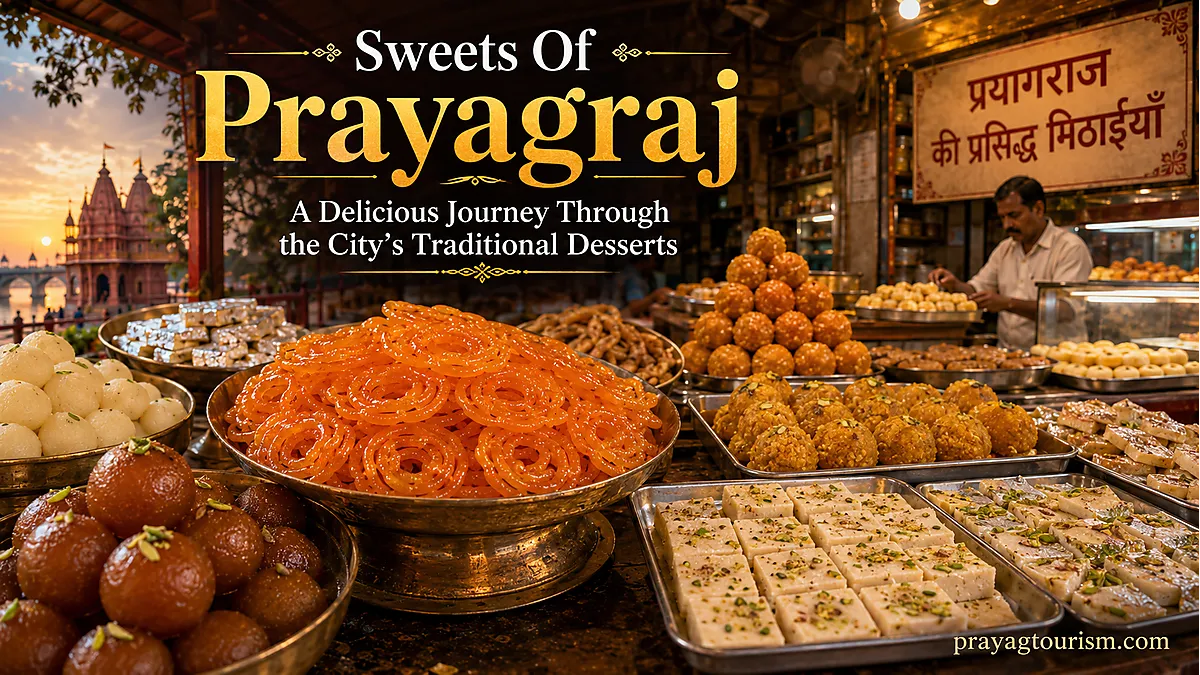
The golden winter sun begins its gentle descent over the sacred Triveni Sangam, painting the waters of the Ganga and Yamuna in hues of deep saffron and rose. Pilgrims, having offered their evening prayers and taken their holy dip, slowly make their way from the ghats, their spirits light, their senses still echoing with the sound of temple bells. As they step into the narrow, bustling lanes of Chowk, a new kind of enchantment begins. The air, once filled with the scent of incense, now carries an irresistible, rich, and nutty aroma—the unmistakable fragrance of ghee.
Through the crowd, you catch a glimpse of it. A brass karahi (wok) bubbles with golden oil, where jalebis, shaped like perfect coils, are being deep-fried to a crisp and then lovingly dunked into a fragrant sugar syrup. At another stall, a massive kadhai holds creamy, saffron-infused rabri, its surface shimmering with a layer of malai (cream). And in the heart of the market, a third-generation sweet maker carefully arranges silver-leafed peda on a glistening marble slab, his hands moving with the practiced grace of an artist.
This is the other sacred pilgrimage of Prayagraj. For centuries, the city has been a confluence not just of rivers, but of traditions, cultures, and culinary arts. The sweets here are more than mere desserts; they are offerings of love, emblems of celebration, and timeless memories carried home in boxes tied with cotton string.
What is a pilgrimage to Prayagraj without tasting its legendary sweets?
Welcome, then, to a delicious journey through the divine and delicious world of the Sweets of Prayagraj.
Table of Contents
🍬 Why Sweets Are an Important Part of Prayagraj’s Culture
To the people of Prayagraj, sweets are far more than a post-meal indulgence. They are an intrinsic part of the city’s spiritual, social, and emotional fabric.
- Pilgrimage Traditions (Prasad): For the millions who visit Tirtharaj, sweets are a sacred offering. Prasad—food that has been blessed and offered to a deity—is a key part of worship. A box of laddus or peda from a revered temple shop is considered a spiritual souvenir, carrying the blessings of the Sangam home to loved ones across the country.
- Festival Celebrations: No festival in Prayagraj feels complete without a special sweet. Every celebration, from Makar Sankranti to Janmashtami, has its own signature mithai, which becomes the flavor of the season.
- Hospitality: The people of Prayagraj believe “Atithi Devo Bhava” (The guest is God). Offering a sweet upon a guest’s arrival is a gesture of respect, love, and warm welcome.
- Milestones and Memories: Sweets are the official language of joy. From a child’s first birthday to a wedding, from a successful exam result to a new home, celebrations are marked with the exchange of mithai.
- Traditional Cuisine: Prayagraj’s sweet-making traditions are a testament to its rich agricultural heritage. The use of desi ghee, khoya (reduced milk solids), and locally sourced ingredients creates flavors that are unique, authentic, and unforgettable.
📜 The Sweet Heritage of Prayagraj
The story of Prayagraj’s sweets is as layered and rich as a Gujiya itself. This is a city where culinary traditions have been refined for centuries, nurtured by its unique position as the “King of Pilgrimage Sites.”
The Kumbh Mela has been a primary catalyst for this sweet evolution. Every twelve years, millions of pilgrims from across India gather at the Sangam, creating an unprecedented demand for prasad and sustenance. This led to the establishment of now-legendary sweet shops that became institutions over generations. Many of Prayagraj’s oldest and most famous mithai shops began humbly, as stalls serving the pilgrims during Kumbh.
Prayagraj’s unique sweet making is also a story of pure ingredients and hard work. For over a century, families have built their reputations on the uncompromising quality of desi ghee and khoya, passing down age-old recipes that are the city’s sweetest legacy. Walking into an iconic shop like Hari Ram & Sons or Hira Halwai is akin to walking into a living museum, where the dedication and flavour have been maintained for decades .
🍬 Most Famous Sweets of Prayagraj
Prayagraj’s sweet repertoire includes beloved classics from across Uttar Pradesh, prepared with a unique local touch, alongside a few delightful specialties. Prepare your sweet tooth for a tour of the city’s most iconic treats.
1. The King of Breakfast: Jalebi
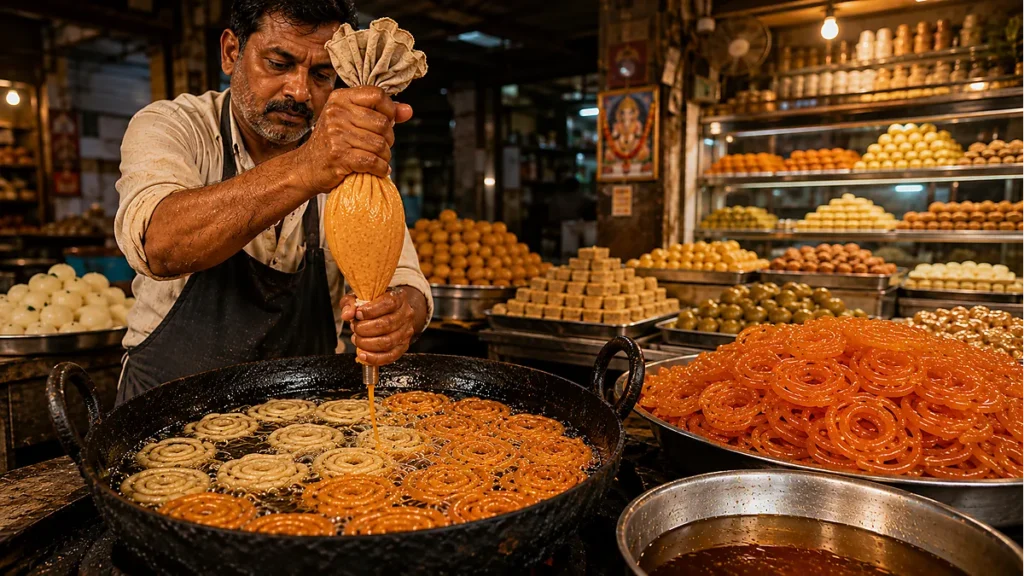
Prayagraj has a passionate love affair with the jalebi. While it is a popular tea-time snack elsewhere, in Prayagraj, the crispy, sweet, and impossibly juicy jalebi is the perfect accompaniment to breakfast. Locals and visitors alike relish it paired with a spicy aloo sabzi or simply with a dollop of creamy dahi (yogurt), creating a perfect balance of sweet and tangy flavours .
Where to Try: For a legendary experience, head to Netram Moolchand & Sons or Sulaki Lal Srinath & Sons in Chowk. Also look for any halwai (sweet maker) at Chandra Sweets or Hira Halwai & Sons.
When to Eat: Early in the morning (as a breakfast treat) or in the evening (as a snack with tea).
2. The Golden Disc: Imarti
While often confused with jalebi, imarti is a distinct and more intricate sweet. Made from a batter of urad dal (black gram), it is piped into a flower-like shape before being deep-fried and soaked in sugar syrup. The result is a denser, slightly chewier, and more aromatic sweet that is a feast for both the eyes and the taste buds.
- Where to Try: Chandra Sweets is highly recommended by locals for their emarti. It is also a staple offering at many traditional shops in Chowk and Civil Lines.
3. The Classic Cardamom-Flavored Treat: Peda
Peda is a ubiquitous sweet found across Uttar Pradesh, but Prayagraj’s version is special. These soft, round, cardamom-scented discs made from khoya (reduced milk) have a melt-in-the-mouth texture. They are a favourite prasad offering in temples, and their enduring popularity makes them a must-try souvenir .
- Where to Try: Hira Halwai & Sons and Sulaki Lal Srinath & Sons are famous for their pedas. Netram Moolchand is also a crowd favourite for their traditional sweets.
4. The Ubiquitous Gold: Laddoo (Motichoor & Bundi)
Laddoo is perhaps the most beloved sweet in India. The variety in Prayagraj is a textural masterpiece.
- Motichoor Laddoo: These are made from tiny, pearl-like, deep-fried gram flour balls ( boondi ) that are bound together in a sweet, syrupy khoya mixture. The result is a laddoo with a delightful granular yet melt-in-the-mouth texture.
- Bundi Laddoo: Made from a slightly coarser boondi, these laddoos are often eaten as a prasad in temples.
- Where to Try: Sulaki Lal Srinath & Sons are known for their Motichur Laddoos. Chandra Sweets is also famous for their laddoo, including specialties like Chandra ke Laddu and Thaggu ke Laddu.
5. The Syrup-Soaked Spheres: Gulab Jamun, Kala Jamun & Rasgulla
Prayagraj is a haven for lovers of soft, syrup-soaked sweets.
- Gulab Jamun: These are soft, brown, milk-solid balls, deep-fried and soaked in a rose-scented sugar syrup. Dehati Rasgulla in Prayagraj is famous for its gulab jamun made in desi ghee. They are known for being “so soft that they almost melt in your mouth”.
- Kala Jamun: A darker, richer, and larger cousin of the gulab jamun.
- Rasgulla: A spongy, white, chenna (cottage cheese) ball, known for its light and juicy texture. Dehati Rasgulle is an iconic spot for this sweet as well. Sulaki Lal Srinath & Sons also offers Kala Jamun.
6. The Festive Pastry: Gujiya
Gujiya is the official sweet of the Holi festival. This deep-fried pastry, shaped like a crescent moon or a half-moon, is filled with a rich mixture of khoya, dried fruits, and fragrant spices like cardamom and saffron. The filling is so popular, that shops and homes are now seeing orders for Kesar-Mawa Gujiya ahead of festivals.
- Where to Find: During the Holi season, gujiyas are available in abundance in all major sweet shops, especially in Chowk, Katra, and Civil Lines.
7. The Sweet Spread: Makhan Malai (or Malai Makhan)
This unique winter delicacy is a specialty of Prayagraj and surrounding regions. It is a heavenly, cloud-like dessert made by churning milk for hours and collecting the thick cream (malai) that forms. This cream is then chilled and served as a light, frothy, and luscious sweet, often flavoured with saffron and nuts. It is an ephemeral treat that seems to dissolve on your tongue.
- Where to Try: It is a seasonal specialty, often found at local sweet shops and street vendors in Chowk and Loknath Gali during the winter.
8. The Winter Warmer: Til Laddoo and Gajak
The winter months bring a special category of sweets made from sesame seeds and jaggery. These are not just delicious; they are designed to keep the body warm in the cold Prayagraj winter.
- Til Laddoo: Balls made from black or white sesame seeds ( til ) and jaggery ( gur ). They are nutty, chewy, and considered very healthy. They can be found in the wholesale markets of Chowk and Katra.
- Gajak: A hard, crunchy, sesame-jaggery brittle. It is a winter favourite, perfect for festive vibes and an instant energy boost.
9. The Light Sponge: Angoori Petha
While petha is famously associated with Agra, it has become very popular in Prayagraj, especially during the Kumbh Mela. Angoori Petha is a variation featuring small, juicy, grape-sized pieces of petha, often dyed yellow and infused with saffron. It is a light, mildly sweet snack that is very popular. In fact, for the Maha Kumbh 2025, a staggering 501 kilograms of petha were sent to be distributed as prasad to devotees.
- Where to Find: You can find Angoori Petha in Petha Galli of Prayagraj, as well as many sweet shops, especially near the Kumbh Mela area.
10. The Creamy Conclusion: Rabri and Lassi
No sweet journey is complete without a rich, creamy drink or dessert.
- Rabri: A sweet, condensed, milk-based dish with layers of thick malai, often served as a dessert on its own or with jalebi.
- Lassi: A traditional yogurt-based drink, churned to perfection. Raja Ram Lassi Wale in Loknath Gali is a legendary spot, having served lassi for over 120 years. Their lassi is known for being thick, creamy, perfectly balanced, and served in traditional kulhads (earthen cups). Sulaki Lal Srinath & Sons is also famous for its lassi, offering a thick cream served in a khulhad.
📍 The Best Sweet Markets of Prayagraj
The true magic of Prayagraj’s sweets is found not just in their taste, but in the atmosphere of the markets where they are sold.
1. Chowk Market & Loknath Gali: The Heart of Tradition
Chowk is the traditional soul of Prayagraj. Entering here is like stepping back in time. Within it, Loknath Gali is considered the heart and stomach of the market, where the air is forever fragrant with the aroma of ghee and spices. This is where legendary shops like Hari Ram & Sons (since 1890), Raja Ram Lassi Wale, and Sulaki Lal Srinath & Sons are located. The sweet shops here are often small, family-run, and have perfected their recipes over generations. The busy lanes are an essential part of the experience.
2. Katra Market: The Student’s Haven
Katra is a historic market and a favourite with students and budget-conscious shoppers. While it is famous for books and textiles, its sweet shops hold their own. Netram Moolchand & Sons is located here and is the place to go for jalebi, along with other mithai. It is a more crowded but equally authentic experience.
3. Civil Lines: Modern Convenience, Traditional Taste
For a more relaxed, sit-down experience, Civil Lines is the modern city’s answer. It’s home to newer branches of old legends like Hira Halwai & Sons (a renowned sweet shop established in 1942 has a new branch here). These shops offer a clean, hygienic environment and are perfect for picking up sweets to take home or enjoying a sweet treat in air-conditioned comfort.
🙏 Sweets Offered as Prasad in Temples
In Prayagraj, the connection between sweets and spirituality is inseparable. Mithai is a key component of prasad, the blessed food offered to a deity and then shared among devotees. While recent guidelines have encouraged offerings of fruits and coconuts to ensure purity, the tradition of offering sweets like peda, laddoo, and barfi remains deeply embedded in the city’s temple culture. The act of preparing and offering sweets is seen as an act of devotion, and receiving it as prasad is considered a sacred blessing.
🌊 Sweets and the Kumbh Mela Experience
The Kumbh Mela transforms Prayagraj into a sweet lover’s paradise. The world’s largest gathering creates an enormous demand for prasad, and the city’s sweet makers rise to the occasion.
During the Mela, the tented city along the riverfront is dotted with stalls selling traditional sweets alongside regional specialties from across India. It is a unique opportunity to taste Angoori Petha or Til Laddoo in a spiritual setting. The sheer scale and devotion make tasting these sweets an unforgettable memory.
🪔 Festival Sweets of Prayagraj
Each festival in Prayagraj has its own signature sweet that defines the celebration.
- Diwali (Festival of Lights): A time for feasting and sharing, the markets are filled with laddoos, barfis, gulab jamuns, and kaju katlis.
- Holi (Festival of Colors): Gujiya is the undisputed king of the Holi sweets. It’s a day to enjoy these rich pastries and sip thandai.
- Makar Sankranti: Celebrating the harvest and the sun’s northward journey, the winter sweets of Til Laddoo and Gajak take centre stage.
- Janmashtami (Lord Krishna’s Birthday): Devotees prepare panjiri (a sweet, nutty flour-based mixture), makhan mishri, and a variety of laddoos as offerings.
- Raksha Bandhan: The bond between brothers and sisters is celebrated with a box of their favourite sweets, traditionally including peda, barfi, and laddoos.
🚶 A Food Walk for Sweet Lovers
Here is a suggested sweet-focused walking tour to embark on your own delicious journey:
Morning (8:00 AM – 10:00 AM) – The Breakfast of Champions
- Start at Netram Moolchand & Sons in Katra.
- Eat: A plate of poori-sabzi followed by a plate of piping hot, fresh jalebi. The combination is iconic.
Afternoon (12:00 PM – 2:00 PM) – A Sweet & Savory Lunch
- Head to Loknath Gali in Chowk.
- Eat: Grab a masala samosa from Hari Ram & Sons. Then, for dessert, try their dalmoth namkeen and a peda or two.
- Drink: Have a refreshing, thick lassi in a kulhad at Raja Ram Lassi Wale.
Evening (6:00 PM – 8:00 PM) – The Sweet Souvenir Hunt
- Explore Civil Lines.
- Buy: Head to Hira Halwai & Sons (Civil Lines branch) to pick up a gift box of assorted sweets like gulab jamun, barfi, and peda to take home.
- Eat: End your walk with a box of rasgullas from Dehati Rasgulle.
🧑🤝🧑 Sweets for Different Travelers
| Traveler Type | Sweet Recommendations | Why? |
| Pilgrims | Peda, Laddoo, Gulab Jamun | These are traditional prasad offerings. Their long shelf life makes them perfect for bringing home as a blessed souvenir. |
| Families | Assorted Sweet Box | A box from Hira Halwai & Sons or Sulaki Lal offers a variety for everyone to enjoy. |
| Children | Angoori Petha, Jalebi with Dahi | The mild, sweet, and juicy Angoori Petha is fun to eat. Dahi Jalebi is a unique and tasty treat. |
| International Visitors | Lassi, Malai Makhan, Motichoor Laddoo | Lassi is a famous and accessible Indian drink. Malai Makhan offers a unique, light, and airy texture. Motichoor Laddoo is a classic Indian sweet. |
| Food Bloggers | Imarti, Kala Jamun, Seasonal Specials | Imarti is visually stunning. Kala Jamun is a lesser-known but rich variation. Seek out seasonal sweets for unique content. |
| Gift Buyers | Boxed Motichoor Laddoo, Peda, Dehati Rasgulla | These sweets are known for their quality, freshness, and ability to travel reasonably well. |
🎁 What Sweets to Take Home from Prayagraj
Here is a guide to the best edible souvenirs from your trip to Prayagraj:
| Sweet Souvenir | Best Shop(s) | Why It’s a Good Gift |
| Motichoor Laddoo | Netram Moolchand, Sulaki Lal Srinath & Sons | A classic, universally loved sweet. They are dry, travel well, and are a festive gift. |
| Peda | Hira Halwai & Sons, Sulaki Lal | Soft, delicate, and beautifully packaged. Their small size makes them perfect for sharing. |
| Dehati Rasgulla/Gulab Jamun | Dehati Rasgulle | Famous for being incredibly soft and delicious. The unique desi ghee flavour is a talking point. |
| Dalmoth Namkeen | Hari Ram & Sons | While not sweet, dalmoth is a legendary, spicy, and crunchy local snack. It’s the perfect savoury accompaniment to tea. |
| Assorted Gift Box | Hira Halwai & Sons (Civil Lines) | A safe and elegant choice, allowing your loved ones to sample a variety of the city’s best mithai. |
❓ Frequently Asked Questions (FAQs)
1. What are the most famous sweets in Prayagraj?
The most famous sweets include Jalebi, Imarti, Peda, Motichoor Laddoo, Gulab Jamun, Malai Makhan, and Gujiya (during Holi).
2. Which sweet is unique to Prayagraj?
Malai Makhan (or Makhan Malai) is a specialty of the region. This light, frothy, cloud-like sweet made from milk cream is a unique and seasonal winter delicacy.
3. Where is the best place to buy sweets in Prayagraj?
The traditional markets of Chowk and Loknath Gali are the best for authentic, old-school sweets. Civil Lines has modern branches of legendary shops like Hira Halwai & Sons for a more convenient experience.
4. Which sweet shop is famous for its jalebi?
Netram Moolchand & Sons (in Katra) is legendary for its desi ghee kachori and jalebi. Hira Halwai & Sons is also renowned for its jalebi.
5. Where can I find the best lassi in Prayagraj?
*Raja Ram Lassi Wale in Loknath Gali is an iconic, over-120-year-old shop famous for its thick, creamy lassi served in traditional kulhads. Sulaki Lal Srinath & Sons is also highly recommended for lassi.*
6. Are there any seasonal sweets I should try in Prayagraj?
Yes! In winter, try the sesame and jaggery-based Til Laddoo and Gajak, as well as the light and airy Malai Makhan. During Holi, the festive Gujiya is a must-eat.
7. What sweets are offered as prasad in temples?
Traditionally, Peda, Laddoo, and Barfi are common offerings, though recently there has been a move towards offering fruits and coconuts as well to ensure purity.
8. Is street sweet food safe to eat in Prayagraj?
The city is famous for its sweet shops with long-standing reputations. Eat from busy, popular shops with high customer turnover to ensure freshness.
9. What is Kala Jamun?
It is a darker, richer, and larger version of the gulab jamun. It is flavoured with khoya and spices, and you can find it at shops like Sulaki Lal Srinath & Sons.
10. Can I take sweets from Prayagraj on a flight?
Yes. Packaged sweets like laddoos and pedas travel well. It is best to pack them securely in your checked luggage, or carry them on as a gift if sealed.
💎 Conclusion: The Sweet Blessing of Tirtharaj
As your journey through Prayagraj comes to an end, you will carry more than just memories of the sacred Sangam and the ancient temples. The taste of a crispy, golden jalebi, shared with a friend at Netram’s, the memory of thick, creamy lassi sipped from a kulhad in the timeless lanes of Loknath, and the sweet aroma of gulab jamun from Dehati Rasgulle will linger on your palate for years to come.
Long after the sacred waters of the Sangam and the temples of Prayagraj fade into memory, the taste of its traditional sweets continues to linger—a delicious reminder of the city’s devotion, hospitality, and timeless culture. It is the city’s parting blessing to you, a sweet taste of Tirtharaj to carry home in your heart.
This article is part of a series exploring the heritage, culture, and culinary delights of Prayagraj.
Prayag Tourism
📞 Phone/WhatsApp: +91-9555313526
📧 Email: contact@prayagtourism.com
🌐 Website: PrayagTourism.com
May your journey be peaceful, safe, and sweetly enriching – and may the tastes of this sacred city remain with you always.