
Table of Contents
There is a moment just before sunrise at Triveni Sangam that stays with you forever.
The winter fog hangs low over the confluence of three sacred rivers — Ganga, Yamuna, and the mythical Saraswati. Somewhere in the distance, a temple bell breaks the silence. The air is crisp, cool, and carries the faint fragrance of marigold and incense. One by one, pilgrims begin their descent into the water — some murmuring prayers, others completely silent, all seeking something larger than themselves.
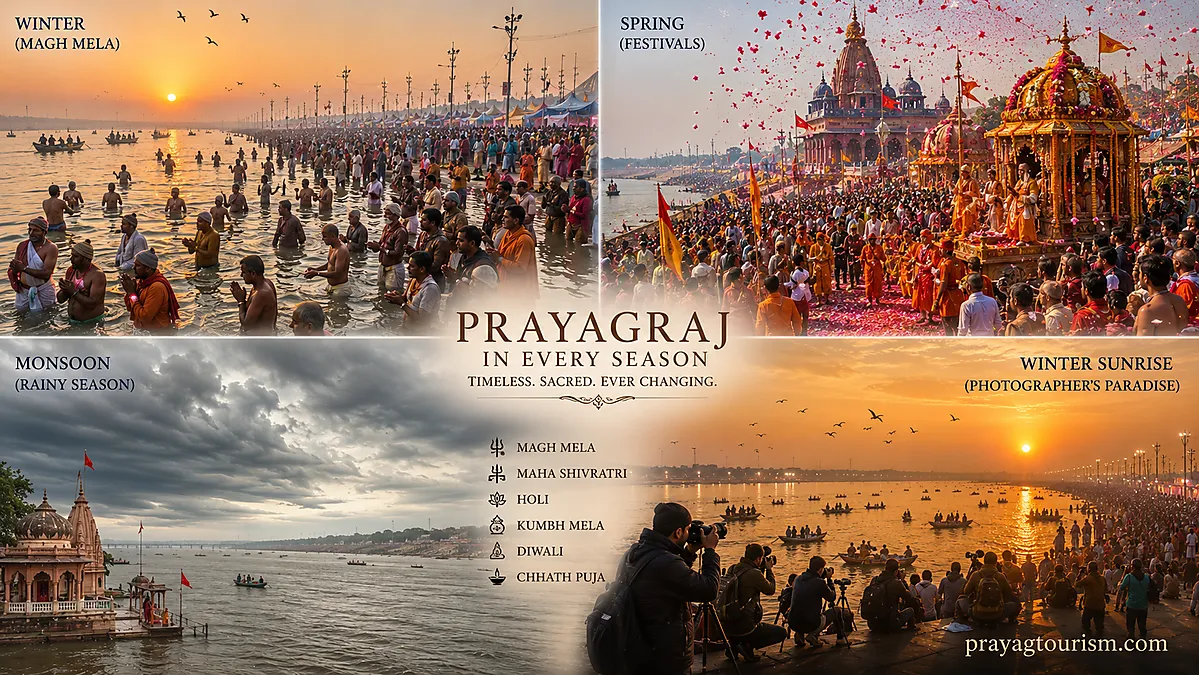
As the first rays of sun pierce through the mist, the ghats come alive. Boats bob gently on the water. The sound of “Har Har Gange” echoes across the river. This is Prayagraj — Tirtharaj, the king of all holy places — and every season paints it in a different light.
The winter sun feels gentle on your skin as you watch thousands of Kalpavasis begin their month-long spiritual discipline during Magh Mela. The summer heat might make you seek shade under ancient banyan trees, but the emptiness of the temples allows for quiet, uninterrupted prayer. The monsoon clouds gather dramatically above the rivers, transforming the landscape into a lush, green spectacle.
So, when is the perfect time to experience Prayagraj at its most beautiful and spiritually vibrant?
The answer, like the city itself, has many layers. Let me guide you through Prayagraj’s seasons, festivals, and rhythms so you can choose the time that speaks to your soul.
SUMMARY
| Detail | Information |
| Destination | Prayagraj |
| Best Overall Season | Winter |
| Best Months | October–March |
| Best For Pilgrims | January–February (Magh Mela) |
| Best For Photography | November–February |
| Major Festival | Magh Mela (January 3 – February 15, 2026) |
| Recommended Duration | 2–3 Days |
OVERVIEW OF PRAYAGRAJ’S CLIMATE
Prayagraj, situated in the northern plains of Uttar Pradesh, experiences a humid subtropical climate — think hot summers, a defined monsoon season, and pleasantly cool winters.
Geographic Influence
Located at the confluence of the Ganga and Yamuna rivers, Prayagraj’s weather is significantly influenced by its riverine geography. The rivers moderate temperatures slightly but also contribute to humidity, especially during monsoon.
Seasonal Variations at a Glance
| Season | Months | Temperature Range | Overall Experience |
| Winter | October–March | 9°C – 28°C | Pleasant, festive, ideal for pilgrimage |
| Summer | April–June | 25°C – 44°C | Very hot, sparse crowds, budget-friendly |
| Monsoon | July–September | 24°C – 34°C | Humid, lush green, occasional heavy rain |
What Makes Prayagraj Unique
Unlike hill stations or coastal destinations, Prayagraj’s spiritual calendar determines its tourism peaks more than weather alone. The city can be crowded even in winter chill and nearly empty in summer heat — but each season offers a distinct flavor of this sacred land.
SEASONAL GUIDE TO VISITING PRAYAGRAJ
WINTER (OCTOBER TO MARCH) — THE BEST TIME TO VISIT PRAYAGRAJ
If you ask any Prayagraj local about the best time to visit, the answer will almost always be winter — and for good reason.
Weather Conditions
Winter in Prayagraj is nothing short of magical. The oppressive heat of summer gives way to crisp, clear days and cool, sometimes chilly nights. Daytime temperatures hover around a comfortable 21°C to 28°C, while nights can dip to 9°C to 14°C .
The Pilgrimage Experience
This is the season when Prayagraj truly fulfills its destiny as Tirtharaj. The Magh Mela (January–February) transforms the riverbanks into a temporary city of faith. Millions of pilgrims, saints, and Kalpavasis camp along the Sangam, creating an atmosphere that is simultaneously chaotic and deeply peaceful.
The winter chill adds meaning to the holy dip — there is a certain spiritual merit in braving cold waters for the sake of devotion.
Tourism Benefits
- Comfortable exploration of all attractions without heat exhaustion
- Active festival calendar with daily spiritual events
- Pleasant boat rides on the Sangam
- Ideal for elderly pilgrims and families
Photography Opportunities
Winter offers the most dramatic lighting conditions. Morning fog creates mystical scenes at the ghats. The golden hour — just after sunrise and before sunset — casts warm, soft light perfect for capturing rituals, portraits, and landscapes .
Advantages
- Most pleasant weather
- Maximum festivals and events
- Best conditions for pilgrimage
- Prime photography season
Disadvantages
- Peak tourist season = higher prices
- Crowded attractions, especially during Magh Mela
- Accommodation requires advance booking
- Fog can occasionally disrupt train and flight schedules
Why winter is generally considered the best time to visit Prayagraj: The combination of perfect weather, vibrant festivals, and the profound spiritual atmosphere during Magh Mela makes October through March the ideal window for almost every type of traveler.
SUMMER (APRIL TO JUNE) — FOR THE BUDGET-CONSCIOUS AND DEVOTED
Weather
Let’s be honest — summer in Prayagraj is intense. Daytime temperatures regularly cross 40°C, with May and June seeing highs of 43°C to 44°C . Nights offer little respite, staying around 25°C to 29°C.
Crowd Levels
This is the off-season for tourism. The riverbanks, so crowded in winter, become almost deserted. You will find temples peaceful and attractions uncrowded.
Accommodation Availability
With few tourists around, hotels offer significant discounts. You can find quality accommodation at a fraction of winter prices. This is the time for budget travelers to stretch their rupees further.
The Devoted Pilgrim’s Summer
Some pilgrims still visit in summer, believing that penance in harsh conditions brings greater spiritual reward. If you plan a summer visit:
- Schedule outdoor activities for early morning (before 10 AM) and evening (after 4 PM)
- Spend afternoons in air-conditioned museums or your hotel
- Stay hydrated — carry water everywhere
Challenges
- Extreme heat limits outdoor exploration
- Holy dip becomes less appealing in warm water
- Not ideal for elderly travelers or young children
- Boat rides are uncomfortable during peak heat
MONSOON (JULY TO SEPTEMBER) — LUSH AND MELANCHOLIC
Rainfall
Prayagraj receives substantial rainfall during the monsoon, with July, August, and September bringing 114mm to 262mm of rain monthly . August typically sees about 25 rainy days.
River Conditions
The Ganga and Yamuna swell significantly during monsoon. The Sangam becomes more powerful and dramatic. However, boat operations may be restricted during heavy rain or when water levels are dangerously high.
Scenic Beauty
This is Prayagraj at its greenest. Parks and gardens burst with life. The rain-washed ghats have a fresh, clean appearance. The dramatic cloud formations create spectacular skies for landscape photography .
Photography Opportunities
Monsoon offers unique photographic possibilities:
- Dramatic cloud formations
- Rain-washed reflections on wet stones
- Lush green landscapes
- Moody, atmospheric shots of the ghats in rain
Travel Considerations
- Pack rain gear (umbrella, waterproof shoes, quick-dry clothing)
- Expect transportation delays
- Some boat services may be suspended
- Humidity is high (prepare to sweat)
- Fewer tourists = better hotel deals
MONTH-BY-MONTH VISITOR GUIDE
January
- Weather: Cold. Daytime ~21°C, nights drop to ~10°C. Foggy mornings common.
- Festivals: Magh Mela begins (Jan 3), Makar Sankranti (Jan 14/15), Mauni Amavasya (Jan 18), Basant Panchami (Jan 23)
- Visitor Experience: Peak pilgrimage season. The Sangam is crowded with devotees taking holy dips. A month of profound spiritual energy.
- Photography Quality: ⭐⭐⭐⭐⭐ (Foggy mornings + golden light + festival crowds)
- Crowd Levels: Extremely high
- Recommendation Score: 10/10 for pilgrims; 7/10 for those avoiding crowds
February
- Weather: Pleasant. Daytime ~27°C, nights ~13°C. Fog decreases.
- Festivals: Maghi Purnima (Feb 1), Maha Shivratri (Feb 15) — Magh Mela concludes
- Visitor Experience: Still excellent for pilgrimage. Crowds begin thinning after mid-February. Great time for comfortable exploration.
- Photography Quality: ⭐⭐⭐⭐ (Good light, less fog interference)
- Crowd Levels: High (early Feb), Moderate (late Feb)
- Recommendation Score: 9/10
March
- Weather: Warming up. Daytime ~31°C, nights ~18°C.
- Festivals: Holi (dates vary — typically March)
- Visitor Experience: Transition month. Mornings pleasant, afternoons warm. Good for sightseeing without extreme crowds.
- Photography Quality: ⭐⭐⭐ (Good, but harsher midday light)
- Crowd Levels: Moderate
- Recommendation Score: 8/10
April
- Weather: Summer begins. Daytime ~36°C, nights ~22°C.
- Festivals: Ram Navami, Baisakhi
- Visitor Experience: Hot, especially afternoons. Better for early morning activities. Budget-friendly hotel rates.
- Photography Quality: ⭐⭐ (Harsh light, heat haze)
- Crowd Levels: Low
- Recommendation Score: 6/10
May
- Weather: Very hot. Daytime ~38°C to 43°C, nights ~24°C.
- Festivals: None major
- Visitor Experience: Intense heat limits outdoor time. Only for the truly devoted or budget-conscious.
- Photography Quality: ⭐ (Harsh light, uncomfortable conditions)
- Crowd Levels: Very low
- Recommendation Score: 4/10
June
- Weather: Peak summer. Daytime up to 44°C, nights ~29°C .
- Festivals: None
- Visitor Experience: Hottest month. Not recommended for general tourism.
- Photography Quality: ⭐
- Crowd Levels: Minimal
- Recommendation Score: 3/10
July
- Weather: Monsoon begins. Daytime ~34°C, nights ~27°C. Rainfall increases.
- Festivals: Guru Purnima
- Visitor Experience: Humid with frequent rain. Landscape turns green. Occasional boat ride cancellations.
- Photography Quality: ⭐⭐⭐ (Dramatic clouds, reflections)
- Crowd Levels: Low
- Recommendation Score: 5/10
August
- Weather: Peak monsoon. Daytime ~32°C, ~25 rainy days .
- Festivals: Raksha Bandhan, Janmashtami
- Visitor Experience: Wettest month. Best for those who enjoy monsoon ambiance.
- Photography Quality: ⭐⭐ (Rain limits outdoor shooting)
- Crowd Levels: Very low
- Recommendation Score: 4/10
September
- Weather: Monsoon retreats. Daytime ~32°C, nights ~25°C.
- Festivals: Pitru Paksha, Navratri begins (late Sep)
- Visitor Experience: Rain decreases toward month end. Humidity still high. Good deals on accommodation.
- Photography Quality: ⭐⭐⭐ (Improving conditions)
- Crowd Levels: Low
- Recommendation Score: 6/10
October
- Weather: Winter approaches. Daytime ~31°C, nights ~20°C. Humidity drops.
- Festivals: Navratri, Durga Puja, Dussehra
- Visitor Experience: Pleasant weather returns. Ideal time for sightseeing before peak pilgrimage crowds. Beginning of tourism season.
- Photography Quality: ⭐⭐⭐⭐ (Good light, comfortable conditions)
- Crowd Levels: Moderate (increasing)
- Recommendation Score: 9/10
November
- Weather: Cooling down. Daytime ~28°C, nights ~16°C.
- Festivals: Diwali, Kartik Purnima
- Visitor Experience: Excellent weather. Diwali brings festive lighting and celebrations across the city.
- Photography Quality: ⭐⭐⭐⭐ (Beautiful light, festive decorations)
- Crowd Levels: Moderate to High
- Recommendation Score: 9/10
December
- Weather: Cool to cold. Daytime ~23°C, nights ~12°C.
- Festivals: Christmas (minor), pre-Magh Mela preparations begin
- Visitor Experience: Perfect winter weather. Pre-Magh Mela buzz begins. Great for comfortable exploration.
- Photography Quality: ⭐⭐⭐⭐ (Crisp light, fog starts forming late Dec)
- Crowd Levels: Moderate
- Recommendation Score: 9/10
FESTIVAL CALENDAR OF PRAYAGRAJ
Prayagraj’s spiritual calendar is the heartbeat of the city. Here are the festivals that transform the Sangam into a living, breathing testament of faith.
Magh Mela (January–February Annually)
What it is: A month-long sacred fair held annually during the Hindu month of Magh (January–February). While smaller than the Kumbh Mela, it is still a massive gathering drawing millions of devotees. In 2026, authorities expanded the mela area to 800 hectares to accommodate an anticipated 12–15 crore pilgrims over 45 days .
What to Expect: The riverbanks transform into a temporary city with sectors, pontoon bridges, and extensive facilities. Kalpavasis (devotees who camp for the entire month) engage in prayer, meditation, and ritual baths. The atmosphere is charged with devotion.
Kumbh Mela (Every 12 Years at Prayagraj)
What it is: The largest peaceful gathering of humanity on Earth. The Kumbh Mela rotates among four locations — Prayagraj, Haridwar, Nashik, and Ujjain — with Prayagraj’s Kumbh considered the most auspicious .
When It Happens: The next Kumbh Mela at Prayagraj will be in 2031. Maha Kumbh (once every 144 years) last occurred in 2025.
Why It Matters: The 2019 Kumbh Mela at Prayagraj attracted over 240 million pilgrims. The event commemorates the celestial event when drops of amrit (immortality nectar) fell at four locations.
Ardh Kumbh Mela (Every 6 Years)
What it is: The “half” Kumbh occurring every 6 years at Prayagraj.
Next Ardh Kumbh: 2028 (approximately)
Other Major Festivals in Prayagraj
| Festival | Typical Timing | Crowd Level | Experience |
| Makar Sankranti | January 14 | Very High | First major bathing day of Magh Mela |
| Mauni Amavasya | January/February | Extremely High | Most sacred bathing day — peak crowds |
| Maha Shivratri | February/March | High | Night-long prayers at Shiva temples |
| Holi | March | High (local) | Colorful celebrations across city |
| Ram Navami | March/April | Moderate | Celebrations at temples |
| Navratri | March/April & Sept/Oct | Moderate-High | Nine nights of Devi worship |
| Diwali | October/November | High | City lit with lamps; Kartik Purnima follows |
| Kartik Purnima | November | High | Full moon bath; end of Diwali period |
MAGH MELA – THE BEST SEASON FOR PILGRIMS?
If your purpose is purely spiritual, Magh Mela season (January–February) is undeniably the best time to visit Prayagraj.
The Spiritual Atmosphere
Imagine waking before dawn to the sound of Vedic chants. The air is cold enough to see your breath. You walk toward the Sangam with thousands of others — some chanting, some silent, all moving with singular purpose.
The holy dip at sunrise during Magh Mela is an experience that transcends description. The water is cold, but the faith runs warm.
Kalpavas – The Month of Discipline
Kalpavas is the practice of staying on the riverbanks for the entire Magh month (or portions of it). Kalpavasis follow strict disciplines:
- One meal per day
- Sleeping on the ground
- Daily holy dips
- Meditation and scriptural study
- Complete celibacy
Witnessing or participating in Kalpavas offers insight into the deepest levels of Hindu spiritual practice.
Visitor Planning for Magh Mela
- Book accommodation months in advance — hotels fill up completely
- Expect crowds — especially on Mauni Amavasya (single-day crowds can exceed 5 crore)
- Prepare for basic facilities — while improved yearly, temporary infrastructure cannot match permanent hotels
- Allow extra travel time — roads are congested, parking is far from the Sangam
- Hire a local guide — navigating the temporary city requires local knowledge
WEATHER GUIDE FOR TOURISTS
Average Temperature Table
| Month | Avg Day Temp (°C) | Avg Night Temp (°C) | Record High (°C) |
| January | 21 | 10 | 27 |
| February | 27 | 14 | 32 |
| March | 31 | 18 | 35 |
| April | 37 | 22 | 42 |
| May | 38 | 24 | 44 |
| June | 40 | 29 | 44 |
| July | 34 | 27 | 36 |
| August | 33 | 27 | 34 |
| September | 33 | 26 | 36 |
| October | 32 | 21 | 35 |
| November | 28 | 17 | 31 |
| December | 24 | 12 | 28 |
Source: Climate data for 2026
Rainfall Patterns
| Month | Rainfall (mm) | Rainy Days |
| January | 34 | 6 |
| February | 0 | 0 |
| March | 47 | 12 |
| April | 7 | 4 |
| May | 20 | 7 |
| June | 114 | 12 |
| July | 262 | 27 |
| August | 201 | 25 |
| September | 181 | 26 |
| October | 40 | 7 |
| November | 7 | 2 |
| December | 9 | 4 |
Humidity & Fog Conditions
- Humidity: Highest in July–September (70–85%); lowest in April–May (30–45%)
- Fog: Common in December–January, especially early mornings; can disrupt trains and flights
Clothing Recommendations by Season
| Season | Recommended Clothing |
| Winter (Oct–Mar) | Light sweaters for October/November; heavy woolens for December–January (especially evenings); scarf/muffler for early mornings |
| Summer (Apr–Jun) | Light cotton; wide-brimmed hat; sunglasses; sunscreen; full sleeves for sun protection |
| Monsoon (Jul–Sep) | Light quick-dry clothing; waterproof jacket; umbrella; waterproof footwear |
BEST PHOTOGRAPHY SEASONS IN PRAYAGRAJ
Prayagraj is a photographer’s paradise — if you know when and where to point your lens.
Winter Sunrise Photography (November–February) ⭐⭐⭐⭐⭐
This is the crown jewel of Prayagraj photography. The combination of winter fog, golden sunrise, and river mist creates ethereal conditions.
Best Locations:
- Triveni Sangam (from boat or ghats)
- Saraswati Ghat
- Boat rides during sunrise
Best Timing: 6:30 AM – 8:00 AM (varies by month)
What You’ll Capture:
- Pilgrims emerging from fog to take holy dip
- Silhouettes against golden water
- Birds flying over mist-covered river
- Temple towers piercing through fog
Pro Tip: Hire a boat to shoot from the water. The perspective of the merging rivers with rising sun is unmatched .
Festival Photography (January–February, October–November) ⭐⭐⭐⭐⭐
The crowds, colors, and chaos of festivals offer endless storytelling opportunities.
Best Locations:
- Sangam during Magh Mela bathing days
- Ghats during Ganga Aarti
- Mela grounds with Kalpavasis’ tents
What You’ll Capture:
- Devotees in prayer and ritual
- Colorful sadhus (seek permission before portraits)
- Mass holy dips
- Evening aarti with oil lamps
Pro Tip: For Mauni Amavasya, arrive by 4 AM to secure a good shooting position. Use a telephoto lens for candid moments .
Monsoon Landscapes (July–September) ⭐⭐⭐
Dramatic clouds and rain-washed landscapes create moody, atmospheric images.
Best Locations:
- Riverfront ghats
- Parks and gardens
- Temples with rain-soaked stones
What You’ll Capture:
- Dark, dramatic cloud formations
- Reflections in puddles on ghat steps
- Lush greenery around the city
- Rain and devotees with umbrellas
Pro Tip: Protect your gear with rain covers. The soft, diffused light of overcast days eliminates harsh shadows.
Golden Hour Locations
| Location | Best Season | Sunrise Shot | Sunset Shot | Special Feature |
| Triveni Sangam | Winter | ⭐⭐⭐⭐⭐ | ⭐⭐⭐⭐ | Confluence visible |
| Saraswati Ghat | Winter | ⭐⭐⭐⭐⭐ | ⭐⭐⭐⭐ | Less crowded than main Sangam |
| Boat on Ganga | Winter | ⭐⭐⭐⭐⭐ | ⭐⭐⭐⭐ | Unique water perspectives |
| Allahabad Fort | Winter | ⭐⭐⭐ | ⭐⭐⭐⭐ | Historical architecture |
| Khusro Bagh | Winter/Spring | ⭐⭐⭐⭐ | ⭐⭐⭐ | Mughal tomb gardens |
Bird Photography (November–February) ⭐⭐⭐⭐
Winter brings migratory birds to the riverine ecosystems around Prayagraj.
Best Locations:
- Riverbanks near Sangam
- Wetlands along Ganga and Yamuna
Species to Spot: Seagulls, ducks, herons, cormorants, kingfishers
Pro Tip: Early morning offers best bird activity. A 200mm+ lens recommended.
BEST TIME FOR DIFFERENT TYPES OF TRAVELERS
Pilgrims – Best Time: January–February (Magh Mela Season)
The spiritual energy during Magh Mela is unmatched. The holy dip during Mauni Amavasya is considered most meritorious. However, prepare for massive crowds and book everything in advance.
Families – Best Time: October–November or February–March
Pleasant weather, manageable crowds, and comfortable temperatures for elderly and children. Avoid peak festival days (Mauni Amavasya) if crowd anxiety is a concern.
Photographers – Best Time: November–February (for winter magic) or July–September (for monsoon drama)
Winter offers the classic Prayagraj aesthetic — fog, golden light, and vibrant festivals. Monsoon offers moody, dramatic landscapes.
History Lovers – Best Time: October–March
Comfortable weather for exploring Allahabad Fort, Anand Bhavan, Khusro Bagh, and other heritage sites. Summer heat makes extended outdoor exploration difficult.
International Visitors – Best Time: October–March
Winter weather is most comfortable for those unaccustomed to Indian heat. The festivals provide cultural immersion. Air and rail connectivity is best during this period.
Budget Travelers – Best Time: April–September (Off-Season)
Hotel rates drop significantly. Attractions are uncrowded. The trade-off is extreme heat (April–June) or rain/humidity (July–September).
BEST TIME TO VISIT MAJOR ATTRACTIONS
| Attraction | Best Season | Best Time of Day | Photography Rating | Notes |
| Triveni Sangam | Winter (Oct–Mar) | Sunrise (6–8 AM) | ⭐⭐⭐⭐⭐ | Boat ride essential for full experience |
| Allahabad Fort | Winter (Nov–Feb) | Morning (9–11 AM) | ⭐⭐⭐⭐ | Limited access area; Ashoka Pillar inside |
| Anand Bhavan | Winter (Oct–Mar) | Afternoon (1–4 PM) | ⭐⭐⭐ | Nehru family museum; good for history lovers |
| Khusro Bagh | Winter/Spring | Late afternoon | ⭐⭐⭐⭐ | Beautiful Mughal gardens; golden hour best |
| Shringverpur Dham | Winter (Nov–Feb) | Morning (8–10 AM) | ⭐⭐⭐ | Ramayana-related site; quieter than Sangam |
| Alopi Devi Temple | Any season | Evening aarti time | ⭐⭐⭐ | Unique Shakti Peeth; good for cultural experience |
| Hanuman Mandir | Winter mornings | Sunrise | ⭐⭐ | Famous reclining Hanuman; very crowded |
WHAT TO PACK FOR EACH SEASON
Winter Packing List (October–March)
- Light sweaters (Oct–Nov, Feb–Mar)
- Heavy woolens (Dec–Jan)
- Scarf, muffler, or shawl
- Warm socks and closed shoes
- Lip balm and moisturizer (air gets dry)
- Camera for foggy sunrise shots
- Power bank (cold drains batteries faster)
Summer Packing List (April–June)
- Light cotton clothing (full sleeves for sun protection)
- Wide-brimmed hat or cap
- Sunglasses with UV protection
- High-SPF sunscreen
- Reusable water bottle (stay hydrated!)
- Umbrella for sun/possible pre-monsoon showers
- Electrolyte powder or ORS sachets
- Light scarf for temple visits
Monsoon Packing List (July–September)
- Quick-dry clothing
- Waterproof jacket or poncho
- Umbrella (compact, sturdy)
- Waterproof footwear or sandals
- Dry bag for electronics and documents
- Anti-fungal powder (for humidity)
- Mosquito repellent
- Extra plastic bags for wet clothes
Year-Round Essentials (No Matter When You Visit)
- Comfortable walking shoes
- Basic first-aid kit
- Prescription medications (with copies)
- Power bank and charging cables
- Modest clothing for temples (shoulders and knees covered)
- Copy of ID proof
- Prayagraj offline map
SAMPLE TRAVEL PLANS BY SEASON
Winter Itinerary (3 Days – Perfect Weather + Magh Mela)
Day 1: Sangam Experience
- 5:30 AM – Arrive at Sangam for sunrise boat ride
- 6:00 AM – Holy dip at Triveni Sangam
- 7:30 AM – Breakfast at local eatery
- 9:00 AM – Visit Bade Hanuman Temple
- 11:00 AM – Explore Allahabad Fort and Ashoka Pillar
- 1:00 PM – Lunch (try local Kachori-sabzi)
- 4:00 PM – Evening boat ride (different light!)
- 6:00 PM – Return to hotel, rest
Day 2: Magh Mela Exploration (Jan–Feb only)
- 6:00 AM – Walk through Magh Mela grounds
- 8:00 AM – Observe Kalpavasis’ morning rituals
- 10:00 AM – Visit Akharas (saint camps) – seek permission
- 12:00 PM – Lunch at Mela food stalls
- 2:00 PM – Rest at hotel
- 5:00 PM – Evening aarti at Sangam
- 7:00 PM – Dinner at Civil Lines restaurant
Day 3: Heritage + Departure
- 8:00 AM – Visit Khusro Bagh (Mughal garden tombs)
- 10:00 AM – Anand Bhavan Museum
- 12:30 PM – Lunch
- 2:00 PM – Last-minute shopping at Chowk
- 4:00 PM – Depart for station/airport
Summer Itinerary (2 Days – Early Mornings + Afternoon Breaks)
Day 1
- 5:00 AM – Sunrise Sangam boat ride (beat the heat)
- 6:30 AM – Holy dip and prayers
- 8:00 AM – Breakfast
- 9:00 AM – Visit Hanuman Temple (before crowds)
- 11:00 AM – Return to hotel (AC respite)
- 1:00 PM – Lunch at hotel
- 3:00 PM – Indoor activity: Anand Bhavan Museum
- 6:00 PM – Evening walk at Company Garden
- 7:30 PM – Dinner at AC restaurant
Day 2
- 5:30 AM – Visit Alopi Devi Temple
- 7:00 AM – Breakfast
- 8:00 AM – Allahabad Fort (limited morning hours)
- 10:00 AM – Return to hotel, check out
- 12:00 PM – Depart after early lunch
Monsoon Itinerary (2 Days – Rain-Ready)
Day 1
- 7:00 AM – Breakfast (wait for rain to ease)
- 9:00 AM – Khusro Bagh (rain-washed gardens are beautiful)
- 11:00 AM – Allahabad Fort (covered areas)
- 1:00 PM – Lunch
- 4:00 PM – Short boat ride if weather permits
- 6:00 PM – Evening aarti (rain or shine)
Day 2
- 8:00 AM – Anand Bhavan (indoor museum, rain-proof)
- 11:00 AM – Local markets under cover
- 1:00 PM – Lunch
- 2:00 PM – Depart
FREQUENTLY ASKED QUESTIONS
1. What is the best month to visit Prayagraj?
October through March are the best months, with January and February offering the unique Magh Mela experience. December offers pleasant weather with fewer crowds than peak Mela season.
2. Is winter the best season to visit Prayagraj?
Yes, winter (October–March) is universally considered the best time to visit Prayagraj due to pleasant temperatures, active festivals, and ideal conditions for pilgrimage and sightseeing.
3. When is Magh Mela held in Prayagraj?
Magh Mela is held annually from January to February. In 2026, it runs from January 3 to February 15 .
4. Is monsoon a good time to visit Prayagraj?
Monsoon (July–September) offers lush green landscapes and dramatic skies but comes with high humidity and frequent rain that can disrupt outdoor activities. It’s best for photographers seeking moody shots or budget travelers willing to risk rain.
5. Which season is best for photography in Prayagraj?
Winter (November–February) is best for foggy sunrise shots, golden hour landscapes, and festival photography. Monsoon offers unique dramatic cloud scenes.
6. What is the weather like in Prayagraj in January?
January is cold with daytime temperatures around 21°C and nights dropping to 10°C. Mornings often have dense fog. This is peak Magh Mela season with massive crowds .
7. What is the weather like in Prayagraj in May?
May is extremely hot with daytime temperatures reaching 43–44°C. Not recommended for general tourism. Only for the devoted or budget-conscious .
8. When is the Kumbh Mela at Prayagraj?
The next full Kumbh Mela at Prayagraj will be in 2031. The last Maha Kumbh was in 2025. The Ardh Kumbh (half Kumbh) occurs every 6 years, next in 2028 approximately .
9. What are the main bathing dates during Magh Mela 2026?
Key bathing dates: Paush Purnima (Jan 3), Makar Sankranti (Jan 14/15), Mauni Amavasya (Jan 18), Basant Panchami (Jan 23), Maghi Purnima (Feb 1), Maha Shivratri (Feb 15) .
10. Can I visit Prayagraj in summer?
Yes, but prepare for extreme heat (40–44°C). Plan outdoor activities for early morning (before 10 AM) and evening (after 4 PM). Stay hydrated and use AC accommodation. Budget travelers benefit from low season rates.
11. What should I wear in Prayagraj during winter?
Light woolens for early winter (Oct–Nov), heavy woolens for Dec–Jan. A scarf or muffler is essential for early mornings at the Sangam. Closed shoes recommended.
12. Is Prayagraj crowded during festivals?
Extremely crowded during Magh Mela (Jan–Feb), especially on Mauni Amavasya when single-day crowds can exceed 5 crore pilgrims. Diwali, Makar Sankranti, and Maha Shivratri also see significant crowds.
13. How many days are enough for Prayagraj?
2–3 days is ideal for a comfortable visit covering Sangam, major temples, fort, and museums. Add extra days if visiting during Magh Mela.
14. Is the Sangam visible throughout the year?
Yes, the Triveni Sangam confluence is visible year-round, though water levels vary. Winter offers the clearest views; monsoon swells the rivers dramatically.
15. What is the best time for boat rides at Sangam?
Sunrise (6–8 AM) offers the best experience — cool weather, beautiful light, and fewer crowds. Winter sunrise with fog is magical. Avoid midday in summer.
16. Are hotels expensive during Magh Mela?
Yes, prices increase significantly during Magh Mela (January–February). Book at least 3–4 months in advance. Budget travelers should visit in October–November or February–March instead.
17. What is Kalpavas?
Kalpavas is the practice of staying on the riverbanks for the entire Magh month (or a portion). Kalpavasis follow strict spiritual disciplines including daily holy dips, one meal, and celibacy.
18. Can I take photos of sadhus at Magh Mela?
Yes, but always ask for permission first. Many sadhus are happy to be photographed; some are not. A respectful attitude and small donation are appreciated.
19. What is the best time for bird watching in Prayagraj?
November to February when migratory birds visit the riverine ecosystems. Early morning is best.
20. Is it safe to visit Prayagraj solo?
Yes, Prayagraj is generally safe for solo travelers. During festivals, crowds are massive but well-policed. Standard precautions apply, especially at night. Female solo travelers should exercise usual caution.
WHY EVERY SEASON OFFERS A DIFFERENT SIDE OF PRAYAGRAJ
I have watched the Sangam change through every season, and I can tell you this — there is no wrong time to visit Prayagraj.
Winter offers the Prayagraj of postcards — golden sunlight filtering through fog, the gentle chill making the holy dip an act of devotion, and the entire city pulsing with festival energy. This is when Prayagraj shows off.
Summer strips away the crowds and leaves you alone with the sacred. The temples are empty. You can sit at the Sangam for hours without interruption. The heat is punishing, yes, but there is a certain peace in being one of the few who chose to come when others would not.
Monsoon transforms the landscape. The rivers swell and roar instead of their usual gentle flow. The ghats are washed clean. The clouds create dramatic skies that photographers dream about. Yes, you might get wet — but isn’t that part of the experience?
And spring and autumn? They are the quiet in-betweens — the moments when the weather is just right and the crowds haven’t yet arrived.
The truth is this: Prayagraj does not need perfect weather to be magnificent. The Sangam has been drawing pilgrims for thousands of years, through every kind of weather imaginable. Whether you come in the cold of January or the heat of June, the rivers will still flow, the bells will still ring, and your soul will find what it came for.
May your journey be peaceful, safe, and spiritually enriching — no matter which season you choose.
RELATED TRAVEL GUIDES
To help you plan your complete Prayagraj experience, explore these guides:
- Prayagraj Tourism: Complete Travel Guide — Everything you need to know before visiting
- Triveni Sangam: The Sacred Confluence— History, significance, and darshan guide
- Magh Mela 2026: Complete Pilgrim Guide — Detailed preparation, accommodation, and rituals
- Kumbh Mela Guide: When and How to Attend — Planning for the next Kumbh in 2031
- Top 25 Places to Visit in Prayagraj — Complete attraction guide with timings
- Prayagraj Photography Guide: Best Spots & Timings — Expanded photography tips
- How to Reach Prayagraj: By Air, Train, and Road — Transportation guide with connections
- Prayagraj with Family: Tips and Itineraries — Family-specific travel advice
Planning your visit? Have more questions about the best time for your specific travel dates? Contact us — we are Prayagraj locals who live through every season. We will give you honest advice and help plan your perfect spiritual journey.
📞 Phone/WhatsApp: +91-9555313526
📧 Email: contact@prayagtourism.com
🌐 Website: PrayagTourism.com
This guide is regularly updated with current weather data, festival dates, and travel information. Last updated for 2026 travel season.
Last Updated: June 2026
Reviewed By: PrayagTourism Team
Disclaimer: Weather conditions, festival dates, train schedules and river conditions may change. Verify current information before travel.