
Quick Facts at a Glance
| Detail | Information |
| Official Name | Allahabad Government Public Library |
| Popular Name | Thornhill Mayne Memorial |
| Location | Chandrashekhar Azad Park (formerly Alfred Park), Prayagraj, Uttar Pradesh |
| Coordinates | 25°27′21″N 81°50′58″E |
| Established | 1864 |
| Building Completed | 1870 (library shifted to present premises in 1879) |
| Architect | Richard Roskell Bayne |
| Architectural Style | Scottish Baronial Revival |
| Collection Size | Approx. 125,000 books, 40 magazines, 28 newspapers |
| Notable Manuscripts | Shahnama (Firdausi), Upanishads translated by Dara Shikoh, Raghuvansh Tika, 21 Arabic manuscripts |
| Former Function | House of Legislative Assembly (when Allahabad was capital of United Provinces) |
| Best Time to Visit | October–March (winter) |
| Recommended Visit Duration | 1–2 hours |
A Journey into the Palace of Knowledge
You walk through the cool, shaded pathways of Chandrashekhar Azad Park, the birdsong above you a soft soundtrack to your exploration. The noise of the city – the honking rickshaws, the chatter of the bazaars – fades behind you. The trees part, and there it is.
A castle.
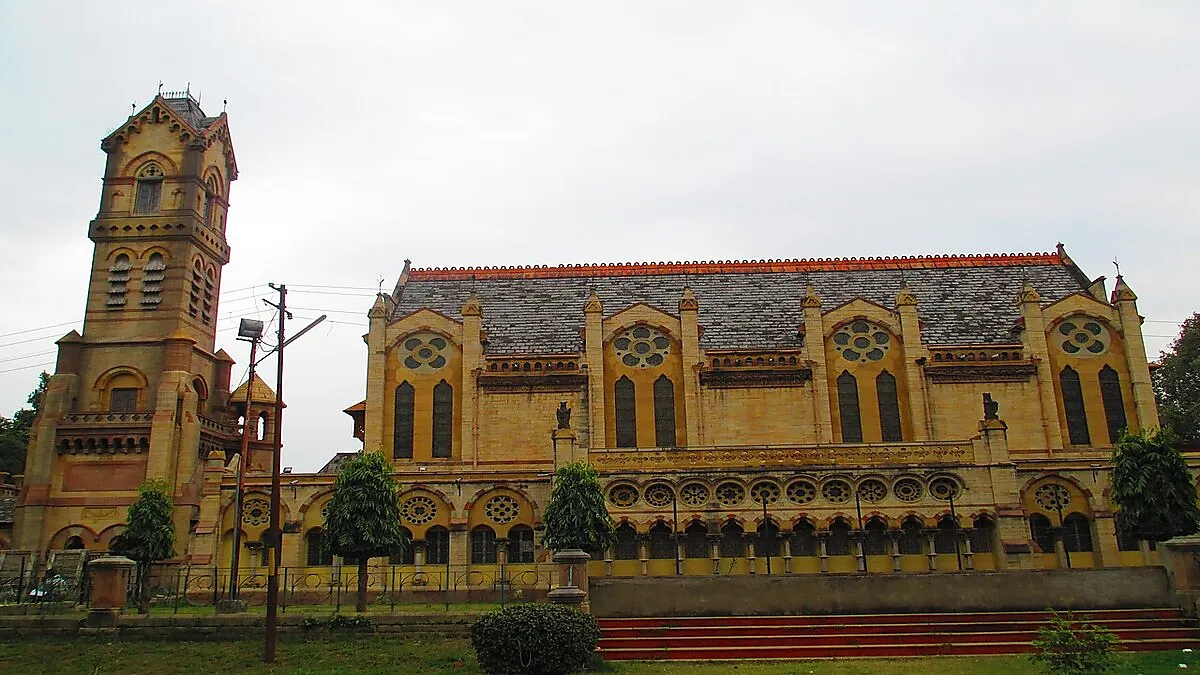
Not a fairy‑tale castle, but a real one, made of creamy sandstone and granite. Turrets rise against the sky. Pointed arches cast geometric shadows on the grass. Arcaded cloisters stretch along its sides, inviting you to walk through them. The building has the air of a Scottish baronial hall, transplanted by magic into the heart of a North Indian city.
This is the Allahabad Public Library – also known as the Thornhill Mayne Memorial. It is one of the most beautiful and historically significant buildings in Prayagraj. And it is not merely a library. It has been a legislative assembly, a memorial to British civil servants, a sanctuary for students and scholars, and a witness to over 150 years of Indian history.
As you push open the heavy wooden doors and step inside, the silence envelops you. The smell of old paper, of leather bindings, of polished wood. Rows of books stretch into the distance, their spines a rainbow of colours and languages. In a corner, a young student is hunched over a textbook. An elderly scholar is carefully turning the pages of a manuscript written in Persian script. The air is thick with concentration, with the quiet pursuit of knowledge.
How can a single building preserve more than 150 years of knowledge, history, and culture? The answer is waiting for you within these walls.
Table of Contents
What Is the Allahabad Public Library?
The Allahabad Government Public Library, popularly known as the Thornhill Mayne Memorial, is the largest public library in the state of Uttar Pradesh and one of the oldest in India.
- Location: Situated within the lush 133‑acre expanse of Chandrashekhar Azad Park (formerly Alfred Park) in Prayagraj. The library is approximately 4 km from Prayagraj Junction railway station.
- Known For: It is famous for its magnificent Scottish Baronial Revival architecture, its vast collection of rare manuscripts and historical documents, and its unique history as a former legislative assembly hall.
- Tourist Appeal: The library is a top attraction for heritage travelers, architecture enthusiasts, students, researchers, and book lovers visiting Prayagraj. It offers a unique blend of history, culture, and quiet study.
- Academic Significance: The library serves as a vital resource for scholars, historians, and students preparing for competitive examinations, providing access to a wide range of books, journals, government publications, and rare manuscripts.
The History of the Allahabad Public Library (1864 – Present)
The story of the Allahabad Public Library spans more than a century and a half, mirroring the transformation of Prayagraj itself.
1864 – The Founding
The library was first established in 1864 by the Government of the North‑Western Provinces (the former name for the region that later became Uttar Pradesh). Its early years were modest, but its ambition was grand: to create a public repository of knowledge that would serve the growing colonial city.
1870–1879 – The Thornhill Mayne Memorial Building
The building now known as the Thornhill Mayne Memorial was completed in 1870 by the British architect Richard Roskell Bayne. The total cost of construction was approximately ₹94,222 (a substantial sum at the time). The building was originally intended as a memorial to Cuthbert Bensley Thornhill, a member of the Bengal Civil Service who had passed away in 1868, but was also closely associated with Francis Otway Mayne, the Commissioner of Allahabad, who funded the project.
After serving for some time as the Legislative Assembly of the United Provinces (see Phase 9), the building was finally converted into a public library in 1879 and the library was shifted to its current premises at Alfred Park (now Chandrashekhar Azad Park).
The 20th Century – Growth and Modernization
Over the decades, the library’s collection grew steadily. It acquired rare manuscripts, old government publications, parliamentary papers, and 19th‑century “blue books” that document the history of the British administration in India. It also became a hub for students and scholars, particularly those preparing for the civil services examinations.
2023–2025 – The Smart City Revamp
Recognizing the library‘s historical and cultural importance, the Prayagraj Smart City Initiative undertook a major renovation and modernization project. Conservation work began in June 2022 through the Indian National Trust for Art and Cultural Heritage (INTACH) and was well underway by 2023. The project includes:
- Physical renovation of the heritage building.
- Digitalization of rare books and manuscripts.
- Introduction of internet facilities and modern online cataloguing.
- Upgradation of membership and caution money systems.
These efforts ensure that the library remains relevant in the digital age while preserving its historic character.
The Thornhill Mayne Memorial – A Name with a Story
The building that houses the Allahabad Public Library is officially known as the Thornhill Mayne Memorial. This name commemorates two British civil servants who served in the region during the 19th century.
| Person | Details |
| Cuthbert Bensley Thornhill | A member of the Bengal Civil Service. He died on 11 July 1868 at sea off Aden [10†L22-L25]. The building was originally opened as a memorial to him. |
| Francis Otway Mayne, C.B. | The Commissioner of Allahabad (the chief administrative officer of the region). He funded much of the construction. He died on 30 August 1872 in Allahabad after the building was completed. |
A brass memorial tablet placed in the porch of the building records their names and the dates of their deaths. The library was erected as “a testament to their enduring friendship and ascription to the values of scholarship”.
Richard Roskell Bayne: The Architect Behind the Masterpiece
The Allahabad Public Library is one of the finest works of Richard Roskell Bayne, a British architect who left a significant mark on the colonial architecture of North India.
- Who Was He? Richard Roskell Bayne was an English architect working for the East Indian Railway. He was active in India between approximately 1866 and 1890.
- Other Works: Bayne was involved in the construction of many iconic buildings, including the Hussainabad Clock Tower in Lucknow, the East India Railway Office, the Oak Grove School in Mussoorie, and the palace of the Maharajah of Darbhanga.
- His Style: Bayne was particularly skilled in the Scottish Baronial Revival style, which he deployed brilliantly in the Allahabad Public Library.
Bayne’s design for the library combined elements of Gothic revival, Indo‑Gothic, and traditional Scottish castle architecture, resulting in a structure that is both imposing and elegant.
Architectural Grandeur: Scottish Baronial Revival in India
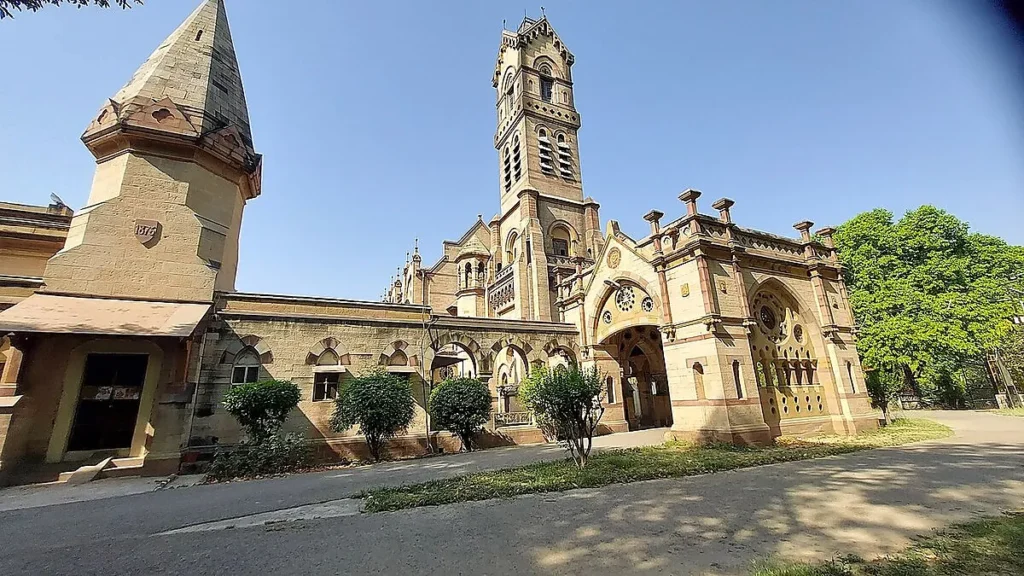
The Allahabad Public Library is often cited by architectural historians as one of the finest examples of the Scottish Baronial Revival style in India. But what does this mean?
Origins of the Scottish Baronial Style
The Scottish Baronial style (also called Scots Baronial) is an architectural style that revived the forms and ornaments of the Late Middle Ages and the Early Modern Period in Scotland. Reminiscent of Scottish castles, buildings in this style are characterized by:
- Elaborate rooflines embellished with conical roofs (turrets).
- Turrets (small towers) , often called bartizans.
- Battlements with machicolations (gaps for dropping objects on attackers).
- Asymmetric plans – the building looks different from every side.
How Bayne Applied It in Prayagraj
At the Allahabad Public Library, Bayne adapted this Scottish castle style to the Indian context, using local materials and craftsmanship. The key features of the building include:
- Sharp Pillars and Turrets of Granite and Sandstone: The building’s most distinctive feature is its array of soaring, pointed turrets, which give it a castle‑like silhouette against the Prayagraj sky.
- Arcaded Cloisters: Long verandahs with a series of arches (arcades) run along the sides of the building. These cloisters create a dramatic play of light and shadow and are ideal for photography.
- Structural Polychromy: The building uses different coloured materials – predominantly cream and grey – to create decorative patterns. This is known as structural polychromy.
- Lofty Towers: The building has several tall towers that dominate the surrounding park landscape.
- Pointed Arches: The windows and doorways feature the pointed arches characteristic of Gothic and Gothic Revival architecture.
When completed in 1870, the building cost around ₹94,222, a huge amount at the time, reflecting its importance as a monumental public structure. Today, the building is in excellent condition and continues to dominate the landscape of Chandrashekhar Azad Park.
A Walk Through the Library – Virtual Tour of the Grand Interiors
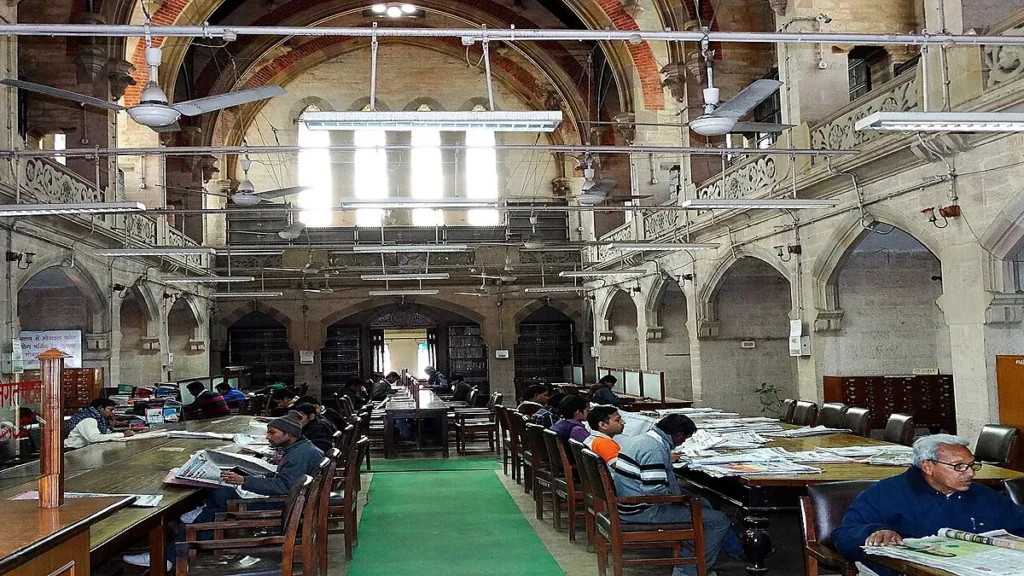
Let us step inside. As you enter the library, you are greeted by:
- The Entrance Hall: A grand, high‑ceilinged hall with polished wooden floors and elegant arches leading to the main reading rooms.
- The Main Reading Room: A vast, silent hall filled with long wooden tables and chairs. The ceilings are high, the walls are lined with bookcases, and the light filters in gently through tall, arched windows. This is the heart of the library.
- The Reference Section: A quieter room where rare books, manuscripts, and reference materials are stored. Access may be restricted.
- The Corridors: Winding corridors connect the different sections of the library. The walls are adorned with old photographs, paintings, and plaques.
- The Stacks: Row after row of metal and wooden bookcases, filled with tens of thousands of volumes. The smell of old paper and leather bindings is unmistakable.
The library has a capacity for 55,100 readers and had over 1,271 registered members in 2013–14. Visiting during a weekday morning, when the library is quietest, is the best way to experience its contemplative atmosphere.
A Treasure Trove of Knowledge: Rare Collections & Manuscripts
The Allahabad Public Library is not just an architectural gem; it is also a treasure house of knowledge and one of the largest libraries in Uttar Pradesh. As of 2024, the library’s collection includes:
- Approximately 125,000 books
- 40 types of magazines
- 28 different newspapers in Hindi, English, Urdu, and Bangla
- 21 Arabic manuscripts
Prized Manuscripts
Among its most valued items are:
- Shahnama in Persian: The famous epic poem by the Persian poet Firdausi.
- Upanishads translated by Dara Shikoh: A rare Persian translation of the Hindu Upanishads by the Mughal prince Dara Shikoh, son of Emperor Shah Jahan. This is a prized possession of the library.
- Raghuvansh Tika: A Sanskrit work by the great poet Kalidasa.
- Majma‑ul‑Bahrain: A collection of Arabic manuscripts.
Old Government Publications
The library holds an invaluable collection of government records, including:
- Parliamentary papers and blue books of the 19th century.
- Gazette of India from 1900 to 1953.
- North‑Western Provinces Gazette from 1860 to 1902.
- United Provinces Gazette from 1903 to 1951.
- Uttar Pradesh Gazette from 1951 to 2000.
Newspapers
The library also has an extensive collection of historical newspapers, including:
- The Times of India from April 1965 onwards.
- The Pioneer from its inception in 1868.
- The Hindustan Times from January 1966 onwards.
When the Library Was a Parliament – The Legislative Assembly Years
One of the most fascinating facts about this building is its dual function: before becoming a library, it served as the Legislative Assembly of the United Provinces when Allahabad was the capital.
From 1879 to the early 20th century, while Allahabad served as the capital of the United Provinces (the colonial precursor to present‑day Uttar Pradesh), the elegant, high‑ceilinged hall that now houses books was filled instead with legislators. Within these walls, the laws that governed millions were debated. Fiery speeches were made, alliances were forged, and the political future of the region was shaped.
The building was originally built to house the legislative assembly, reflecting the city’s status as a political hub. After the assembly moved to a new location, the library was shifted to this building in 1879, repurposing a symbol of colonial governance into a centre of public learning. Standing in the main reading room today, you can still feel the echo of those past debates.
The Library and Prayagraj’s Intellectual Heritage
The Allahabad Public Library has played a central role in shaping the intellectual life of Prayagraj.
- Illustrious Patrons: Many of India’s most prominent leaders were members of the library, including Motilal Nehru, Jawaharlal Nehru, Madan Mohan Malaviya, C.Y. Chintamani, and G.B. Pant.
- Hub for Students: For generations, students preparing for the civil services examinations and other competitive tests have used the library as their primary study space.
- Centre for Scholars: The library’s rare manuscripts and historical documents attract researchers and historians from across the country.
The library continues to be a vital institution in Prayagraj, embodying the city‘s deep‑rooted culture of learning, literature, and public service. It is one of the oldest public libraries in India and remains a testament to the enduring value of knowledge.
Visitor Guide – Timings, Entry, Membership & More
Planning a visit to the Allahabad Public Library? Here is everything you need to know.
| Detail | Information |
| Location | Chandrashekhar Azad Park, Prayagraj, Uttar Pradesh 211002 |
| Best Time to Visit | Winter (October–March) for the most pleasant weather. Weekdays are quieter than weekends. |
| Recommended Duration | 1–2 hours |
| Park Entry | There is usually a small entry fee for Chandrashekhar Azad Park (₹5–₹10). |
| Library Entry | Free entry for visitors to browse and explore. |
| Photography | Still photography is generally allowed. Tripods and flash may be restricted. |
| Membership Fee | Annual membership fee is approximately ₹50. Fees may be revised. |
| Caution Money | Refundable caution money ranging from ₹500–₹2,000, depending on the value of books borrowed. |
| Languages | Collection includes books in Hindi, English, Sanskrit, Urdu, Arabic, Persian, Bangla, and French. |
| Accessibility | The building is not fully wheelchair‑accessible due to its historic nature, though some areas can be accessed. |
| Phone | +91 532 246 0197 |
How to Reach the Allahabad Public Library
The library is located in Chandrashekhar Azad Park in the Civil Lines area of Prayagraj, making it easily accessible from anywhere in the city.
- By Air: The nearest airport is Prayagraj Airport (Bamrauli Airport) , approximately 12 km away.
- By Train: The library is about 4 km from Prayagraj Junction (Allahabad Junction), and almost equidistant from Prayag and Rambagh Railway Stations.
- By Road: The Civil Lines Bus Stand is about 2.5 km from the park.
- Local Transport: Auto‑rickshaws and e‑rickshaws are the most convenient mode of transport. Taxis and cycle‑rickshaws are also available.
- Walking: The library is a pleasant 15‑minute walk from Anand Bhavan and other heritage sites in the Civil Lines area.
Nearby Attractions – A Heritage Circuit in Chandrashekhar Azad Park
One of the great advantages of visiting the Allahabad Public Library is its location. The library is inside Chandrashekhar Azad Park, which itself contains several other attractions.
In the Same Park Complex:
- Chandrashekhar Azad Park (Alfred Park): This 133‑acre park was built in 1870 to commemorate the visit of Prince Alfred of Saxe‑Coburg and Gotha. It is famous as the site where the revolutionary Chandrashekhar Azad fought his last battle and died on 27 February 1931.
- Azad Memorial: A statue and memorial plaque mark the exact spot where Azad fell.
- Victoria Memorial Canopy: A large Italian limestone canopy built in 1906, once containing a statue of Queen Victoria.
- Allahabad Museum: Located within the park, this national‑level museum houses the Colt pistol used by Chandrashekhar Azad as well as an excellent collection of Gupta sculptures, terracotta art, and ancient coins.
Nearby Attractions (within 1–2 km):
- Anand Bhavan: The ancestral home of the Nehru family, now a museum dedicated to India‘s freedom movement.
- Swaraj Bhavan: The original Nehru family home, donated to the Indian National Congress.
- All Saints Cathedral (Patthar Girja): A stunning Gothic Revival cathedral in the Civil Lines area.
To make the most of your visit, consider this itinerary:
- Morning (9:00 AM): Start at the Allahabad Public Library (1 hour).
- Late Morning (10:00 AM): Visit the Allahabad Museum (2 hours).
- Early Afternoon (12:30 PM): Walk through Chandrashekhar Azad Park and see the Azad Memorial and Victoria Memorial (30 minutes).
- Lunch: Have lunch at a restaurant in the Civil Lines area.
- Afternoon (2:00 PM): Visit Anand Bhavan and Swaraj Bhavan (2 hours).
Photography and Architectural Highlights
The Allahabad Public Library is a photographer‘s delight. Here are some of the best spots to capture:
| Feature | Best Time | Tips |
| Exterior (full building) | Early morning or late afternoon (golden hour) | Stand across the lawn to capture the entire building with its turrets. |
| Turret close‑up | Midday | The sunlight on the stone brings out the texture of the sandstone. |
| Arcaded cloisters | Afternoon | The arches create dramatic shadows. |
| Main Reading Room | Morning | Natural light streams in through the windows; be respectful of readers. |
| Entrance Porch | Anytime | Look for the brass memorial tablet. |
| In the garden | Golden hour | The library framed by the greenery of the park is a classic shot. |
Important: While still photography is allowed, always be discreet and respectful of those studying. Do not use flash inside the reading rooms. Tripods and professional equipment may require prior permission from the librarian.
Frequently Asked Questions (FAQs)
1. What is the Allahabad Public Library famous for?
The library is famous for its magnificent Scottish Baronial Revival architecture (the Thornhill Mayne Memorial building), its vast collection of rare manuscripts (including the Upanishads translated by Dara Shikoh), and its unique history as a former legislative assembly hall.
2. Who built the Allahabad Public Library?
The building was designed by the British architect Richard Roskell Bayne. It was funded largely by Francis Otway Mayne, the Commissioner of Allahabad, and opened as a memorial to Cuthbert Bensley Thornhill.
3. What is the Thornhill Mayne Memorial?
The Thornhill Mayne Memorial is the name of the historic building that houses the Allahabad Public Library. It is named after two British civil servants: Cuthbert Bensley Thornhill and Francis Otway Mayne.
4. Why is the library’s architecture special?
The building is considered one of the finest examples of the Scottish Baronial Revival style in India. It features sharp pillars and turrets of granite and sandstone, arcaded cloisters, lofty towers, and structural polychromy.
5. What rare manuscripts does the library have?
Among the library’s prized possessions are the Shahnama in Persian by Firdausi, the Upanishads translated by Dara Shikoh, and the Raghuvansh Tika in Sanskrit. It also holds 21 Arabic manuscripts.
6. Did the library building ever serve as a parliament?
Yes. When Allahabad was the capital of the United Provinces during the British Raj, the building served as the Legislative Assembly hall.
7. How many books are in the Allahabad Public Library?
The library has an approximate collection of 125,000 books, 40 magazines, and 28 newspapers in Hindi, English, Urdu, and Bangla.
8. How much does it cost to enter the library?
Library entry is free. However, there is a small entry fee for Chandrashekhar Azad Park (₹5–₹10). Membership fees for borrowing books are separate.
9. What are the library timings?
The library is generally open from 9:00 AM to 5:00 PM daily, though timings may vary. The park is open from 5:00 AM to 8:00 PM.
10. How do I get a membership card for the library?
You can become a member by paying an annual fee of approximately ₹50 and a refundable caution money deposit (₹500–₹2,000). Contact the librarian for the latest fees and procedures.
11. Is the library wheelchair accessible?
The building is not fully wheelchair‑accessible due to its historic nature. The main entrance has steps, though some areas may be accessible with assistance.
12. Can I take photographs inside the library?
Still photography is generally allowed in public areas. However, you must not use flash, especially inside the reading rooms where people are studying. Tripods and professional shoots require permission.
13. What is the best time to visit the Allahabad Public Library?
The best time is during the winter months (October to March) when the weather is pleasant for walking through the park. Weekday mornings are the quietest.
14. Who were some famous members of the library?
Famous members included Motilal Nehru, Jawaharlal Nehru, Madan Mohan Malaviya, C.Y. Chintamani, and G.B. Pant.
15. How does the library modernize in the digital age?
Under the Prayagraj Smart City Initiative, the library is undergoing a mega revamp, including digitalization of rare manuscripts, introduction of internet facilities, and online cataloguing.
16. What languages are represented in the library collection?
Books and manuscripts are available in Hindi, English, Sanskrit, Urdu, Arabic, Persian, Bangla, and French.
17. Is there a dedicated reference section?
Yes. The library has a dedicated reference section that houses rare manuscripts, historical documents, and valuable reference materials for scholars and researchers.
18. What is the history of Chandrashekhar Azad Park?
The 133‑acre park was built in 1870 to commemorate the visit of Prince Alfred. In 1931, revolutionary Chandrashekhar Azad died here in a gunfight with British police, and the park was later renamed in his honour.
19. Can I borrow books from the library?
Yes, registered members can borrow books. The borrowing policy involves a refundable caution money deposit (₹500–₹2,000) depending on the value of books taken home.
20. Is the library near the Triveni Sangam?
The library is approximately 5‑6 km from the Triveni Sangam. You can easily combine a visit to the library with a visit to the Sangam, Anand Bhavan, and Allahabad Fort in a single day trip.
Why This Library Remains a Must-Visit in Prayagraj
As you leave the cool, quiet halls of the library and step back into the sunlight of Chandrashekhar Azad Park, you feel changed. You have walked through a building that has served as a memorial, a parliament, and a sanctuary for knowledge. You have seen, with your own eyes, a 400‑year‑old manuscript of the Upanishads translated by a Mughal prince. You have sat in a reading room where Motilal and Jawaharlal Nehru once studied.
The Allahabad Public Library is more than a building. It is a living monument to learning, culture, architecture, and the intellectual spirit of Prayagraj. In an age of screens and scrolling, this 150‑year‑old library reminds us of the enduring value of the physical book, the quiet discipline of study, and the beauty of a space built not for commerce or worship, but for the pursuit of knowledge.
It is a must‑visit for anyone who loves history, architecture, or the simple pleasure of losing oneself in a good book.
This article is part of a series on the heritage destinations of Prayagraj.
Prayag Tourism
📞 Phone/WhatsApp: +91-9555313526
📧 Email: contact@prayagtourism.com
🌐 Website: PrayagTourism.com
May your journey be peaceful, safe, and intellectually enriching – and may the doors of knowledge always open for you.