
Prayag Tourism · Temple
Temples of Varanasi
Varanasi's temples form a network of different deities, neighbourhoods and devotional practices. Kashi Vishwanath is a major focus, but smaller shrines reveal the diversity of the city's sacred life.
1. Introduction: A City Where Every Lane Houses a Sanctum
A popular Banarasi proverb states, “Kashi ke kankar shankar saman”—”Every pebble of Kashi is Lord Shiva himself.” Walking through the historic quarters of Varanasi, a visitor quickly discovers that this saying is an architectural reality (Temples Of Importance | District Varanasi). Beyond the gilded domes of world-famous shrines stand thousands of wayside lingams nestled beneath sacred peepal and banyan trees, subterranean goddess sanctuaries, courtyard shrines inside 18th-century Maratha and Bengali mansions, and modern marble temples set amid university lawns (1760321416169VettedStoriesofKashi-SarnathPoIs.pdf).
Because the sheer density of shrines can overwhelm even seasoned pilgrims, this master directory organises the temples of Varanasi into geographical clusters and traditional liturgical circuits. Rather than repeating the full history of each monument—which is covered in depth on our dedicated individual temple pages (VAR-008 to VAR-018)—this guide explains how Kashi’s temples relate to one another theologically, spatially, and practically so you can plan a smooth, respectful darshan schedule.
2. The Sacred Geometry of Kashi’s Temples: Jyotirlinga, Shaktipeeths, Bhairavas and Vinayakas
Unlike modern cities where temples are built randomly as neighbourhoods expand, the temples of classical Kashi form a structured cosmic diagram (mandala) described in the Kashi Khanda of the Skanda Purana (1760321416169VettedStoriesofKashi-SarnathPoIs.pdf):
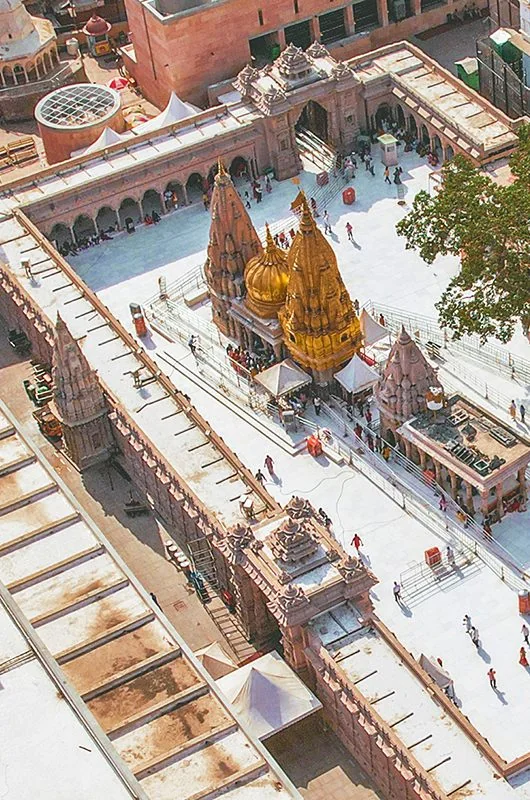
- The Central Axis (Shiva as Vishweshwara / Vishwanath): At the centre of the mandala stands Shri Kashi Vishwanath Temple (VAR-008), housing one of the twelve Jyotirlingas of India and complemented by the 18 mahalingams (led by Krittivaseshwar, Omkareshwar, Kedareshwar, Trilochaneshwar, Tilbhandeshwar, and Mrityunjay Mahadev).
- The Divine Feminine (Shaktipeeth & Nava Durga / Nava Gauri): Balancing Shiva’s ascetic transcendence is the nurturing and protective power of Shakti. Kashi is home to the Vishalakshi Temple (VAR-018) at Meer Ghat—revered as one of the 51 Shaktipeeths where Goddess Sati’s eye or ear-ring fell—alongside Annapurna Devi Temple (VAR-009), the Goddess of Food and Abundance; Durga Kund Temple (VAR-012); Sankatha Devi Temple (VAR-017); and the nine forms of Nava Durga and Nava Gauri visited during autumn and spring Navratri.
- The Protective Guardians (Ashta Bhairava & 56 Vinayakas): Entry into Kashi’s spiritual realm is regulated by eight directional manifestations of Bhairava—headed by Kal Bhairav Temple (VAR-010), the Kotwal (Chief Magistrate) of Kashi—and 56 manifestations of Lord Ganesha (Chhappan Vinayak), anchored by Dhundiraj Vinayak (who removes inner confusion before Vishwanath darshan), Dehli Vinayak (at the outer threshold), and Sakshi Vinayak (who bears witness that a pilgrim has completed their Kashi Yatra) (Kashi Yatra by Anu Shankar.pdf).
- Vaishnava, Solar & Multi-Faith Sanctuaries: Completing the mandala are the five Pancha Madhava shrines of Lord Vishnu (led by Bindu Madhav at Panchganga Ghat and Adi Keshav at the Varuna confluence), the twelve solar Dwadasha Adityas (such as Lolark Aditya near Tulsi Ghat), Sankat Mochan Hanuman Temple (VAR-011), and historic Jain, Buddhist, and Sikh temples (VAR-018).
3. Geographical Cluster 1: The Vishwanath Khanda & Central Old City Core
For practical sightseeing, the central cluster around Godowlia, Vishwanath Gali, Manikarnika, and Chowk should be explored on foot or via boat drop-off at Lalita Ghat during the early morning hours:
- Shri Kashi Vishwanath Temple (VAR-008): The crowning Jyotirlinga shrine and the expansive Shri Kashi Vishwanath Dham Corridor linking the sanctum to the Ganga.
- Annapurna Devi Temple (VAR-009): Located steps from Vishwanath inside Vishwanath Gali, famous for its 1729 CE Maratha shrine and free annakshetra prasad.
- Dhundiraj Vinayak & Sakshi Vinayak (VAR-018): Essential Ganesha shrines situated along the immediate approach to Vishwanath Gate No. 1 (Kashi Yatra by Anu Shankar.pdf).
- Vishalakshi Devi Shaktipeeth (VAR-018): Situated at Meer Ghat near Manikarnika, featuring a distinctive South Indian gopuram renovated in 1971 CE and the adjacent Dharmakupa (1760321416169VettedStoriesofKashi-SarnathPoIs.pdf).
- Sankatha Devi Temple (VAR-017): Above Sankatha/Scindia Ghat in Chowk, housing a 1.5-metre self-manifested idol revered on Fridays for removing life’s obstacles.
- Nepali Temple / Kathwala Mandir (VAR-016): Overlooking Lalita Ghat, built in 1841–1843 CE by the royal family of Nepal in Kathmandu pagoda style using terracotta and Nepalese wood.
4. Geographical Cluster 2: Northern Heritage Zone (Kotwali, Maidagin, Daranagar & Panchganga)
Located 1 to 2.5 km north of Godowlia, this historic zone is best visited by cycle-rickshaw or morning walk:
- Kal Bhairav Temple (VAR-010): Near the Head Post Office at Visheshwarganj/Bhairavnath; the mandatory shrine of the Kotwal of Kashi (Temples Of Importance | District Varanasi).
- Mrityunjay Mahadev Temple (VAR-018): On the route from Daranagar to Kal Bhairav, housing an ancient Shivalinga and the sacred Dhanvantari Kupa (well of medicinal underground streams).
- Bindu Madhav Temple (VAR-018) & Panchganga Ghat (VAR-024): The primary Vishnu sanctuary of Kashi overlooking the five-river confluence.
- Bara Ganesh (Lohatia) & Trilochan Mahadev (VAR-018): Important Ganesha and Gahadavala-era Shiva shrines in the northern quarters.
5. Geographical Cluster 3: Southern Circuit (Bhelupur, Durgakund, Assi, Lanka & BHU)
Wide roads allow private cars, taxis, and auto-rickshaws to connect all temples in this southern belt effortlessly in a single morning or afternoon loop:
- Sankat Mochan Hanuman Temple (VAR-011): Founded by Goswami Tulsidas near the Assi stream; a serene, tree-shaded complex famous for evening Hanuman Chalisa chanting.
- Durga Kund Temple (VAR-012): An 18th-century red-ochre Nagara-style temple built by Rani Bhavani of Natore beside the stepped Durga Kund tank (Temples Of Importance | District Varanasi).
- Tulsi Manas Temple (VAR-013): Built in 1964 CE near Durgakund in white marble, with the entire Ramcharitmanas inscribed on its inner walls.
- New Vishwanath Temple / Birla Mandir, BHU (VAR-014): Inside the verdant Banaras Hindu University campus, featuring a 250-foot shikhara open to visitors of all faiths (Sri Vishwanath Temple | BHU).
- Gauri Kedareshwar Temple (VAR-018) & Kedar Ghat (VAR-025): The revered riverside Shiva shrine of southern Kashi (Kedar Khanda), along with Tilbhandeshwar, Batuk Bhairav, Baba Keenaram Ashram, and Bhelupur Parshvanath Jain Temple.
6. Geographical Cluster 4: Central-West & Outer Ring Shrines
- Bharat Mata Temple (VAR-015): Located on the Mahatma Gandhi Kashi Vidyapith campus in Sigra (near Cantonment station), inaugurated by Mahatma Gandhi in 1936 CE and housing a giant marble relief map of undivided India (Temples Of Importance | District Varanasi).
- Kardameshwar Mahadev (Kandwa), Markandey Mahadev (Kaithi) & Guru Ravidas Janam Asthan (Seer Govardhanpur) (VAR-018): Outer-ring pilgrimage landmarks accessible by road cab.
C. Practical Visitor Information: Master Comparison of Top Varanasi Temples
Temple Name
Deity / Significance
Visiting Hours
Location & Zone
Kashi Vishwanath (VAR-008)
Lord Shiva (Jyotirlinga)
2:45 AM – 11:00 PM (General Darshan from 4:00 AM) (Shri Kashi Vishwanath Official Web Portal)
Vishwanath Gali / Lalita Ghat (Central)
Annapurna Devi (VAR-009)
Goddess Annapurna (Nourishment)
~4:00 AM – 11:30 AM & 1:30 PM – 10:00 PM
Adjacent to Kashi Vishwanath (Central)
Kal Bhairav (VAR-010)
Lord Kal Bhairav (Kotwal of Kashi)
~5:00 AM – 1:30 PM & 4:30 PM – 9:30 PM
Visheshwarganj / Kotwali (North-Central)
Sankat Mochan (VAR-011)
Lord Hanuman (Founded by Tulsidas)
~4:30 AM – 12:00 PM & 3:00 PM – 10:00 PM
Saket Nagar / Assi-Lanka Road (South)
Durga Kund (VAR-012)
Goddess Durga (Swayambhu / Nagara style)
~5:00 AM – 12:00 PM & 4:00 PM – 9:00 PM
Durgakund, Chetganj/Bhelupur (South)
Tulsi Manas (VAR-013)
Lord Rama (Ramcharitmanas Marble Walls)
~5:30 AM – 12:00 PM & 3:30 PM – 9:00 PM
Sankat Mochan Road, Durgakund (South)
New Vishwanath BHU (VAR-014)
Lord Shiva (Birla Mandir, 250-ft Spire)
5:00 AM – 12:00 PM & 1:00 PM – 7:30 PM (BHU Portal)
BHU Campus, Lanka (South)
Bharat Mata (VAR-015)
Undivided Mother India (Marble Relief Map)
~8:00 AM – 7:00 PM
MG Kashi Vidyapith, Sigra (West)
Nepali Temple (VAR-016)
Lord Pashupatinath Shiva (Kathmandu Style)
Early Morning to Evening
Lalita Ghat (Central Riverfront)
Sankatha Devi (VAR-017)
Goddess Sankatha (Remedy of Troubles)
~5:00 AM – 12:00 PM & 3:00 PM – 9:00 PM (Peak Fridays)
Sankatha Gali, Above Scindia Ghat
D. Frequently Asked Questions (FAQs)
- How can I group Varanasi’s temples to avoid backtracking in traffic?Divide your temple visits into two distinct loops: (1) an early morning pedestrian/boat loop covering Kashi Vishwanath, Annapurna, Vishalakshi, Sankatha Devi, Nepali Temple, and Kal Bhairav in the Old City; and (2) a late-morning or afternoon cab loop in South Varanasi covering Sankat Mochan, Durga Kund, Tulsi Manas Mandir, and New Vishwanath Temple inside BHU (VAR-079).
- Which temples in Varanasi have strict bans on mobile phones and cameras?Shri Kashi Vishwanath Temple (inner sanctum) and Sankat Mochan Hanuman Temple enforce strict security screening and prohibit mobile phones, cameras, smartwatches, and large bags inside. Both temples provide free cloakrooms/lockers at their entrances, or you can leave devices in your private cab (VAR-008, VAR-011).
- Why do many Varanasi temples close between 12:00 Noon and 3:00 or 4:00 PM?Following traditional Agamic and Vaishnava/Shakta liturgical schedules, most temples in Varanasi (including Sankat Mochan, Durga Kund, Tulsi Manas, New Vishwanath BHU, and Kal Bhairav) close their inner sanctum doors for 1 to 3 hours in the afternoon after midday Rajbhog Aarti so the deity may rest (vishram). Only Kashi Vishwanath keeps continuous general darshan open between afternoon Bhog Aarti (11:15 AM–12:20 PM) and evening Sapta Rishi Aarti (7:00 PM) (Daily Schedule | Kashi Vishwanath).
- Is there any entry ticket required to visit temples in Varanasi?General entry (darshan) to all Hindu, Jain, Buddhist, and Sikh temples in Varanasi is completely free. Optional paid tickets exist only at Shri Kashi Vishwanath Temple for special Sugam Darshan (₹300), seated Aartis (₹300–₹500), or Rudrabhishek pujas booked through the official temple trust (Daily Schedule | Kashi Vishwanath).
- Which temple should be visited first according to Kashi tradition?In traditional Kashi pilgrimage custom, devotees first visit Kal Bhairav Temple (the Kotwal of Kashi) to seek permission to reside and worship in the city, and bow to Dhundiraj Ganesh before entering Kashi Vishwanath (1760321416169VettedStoriesofKashi-SarnathPoIs.pdf).
- What is the dress code for visiting temples in Varanasi?All visitors should wear modest attire covering shoulders and knees (kurtas, trousers, sarees, or salwar suits). For special inner-sanctum abhishekam or sparsh darshan at Kashi Vishwanath, traditional Indian attire (dhoti-kurta for men; saree or salwar suit for women) is often stipulated by the temple administration.
Choose your next chapter
Explore this part of Varanasi
Kashi Vishwanath Temple
Kashi Vishwanath is a major Shiva pilgrimage destination in the old city and is revered among the Jyotirlinga shrines. Its importance comes from continuing devotion as well as the temple precinct itself.
Explore guide →Annapurna Devi Temple
Annapurna Devi is revered as a goddess of nourishment, linking the practical act of feeding people with religious life in Kashi. The shrine belongs to the old-city devotional landscape near Vishwanath.
Explore guide →Kal Bhairav Temple
Kal Bhairav is widely revered as Kashi's guardian, often described in local tradition as the city's kotwal. The shrine helps visitors understand a protective aspect of Shiva worship beyond the riverfront's best-known landmarks.
Explore guide →Sankat Mochan Hanuman Temple
Sankat Mochan is a Hanuman temple associated with the devotional world of Tulsidas. Its name expresses the devotee's hope for relief from difficulties, and worship remains the central reason many people come.
Explore guide →Durga Kund Temple
Durga Kund brings together a Goddess temple and its associated tank in southern Varanasi. It is a useful stop for understanding Shakta worship alongside the city's better-known Shiva traditions.
Explore guide →Tulsi Manas Temple
Tulsi Manas Temple gives the visitor a particularly clear connection between sacred literature and built space. Its marble surfaces and inscriptions honour the Ramcharitmanas tradition associated with Tulsidas.
Explore guide →New Vishwanath Temple, BHU
The New Vishwanath Temple stands within Banaras Hindu University and offers a different setting from Kashi Vishwanath in the old city. The university context is essential to understanding this visit.
Explore guide →Bharat Mata Temple
Bharat Mata Temple is unusual because its central object is a relief map rather than the customary image of a deity. It invites reflection on geography, nationhood and the public culture of its period.
Explore guide →Nepali Temple of Varanasi
The Nepali Temple near Lalita Ghat introduces a distinct architectural language to the riverfront. Its association with Nepal and worship of Shiva make it a useful place to consider connections across the Himalayan region.
Explore guide →Sankatha Devi Temple
Sankatha Devi is a neighbourhood Goddess shrine associated with the removal of distress. It offers a more local view of devotion than a route limited to the largest temple precincts.
Explore guide →Other Important Temples and Shrines of Varanasi
Kashi's sacred landscape extends far beyond a short list of headline temples. Smaller shrines often connect to a particular community, pilgrimage route or form of worship and deserve context rather than a hurried checklist.
Explore guide →No matching guides. Try a broader search.
Choose your next chapter
Continue your journey
Ghats of Varanasi
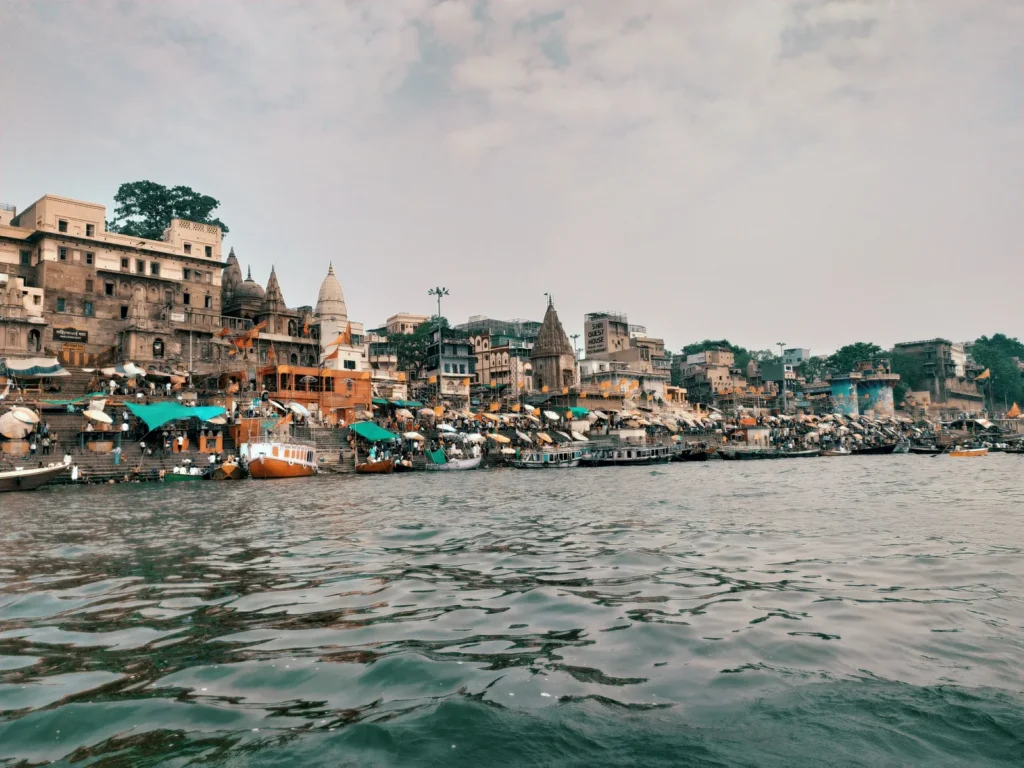
The ghats are the city's meeting place with the Ganga: stepped river edges used for worship, movement, gathering and everyday work. They are connected, but each has a name and history worth learning.
Explore guide →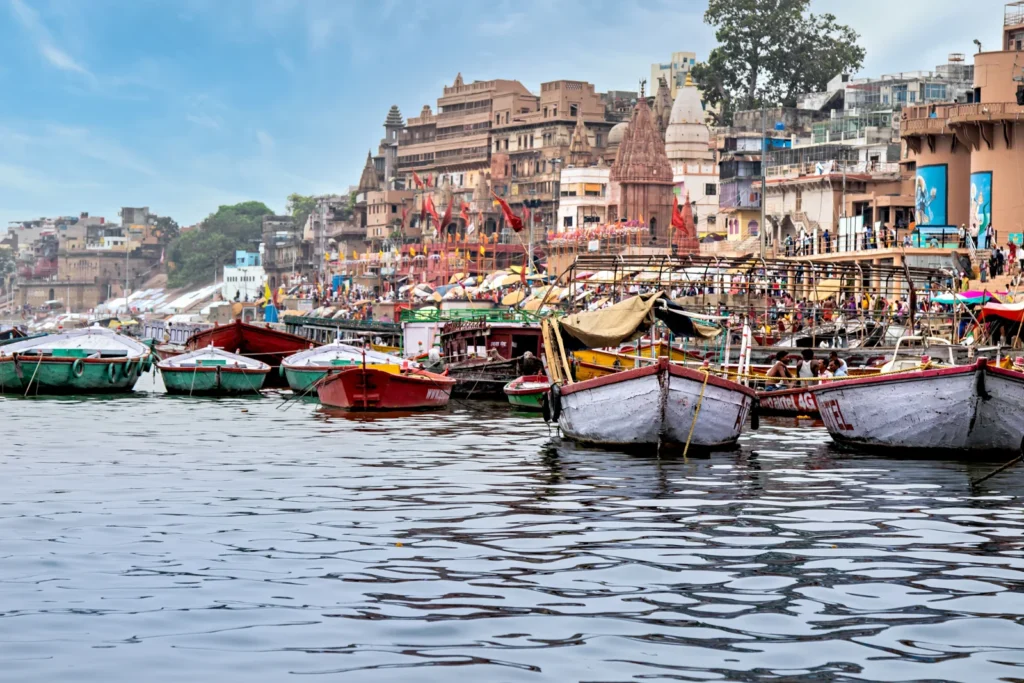
Things to Do in Varanasi
Things to do in Varanasi range from quiet observation to structured visits. The best selection depends on whether your interest is pilgrimage, history, culture, food or time beside the river.
Explore guide →No matching guides. Try a broader search.
Explore the Hinduism knowledge portal
A journey shaped around you
Plan your time in Kashi
Tell us your dates, interests and travel needs. Request a tailored proposal with clear inclusions before confirming any service.
Enquiry only · Availability and prices require confirmation · No payment is taken here