
Prayag Tourism · Temple
Other Important Temples and Shrines of Varanasi
Kashi's sacred landscape extends far beyond a short list of headline temples. Smaller shrines often connect to a particular community, pilgrimage route or form of worship and deserve context rather than a hurried checklist.
1. Introduction: Discovering the Ancient Pillars of Kashi's Sacred Mandala
While first-time visitors to Varanasi naturally focus on the ten famous temples covered in VAR-008 through VAR-017, seasoned pilgrims and cultural researchers know that the deepest spiritual and historical layers of Kashi often reside in quieter courtyard shrines tucked behind old riverfront ghats or along the outer pilgrimage rings (1760321416169VettedStoriesofKashi-SarnathPoIs.pdf). Here stand one of India’s 51 Shaktipeeths, the oldest surviving 12th-century stone temple in the district, a riverfront Shiva shrine that leans at a steeper angle than the Tower of Pisa, the primal Vishnu sanctuaries of the Pancha Madhava circuit, and the birthplaces of four Jain Tirthankaras and Bhakti saint Guru Ravidas (Tourist Places | District Varanasi).
This comprehensive guide documents the most important sacred shrines of Varanasi beyond the main ten, organised by theological group and location so you can seamlessly incorporate them into your pilgrimage or heritage walk.
2. Ancient Shiva & Jyotirlinga-Tradition Shrines
- Mrityunjay Mahadev Temple (Daranagar / Maidagin): Situated on the ancient route between Daranagar and Kal Bhairav Temple, this revered shrine is dedicated to Lord Shiva as Mahamrityunjaya (“The Great Conqueror of Death”) (Temples Of Importance | District Varanasi). Inside the complex, priests chant the Vedic Mahamrityunjaya Mantra for devotees seeking recovery from severe illness and longevity. Immediately beside the sanctum lies the famous Koop (Sacred Well)—associated with Dhanvantari, the divine physician of Ayurveda—whose water is fed by several underground streams and is prized for its natural mineral and healing properties (Temples Of Importance | District Varanasi).
- Gauri Kedareshwar Temple (Kedar Ghat): Perched atop the steep stone staircase of Kedar Ghat (VAR-025) in southern Varanasi, Kedareshwar is the presiding deity of the Kedar Khanda (the southern sacred sector of Kashi) (1760321416169VettedStoriesofKashi-SarnathPoIs.pdf, Entries 18, 19 & 63). Enshrining a unique self-manifested (Swayambhu) Shivalinga split naturally into two halves representing Shiva and Gauri (shaped like a mound of khichdi), the temple follows South Indian Dravidian liturgical traditions and is considered equivalent in spiritual merit to trekking to Kedarnath in the Himalayas (Kashi Yatra by Anu Shankar.pdf, p. 14).
- Kardameshwar Mahadev Temple (Kandwa): Located on the southern edge of the city at Kandwa village alongside the 18th-century Kardama Kund built by Rani Bhavani of Natore, this 12th-century Gahadavala stone temple is the oldest surviving intact Hindu temple structure in Varanasi and serves as the First Night Halt (Padav) of the 88-kilometre Panchkroshi Yatra (1760321416169VettedStoriesofKashi-SarnathPoIs.pdf, Entry 20; VAR-044).
- Tilbhandeshwar Mahadev Temple (Bengali Tola, Bhelupur): Associated with the ancient sage Vibhandak, this temple houses one of the largest Swayambhu Shivalingas in Kashi—believed in local lore to grow incrementally by the size of a sesame seed (til) each year—and is famous for its vibrant Maha Shivaratri baraat procession and a rare subsidiary shrine to Lord Ayyappa (1760321416169VettedStoriesofKashi-SarnathPoIs.pdf, Entry 12).
- Trilochan Mahadev & Krittivaseshwar Mahadev: Trilochan Mahadev (near Machhodari/Trilochan Ghat) represents the “Third Eye” of Lord Shiva and dates back to Gahadavala records alongside the Padodaka Kupa, while Krittivaseshwar symbolises all 18 branches of Vedic knowledge (1760321416169VettedStoriesofKashi-SarnathPoIs.pdf, Entries 13 & 17).
- Ratneshwar Mahadev Temple – “Kashi Karvat” (Scindia / Manikarnika Ghat): Standing right at the water’s edge between Manikarnika and Scindia Ghats, this mid-19th-century Nagara sandstone temple tilts dramatically by nearly 9 degrees (more than double the 4-degree tilt of the Leaning Tower of Pisa) due to alluvial foundation subsidence and seasonal monsoon submergence (1760321416169VettedStoriesofKashi-SarnathPoIs.pdf, Entry 31). (Note: Also near Kashi Vishwanath Gate No. 3/4 is the historic Atmavireshwar / Kashi Karvat subterranean shrine.)
- Markandey Mahadev Temple (Kaithi – Ganga-Gomti Sangam): Located approximately 28–30 km northeast of Varanasi at the scenic confluence of the Ganga and Gomti rivers, this ancient shrine marks the Puranic spot where Lord Shiva protected the 16-year-old boy-sage Markandeya from Yama, the God of Death (1760321416169VettedStoriesofKashi-SarnathPoIs.pdf, Entry 23).
3. Shaktipeeths, Devi Shrines, Vinayakas and Bhairavas
- Mata Vishalakshi Devi Temple (Meer Ghat – 51 Shaktipeeth): Located just 250 metres from Kashi Vishwanath behind Meer Ghat, Kashi Vishalakshi (“The Wide-Eyed Goddess”) is revered as one of the 51 Maha Shaktipeeths where the eyes or jewelled ear-ring (manikarnika) of Goddess Sati fell (1760321416169VettedStoriesofKashi-SarnathPoIs.pdf, Entry 10). Renovated in 1971 CE by South Indian Nattukottai Nagarathar patrons with a vibrant Dravidian gopuram, it forms the pan-Indian triad of Kanchi Kamakshi, Madurai Meenakshi, and Kashi Vishalakshi. Inside the garbhagriha stand two idols—the ancient Adi Vishalakshi and a later black-stone murti, alongside a Sri Yantra associated with Adi Shankaracharya (Kashi Yatra by Anu Shankar.pdf, p. 10). Right outside lies the Dharmakupa (“Well of Dharma”) and Dharmeshwara.
- Varahi Devi Temple (Manmandir / Tripura Bhairavi Ghat): One of the most mysterious shrines in Kashi, dedicated to the boar-faced Sapta Matrika goddess Panchami Varahi (Kashi Yatra by Anu Shankar.pdf, p. 13). The temple opens only at dawn (roughly 5:00 AM to 7:00 AM daily), and devotees view the colossal subterranean stone idol through two small circular openings cut into the ground-floor stone slab!
- Shitala Mata Mandir (Dashashwamedh / Shitala Ghat), Chousatthi Yogini (Chousatthi Ghat) & Chozhi / Kauri Mata (Durga Kund Road): Shitala Mata at Dashashwamedh Ghat is worshipped for protection against fevers; Chousatthi Devi honours the 64 Yoginis; and Kauri Mata (Chozhi Mata) near Bhelupur/Durgakund is the sister of Shiva to whom pilgrims offer small sea cowrie shells (kauris) at the conclusion of their Kashi Yatra (Kashi Yatra by Anu Shankar.pdf, p. 12; 1760321416169VettedStoriesofKashi-SarnathPoIs.pdf, Entries 32 & 72).
- Dhundiraj Vinayak, Sakshi Vinayak & Bara Ganesh: Dhundiraj and Sakshi Vinayak flank the approach to Kashi Vishwanath Gate No. 1, while Bara Ganesh at Lohatia (Kabir Chaura road) is the city’s grandest standalone Ganesha temple, especially popular on Wednesdays and Sankashti Chaturthi (Kashi Yatra by Anu Shankar.pdf, pp. 10, 14).
- Batuk Bhairav (Kamachha/Bhelupur) & Laat Bhairav (Alaipura): Batuk Bhairav worships the compassionate child form of Bhairav with an eternal Akhand Deep whose oil is prized for healing, while Laat Bhairav preserves an ancient stambha (pillar) beside the historic Kapalmochan tank (1760321416169VettedStoriesofKashi-SarnathPoIs.pdf, Entries 3 & 4).
4. Vaishnava Temples: Bindu Madhav and Adi Keshav
While Kashi is famous as Shiva’s city, Lord Vishnu is revered here as the co-guardian through the Pancha Madhava shrines (1760321416169VettedStoriesofKashi-SarnathPoIs.pdf, Entries 25–28):
- Bindu Madhav Temple (Panchganga Ghat): Once a towering 16th-century temple described by French traveller Jean-Baptiste Tavernier before its 1669 demolition, the surviving shaligram idol of Lord Vishnu as Bindu Madhav is enshrined in an atmospheric 19th-century Maratha hall atop Panchganga Ghat, attracting thousands of devotees during the holy month of Kartik (1760321416169VettedStoriesofKashi-SarnathPoIs.pdf, Entry 26; Kashi Yatra by Anu Shankar.pdf, p. 11).
- Adi Keshav Temple (Varuna-Ganga Sangam, Rajghat): Marking the northernmost boundary of Kashi where the Varuna river meets the Ganga, this historic temple (rebuilt by the Scindias in 1807 CE) honours the spot where Lord Vishnu first washed his feet in Kashi (Padodaka Tirtha) (1760321416169VettedStoriesofKashi-SarnathPoIs.pdf, Entry 25).
5. Multi-Faith & Reformist Sanctuaries: Jain Tirths, Sikh Gurdwaras, Guru Ravidas, Kabir Math and Aghor Peeth
- Four Jain Birthplace Temples (Jain Tirthankara Janmasthans):
- Parshvanath Jain Temple (Bhelupur): Birthplace of the 23rd Tirthankara Lord Parshvanath, housing both Digambara (75 cm black stone) and Svetambara (60 cm white marble) shrines (1760321416169VettedStoriesofKashi-SarnathPoIs.pdf, Entry 34).
- Suparshvanath Jain Temple (Bhadaini / Jain Ghat): Birthplace of the 7th Tirthankara Lord Suparshvanath right on the riverfront (1760321416169VettedStoriesofKashi-SarnathPoIs.pdf, Entries 36 & 48).
- Shreyanshnath Digambar Jain Temple (Sarnath): Built in 1824 CE directly beside Dhamek Stupa, marking the birthplace of the 11th Tirthankara Lord Shreyanshnath (1760321416169VettedStoriesofKashi-SarnathPoIs.pdf, Entry 33).
- Chandraprabhu Jain Temple (Chandrawati, 20 km north): Birthplace of the 8th Tirthankara Lord Chandraprabhu (1760321416169VettedStoriesofKashi-SarnathPoIs.pdf, Entry 35).
- Shri Guru Ravidas Janam Asthan Mandir (Seer Govardhanpur, Near BHU): A grand white-marble and gold-domed temple complex marking the birthplace of the 15th-century Bhakti poet-saint and social reformer Guru Ravidas Ji, whose Magh Purnima Jayanti draws hundreds of thousands of devotees for nagar kirtan and langar (Tourist Places | District Varanasi; 1760321416169VettedStoriesofKashi-SarnathPoIs.pdf, Entry 38).
- Gurdwara Guru Ka Bagh (Kamachha) & Gurdwara Bari Sangat (Nichibagh): Commemorating the 1507 CE Shivaratri visit of Sri Guru Nanak Dev Ji (who debated Pandit Chatur Das at Guru Ka Bagh) and the visits of Guru Tegh Bahadur Ji and Guru Gobind Singh Ji, offering daily kirtan and free community langar (1760321416169VettedStoriesofKashi-SarnathPoIs.pdf, Entry 37).
- Kabir Chaura Math & Lahartara: Preserving the karma-bhoomi (weaver’s courtyard, Bijak Mandir, and wooden sandals) of 15th-century mystic poet Sant Kabir at Kabir Chaura and his appearance site at Lahartara Talab (Varanasi UP tousim2.pdf, p. 49; Kashi Yatra by Anu Shankar.pdf, pp. 16–17).
- Baba Keenaram Sthal / Kreem Kund (Ravindrapuri, Bhelupur) & Garhwa Ghat Ashram: The world headquarters of the 17th-century Aghor lineage founded by Baba Keenaram, featuring an eternal sacred fire (akhand dhuni), the healing Kreem Kund, and extensive social/medical charity (1760321416169VettedStoriesofKashi-SarnathPoIs.pdf, Entry 39).
C. Practical Visitor Information: Quick Reference Guide
- Vishalakshi Shaktipeeth: Meer Ghat (250 m south of Vishwanath) | One of 51 Shaktipeeths; open ~4:30 AM–12:00 PM & 4:00 PM–9:30 PM (Kashi Yatra by Anu Shankar.pdf, p. 10).
- Varahi Devi Temple: Manmandir / Tripura Bhairavi Ghat | Subterranean peephole darshan; Open ONLY ~5:00 AM to 7:00 AM daily (Kashi Yatra by Anu Shankar.pdf, p. 13).
- Mrityunjay Mahadev: Daranagar (Near Maidagin / Kal Bhairav) | Mahamrityunjaya Mantra & medicinal Dhanvantari Koop well; open early morning to night (District Varanasi).
- Gauri Kedareshwar: Kedar Ghat (Sonarpura, South) | Southern Kashi Jyotirlinga replica; open ~4:00 AM–12:00 PM & 4:00 PM–10:00 PM (VAR-025).
- Bindu Madhav & Adi Keshav: Panchganga Ghat & Rajghat (North) | Historic Vishnu temples; best visited on a morning boat/heritage walk (VAR-024).
- Kardameshwar Mahadev: Kandwa (Panchkroshi Road, South-West) | Oldest surviving 12th-c. Gahadavala stone temple & Kardama Kund (VAR-044).
- Guru Ravidas Janam Asthan: Seer Govardhanpur (1.5 km from BHU) | Birthplace of Sant Guru Ravidas; spacious marble temple & langar hall (District Varanasi).
- Parshvanath Jain Tirth: Bhelupur (Near Durgakund) | Birthplace of 23rd Jain Tirthankara; Digambara & Svetambara temples (1760321416169VettedStoriesofKashi-SarnathPoIs.pdf, Entry 34).
- Kabir Chaura Math: Kabir Chaura / Lohatia (Central-North) | Samadhi, paintings & Bijak manuscripts of Sant Kabir (Kashi Yatra by Anu Shankar.pdf, p. 17).
D. Frequently Asked Questions (FAQs)
- Where is the Shaktipeeth in Varanasi located?The official Shaktipeeth in Varanasi is the Mata Vishalakshi Devi Temple, located in the lanes behind Meer Ghat (roughly 250 metres south of Kashi Vishwanath Temple and Annapurna Mandir), where Goddess Sati’s eye or ear-ring is believed to have fallen (1760321416169VettedStoriesofKashi-SarnathPoIs.pdf, Entry 10).
- Why does the Varahi Devi Temple in Varanasi open only from 5:00 AM to 7:00 AM?According to ancient Tantric and Shakta ritual custom preserved at the Panchami Varahi Temple near Manmandir/Tripura Bhairavi Ghat, worship of the subterranean boar-faced goddess is completed before sunrise, after which the sanctum doors are locked for the remainder of the day. Visitors must arrive between 5:00 AM and 6:45 AM to view the idol through the floor openings (Kashi Yatra by Anu Shankar.pdf, p. 13).
- What is special about the well at Mrityunjay Mahadev Temple?Adjacent to the Mrityunjay Mahadev sanctum in Daranagar is the ancient Dhanvantari Koop, a deep masonry well fed by multiple underground springs whose cool water is traditionally believed to possess natural curative properties (Temples Of Importance | District Varanasi).
- How can Jain pilgrims visit all four Tirthankara birthplaces in Varanasi?Three of the four birthplaces lie right inside the city and Sarnath—Suparshvanath at Bhadaini/Jain Ghat, Parshvanath at Bhelupur (1.5 km away), and Shreyanshnath at Sarnath (10 km away)—while the fourth, Chandraprabhu Temple at Chandrawati, lies 20 km north along the Varanasi–Ghazipur highway and can be easily covered by private cab in half a day (1760321416169VettedStoriesofKashi-SarnathPoIs.pdf, Entries 33–36).
- Where is the leaning temple of Varanasi (“Kashi Karvat”) located?The photogenic riverfront leaning temple—Ratneshwar Mahadev—stands right at the water’s edge between Manikarnika Ghat and Scindia Ghat, tilting by nearly 9 degrees (1760321416169VettedStoriesofKashi-SarnathPoIs.pdf, Entry 31).
Choose your next chapter
Continue your journey
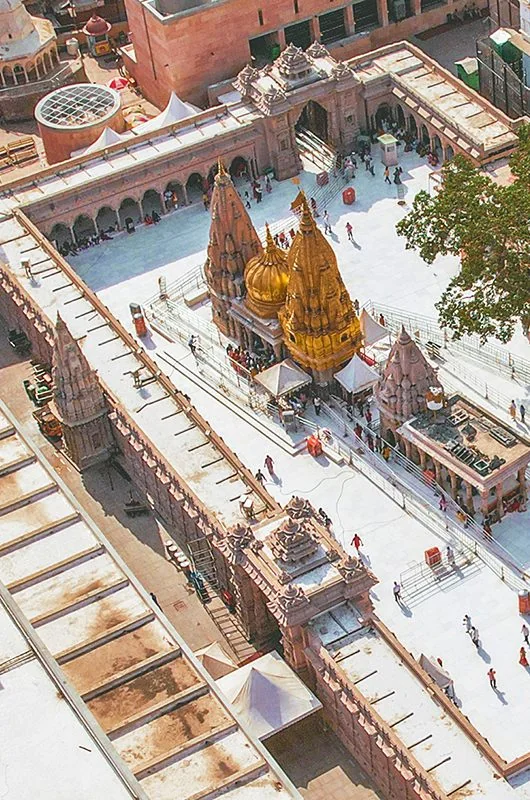
Temples of Varanasi
Varanasi's temples form a network of different deities, neighbourhoods and devotional practices. Kashi Vishwanath is a major focus, but smaller shrines reveal the diversity of the city's sacred life.
Explore guide →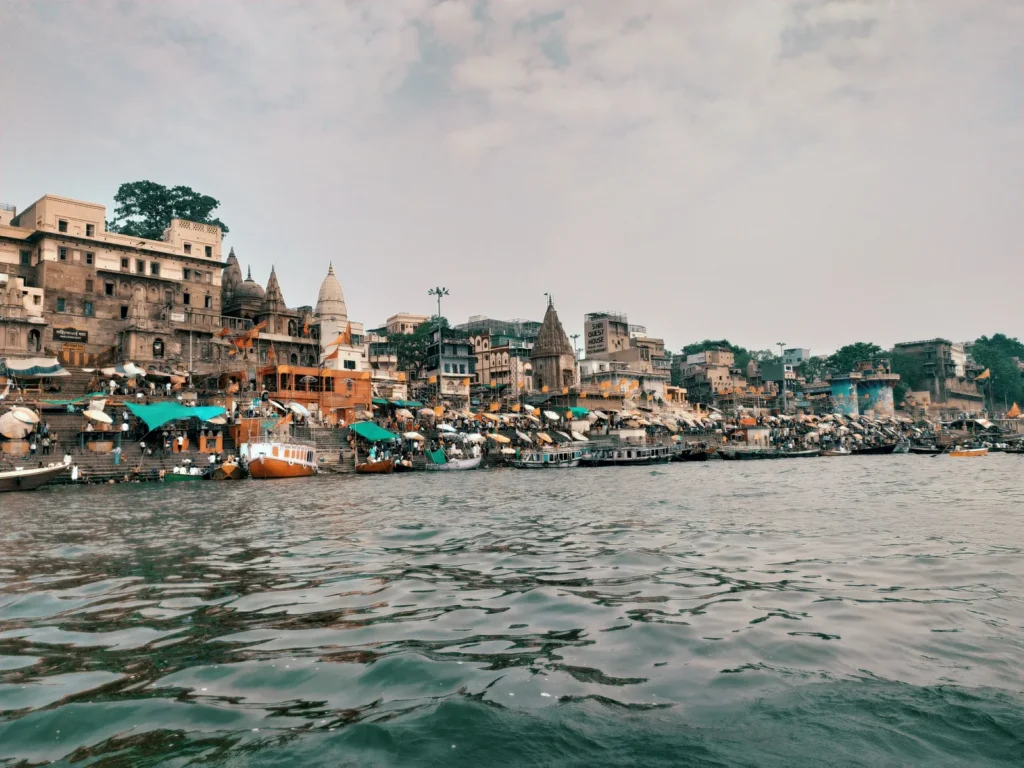
Ghats of Varanasi
The ghats are the city's meeting place with the Ganga: stepped river edges used for worship, movement, gathering and everyday work. They are connected, but each has a name and history worth learning.
Explore guide →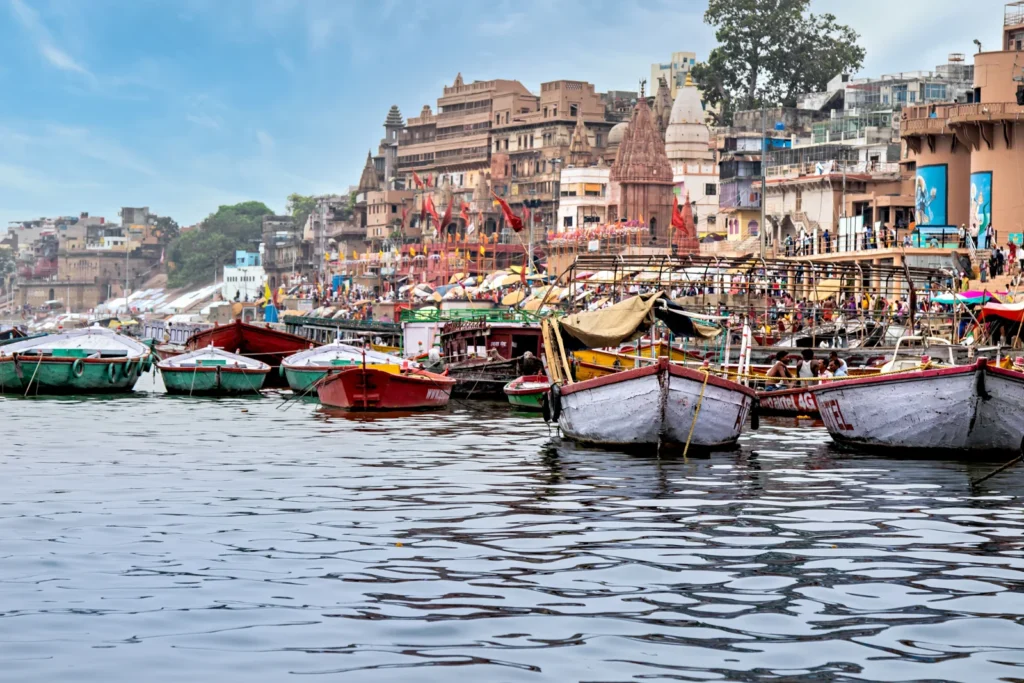
Things to Do in Varanasi
Things to do in Varanasi range from quiet observation to structured visits. The best selection depends on whether your interest is pilgrimage, history, culture, food or time beside the river.
Explore guide →No matching guides. Try a broader search.
Explore the Hinduism knowledge portal
A journey shaped around you
Plan your time in Kashi
Tell us your dates, interests and travel needs. Request a tailored proposal with clear inclusions before confirming any service.
Enquiry only · Availability and prices require confirmation · No payment is taken here