
Prayag Tourism · Temple
New Vishwanath Temple, BHU
The New Vishwanath Temple stands within Banaras Hindu University and offers a different setting from Kashi Vishwanath in the old city. The university context is essential to understanding this visit.
1. Introduction: The Soaring Spire at the Heart of Banaras Hindu University
Drive through the grand semi-circular Lanka Gate into the 1,300-acre tree-lined campus of Banaras Hindu University (BHU), follow the radiating avenues lined with mango and banyan trees, and at the focal axis of the university rises a colossal pink-and-white marble spire piercing the sky at 250 feet (approximately 76 metres). This is Sri Vishwanath Temple, BHU—popularly known to travellers as the New Vishwanath Temple or Birla Mandir, and affectionately called “VT” by generations of BHU students (Sri Vishwanath Temple | BHU; Temples Of Importance | District Varanasi).
Surrounded by manicured lawns, lotus ponds, and quiet academic faculties, the New Vishwanath Temple offers one of the most peaceful, spacious, and accessible spiritual experiences in Varanasi—explicitly conceived from its inception as a place of worship open to all human beings irrespective of caste, creed, gender, or nationality (Temples Of Importance | District Varanasi).
2. Vision and History: Pandit Madan Mohan Malaviya and the Birla Family (1931–1966 CE)
The story of the New Vishwanath Temple is rooted in the reformist, educational, and nationalist vision of Bharat Ratna Pandit Madan Mohan Malaviya (1861–1946), who founded Banaras Hindu University in 1916 CE (1760321416169VettedStoriesofKashi-SarnathPoIs.pdf, Entry 24):
- Why Malaviya Ji Conceived a New Vishwanath Temple: First, Malaviya Ji believed that higher scientific and humanistic education is incomplete without moral and spiritual grounding (Character Building alongside Scholarship), and therefore placed a temple of Lord Vishwanath at the physical and symbolic centre of the university campus. Second, having witnessed how historical invasions had repeatedly damaged the old Kashi Vishwanath Temple and how orthodox restrictions in the early 20th century sometimes barred certain communities or foreign visitors from entering traditional sanctums, Malaviya Ji envisioned a grand modern replica whose gates would remain open to every seeker from around the world (Temples Of Importance | District Varanasi).
- Thirty-Five Years of Construction (1931–1966 CE): The foundation stone was laid in March 1931 by Saint Swami Krishnananda, and construction was financed by the philanthropic industrialist Raja Baldeo Das Birla and his sons Jugal Kishore Birla and Ghanshyam Das Birla (giving it the popular name Birla Mandir). Taking 35 years of painstaking stonework to complete, the temple was finally consecrated in 1966 CE (1760321416169VettedStoriesofKashi-SarnathPoIs.pdf, Entry 24).
3. Architecture: The 250-Foot Shikhara and Nine Interconnected Shrines
Designed to echo the classical proportions of medieval North Indian Nagara temple architecture while incorporating spacious modern halls, the New Vishwanath Temple is an engineering and artistic landmark (1760321416169VettedStoriesofKashi-SarnathPoIs.pdf, Entry 24):
- One of the Tallest Temple Towers in the World: The central shikhara soars to 250 feet (76.2 metres)—taller than the Qutub Minar in Delhi—making it visible from across southern Varanasi and the Ganga riverfront.
- Nine Temples in One Two-Storey Complex: Although dedicated primarily to Lord Shiva, the two-level marble structure functions as a pan-Hindu devotional synthesis housing nine distinct shrines (1760321416169VettedStoriesofKashi-SarnathPoIs.pdf, Entry 24):
1. Ground Floor Central Sanctum: Enshrines the grand marble-and-stone Shivalinga of Sri Vishwanath, faced by a large white marble Nandi in the main pillared pavilion.
2. Surrounding Ground & First-Floor Shrines: Dedicated to Lakshmi-Narayan, Goddess Parvati, Lord Ganesha, Panchamukhi Mahadev, Lord Hanuman, Goddess Saraswati, Nataraja (Lord Shiva as Cosmic Dancer), and Goddess Durga.
- Scriptural Walls Engraved with the Bhagavad Gita: Just as Tulsi Manas Mandir displays the Ramcharitmanas, the polished white marble interior walls and corridors of the New Vishwanath Temple are inscribed with the complete Bhagavad Gita alongside selected verses from the Upanishads, Vedas, Puranas, and Tulsidas’s works, illustrated with painted murals and marble plaques explaining Hindu ethical philosophy (1760321416169VettedStoriesofKashi-SarnathPoIs.pdf, Entry 24).
4. The Visitor Experience: Campus Serenity, Bharat Kala Bhavan and “Cold Coffee at VT”
Visiting the New Vishwanath Temple allows travellers to step out of the dense urban intensity of Varanasi into a tranquil, green sanctuary. After offering prayers inside the cool marble halls and strolling through the rose and hibiscus gardens flanking the temple steps, visitors can walk just 500 metres across the BHU campus to explore Bharat Kala Bhavan Museum (VAR-035)—one of India’s premier university art and archaeology museums—or enjoy the iconic student snack of chilled cold coffee and samosas at the snack stalls lining the outer VT plaza.
C. Practical Visitor Information
- Location: Central Axis, Banaras Hindu University (BHU) Campus, Lanka, Varanasi – 221005 (Sri Vishwanath Temple | BHU)
- How to Reach: Enter through BHU Main Gate (Mahamana Malaviya Gate at Lanka Chauraha) and drive ~1.5 km straight down the central campus avenue. Approx. 2.5 km from Assi Ghat; 4 km from Banaras Railway Station (BSBS); 9 km from Varanasi Junction (BSB) (How to Reach BHU).
- Verified Daily Timings: Morning Session: 5:00 AM to 12:00 Noon (Snan & Shringar: 5:15–5:45 AM; Morning Aarti: 5:45–6:00 AM; Midday Shayan Aarti: 11:50 AM). Midday Closure: 12:00 Noon to 1:00 PM. Afternoon/Evening Session: 1:00 PM to 7:30 PM (Jagran Aarti: 1:05 PM; Evening Snan & Shringar: 6:00–6:45 PM; Evening Aarti: 6:45–7:00 PM; Night Shayan Aarti: 7:25 PM) (Sri Vishwanath Temple Timings | BHU).
- Entry Fee: Free for all visitors of all faiths and nationalities (Temples Of Importance | District Varanasi).
- Photography Rules: Exterior photography of the 250-foot spire, gardens, and outer campus is freely permitted; photography inside the inner sanctum halls is restricted.
- Duration Required: 45 to 60 Minutes for the temple and gardens (Allow 2 hours if combining with Bharat Kala Bhavan Museum inside BHU).
- Nearby Attractions: Bharat Kala Bhavan Museum (500 m inside BHU; 10:30 AM–4:30 PM, closed Sundays), Malaviya Bhavan (BHU), Sankat Mochan Temple (1.8 km), Assi Ghat (2.5 km), Ramnagar Fort (4 km across Samne Ghat bridge).
- Visitor Advice: Respect the university campus environment—avoid honking, maintain quiet inside the marble galleries, and deposit footwear at the organized free shoe counters at the base of the temple steps.
D. Frequently Asked Questions (FAQs)
- What are the official opening, closing, and Aarti timings of New Vishwanath Temple at BHU?According to the official Banaras Hindu University portal, Sri Vishwanath Temple opens daily at 5:00 AM, closes for one hour at midday from 12:00 Noon to 1:00 PM, and remains open in the afternoon/evening from 1:00 PM to 7:30 PM. Morning Aarti is held from 5:45 AM to 6:00 AM, and Evening Aarti takes place from 6:45 PM to 7:00 PM (Sri Vishwanath Temple Timings | BHU).
- Are foreign tourists and non-Hindus allowed inside New Vishwanath Temple, BHU?Yes! Pandit Madan Mohan Malaviya specifically established the New Vishwanath Temple at BHU to be open to all people regardless of religion, caste, or nationality (Temples Of Importance | District Varanasi).
- Why is New Vishwanath Temple at BHU also called “Birla Mandir” or “VT”?It is called Birla Mandir because the industrialist Birla family (Raja Baldeo Das Birla and his sons) funded its construction between 1931 and 1966 at the request of Pandit Madan Mohan Malaviya. Students and residents of BHU affectionately call it “VT” (short for Vishwanath Temple) (1760321416169VettedStoriesofKashi-SarnathPoIs.pdf, Entry 24).
- How tall is the spire (shikhara) of the New Vishwanath Temple?The central Nagara shikhara of the New Vishwanath Temple rises to approximately 250 feet (76 metres), making it one of the tallest temple towers in India (1760321416169VettedStoriesofKashi-SarnathPoIs.pdf, Entry 24).
- Can private cabs and auto-rickshaws drive inside the BHU campus up to the temple?Yes, private cars, taxis, and auto-rickshaws are permitted to drive through the Lanka Main Gate along the designated campus avenues right up to the parking zone outside the New Vishwanath Temple gardens (VAR-034).
Choose your next chapter
Continue your journey
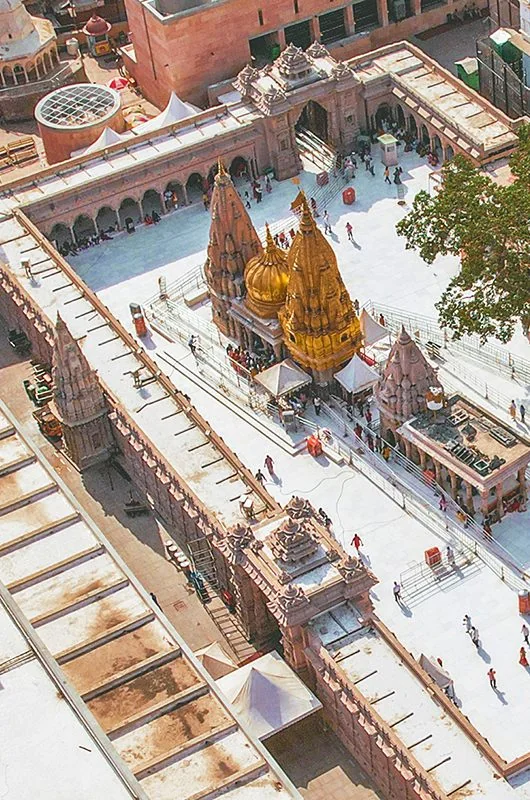
Temples of Varanasi
Varanasi's temples form a network of different deities, neighbourhoods and devotional practices. Kashi Vishwanath is a major focus, but smaller shrines reveal the diversity of the city's sacred life.
Explore guide →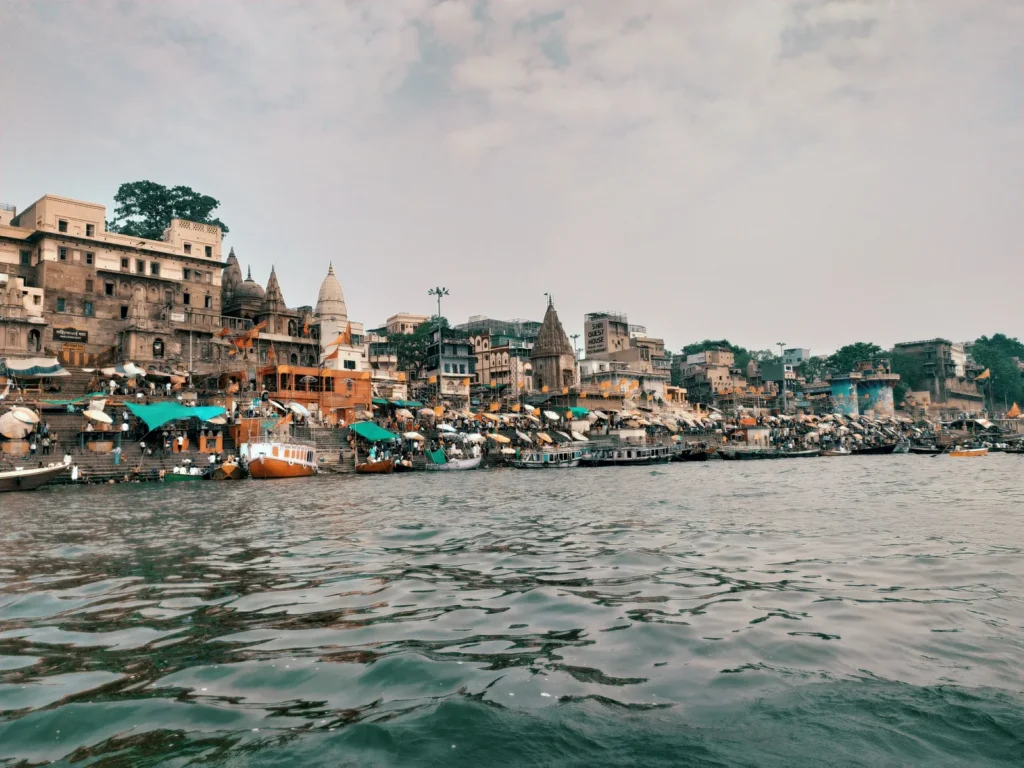
Ghats of Varanasi
The ghats are the city's meeting place with the Ganga: stepped river edges used for worship, movement, gathering and everyday work. They are connected, but each has a name and history worth learning.
Explore guide →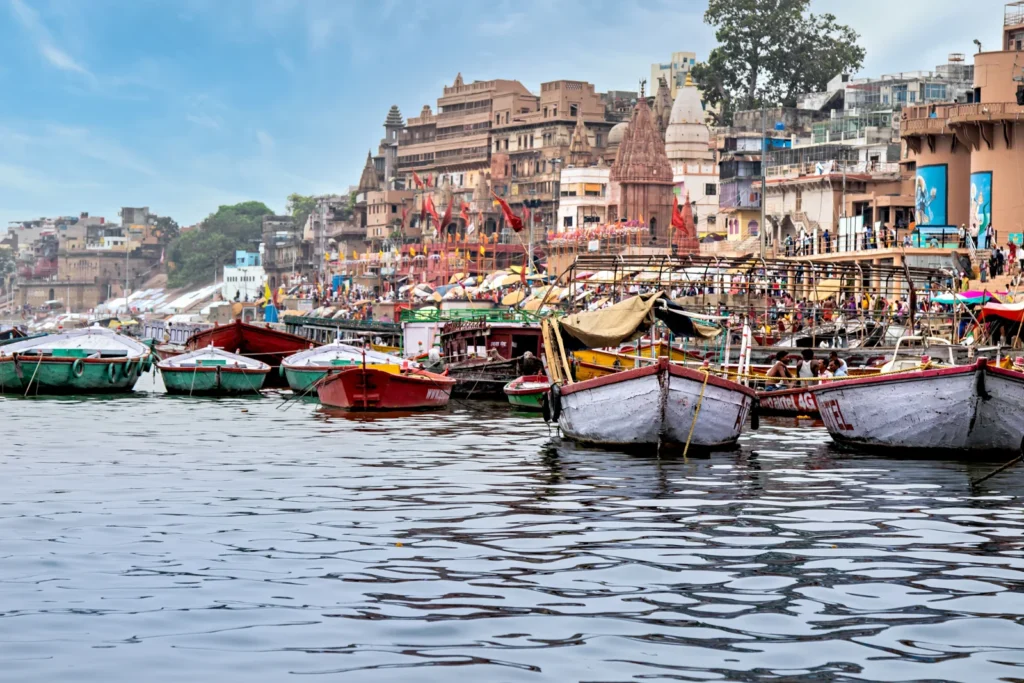
Things to Do in Varanasi
Things to do in Varanasi range from quiet observation to structured visits. The best selection depends on whether your interest is pilgrimage, history, culture, food or time beside the river.
Explore guide →No matching guides. Try a broader search.
Locate the area
Open a place-name search and confirm the exact venue and approach before travelling. No unverified coordinates or embedded tracking map are used.
Open map search: New Vishwanath Temple, BHU, Varanasi, Uttar Pradesh, India ↗A journey shaped around you
Plan your time in Kashi
Tell us your dates, interests and travel needs. Request a tailored proposal with clear inclusions before confirming any service.
Enquiry only · Availability and prices require confirmation · No payment is taken here