
Prayag Tourism · Temple
Sankat Mochan Hanuman Temple
Sankat Mochan is a Hanuman temple associated with the devotional world of Tulsidas. Its name expresses the devotee's hope for relief from difficulties, and worship remains the central reason many people come.
1. Introduction: A Sanctuary of Courage and Devotion by the Assi Stream
In the southern belt of Varanasi, nestled inside a tranquil, tree-shaded campus along the ancient course of the Assi stream between Durga Kund and Banaras Hindu University, stands Shri Sankat Mochan Hanuman Temple (Temples Of Importance | District Varanasi). While the riverfront of Kashi resonates with the cosmic majesty of Lord Shiva, Sankat Mochan beats with the warm, accessible, and deeply personal devotion of Rama-bhakti. Its very name—Sankat (trouble, crisis, affliction) and Mochan (liberator, reliever, remover)—captures why tens of thousands of students, mothers, pilgrims, and classical musicians walk barefoot across its cool stone courtyard every week (1760321416169VettedStoriesofKashi-SarnathPoIs.pdf, Entry 11).
Whether you arrive at dawn to hear the thunderous unison recitation of the Hanuman Chalisa and Sankat Mochan Hanuman Ashtak, or sit beneath the ancient trees in the evening watching families offer boxes of pure desi ghee besan ladoos wrapped in marigold garlands, the atmosphere of Sankat Mochan is one of quiet strength and unshakeable hope.
2. Historical & Spiritual Origin: The 16th-Century Vision of Goswami Tulsidas
The foundation of Sankat Mochan Temple is inseparably tied to the life of Goswami Tulsidas (1532–1623 CE), the revered Bhakti saint-poet who composed the Ramcharitmanas, Hanuman Chalisa, Sankat Mochan Ashtak, and Vinaya Patrika in Kashi (Temples Of Importance | District Varanasi).
- The Divine Vision Under the Forest Canopy: According to devotional history preserved by the temple’s hereditary Mahant lineage (the family of the late environmentalist and scholar Mahant Prof. Veer Bhadra Mishra), Tulsidas resided at nearby Tulsi Ghat (then Lolark/Assi) while composing the Ramcharitmanas (1760321416169VettedStoriesofKashi-SarnathPoIs.pdf, Entries 11 & 43). Every morning, after bathing in the Ganga, Tulsidas walked into the quiet woodland along the Assi stream and poured his remaining water at the roots of a dry tree. Touched by his devotion, a spirit inhabiting the tree revealed that Lord Hanuman himself attended Tulsidas’s daily Rama-katha discourses in the humble disguise of a leper sitting at the very back of the audience.
- Consecration of the Self-Manifested Idol: Seeking out the disguised devotee and falling at his feet, Tulsidas was blessed here with the direct visual darshan of Lord Hanuman, who subsequently facilitated Tulsidas’s vision of Lord Rama at Chitrakoot. At the exact spot where Hanuman granted him darshan—and where Tulsidas had been cured of a severe physical affliction in his arms after composing the Hanuman Bahuk and Sankat Mochan Ashtak—the poet-saint installed and consecrated the mud-and-stone effigy of Sankat Mochan Hanuman in the late 16th century (1760321416169VettedStoriesofKashi-SarnathPoIs.pdf, Entry 11). Noticeably, the present spacious temple verandah and surrounding structures were expanded in the early 20th century with the support of Bharat Ratna Pandit Madan Mohan Malaviya, founder of the neighbouring Banaras Hindu University.
3. Unique Iconography: Why Hanuman Faces Lord Rama Directly
The inner sanctum of Sankat Mochan Hanuman Temple possesses an architectural and theological feature that every pilgrim should observe carefully:
- The Orange Sindoor Idol: Enshrined inside the central sanctum is the vibrant, marigold-draped idol of Lord Hanuman coated in sacred sindoor (vermilion mixed with clarified butter), depicted with his right hand raised in Abhaya Mudra (blessing of fearlessness) and his left hand resting near his heart.
- Face-to-Face with Lord Rama, Sita and Lakshmana: Directly opposite the sanctum of Hanuman—positioned across the central courtyard so that their gazes meet continuously—stands a shrine dedicated to Lord Rama, Goddess Sita, and Lakshmana. In devotional belief, because Lord Hanuman’s eyes are fixed eternally upon his beloved Lord Sri Ram, any devotee who steps into the courtyard between the two shrines automatically falls within the direct, merciful line of sight of both Rama and Hanuman!
- The Sacred Well & Angad Shrine: Within the lush compound also stand an ancient masonry well used by Tulsidas, a shrine to Angad and Shiva, and a large peepal tree beneath which devotees sit cross-legged to read small red-cloth-bound booklets of the Hanuman Chalisa and Sundarkand.
4. The Famous “Sankat Mochan Sangeet Samaroh” and Cultural Legacy
Beyond its daily devotional rhythm, Sankat Mochan Temple is one of India’s most prestigious stages for Indian classical music and dance (1760321416169VettedStoriesofKashi-SarnathPoIs.pdf, Entry 11). Every year in April (Chaitra Purnima), immediately following Hanuman Jayanti, the temple hosts the six-night Sankat Mochan Sangeet Samaroh (Varanasi UP tousim2.pdf, p. 58).
- Music as Worship (Nada Yoga): Founded over a century ago, this all-night open-air festival brings together India’s greatest Hindustani and Carnatic vocalists, instrumentalists, and Kathak/Odissi dancers, who perform from dusk until sunrise directly in front of the sanctum as an offering (haziri) to Lord Hanuman—with completely free admission for thousands of ordinary citizens sitting on carpets in the courtyard.
- Resilience and Interfaith Harmony: Following the tragic March 2006 terrorist bomb blast inside the temple courtyard, the people and priests of Varanasi demonstrated extraordinary spiritual resilience—resuming the evening Aarti within hours and welcoming artistes of all faiths (including legendary Muslim ustads) to perform in the courtyard as a testament to Kashi’s unbroken Ganga-Jamuni unity.
C. Practical Visitor Information
- Location: B 2/15, Sankat Mochan Road, Saket Nagar (Between Durga Kund & BHU Lanka Gate), Bhadaini, Varanasi – 221005 (Prayagraj Ayodhya Varanasi Tour | PrayagTourism)
- How to Reach: By Cab/Auto: Direct road access right up to the main security gate (~1.5 km from Assi Ghat; ~1 km from Durga Kund / Tulsi Manas; ~1.5 km from BHU Lanka Gate; ~8 km from Varanasi Junction BSB).
- Best Time to Visit: Early Morning (4:30 AM – 7:30 AM) for Mangala Aarti and cool courtyard chanting, or Evening (7:00 PM – 9:00 PM) for the vibrant collective Sandhya Aarti and Hanuman Chalisa recitation. Tuesdays and Saturdays are the most auspicious days (expect longer queues).
- Visiting Hours: 4:30 AM – 12:00 Noon and 3:00 PM – 10:00 PM daily (Closed midday from 12:00 Noon to 3:00 PM for Bhog and rest; confirm festival schedules locally) (Prayagraj Ayodhya Varanasi Tour | PrayagTourism).
- Entry Fee: Free for all visitors.
- Strict Security & Monkey Advisory: No Mobile Phones, Cameras, Smartwatches, or Electronic Devices are permitted past the security metal detectors. Free Deposit Lockers (Mobile Jama Kendra) and shoe stands are located right outside the main gate. Monkey Alert: Hundreds of rhesus macaques inhabit the trees (giving it the nickname “Monkey Temple”); carry your ladoo prasad box inside a closed cloth bag provided by the shop!
- Signature Prasad: Pure desi ghee Besan Ladoos and Lal Peda sold at the official sweet counters inside and outside the temple complex.
- Duration Required: 45 to 60 Minutes (Estimated).
D. Frequently Asked Questions (FAQs)
- What are the daily opening and closing hours of Sankat Mochan Hanuman Temple?Sankat Mochan Temple opens daily at 4:30 AM for morning Mangala Aarti and remains open until 12:00 Noon. After a three-hour midday closure, the temple reopens at 3:00 PM and closes at 10:00 PM after the night Shayan Aarti (Prayagraj Ayodhya Varanasi Tour | PrayagTourism).
- Are mobile phones and bags allowed inside Sankat Mochan Temple?No. Since 2006, high-level airport-style security screening is enforced at the entrance of Sankat Mochan Temple. Mobile phones, cameras, smartwatches, earphones, laptops, and large backpacks are strictly prohibited inside. You can deposit phones free of charge at the official token counter outside the gate or leave them in your private cab.
- Why are both Sankat Mochan Temple and Durga Kund Temple called “Monkey Temple”?Both temples lie in the lush southern belt of Varanasi and historically hosted large troops of rhesus monkeys (Temples Of Importance | District Varanasi). Today, Sankat Mochan’s wooded compound still has many monkeys; visitors should remove spectacles or hold them securely and keep prasad boxes tucked inside cloth bags until reaching the sanctum counter.
- Who founded Sankat Mochan Temple and what is the Sankat Mochan Ashtak?The temple was founded in the 16th century by the great saint-poet Goswami Tulsidas at the place where he received a divine vision of Lord Hanuman. Tulsidas also composed the 8-verse hymn Sankat Mochan Hanuman Ashtak (“Baal samay ravi bhakshi liyo tab…”), which is chanted daily at the temple (1760321416169VettedStoriesofKashi-SarnathPoIs.pdf, Entry 11).
- What is the famous prasad of Sankat Mochan Temple?The signature offering of Sankat Mochan Temple is the fragrant, melt-in-the-mouth Besan Ladoo made in pure desi ghee (alongside Lal Peda), available at the official temple sweet stalls inside the complex. Many travellers buy extra boxes to carry home for family and friends.
- When does the Sankat Mochan Sangeet Samaroh music festival take place?The six-day all-night classical music and dance festival (Sankat Mochan Sangeet Samaroh) takes place annually in April (during the Hindu month of Chaitra), starting a few days after Hanuman Jayanti (Varanasi UP tousim2.pdf, p. 58).
Choose your next chapter
Continue your journey
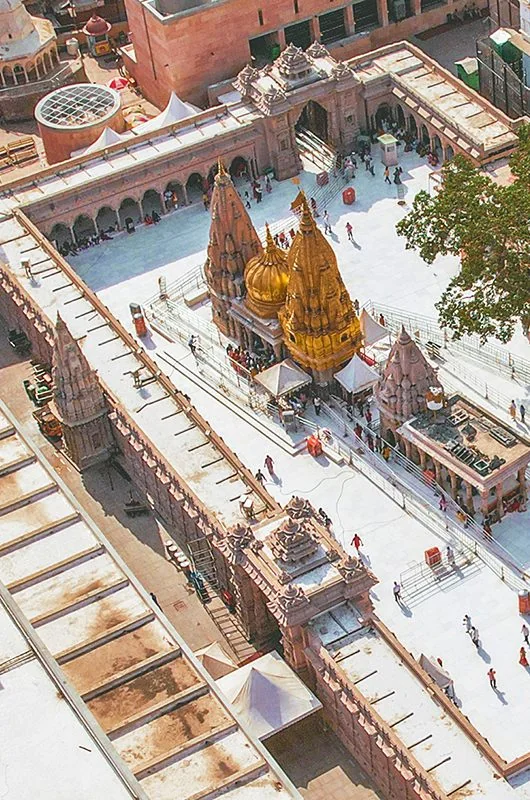
Temples of Varanasi
Varanasi's temples form a network of different deities, neighbourhoods and devotional practices. Kashi Vishwanath is a major focus, but smaller shrines reveal the diversity of the city's sacred life.
Explore guide →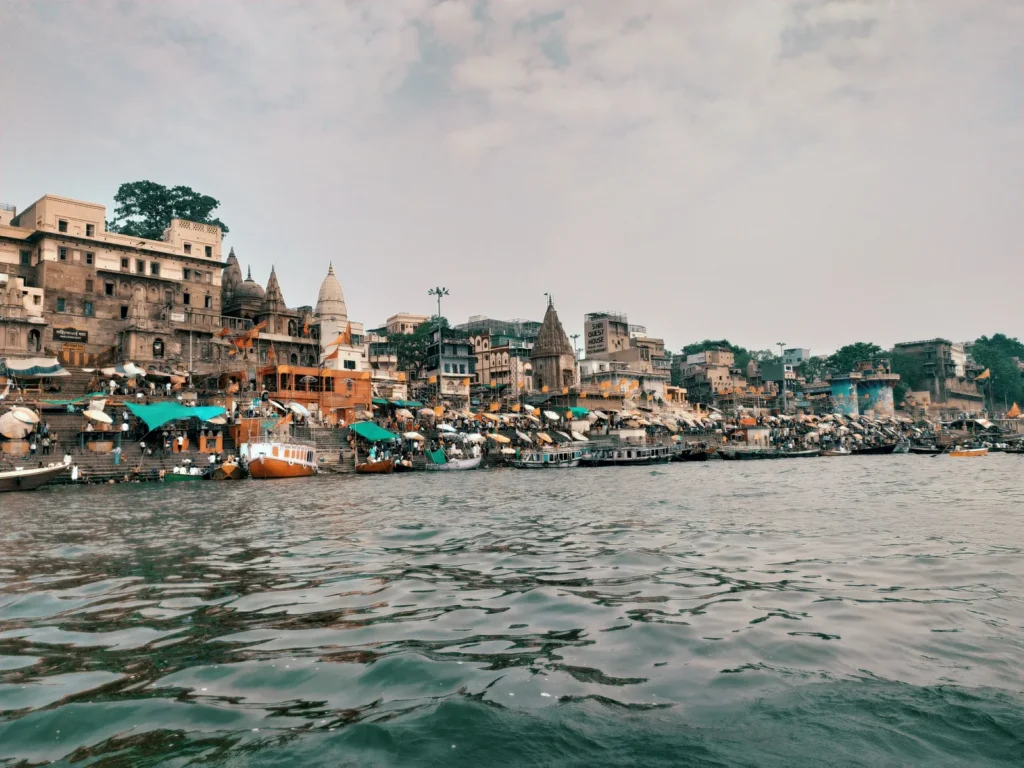
Ghats of Varanasi
The ghats are the city's meeting place with the Ganga: stepped river edges used for worship, movement, gathering and everyday work. They are connected, but each has a name and history worth learning.
Explore guide →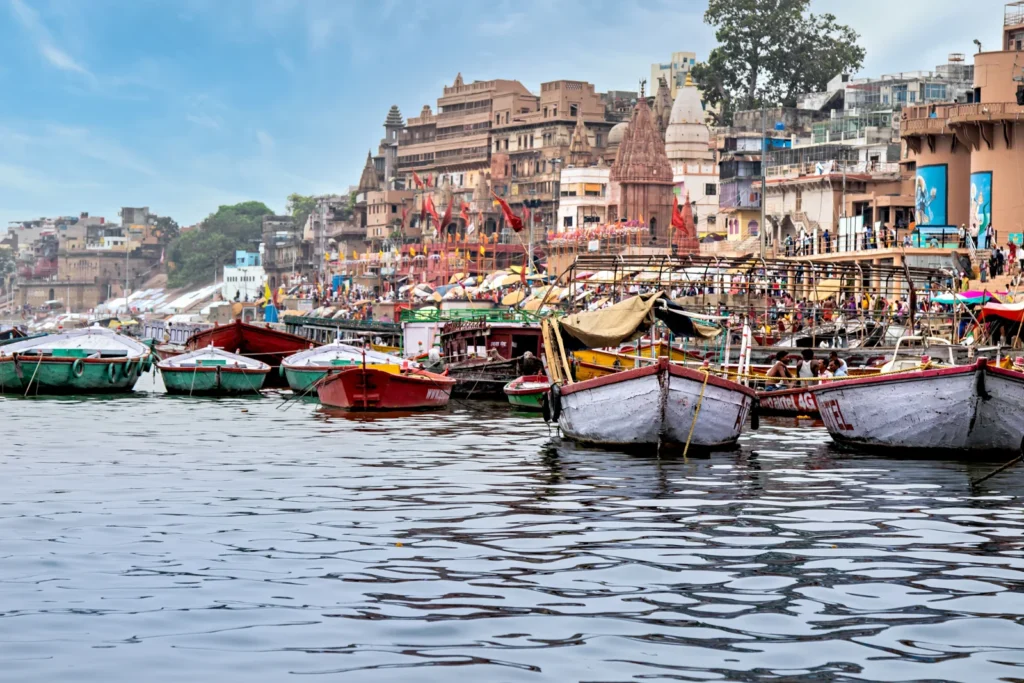
Things to Do in Varanasi
Things to do in Varanasi range from quiet observation to structured visits. The best selection depends on whether your interest is pilgrimage, history, culture, food or time beside the river.
Explore guide →No matching guides. Try a broader search.
Locate the area
Open a place-name search and confirm the exact venue and approach before travelling. No unverified coordinates or embedded tracking map are used.
Open map search: Sankat Mochan Hanuman Temple, Varanasi, Uttar Pradesh, India ↗Explore the Hinduism knowledge portal
A journey shaped around you
Plan your time in Kashi
Tell us your dates, interests and travel needs. Request a tailored proposal with clear inclusions before confirming any service.
Enquiry only · Availability and prices require confirmation · No payment is taken here