
Prayag Tourism · Temple
Kal Bhairav Temple
Kal Bhairav is widely revered as Kashi's guardian, often described in local tradition as the city's kotwal. The shrine helps visitors understand a protective aspect of Shiva worship beyond the riverfront's best-known landmarks.
1. Introduction: Why No Pilgrimage to Kashi Is Complete Without Kal Bhairav
In the civic and spiritual folklore of Varanasi, there is a saying known to every resident, magistrate, and police officer posted to the district: “Kashi mein rehna hai toh Baba Kal Bhairav ki aagya leni hogi”—”To reside in or visit Kashi, one must first obtain the permission of Baba Kal Bhairav” (Temples Of Importance | District Varanasi). Nestled in the old northern lanes of Bhairavnath near the Head Post Office at Visheshwarganj and the Kotwali police station, Shri Kal Bhairav Temple enshrines the fierce, protective manifestation of Lord Shiva whom the Lord of the Universe appointed as the Kotwal (Chief Magistrate and Divine Police Commissioner) of his sacred city (1760321416169VettedStoriesofKashi-SarnathPoIs.pdf, Entry 2).
So deeply embedded is this tradition in the daily fabric of Varanasi that even in the 21st century, the nearby Kotwali police station symbolically reserves its chief chair of authority for Baba Kal Bhairav, and newly appointed administrative and judicial officials routinely visit this shrine to seek his blessings before assuming office. For pilgrims, bowing at the threshold of Kal Bhairav at the start and conclusion of a Kashi Yatra is considered essential to receiving the spiritual fruits of their pilgrimage (Kashi Yatra by Anu Shankar.pdf, p. 11).
2. Puranic Origin: Brahma’s Fifth Head, Kapalmochan and the Office of “Kotwal”
The origin of Kal Bhairav is narrated vividly in the Shiva Purana and the Kashi Khanda of the Skanda Purana (1760321416169VettedStoriesofKashi-SarnathPoIs.pdf, Entries 2 & 4):
- The Manifestation of Kala Bhairava: When Lord Brahma once spoke with arrogance out of his fifth head, claiming superiority over the cosmos, a fierce, dark-hued form burst forth from the brow of Lord Shiva—Kala Bhairava (“The Terrifying One who rules over Time and Death”). With the tip of his left fingernail, Bhairava severed Brahma’s arrogant fifth head.
- The Wandering of Kapali and Arrival at Kashi: Because severing Brahma’s head incurred the sin of Brahmahatya (symbolised as a fierce maiden pursuing him while the skull, kapala, remained stuck fast to Bhairava’s palm), Shiva instructed Bhairava to wander across all the pilgrimage sites of the earth until the skull fell away on its own. Nowhere did the skull release his hand until Bhairava crossed the threshold into Kashi. The exact moment his foot touched the soil of Kashi (at the site of the ancient Kapalmochan Tirtha near Laat Bhairav), the skull dropped to the ground and Brahmahatya vanished into the netherworld (1760321416169VettedStoriesofKashi-SarnathPoIs.pdf, Entry 4).
- Appointment as Chief Magistrate of Kashi: Moved by Bhairava’s penance, Lord Shiva decreed that Kashi would forever be under Kal Bhairav’s executive authority. While Vishwanath sits in serene meditation granting liberation, Kal Bhairav—accompanied by his vahana (vehicle), the black dog (Shvan)—maintains cosmic law, protects devotees from negative planetary influences (Rahu, Ketu, and Shani), and administers brief, purifying justice (Bhairavi Yatana) so that souls in Kashi are freed from the jurisdiction of Yamaraja, the God of Death.
3. History and Architecture: The 1817 CE Peshwa Reconstruction
Historically, the worship of the Ashta Bhairavas (the eight Bhairavas guarding Kashi: Kal Bhairav, Dandapani, Batuk Bhairav, Laat/Kapali Bhairav, Ruru Bhairav, Chanda Bhairav, Asitanga Bhairav, and Krodhana/Unmatta Bhairav) dates back to early medieval Shaiva and Kapalika traditions (Kashi Yatra by Anu Shankar.pdf, p. 11). While earlier shrines stood at Bhairavnath for centuries, the present stone temple structure was built in 1817 CE by the last Maratha Peshwa, Bajirao Peshwa II, a historical fact attested by a dated stone inscription set into the back wall of the inner courtyard (1760321416169VettedStoriesofKashi-SarnathPoIs.pdf, Entry 2).
Approached through a bustling lane lined with stalls selling marigold garlands, mustard-oil lamps, and sacred black threads, the temple opens into a compact, stone-paved quadrangle:
- The Central Sanctum & Silver Face: At the heart of the courtyard stands the Nagara-style shrine with a carved spire and a brass-plated doorway guarded by silver figures of dwarapalas and Bhairava’s dog mount. Inside the garbhagriha, the full anthropomorphised stone body of Kal Bhairav is kept completely draped in silk clothes and thick garlands of marigolds and mundamala motifs; only the gleaming silver mask (Mukhauta) of the deity’s face—crowned with silver serpents—is visible to devotees through the sanctum doorway (1760321416169VettedStoriesofKashi-SarnathPoIs.pdf, Entry 2).
- Courtyard Shrines & Navagraha Slab: Circumambulating the inner compound, visitors encounter subsidiary shrines dedicated to Hanuman, Radha-Krishna, Shiva-Parvati, Ganesha, and Kali, alongside a remarkable carved stone slab enshrining all Nine Planets (Navagrahas) in a row, where devotees light mustard-oil diyas on Tuesdays and Saturdays to pacify astrological afflictions (1760321416169VettedStoriesofKashi-SarnathPoIs.pdf, Entry 2).
4. Rituals, the Peacock-Feather Blessing and the Sacred “Kashi Thread”
Experiencing darshan at Kal Bhairav Temple offers three distinctive ritual elements found almost nowhere else:
1. The Peacock-Feather Club (Morchhal / Sota) Blessing: As you exit the sanctum doorway after viewing Baba Kal Bhairav, temple priests sit on a raised platform holding a large bundle of peacock feathers (morpankh) representing Bhairava’s judicial staff (danda). The priest gently taps the devotee’s back or head with the peacock-feather wand—symbolically “brushing away” past karmic obstacles, negative energies (drishti), and ego.
2. The Sacred Black Thread (Kashi Ganda / Kala Dhaga): Outside and inside the temple, devotees acquire braided black, red, or multi-coloured silk threads knotted with sacred mantras. Tied around the wrist or upper arm, this Kashi thread is cherished across India as a protective talisman against fear, accidents, and evil eye (Kashi Yatra by Anu Shankar.pdf, p. 11).
3. Feeding the Street Dogs (Shvan Seva): Because the dog is the sacred vahana of Lord Bhairav, street dogs around the temple lanes are treated with affectionate reverence, and devotees frequently buy milk or sweet biscuits (rotis) to feed them as an act of worship.
C. Practical Visitor Information
- Location: K30/51-53-55, Ghasi Tola / Bibi Hatiya, Near Head Post Office (Visheshwarganj), Kotwali, Varanasi – 221001 (Temples Of Importance | District Varanasi)
- How to Reach: Located ~1.2 km north of Kashi Vishwanath Temple / Maidagin Chauraha. Take an auto-rickshaw or cab to Maidagin Crossing or Visheshwarganj Post Office, then walk 300–400 metres (or take a cycle-rickshaw) into Bhairavnath Gali.
- Best Time to Visit: Early morning (5:30 AM – 8:00 AM) on weekdays for a calm queue. Tuesdays, Saturdays, Sundays, and Bhairava Ashtami (in November/Margashirsha) draw massive devotional crowds.
- Visiting Hours: Approx. 5:00 AM – 1:30 PM and 4:30 PM – 9:30 PM daily (Closes midday between 1:30 PM and 4:30 PM for Shringar/rest; confirm festival hours locally) (Temples Of Importance | District Varanasi).
- Entry Fee: Free for all visitors.
- Duration Required: 30 to 45 Minutes on regular days (1 to 2 hours on Sundays, Tuesdays, or festival evenings).
- Nearby Attractions: Dandapani Temple & Mrityunjay Mahadev Temple (500 m), Maidagin / Company Garden (400 m), Panchganga Ghat & Bindu Madhav (800 m), Kashi Vishwanath Temple (1.2 km).
- Visitor Advice: Keep small denominations (₹10–₹50) ready if you wish to purchase a Kashi thread or receive the peacock-feather blessing; beware of aggressive street touts in the outer lane selling overpriced offering baskets.
D. Frequently Asked Questions (FAQs)
- Why is Kal Bhairav called the “Kotwal of Kashi”?In Hindu Puranic tradition, Lord Shiva appointed Kal Bhairav as the divine chief magistrate and police commissioner (Kotwal) of Varanasi, entrusting him with maintaining spiritual law and order in the city. Tradition holds that no one can reside in or complete a pilgrimage to Kashi without his permission (Temples Of Importance | District Varanasi).
- What are the opening and closing timings of Kal Bhairav Temple in Varanasi?The temple generally opens at 5:00 AM and remains open until 1:00 PM – 1:30 PM, closes in the afternoon for midday rest and decoration, and reopens from 4:30 PM to 9:30 PM daily (Temples Of Importance | District Varanasi).
- Why do priests tap devotees with a peacock-feather bundle at Kal Bhairav Temple?The peacock-feather wand (morchhal) represents the gentle, compassionate form of Kal Bhairav’s staff of justice (danda). Devotees believe that being lightly tapped with it inside the temple courtyard absolves minor karmic faults and wards off fear and negative energies (1760321416169VettedStoriesofKashi-SarnathPoIs.pdf).
- Who is Dandapani in relation to Kal Bhairav, and where is his shrine?Among the Ashta Bhairavas (and Shiva’s attendants), Dandapani (“Wielder of the Staff”) is regarded as the judicial officer who determines karmic discipline, while Kal Bhairav enforces it (Kashi Yatra by Anu Shankar.pdf, p. 11). Shrines to Dandapani exist both inside the Kashi Vishwanath complex and near Kal Bhairav.
- When is Bhairava Ashtami (Kal Bhairav Jayanti) celebrated in Varanasi?Kal Bhairav Jayanti (Bhairava Ashtami) is celebrated annually on the eighth lunar day (Ashtami) of the dark fortnight (Krishna Paksha) in the Hindu month of Margashirsha (November–December), when the full form of the deity is adorned in royal silver and floral vestments (1760321416169VettedStoriesofKashi-SarnathPoIs.pdf, Entry 2).
- Are mobile phones allowed at Kal Bhairav Temple?Unlike Kashi Vishwanath, you can walk through Bhairavnath Gali carrying your mobile phone in your pocket or bag, though photography directly inside the inner garbhagriha doorway is restricted so that the darshan queue keeps moving smoothly.
Choose your next chapter
Continue your journey
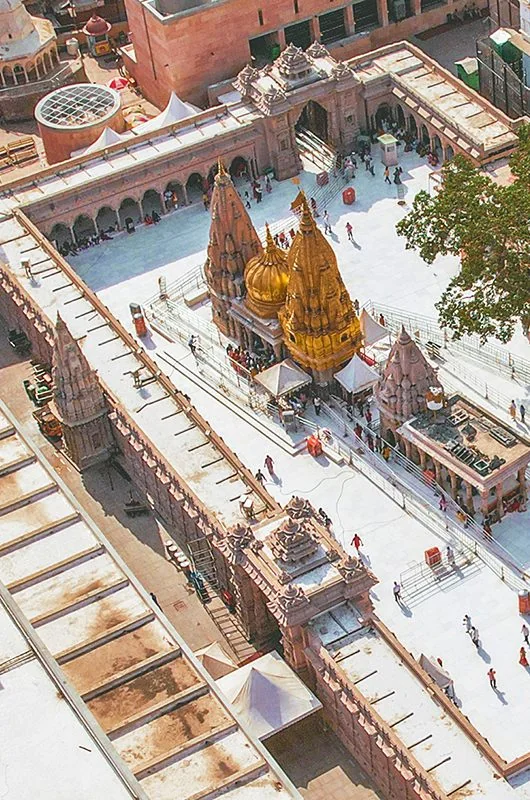
Temples of Varanasi
Varanasi's temples form a network of different deities, neighbourhoods and devotional practices. Kashi Vishwanath is a major focus, but smaller shrines reveal the diversity of the city's sacred life.
Explore guide →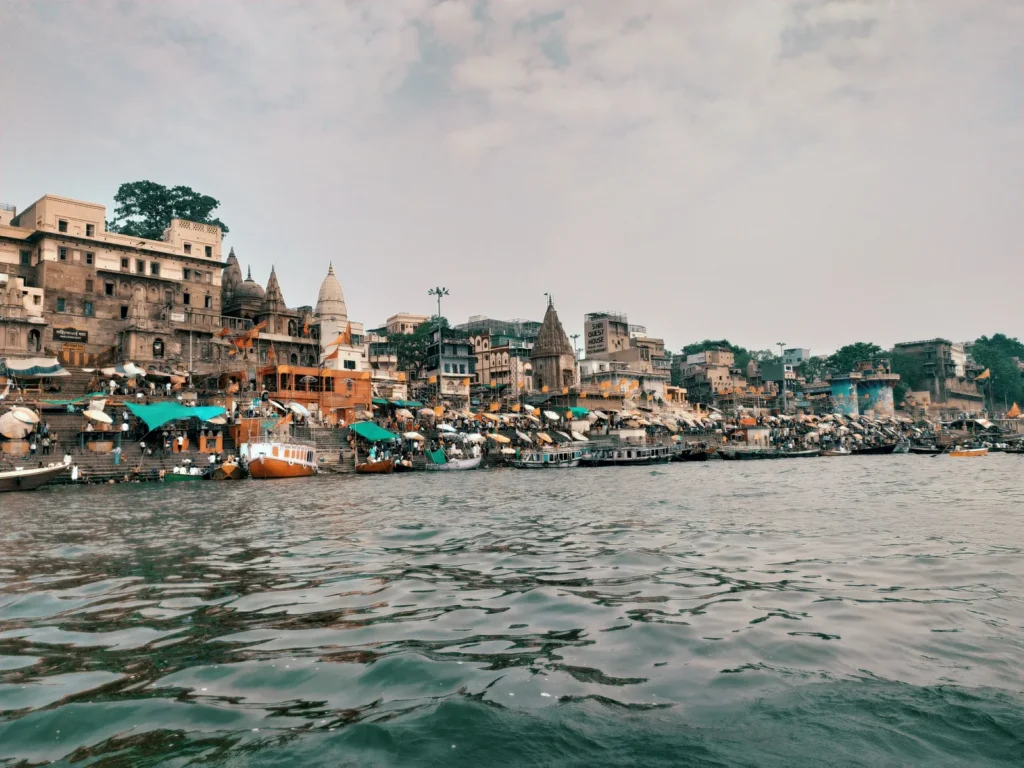
Ghats of Varanasi
The ghats are the city's meeting place with the Ganga: stepped river edges used for worship, movement, gathering and everyday work. They are connected, but each has a name and history worth learning.
Explore guide →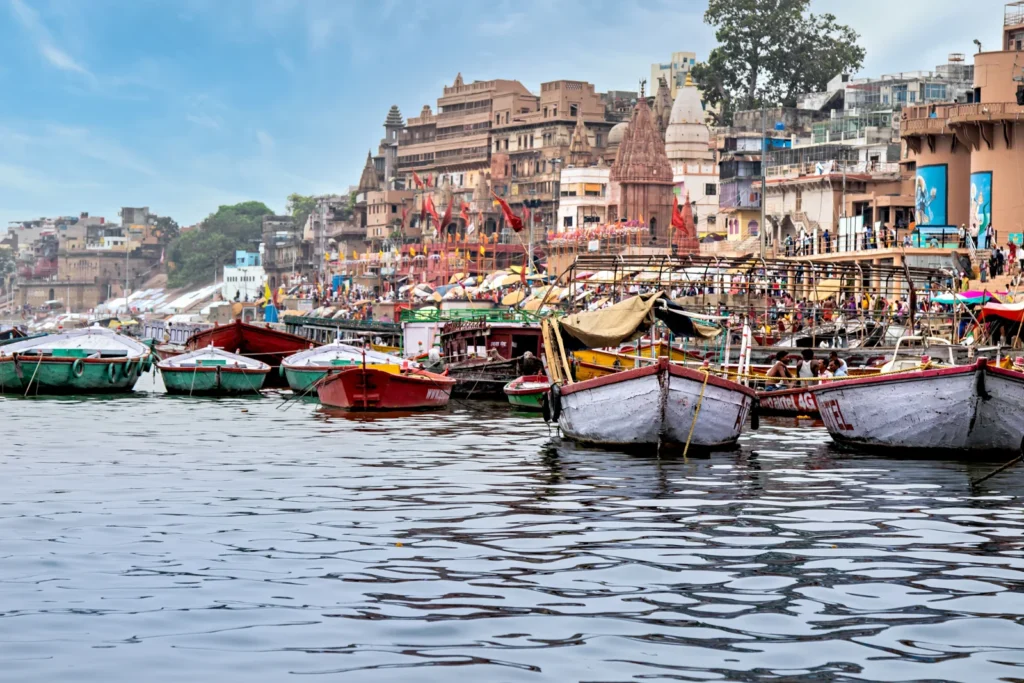
Things to Do in Varanasi
Things to do in Varanasi range from quiet observation to structured visits. The best selection depends on whether your interest is pilgrimage, history, culture, food or time beside the river.
Explore guide →No matching guides. Try a broader search.
Locate the area
Open a place-name search and confirm the exact venue and approach before travelling. No unverified coordinates or embedded tracking map are used.
Open map search: Kal Bhairav Temple, Varanasi, Uttar Pradesh, India ↗A journey shaped around you
Plan your time in Kashi
Tell us your dates, interests and travel needs. Request a tailored proposal with clear inclusions before confirming any service.
Enquiry only · Availability and prices require confirmation · No payment is taken here