
Prayag Tourism · Ghat
Ghats of Varanasi
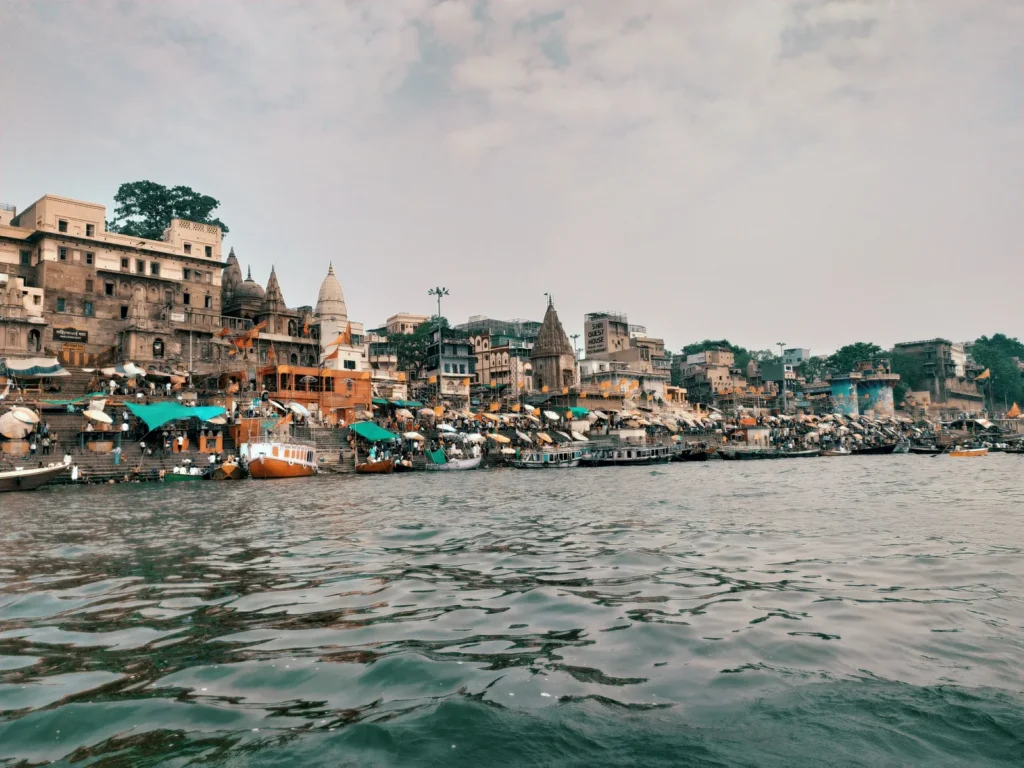
The ghats are the city's meeting place with the Ganga: stepped river edges used for worship, movement, gathering and everyday work. They are connected, but each has a name and history worth learning.
1. Introduction: What Is a "Ghat" in the Civilisation of Kashi?
In Sanskrit and Hindi, the word ghat (घाट) denotes a flight of terraced stone steps leading down to a body of water (Tourist Places | District Varanasi). Along the western bank of the northward-flowing (Uttarvahini) River Ganga in Varanasi, however, the ghats are far more than architectural staircases. Stretching in a continuous 6.8-kilometre crescent from the confluence of the Assi stream in the south to the confluence of the Varuna river in the north, the 84 historic ghats of Varanasi—joined in 2023 by the modern 85th riverfront promenade at Namo Ghat (and extending across 88 counted embankments including sub-ghats)—form the world’s greatest living riverfront theatre (Ganga Ghat | District Varanasi; Namo Ghat Varanasi Guide).
As documented in the 2024 Indian Institute of Public Administration (IIPA) and National Mission for Clean Ganga (NMCG) study Navigating the Ghats of Varanasi, the ghats represent the physical and spiritual threshold (tirtha) between earthly life and cosmic transcendence (Varanasi Ghats Book (Final).pdf, p. 10). Yet no two ghats are identical: each possesses its own patron dynasty, architectural signature, presiding deity, social community, and daily rhythm.
2. Functional & Spiritual Classification of the Ghats of Varanasi
To understand the riverfront without treating all 85+ ghats as a single uniform strip, visitors should distinguish five functional categories:
1. The Five Supreme Pilgrimage Ghats (Pancha Tirthi): Revered in the Kashi Khanda of the Skanda Purana as the five essential ritual bathing stops of a Kashi Yatra, arranged from south to north: Assi Ghat (VAR-021), Dashashwamedh Ghat (VAR-020), Adi Keshav Ghat (at the Varuna confluence), Panchganga Ghat (VAR-024), and Manikarnika Ghat (VAR-022) (Kashi Yatra by Anu Shankar.pdf, p. 41; 1760321416169VettedStoriesofKashi-SarnathPoIs.pdf, Entry 63).
2. Active Cremation Ghats (Mahashmashana): Only two ghats on the entire Varanasi riverfront serve as active Hindu cremation grounds where funeral pyres burn day and night: Manikarnika Ghat (VAR-022) in the central zone and Harishchandra Ghat (VAR-023, also revered as Adi Manikarnika) in the southern zone. Both require strict visitor silence and an absolute ban on intrusive photography.
3. Regional Community & Monastic (Math/Akhara) Ghats: Several ghats function as cultural anchors for specific linguistic and monastic communities across India: Kedar Ghat (VAR-025), Hanuman Ghat, Karnataka/Mysore Ghat, and Vijayanagaram Ghat serve Tamil, Telugu, and Kannada pilgrims; Chousatthi Ghat, Digpatia Ghat, and Panchakot Ghat reflect Bengali patronage; Jain Ghat and Vachchharaj Ghat serve the Jain community; Dandi Ghat, Niranjani Ghat, and Mahanirvani Ghat house ascetic akharas; and Nishadraj Ghat is the historic hub of Kashi’s 10,000-strong Nishad / Mallah boatman community (1760321416169VettedStoriesofKashi-SarnathPoIs.pdf, Entries 47–63).
4. Royal Palace & Architectural Heritage Ghats: Built between 1585 CE and 1915 CE by Rajput, Maratha, and provincial rulers, ghats such as Man Mandir Ghat (with Raja Man Singh’s 16th-century astronomical observatory), Chet Singh Ghat (fortified palace and 1781 battle site), Darbhanga & Munshi Ghats, Ahilyabai Ghat, Rana Mahal Ghat, Scindia Ghat, and Bhosale Ghat showcase towering Chunar sandstone bastions and carved jharokha balconies (VAR-027).
5. Modern Multimodal & Cultural Promenade Ghats: Namo Ghat (Khidkiya Ghat) (VAR-028) at the northern entrance and the revitalised Assi Ghat (VAR-021) at the southern entrance feature step-free ramps, open-air amphitheatres, parking plazas, and organized cultural programmes.
3. How the Ghats Were Built: From Ancient Earth Embankments to 18th-Century Stone Steps
While literary and epigraphic records from the Gupta (4th–6th centuries CE) and Gahadavala (11th–12th centuries CE) periods record royal bathing rituals at Kapiladhara, Adi Keshav, Panchganga, Manikarnika, Dashashwamedh, and Lolark, the early riverfront consisted largely of natural clay-and-kankar banks (kaccha ghats) shaded by forest trees (1760321416169VettedStoriesofKashi-SarnathPoIs.pdf).
As the District Varanasi Official Portal notes, the transformation of the riverfront into permanent Chunar sandstone steps (pucca ghats) took place primarily after 1700 CE, spearheaded by Maratha rulers—including the Peshwas of Pune, Maharani Ahilyabai Holkar of Indore, the Scindias (Shindes) of Gwalior, the Bhonsles of Nagpur, and the Gaekwads of Baroda—alongside the Maharajas of Banaras, Rajput kings of Jaipur and Udaipur, and noble families of Bengal, Bihar, and Nepal. In the post-independence era, the Government of Uttar Pradesh and the Namami Gange Programme consolidated and interconnected all remaining stretches so that a continuous stone promenade now links every ghat from south to north (Varanasi Ghats Book (Final).pdf, pp. 8–11).
4. Navigating the Ghats: South-to-North Geography (Assi to Adi Keshav)
In local Banarasi navigation, moving downstream (from Assi Ghat northward toward Dashashwamedh, Manikarnika, Panchganga, and Namo Ghat) is called Ujarna, while moving upstream (southward against the northward current) is called Baharna. Below is how the 85+ ghats unfold from south to north:
- Southern Sector (Ghats 1 to 29 – Assi to Harishchandra): Begins at Assi Ghat (1), passing Ganga Mahal I (2), Rivan (3), Tulsi Ghat (4), Bhadaini (5), Janaki (6), Mata Anandamayee (7), Vachchharaj (8), Jain Ghat (9), Nishadraj (10), Prabhu (11), Panchakot (12), Chet Singh Ghat (13), Niranjani (14), Mahanirvani (15), Shivala Ghat (16), Gulariya (17), Dandi (18), Hanuman & Old Hanuman (19–20), Karnataka / Mysore (21), and Harishchandra Ghat (22), continuing through Lali, Vijayanagaram, Kedar Ghat, Chauki, Kshemeshwar, Mansarovar, and Narad Ghat (1760321416169VettedStoriesofKashi-SarnathPoIs.pdf, Entries 40–67).
- Central Sector (Ghats 30 to 55 – Raja Ghat to Scindia Ghat): Encompasses Raja Ghat, Khori, Pandey, Digpatia, Chousatthi, Rana Mahal, Darbhanga, Munshi, Ahilyabai Ghat, Shitala Ghat, Dashashwamedh Ghat, Prayag Ghat, Dr. Rajendra Prasad Ghat, Man Mandir Ghat, Tripura Bhairavi, Meer Ghat, Phuta/Naya, Nepali, Lalita Ghat (Kashi Vishwanath Dham Ganga Dwar), Bauli/Umraogiri, Jalashayi, Manikarnika Ghat, Bajirao, and Scindia Ghat (1760321416169VettedStoriesofKashi-SarnathPoIs.pdf, Entries 68–80).
- Northern Sector (Ghats 56 to 85+ – Sankatha Ghat to Namo & Adi Keshav Ghat): Includes Sankatha Ghat, Ganga Mahal II, Bhosale Ghat, Naya, Genesa/Ganesha, Mehta, Rama, Jatar, Raja Gwalior, Mangala Gauri / Bala, Venimadhava / Panchganga Ghat, Durga, Brahma, Bundi Parkota, Adi Shitala, Lal, Gai Ghat, Badri Narayan, Trilochan Ghat, Gola, Nandeshwar, Sakka, Telianala, Naya/Phuta, Prahlad Ghat, Raj Ghat, Namo Ghat (Khidkiya Ghat), and Adi Keshav Ghat at the Varuna confluence.
C. Practical Visitor Information: Master Ghat Comparison Table
Ghat Name & Page ID
Sector
Primary Significance & Visitor Highlights
Road / Boat Access
Dashashwamedh Ghat (VAR-020)
Central
Grand Evening Ganga Aarti; Brahma’s 10 horse sacrifices; main boat hub
Walk 500 m from Godowlia; direct boat access
Assi Ghat (VAR-021)
South
Subah-e-Banaras (5:00/5:30 AM); Assi-Ganga confluence; cafes & yoga
Direct car/cab access right to the ghat plaza
Manikarnika Ghat (VAR-022)
Central
Primary 24-hour Hindu cremation ground (Mahashmashana); Chakra Pushkarini Kund
Boat view or walk via Vishwanath Dham / Manikarnika Gali
Harishchandra Ghat (VAR-023)
South
Ancient Adi Manikarnika cremation ghat; King Harishchandra legend
Walk 300 m from Sonarpura road; direct boat pass
Panchganga Ghat (VAR-024)
North
Mythic 5-river confluence; Bindu Madhav Temple; Kartik Deepdan
Walk via Maidagin/Mangala Gauri or boat ride
Kedar Ghat (VAR-025)
South
Gauri Kedareshwar Temple; Gauri Kund; South Indian pilgrimage hub
Walk 300 m from Sonarpura; direct boat stop
Tulsi Ghat (VAR-026)
South
Goswami Tulsidas residence (Ramcharitmanas); Lolark Kund; Tulsi Akhara; Nag Nathaiya
Walk 300 m north of Assi Ghat or via Bhadaini road
Scindia, Lalita & Historic Ghats (VAR-027)
Central
Kashi Vishwanath Ganga Dwar (Lalita); Leaning Ratneshwar Temple (Scindia); Darbhanga Palace; Man Mandir Observatory
Boat ride or continuous ghat walk
Namo Ghat (VAR-028)
North
Modern 85th ghat; giant Namaste sculptures; step-free ramps; riverside car parking
Direct car/bus parking right at the ghat under Malviya Bridge
D. Frequently Asked Questions (FAQs)
- How many ghats are there in Varanasi today?Historically, Varanasi has 84 main ghats stretching from Assi Ghat to Rajghat/Adi Keshav Ghat. With the inauguration of the modern Namo Ghat (redeveloped Khidkiya Ghat) in 2023 and the counting of subdivided embankments (such as Old and New Hanuman Ghat or Prayag Ghat), official district portals refer to 85 to 88 ghats (Tourist Places | District Varanasi; Namo Ghat Varanasi Guide).
- How long does it take to walk across all the ghats of Varanasi?Walking the entire 6.8-kilometre riverfront from Assi Ghat in the south to Rajghat/Namo Ghat in the north takes approximately 2.5 to 3.5 hours at a leisurely pace with photo stops. The most popular scenic walking stretch—from Assi Ghat to Dashashwamedh / Manikarnika Ghat (approx. 3.5 km)—takes 60 to 90 minutes in the early morning.
- Which ghats in Varanasi have direct car and cab access without walking through narrow lanes?Assi Ghat (at the southern end) and Namo Ghat / Rajghat (at the northern end) have direct wide road access and parking right beside the riverfront, making them the easiest boarding points for families, senior citizens, and travellers with mobility needs (VAR-062).
- Why are there two cremation ghats in Varanasi?Manikarnika Ghat (VAR-022) in the central zone and Harishchandra Ghat (VAR-023) in the southern zone are the two historic Mahashmashanas of Kashi. Harishchandra Ghat is associated with the legend of truthful King Harishchandra working at the cremation ground, while Manikarnika is associated with Lord Vishnu’s Chakra Pushkarini Kund and Shiva’s Manikarnika jewel (1760321416169VettedStoriesofKashi-SarnathPoIs.pdf, Entry 60).
- Is there any entry fee or closing time for the ghats of Varanasi?No. All riverfront ghats in Varanasi are public spaces open 24 hours a day, 365 days a year, with completely free access (including viewing the morning and evening Ganga Aarti from the steps).
Choose your next chapter
Explore this part of Varanasi
Dashashwamedh Ghat
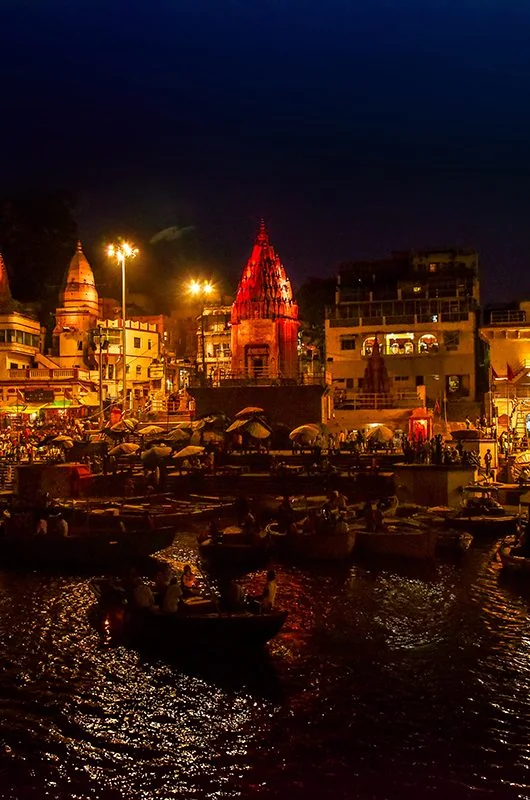
Dashashwamedh Ghat is one of the riverfront's best-known gathering places and is closely associated with Ganga Aarti. Its central setting makes it an important orientation point, but also a place where crowd management matters.
Guide awaiting publicationAssi Ghat
Assi Ghat is a major southern riverfront gathering place associated with the Assi and Ganga and with the morning cultural programme Subah-e-Banaras. It is a useful starting point for a slower introduction to the city.
Guide awaiting publicationManikarnika Ghat
Manikarnika is an active cremation ghat and a place of profound religious importance for many Hindu families. Visitors should understand it first as a working space of bereavement and ritual, not as an attraction for spectacle.
Explore guide →Harishchandra Ghat
Harishchandra Ghat is another active cremation place on the riverfront. It is associated with the story of King Harishchandra and the moral ideal of truthfulness, while continuing to serve the needs of families today.
Explore guide →Panchganga Ghat
Panchganga Ghat is named for a sacred confluence of five rivers in religious tradition. Only the Ganga is visibly present; the fivefold association is a spiritual interpretation of the place, not five observable channels.
Explore guide →Kedar Ghat
Kedar Ghat is closely associated with Gauri Kedareshwar and with Shiva worship. The supplied sources emphasise connections with pilgrims from southern India, showing how Kashi accommodates many regional traditions.
Explore guide →Tulsi Ghat
Tulsi Ghat connects the riverfront with the memory of Tulsidas, Ramcharitmanas recitation and performance traditions. It is a useful place to see how literary heritage can remain part of public religious life.
Explore guide →Scindia, Lalita and Other Historic Ghats
Scindia, Lalita and other historic ghats reveal different forms of patronage and architecture along the river. This guide groups them for orientation without pretending they are one attraction or share one history.
Explore guide →Namo Ghat and Modern Riverfront
Namo Ghat represents a contemporary chapter in Varanasi's riverfront development. Its recognisable folded-hand sculptures make it visually different from the older stepped ghats and palace fronts.
Explore guide →No matching guides. Try a broader search.
Choose your next chapter
Continue your journey
Temples of Varanasi
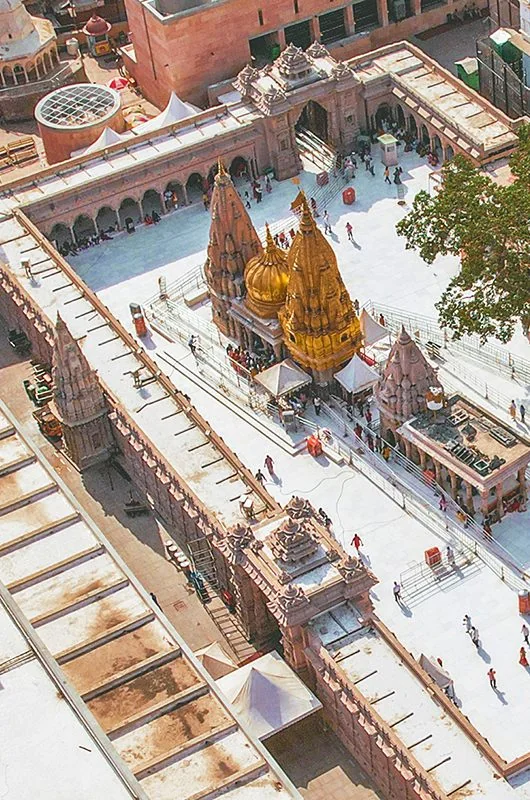
Varanasi's temples form a network of different deities, neighbourhoods and devotional practices. Kashi Vishwanath is a major focus, but smaller shrines reveal the diversity of the city's sacred life.
Explore guide →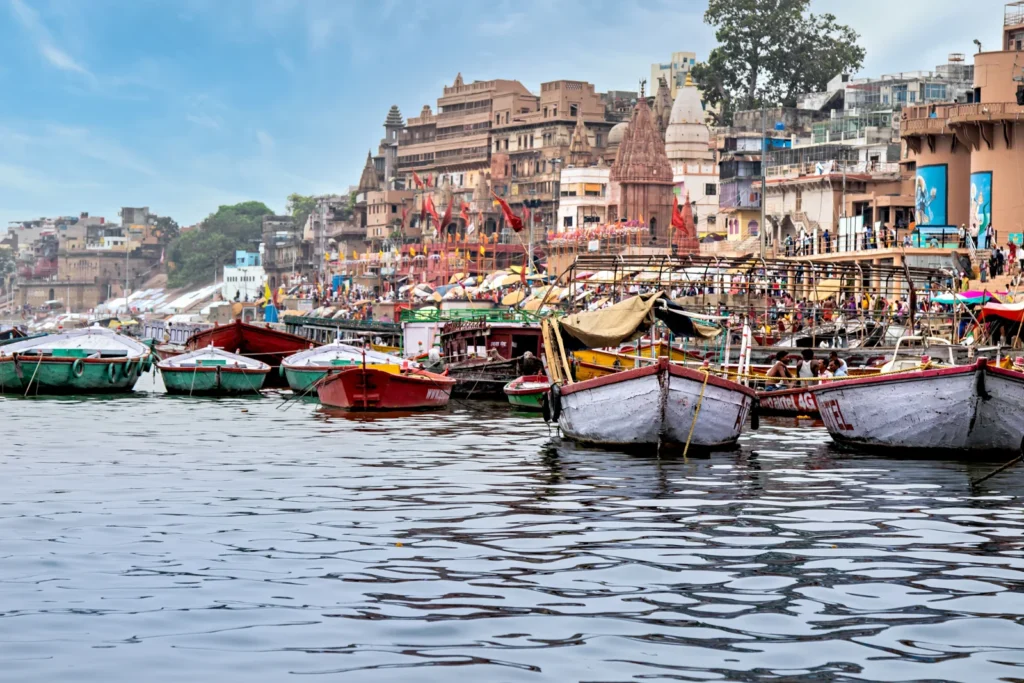
Things to Do in Varanasi
Things to do in Varanasi range from quiet observation to structured visits. The best selection depends on whether your interest is pilgrimage, history, culture, food or time beside the river.
Explore guide →No matching guides. Try a broader search.
Explore the Hinduism knowledge portal
A journey shaped around you
Plan your time in Kashi
Tell us your dates, interests and travel needs. Request a tailored proposal with clear inclusions before confirming any service.
Enquiry only · Availability and prices require confirmation · No payment is taken here