
Prayag Tourism · Ghat
Panchganga Ghat
Panchganga Ghat is named for a sacred confluence of five rivers in religious tradition. Only the Ganga is visibly present; the fivefold association is a spiritual interpretation of the place, not five observable channels.
1. Introduction: The Grandest Architectural Sweep of Northern Kashi
Boat northward past Manikarnika and Scindia Ghats into the quieter, older northern riverfront of Varanasi, and your gaze is drawn upward to a breathtaking, steep amphitheatre of stone stairs crowned by domes, bastions, stone lamp-pillars, and palatial arches. This is Panchganga Ghat—the fourth of the five supreme Pancha Tirthi pilgrimage ghats of Kashi and one of the most historically layered locations in all of northern India (Kashi Yatra by Anu Shankar.pdf, pp. 19, 41).
Few spots in Varanasi bring together so many streams of Indian history on a single flight of steps. Here, Puranic cosmology celebrates the mystical confluence of five sacred rivers; Vaishnava devotion honours the ancient seat of Lord Bindu Madhav; literary history remembers the pre-dawn step where Swami Ramananda initiated the weaver-poet Sant Kabir and where Goswami Tulsidas composed the Vinaya Patrika; and architectural history preserves the 16th-century Maratha-Rajput bastions alongside the 17th-century Alamgir Mosque (Beni Madhav ka Darahara) (Varanasi UP tousim2.pdf, p. 49; 1760321416169VettedStoriesofKashi-SarnathPoIs.pdf, Entry 26).
2. Puranic Legend: The Mystical Confluence of Five Sacred Rivers ( Pancha-Ganga )
In the Kashi Khanda of the Skanda Purana and traditional pilgrimage manuals, Panchganga Ghat is venerated as a Sangam (sacred confluence) where five holy rivers merge into a single current (Kashi Yatra by Anu Shankar.pdf, p. 41):
- Ganga (The visible Himalayan river flowing northward).
- Yamuna (The subtle current extending from Prayagraj).
- Saraswati (The invisible subterranean river of wisdom).
- Kirana (A Puranic solar stream born of the sun’s rays).
- Dhutapapa (“The Washer of Sins,” born of the ascetic penance of the virtuous maiden Susiddhi/Dharmapada).
According to Puranic lore, bathing at Panchganga Ghat—especially before sunrise during the holy autumn month of Kartik (October–November) and the spring month of Vaishakh—cleanses accumulated karmic impurities across lifetimes (1760321416169VettedStoriesofKashi-SarnathPoIs.pdf, Entry 26).
3. Literary & Spiritual History: Swami Ramananda, Sant Kabir, Trailanga Swami and Bindu Madhav
The broad Chunar sandstone steps of Panchganga Ghat—documented in 11th- and 12th-century Gahadavala copper-plate inscriptions and rebuilt in 1580 CE by Raja Raghunath Tandon (Todar Mal’s associate) and in 1735–1775 CE by Peshwa Bajirao I, Sadashivrao Bhau, and Ahilyabai Holkar—witnessed pivotal moments in India’s spiritual history:
- Where Swami Ramananda Initiated Sant Kabir (15th Century CE): At the base of Panchganga Ghat stood the historic Shripad / Ramananda Math, the monastery of the great Vaishnava Bhakti acharya Swami Ramananda. According to beloved Bhakti tradition, young Kabir—knowing that orthodox disciples might block a Muslim weaver from meeting the Brahmin guru—lay down in the pre-dawn darkness across the stone steps of Panchganga Ghat where Ramananda walked down for his daily bath. When Ramananda’s wooden sandal accidentally touched Kabir’s chest, the guru exclaimed in astonishment, “Ram! Ram!”—and Kabir immediately accepted “Ram” as his formal guru-mantra, launching the egalitarian Nirguna Bhakti movement.
- Bindu Madhav Temple (VAR-018): Perched above the ghat is the revered Bindu Madhav Temple, primary among Kashi’s five Pancha Madhava Vishnu shrines (and one of the pan-Indian triad with Veni Madhav at Prayagraj and Sethu Madhav at Rameswaram; Kashi Yatra by Anu Shankar.pdf, pp. 11–12). In the mid-17th century, French jeweller Jean-Baptiste Tavernier marvelled at the original cross-shaped temple built by Raja Man Singh before Emperor Aurangzeb demolished its superstructure in 1669 CE and erected the Alamgir Mosque (popularly still called Beni Madhav ka Darahara by Banarasi boatmen; Varanasi UP tousim2.pdf, p. 49). The rescued shaligram idol of Bindu Madhav continues to be worshipped daily in the adjacent 19th-century Maratha hall built by Bhavan Rao of Satara (1760321416169VettedStoriesofKashi-SarnathPoIs.pdf, Entry 26).
- Trailanga Swami Ashram (Tailang Swami Math): Directly on the ghat stands the ashram and samadhi of the legendary 19th-century yogi Trailanga Swami (1607–1887 CE, whom Sri Ramakrishna Paramahamsa visited and called the “Walking Shiva of Varanasi”), containing a massive Shivalinga that the yogi reportedly lifted from the Ganga with his bare hands.
4. Architectural Gems: "Hajari Chirag" (Stone Lamp Pillars) and Kangan Wali Haveli
Looking closely at the steps of Panchganga Ghat, visitors will spot two unique architectural treasures:
- The Stone Lamp Pillars (Deepastambhas / Hajari Chirag): Rising directly from the ghat steps are conical stone pillars pierced with nearly a thousand small niches (hajari = 1,000), constructed around 1780 CE by Maharani Ahilyabai Holkar. Throughout the month of Kartik and on Dev Deepawali, every single stone niche is filled with a cotton wick and oil—transforming the pillars into towering columns of fire, accompanied by tall bamboo baskets (Akashdeep / sky-lamps) hoisted high into the night sky in memory of ancestors and fallen soldiers (1760321416169VettedStoriesofKashi-SarnathPoIs.pdf, Entry 26).
- Vaulted Riverside Cubicles (Madhis) & Kangan Wali Haveli: Built into the massive retaining wall along the water’s edge are arched stone meditation chambers (madhis) designed for yogis and scholars, while above the ghat rises the intricately carved sandstone Kangan Wali Haveli, famous for its delicate stone-carved bangle (kangan) motifs along its eaves.
C. Practical Visitor Information
- Location: Northern-Central Riverfront (Between Mangala Gauri / Bala Ghat on the south and Durga / Brahma Ghat on the north), Bindu Madhav, Kotwali, Varanasi – 221001 (Varanasi UP tousim2.pdf, p. 49)
- How to Reach: By Boat (Best View): Ask your boatman to extend your morning boat ride 500 metres north past Manikarnika and Scindia Ghats to Panchganga Ghat so you can photograph its grand staircase and stone lamp-pillars from the water (VAR-040). On Foot: Walk ~15 minutes north along the ghats from Dashashwamedh / Manikarnika Ghat, or walk 600 metres east through the historic lanes from Maidagin / Kashi Devi / Chaukhamba.
- Best Time to Visit: Sunrise (5:30 AM – 8:00 AM) when golden light strikes the steep eastern-facing steps, or during Kartik Month (October–November) / Dev Deepawali when the Hajari Chirag stone lamp-pillars and Akashdeep sky-lamps are lit.
- Visiting Hours: Ghat open 24 hours daily. Bindu Madhav Temple & Trailanga Swami Math open roughly 5:00 AM – 12:00 Noon and 4:00 PM – 8:30 PM.
- Entry Fee: Free for all visitors.
- Duration Required: 30 to 45 Minutes (Estimated).
- Nearby Attractions: Bindu Madhav Temple & Trailanga Swami Math (On the ghat), Mangala Gauri Temple (100 m south), Ram Ghat, Mehta Ghat & Vallabhacharya Baithak (200 m south), Gai Ghat & Trilochan Ghat (400 m north), Kal Bhairav Temple (800 m inland).
- Visitor Advice: The stone steps of Panchganga Ghat are broad but steep; wear grippy footwear when climbing up to Bindu Madhav Temple and pause at the stone Deepastambha pillars on the terrace.
D. Frequently Asked Questions (FAQs)
- Why is this ghat called Panchganga Ghat?According to the Kashi Khanda, Panchganga Ghat marks the sacred confluence (sangam) of five rivers: the visible Ganga and four subtle or mythical underground streams—Yamuna, Saraswati, Kirana, and Dhutapapa (Kashi Yatra by Anu Shankar.pdf, p. 41).
- What is the historical connection between Sant Kabir and Panchganga Ghat?In the 15th century, the great Bhakti acharya Swami Ramananda lived at his monastery on Panchganga Ghat, and it was on the dark pre-dawn stone steps of Panchganga Ghat that Ramananda initiated the young weaver-poet Sant Kabir with the mantra “Ram” (VAR-049).
- What are the cone-shaped stone pillars with hundreds of holes on Panchganga Ghat?These are 18th-century stone lamp-towers called Deepastambhas or Hajari Chirag (“Thousand Lamps”), built with hundreds of small stone niches. During the holy month of Kartik and on Dev Deepawali, devotees fill every niche with oil wicks, turning the pillars into blazing towers of light.
- Why do locals call the mosque above Panchganga Ghat “Beni Madhav ka Darahara”?Before 1669 CE, the towering 16th-century Bindu (Beni) Madhav Vishnu Temple stood atop Panchganga Ghat. When Mughal Emperor Aurangzeb demolished the temple superstructure and built the Alamgir Mosque over its lower Hindu plinth, Banarasi residents and boatmen continued to refer to the landmark as Beni Madhav ka Darahara, while the original idol of Bindu Madhav was preserved and reinstalled in the adjacent shrine (Varanasi UP tousim2.pdf, p. 49; 1760321416169VettedStoriesofKashi-SarnathPoIs.pdf, Entry 26).
- Is Panchganga Ghat included in a standard boat ride in Varanasi?Many short boat rides turn back at Manikarnika Ghat. When booking your sunrise or evening boat ride, specifically ask your boatman to go 500 metres further north past Manikarnika and Scindia Ghats to Panchganga Ghat—it takes only 10 extra minutes and reveals the most dramatic architectural staircase on the river (VAR-040).
Choose your next chapter
Continue your journey
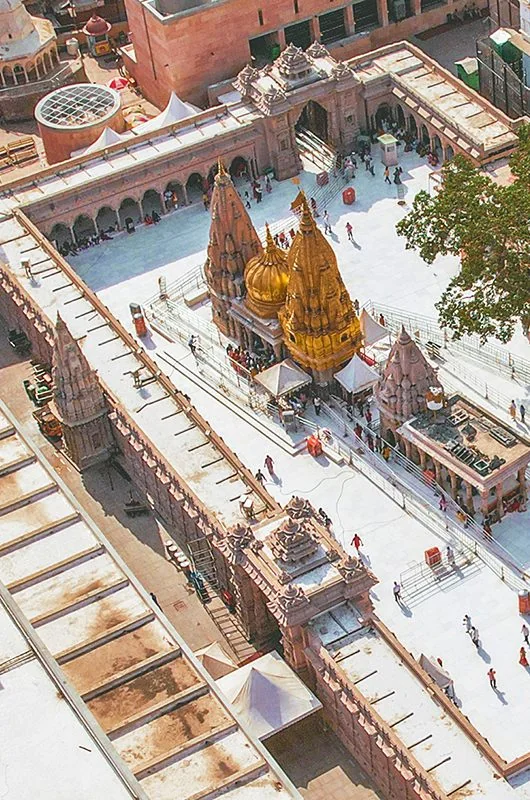
Temples of Varanasi
Varanasi's temples form a network of different deities, neighbourhoods and devotional practices. Kashi Vishwanath is a major focus, but smaller shrines reveal the diversity of the city's sacred life.
Explore guide →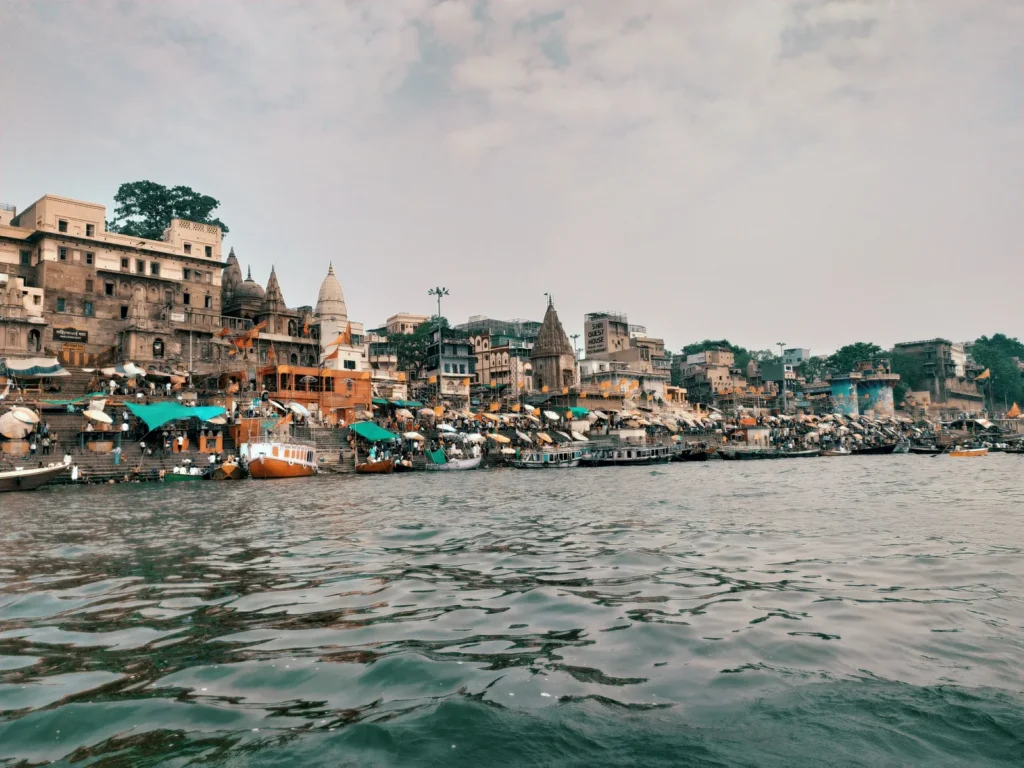
Ghats of Varanasi
The ghats are the city's meeting place with the Ganga: stepped river edges used for worship, movement, gathering and everyday work. They are connected, but each has a name and history worth learning.
Explore guide →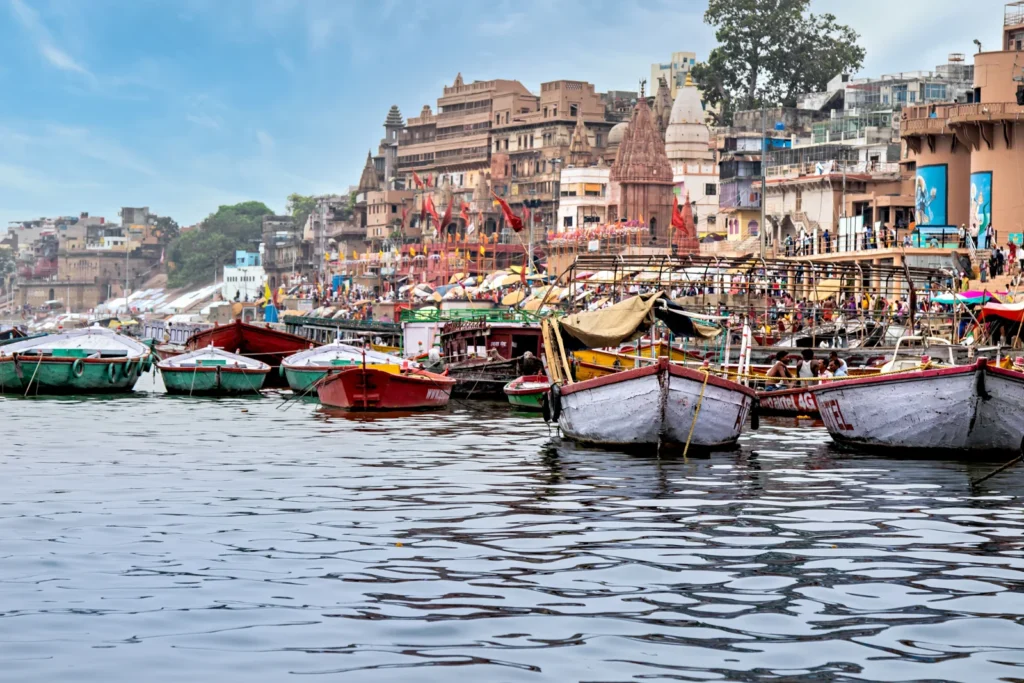
Things to Do in Varanasi
Things to do in Varanasi range from quiet observation to structured visits. The best selection depends on whether your interest is pilgrimage, history, culture, food or time beside the river.
Explore guide →No matching guides. Try a broader search.
Locate the area
Open a place-name search and confirm the exact venue and approach before travelling. No unverified coordinates or embedded tracking map are used.
Open map search: Panchganga Ghat, Varanasi, Uttar Pradesh, India ↗Explore the Hinduism knowledge portal
A journey shaped around you
Plan your time in Kashi
Tell us your dates, interests and travel needs. Request a tailored proposal with clear inclusions before confirming any service.
Enquiry only · Availability and prices require confirmation · No payment is taken here