
Prayag Tourism · Ghat
Scindia, Lalita and Other Historic Ghats
Scindia, Lalita and other historic ghats reveal different forms of patronage and architecture along the river. This guide groups them for orientation without pretending they are one attraction or share one history.
1. Introduction: The Royal Museum of Indian Riverfront Architecture
While Dashashwamedh, Assi, and Manikarnika anchor the ritual poles of Varanasi, the intervening steps form an extraordinary four-kilometre architectural gallery built by rulers from every corner of the Indian subcontinent (District Varanasi Official Portal). Between the seventeenth and early twentieth centuries, Rajput Maharajas of Amber/Jaipur, Maratha Peshwas, Holkars of Indore, Scindias of Gwalior, Bhonsles of Nagpur, Royal Houses of Nepal, Nawabs of Awadh, and Maharajas of Darbhanga and Vijayanagaram competed to construct monumental Chunar sandstone palaces, fortresses, observatories, and riverside shrines along the Ganga (Navigating the Ghats of Varanasi).
This page provides an authoritative architectural and historical guide to the most visually striking historic ghats of Varanasi—led by Scindia Ghat (with its iconic leaning temple of Ratneshwar Mahadev), Lalita Ghat (home to the Nepali Mandir and the grand Ganga Dwar of the Kashi Vishwanath Dham Corridor), Man Mandir Ghat, Darbhanga and Munshi Ghats, Ahilyabai Ghat, and Chet Singh Ghat.
2. Scindia Ghat (Shinde Ghat) and the Leaning Ratneshwar Mahadev Temple
Located immediately north of Manikarnika Ghat (VAR-021), Scindia Ghat is one of the most photographed spots on the entire Varanasi riverfront (Scindia Ghat Drive Photo).
- Patronage and the Submerged Structure: In 1830 CE, Maharani Baiza Bai Scindia, wife of Maharaja Daulat Rao Scindia of Gwalior (who had earlier constructed the colonnaded pavilion over the Gyanvapi Well), commissioned a massive masonry ghat and temple fortification here (Vetted Stories of Kashi & Sarnath PoIs). So enormous was the weight of the stone superstructure that sections of the masonry subsided into the soft alluvial riverbed during construction. The ghat was later reconstructed and stabilized in 1937 CE by the Scindia royal family of Gwalior.
- Ratneshwar Mahadev (Matri-Rin Mahadev) Leaning Temple: Standing right at the water’s edge between Manikarnika and Scindia Ghats is the famous nineteenth-century Ratneshwar Mahadev Temple, which tilts toward the northwest at an astonishing 9-degree angle—significantly steeper than the Leaning Tower of Pisa (~4 degrees) (Vetted Stories of Kashi & Sarnath PoIs). Built in the classical Nagara style with a carved Shikhara and pillared mandapa, the temple remains partially submerged under the Ganga for several months each year during and after the monsoon, with water frequently reaching the tip of its spire. Local legend attributes the tilt to the curse of a mother (Matri-Rin) whose son boasted he had repaid his maternal debt by building the shrine, while structural engineers attribute it to differential settlement of the river silt foundation.
- Birthplace of Agni: In Puranic mythology, Scindia Ghat is revered as the site where Agni (the Hindu deity of fire) was born, and childless couples worship Vireshwara (Lord of Heroes) in the narrow lanes above the ghat.
3. Lalita Ghat: The Nepali Pagoda and the Gateway to Kashi Vishwanath Dham
Situated just south of Manikarnika Ghat (VAR-021), Lalita Ghat blends Himalayan wooden craftsmanship with twenty-first-century monumental sandstone engineering (Vetted Stories of Kashi & Sarnath PoIs):
- Lalita Devi Shrine and King Rana Bahadur Shah: Named after Goddess Lalita (a Tantric manifestation of Parvati whose shrine sits above the steps), the ghat was acquired and fortified in the early nineteenth century by King Rana Bahadur Shah of Nepal, who lived in self-imposed exile in Varanasi from 1800 to 1804 under the monastic title Swami Nirgunananda.
- The Nepali Mandir (Kanthwala Mandir / Mini Khajuraho): Overlooking Lalita Ghat stands the two-storey Samrajeshwar Pashupatinath Mahadev Temple (VAR-017), completed between 1841 and 1843 by King Rajendra Bikram Shah of Nepal using seasoned sal wood, terracotta tiles, and gilded copper roofs modeled on Kathmandu’s Pashupatinath.
- Ganga Dwar of Shri Kashi Vishwanath Dham: Today, the northern conjunction of Lalita Ghat and Jalasen Ghat forms the magnificent Ganga Dwar (River Gateway) of the Shri Kashi Vishwanath Dham Corridor (VAR-007, Ganga Dwar Drive Image). Pilgrims arriving by boat disembark at the wide red-sandstone plaza equipped with ramps and escalators that lead directly to the Golden Temple without navigating narrow city alleys.
4. Man Mandir Ghat and the Jantar Mantar Rooftop Observatory
Located just north of Dashashwamedh Ghat (VAR-019), Man Mandir Ghat (originally known as Someshwar Ghat) is crowned by one of the grandest Rajput palaces in Varanasi (Varanasi UP Tourism Brochure).
- Raja Man Singh’s Palace (c. 1600 CE): Built by Raja Man Singh of Amber (Jaipur), the celebrated general of Emperor Akbar’s court, this towering Chunar sandstone fortress features exquisite carved stone balconies (jharokhas), latticed screens (jalis), and ornamental friezes that overlook the river.
- Sawai Jai Singh II’s Astronomical Observatory (1737 CE): In the 1730s, the astronomer-king Maharaja Sawai Jai Singh II of Jaipur constructed one of his five historic masonry Jantar Mantar observatories on the flat rooftop of Man Mandir Palace (under the supervision of astronomer Jagannath Samrat). Maintained today by the Archaeological Survey of India (ASI), the rooftop houses giant stone instruments including the Samrat Yantra (equinoctial sundial), Nadivalaya Yantra, Chakra Yantra, and Digamsa Yantra used to measure solar time, planetary declinations, and eclipses and to calibrate the Hindu lunar calendar (Panchang). The observatory is open from 10:00 AM to 5:00 PM (closed Fridays; entry fee ~₹15 for Indians / ₹200 for Foreigners).
5. Darbhanga Ghat, Munshi Ghat, and Ahilyabai Ghat
South of Dashashwamedh Ghat stretches a dramatic row of nineteenth- and early twentieth-century royal riverfront mansions (Navigating the Ghats of Varanasi):
- Ahilyabai Ghat (1778 CE): Built by Maharani Ahilyabai Holkar of Indore—the first ghat in Varanasi named after a woman—featuring calm bathing steps and a fortified courtyard palace.
- Munshi Ghat (1812 CE) and Darbhanga Ghat (1915 CE): Originally constructed in 1812 by Sridhara Narayana Munshi, a finance minister of the Nagpur State, the northern portion of the ghat and palace was purchased in 1915 by the Maharaja of Darbhanga (Bihar), who erected the colossal Greek-pillar-and-sandstone fortress of Darbhanga Palace (complete with one of the earliest mechanical elevators in Varanasi) and the adjacent Shiva temple. Part of the historic Munshi Ghat palace now operates as the heritage BrijRama Palace Hotel.
6. Chet Singh Ghat, Panchganga Ghat, and Gai Ghat
- Chet Singh Ghat & Fort (1781 Rebellion): Located in the southern sector near Shivala Ghat, this turreted river fortress was the site of the historic battle on 16 August 1781 between the troops of Maharaja Chet Singh of Banaras and the British East India Company forces of Governor-General Warren Hastings. During the battle, Chet Singh famously escaped down the riverside bastion wall using a rope twisted from royal turbans while Hastings fled Varanasi by night.
- Panchganga Ghat and Bindu Madhav Temple: Situated in the northern sector, Panchganga Ghat marks the mythic confluence of five sacred streams (Ganga, Yamuna, Saraswati, Kirana, and Dhutapapa). Above its sweeping stone steps rises the seventeenth-century Alamgir Mosque (built on the site of the sixteenth-century Bindu Madhav temple destroyed under Aurangzeb), while the preserved Bindu Madhav Vishnu idol is worshipped in an adjacent mansion (VAR-017) and the steps are famous for the tall stone pillar (Hajaro Batti / Alamgir Deep Stambh) lit with oil lamps during Kartik Purnima. Here, saint-poet Kabir received initiation from Swami Ramananda on the dark morning steps.
7. Conclusion
Viewing these historic ghats from a slowly moving boat (VAR-040) and then climbing up into Man Mandir Observatory, Lalita Ghat’s Nepali Mandir, and Scindia Ghat’s leaning temple offers a masterclass in three hundred years of Indian royal patronage and sacred architecture.
C. Practical Visitor Information
- Location: Central and Northern Riverfront (stretching from Chet Singh Ghat in the south to Panchganga Ghat in the north), Varanasi, Uttar Pradesh (District Varanasi Official Portal).
- How to Reach: Best viewed sequentially on a morning or sunset Ganga boat ride (VAR-040), or explored on foot starting from Dashashwamedh Ghat (VAR-019) going north to Man Mandir, Lalita, and Scindia Ghats (~10–15 minutes walk) or south to Ahilyabai, Darbhanga, Munshi, and Chet Singh Ghats (~15–20 minutes walk).
- Best Time to Visit: October to March; 6:00 AM – 9:30 AM for morning light on the east-facing facades, and 10:00 AM – 4:30 PM to visit the ASI Man Mandir Observatory rooftop.
- Visiting Hours: All ghat steps are open 24 hours daily; Man Mandir Observatory is open 10:00 AM to 5:00 PM (Closed on Fridays) (Varanasi UP Tourism Brochure).
- Entry Fee: Ghats and temples are free; Man Mandir ASI Observatory charges ₹15 for Indian citizens and ₹200 for foreign nationals (verify latest ASI e-ticketing rates on arrival).
- Duration Required: Approximately 2 to 3 hours for a walking and rooftop tour (estimated).
- Nearby Attractions: Dashashwamedh Ghat (VAR-019), Manikarnika Ghat (VAR-021), Shri Kashi Vishwanath Dham (VAR-007), and Nepali Mandir (VAR-017).
- Visitor Advice: Bring binoculars or a zoom lens to admire the stone carvings on Ratneshwar Mahadev and Darbhanga Palace from the boat; remember that Man Mandir Observatory is closed on Fridays.
D. Frequently Asked Questions (FAQs)
1. Why is the Ratneshwar Mahadev Temple at Scindia Ghat leaning?The nineteenth-century Ratneshwar Mahadev Temple leans at a 9-degree angle due to differential subsidence of its riverside silt foundation beneath heavy sandstone masonry, though local folklore attributes it to a mother’s debt (Matri-Rin) (Vetted Stories of Kashi & Sarnath PoIs).
2. Can visitors go inside theleaning Ratneshwar Mahadev Temple?No, the temple’s lower sanctum is tilted and frequently submerged or silted by the River Ganga, so it is admired from the exterior steps of Scindia and Manikarnika Ghats or from a boat.
3. Where is the Jantar Mantar Observatory in Varanasi located?Varanasi’s Jantar Mantar Observatory is located on the rooftop of Man Mandir Palace at Man Mandir Ghat, immediately north of Dashashwamedh Ghat (Varanasi UP Tourism Brochure).
4. Which ghat connects directly to the Kashi Vishwanath Dham Corridor?Lalita Ghat (joined with Jalasen Ghat) forms the Ganga Dwar river gateway leading directly into the Shri Kashi Vishwanath Dham Corridor (VAR-007).
5. What happened at Chet Singh Ghat in 1781?On 16 August 1781, a fierce battle broke out at Chet Singh Fort between the guards of Maharaja Chet Singh and British East India Company troops under Warren Hastings, after which the Maharaja escaped down the river wall using a rope of tied turbans.
6. Which saint is associated with the steps of Panchganga Ghat?Both the fourteenth/fifteenth-century mystic Sant Kabir (who received the Rama-mantra from Swami Ramananda on its steps) and Goswami Tulsidas (linked with the adjacent Bindu Madhav temple) are deeply associated with Panchganga Ghat.
Choose your next chapter
Continue your journey
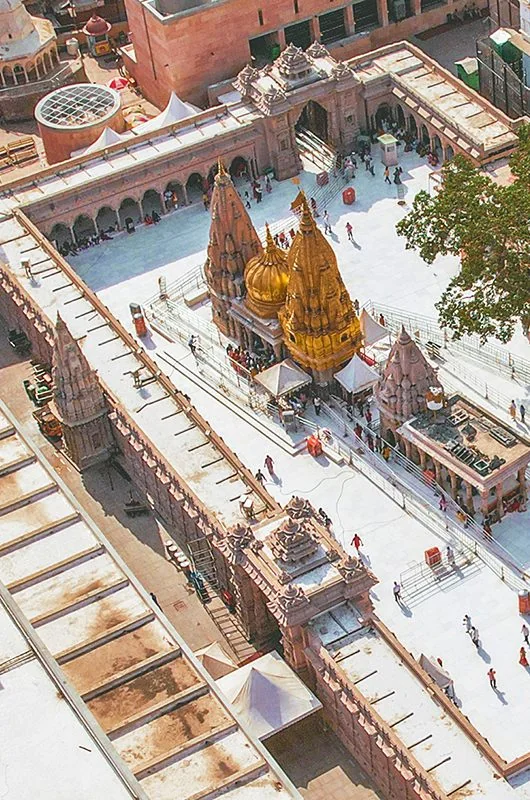
Temples of Varanasi
Varanasi's temples form a network of different deities, neighbourhoods and devotional practices. Kashi Vishwanath is a major focus, but smaller shrines reveal the diversity of the city's sacred life.
Explore guide →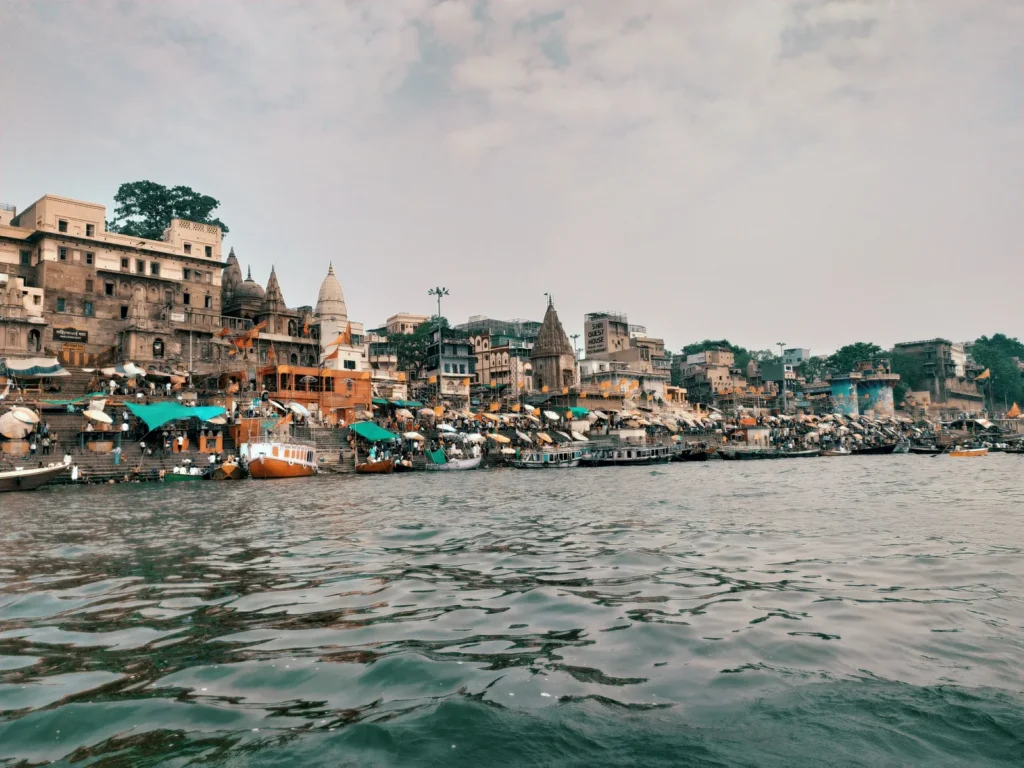
Ghats of Varanasi
The ghats are the city's meeting place with the Ganga: stepped river edges used for worship, movement, gathering and everyday work. They are connected, but each has a name and history worth learning.
Explore guide →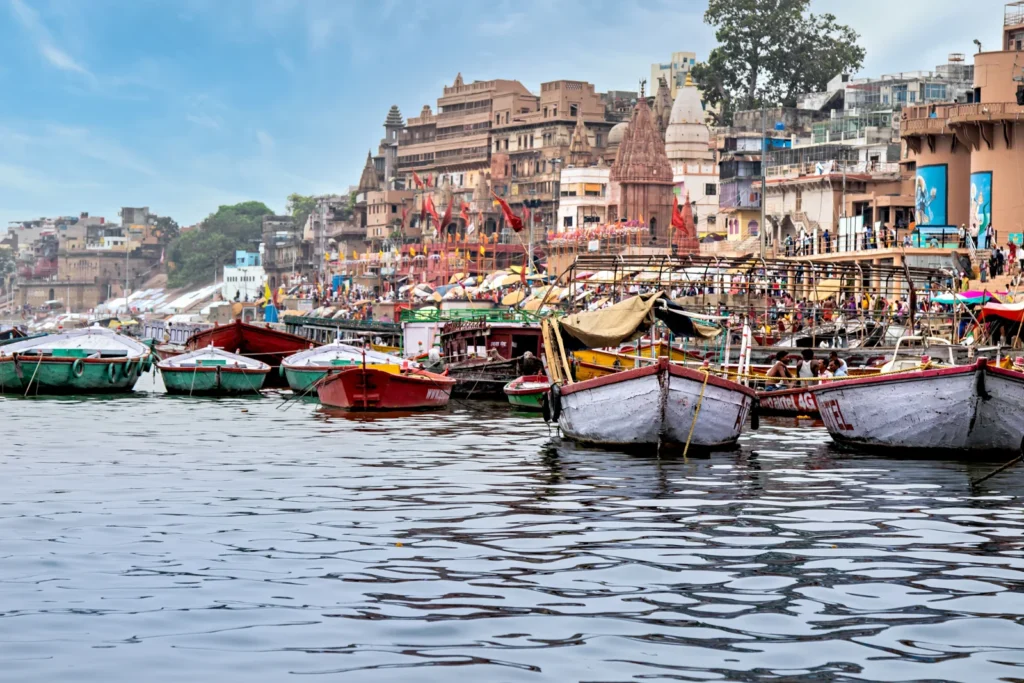
Things to Do in Varanasi
Things to do in Varanasi range from quiet observation to structured visits. The best selection depends on whether your interest is pilgrimage, history, culture, food or time beside the river.
Explore guide →No matching guides. Try a broader search.
Explore the Hinduism knowledge portal
A journey shaped around you
Plan your time in Kashi
Tell us your dates, interests and travel needs. Request a tailored proposal with clear inclusions before confirming any service.
Enquiry only · Availability and prices require confirmation · No payment is taken here