
Prayag Tourism · Ghat
Manikarnika Ghat
Manikarnika is an active cremation ghat and a place of profound religious importance for many Hindu families. Visitors should understand it first as a working space of bereavement and ritual, not as an attraction for spectacle.
1. Introduction: Where the Eternal Flame Honours the Transition from Time to Liberation
Situated on the central arc of the Varanasi riverfront immediately north of Lalita Ghat (the riverfront portal of the Shri Kashi Vishwanath Dham Corridor) and south of Scindia Ghat lies Manikarnika Ghat—the most sacred of the five Pancha Tirthi bathing spots of Kashi and the primary Hindu cremation ground (Mahashmashana) of Varanasi (Varanasi UP tousim2.pdf, p. 52; Kashi Yatra by Anu Shankar.pdf, p. 41). Here, on stone terraces overlooking the northward-flowing Ganga, funeral pyres have burned continuously, day and night, for centuries without ever being extinguished.
To an unprepared outsider, witnessing open-air funerary rites at the water’s edge can feel startling. Within the worldview of Sanatana Dharma, however, Manikarnika Ghat is not a place of macabre spectacle or morbid fear—it is the sacred threshold where the five physical elements (Pancha Mahabhuta—earth, water, fire, air, and ether) return peacefully to nature while the immortal soul (Atman) receives the liberating grace of Lord Shiva (VAR-004). Because this ghat is an active site of bereavement where families from across India gather to perform the final sacrament (Antyeshti Samskara) for their loved ones, every visitor who approaches Manikarnika must do so with quiet dignity, sensitivity, and strict adherence to local etiquette.
2. Puranic Cosmology: Lord Vishnu's "Chakra Pushkarini Kund" and the Falling of the "Manikarnika" Jewel
In the Kashi Khanda of the Skanda Purana (Chapter 26) and the Padma Purana, Manikarnika is revered as the very first tirtha created on earth at the dawn of cosmic time:
- Lord Vishnu’s Fifty-Thousand-Year Penance & Chakra Pushkarini Kund: According to Puranic scripture, before the River Ganga descended from heaven to earth, Lord Vishnu dug a sacred lotus tank here using his Sudarshana discus (Chakra) and filled it with the perspiration of his own ascetic tapasya performed over fifty thousand years in honour of Lord Shiva. Because it was dug by Vishnu’s discus, this square stepped pool—which still exists on the upper terrace of Manikarnika Ghat—is revered as Chakra Pushkarini Kund (or Manikarnika Kund), considered in Hindu tradition to be the oldest tirtha in the universe (Kashi Yatra by Anu Shankar.pdf, p. 41).
- Why It Is Called “Manikarnika” (The Jewelled Ear-Ornament): When Lord Shiva and Goddess Parvati came to behold Vishnu’s devotion beside the shimmering waters of the Chakra Pushkarini, Shiva was so overwhelmed with cosmic bliss that his head trembled with joy, and his jewelled ear-ornament—or, in parallel Puranic and Shakta accounts, the jewelled earring (Mani-karnika) of Goddess Parvati/Sati—slipped from the ear and fell into the sacred kund (Kashi Yatra by Anu Shankar.pdf, p. 19). From that moment, the tirtha was consecrated as Manikarnika.
- Vishnu’s Boon of Mukti: Pleased beyond measure, Lord Shiva asked Vishnu to name any boon. Vishnu requested that Kashi become the supreme sanctuary where living beings are freed from the cycle of rebirth, and where Shiva himself remains present at the moment of death to whisper the Taraka Mantra into the right ear of every departing soul (VAR-004). Thus Manikarnika is celebrated in Sanskrit texts as Mukti Kshetra—where death is transformed from a terrifying end into auspicious liberation (Mangala Marana).
3. Historical Evolution, Royal Reconstructions and Architectural Features
Historically, epigraphic records from the Gupta era and 11th–12th-century Gahadavala copper-plate inscriptions explicitly record royal ceremonial baths and charitable gifts (daan) at Manikarnika Ghat (1760321416169VettedStoriesofKashi-SarnathPoIs.pdf). Across the 18th and 19th centuries, the stone embankments and shrines of Manikarnika were systematically reconstructed by Maratha and royal patrons:
- 1730s–1791 CE Reconstructions (Bajirao Peshwa & Maharani Ahilyabai Holkar): After early 18th-century stonework by Peshwa Bajirao I (who also built the adjacent Bajirao Ghat), Maharani Ahilyabai Holkar of Indore undertook a comprehensive stone reconstruction of Manikarnika Ghat and its riverside temples around 1791 CE (1760321416169VettedStoriesofKashi-SarnathPoIs.pdf, Entries 76 & 77).
- Chakra Pushkarini Kund & Charan Paduka: Set into the stone terrace above the river steps is the square masonry tank of Chakra Pushkarini Kund, surrounded by a cast-iron balustrade. Adjacent to the kund rests a circular marble slab bearing the Charan Paduka (Sacred Footprints) of Lord Vishnu, marking the spot where Vishnu meditated; historically, only VIPs or royal figures of Kashi were cremated beside the Charan Paduka slab.
- Tarakeshwara Mahadev, Manikarnikeshwara & Ratneshwar Mahadev: Overlooking the ghat stand three important Shiva shrines: Tarakeshwara Mahadev Temple (built by Ahilyabai Holkar right on the ghat platform, dedicated to the form of Shiva who whispers the Taraka Mantra), the ancient subterranean Manikarnikeshwara Temple high on the bluff above the ghat (Kashi Yatra by Anu Shankar.pdf, p. 15), and the famously leaning Ratneshwar Mahadev Temple (“Kashi Karvat”) at the northern border where Manikarnika meets Scindia Ghat (VAR-018).
- The Dom Raja Tradition: For centuries, the sacred eternal fire (akhand agni) used to light every funeral pyre at Manikarnika and Harishchandra Ghats has been guarded and provided by the hereditary Dom community (headed by the Dom Raja family), whose role is honoured in the legend of King Harishchandra (VAR-023).
4. Mandatory Visitor Etiquette & Responsible Tourism at Manikarnika Ghat
Because Manikarnika Ghat is both one of the five Pancha Tirthi pilgrimage stops (where devout Hindus take a midday dip at Chakra Pushkarini / Manikarnika during the Pancha Tirthi Yatra and Panchkroshi Yatra) and an active 24-hour cremation ground, visitors must follow strict ethical guidelines:
- Strict Prohibition on Photography and Filming: Never photograph, film, or livestream burning funeral pyres, mortal remains, or grieving family members—neither from the ghat steps nor with zoom lenses from passing boats (VAR-082). Doing so deeply disrespects bereaved families and violates local cultural and administrative norms.
- Maintain Quiet and Step Aside for Funeral Processions: When pallbearers carry a bamboo bier (arthi) chanting “Ram Naam Satya Hai” through the lanes of Manikarnika Gali or down the steps, step immediately to the side, lower your voice, and allow the family and priests unobstructed passage.
- Avoid Unauthorized Street Touts (“Cremation Wood / Hospice” Scam): A well-known tourist hustle operates near the upper approaches to Manikarnika Ghat, where unauthorized self-appointed “guides” approach foreign and domestic visitors claiming to run a hospice, telling fabricated stories, or demanding thousands of rupees for “cremation wood for poor families.” Politely decline and walk on, or view the historic ghat architecture respectfully from a passing boat on the river (VAR-060).
C. Practical Visitor Information
- Location: Central Riverfront (Between Lalita Ghat / Jalashayi Ghat on the south and Bajirao / Scindia Ghat on the north), Manikarnika Gali, Kotwali, Varanasi – 221001 (Varanasi UP tousim2.pdf, p. 52)
- How to Reach: Best & Most Respectful Way: View from a distance aboard a morning or afternoon boat ride on the Ganga (VAR-040), or walk along the upper terrace via the Shri Kashi Vishwanath Dham Corridor (which adjoins Jalashayi/Manikarnika Ghat) if performing the Pancha Tirthi or Panchkroshi pilgrimage.
- Visiting Hours: Active 24 hours a day, 365 days a year. For pilgrims visiting Chakra Pushkarini Kund and Tarakeshwara Mahadev, daytime hours (8:00 AM – 4:00 PM) are recommended.
- Entry Fee: Free public access (No “entry permit” or “camera permit” exists; anyone demanding money to enter or take photos is an unauthorized tout).
- Photography Policy: Strictly Prohibited around active cremation zones and funeral pyres (VAR-082). Distant architectural photography of the northern leaning Ratneshwar Mahadev temple at Scindia Ghat is permitted only when framed away from cremation platforms.
- Duration Required: 15 to 20 Minutes (from a boat or quiet visit to Chakra Pushkarini Kund).
- Nearby Attractions: Shri Kashi Vishwanath Dham Corridor & Lalita Ghat (100 m south), Scindia Ghat & Leaning Ratneshwar Mahadev Temple (50 m north), Sankatha Devi Temple (200 m north), Vishalakshi Shaktipeeth (250 m south).
D. Frequently Asked Questions (FAQs)
- Why is Manikarnika Ghat considered the most sacred cremation ground in Hinduism?According to Puranic scriptures such as the Kashi Khanda, Manikarnika is where Lord Vishnu dug the primordial Chakra Pushkarini Kund, where Shiva’s or Parvati’s jewelled ear-ornament (Manikarnika) fell, and where Lord Shiva himself imparts the liberating Taraka Mantra to departing souls, granting moksha (liberation from rebirth) (Varanasi UP tousim2.pdf, p. 52).
- Is photography allowed at Manikarnika Ghat?No. Taking photographs or videos of active funeral pyres and grieving families at Manikarnika Ghat is strictly prohibited and culturally offensive. Always keep cameras and phones put away when passing the cremation platforms (VAR-082).
- What is the Chakra Pushkarini Kund at Manikarnika Ghat?Chakra Pushkarini Kund (also called Manikarnika Kund) is a sacred square stepped masonry tank located on the upper platform of Manikarnika Ghat. Puranic tradition holds that Lord Vishnu dug it with his Sudarshana Chakra before the Ganga descended to earth, making it one of the five essential bathing/ritual stops of the Pancha Tirthi and Panchkroshi pilgrimages (Kashi Yatra by Anu Shankar.pdf, p. 41).
- Who is Tarakeshwara Mahadev at Manikarnika Ghat?Tarakeshwara Mahadev is the form of Lord Shiva enshrined in the 18th-century temple built by Maharani Ahilyabai Holkar right on Manikarnika Ghat, representing Shiva’s role as the giver of the Taraka Mantra that ferries souls across the ocean of worldly existence.
- Should tourists walk through the active cremation platforms of Manikarnika Ghat?Unless you are a pilgrim performing ritual bathing at Chakra Pushkarini Kund or attending a family funeral, the most respectful way to observe Manikarnika Ghat and understand its spiritual significance is from a quiet boat out on the River Ganga accompanied by a knowledgeable local guide (VAR-040).
Choose your next chapter
Continue your journey
Religious and Spiritual Significance of Kashi
For many Hindu pilgrims, Kashi is associated with Shiva, the Ganga and the hope of liberation. These beliefs help explain journeys made here, but they should be presented as religious traditions rather than promises of a measurable outcome.
Explore guide →Harishchandra Ghat
Harishchandra Ghat is another active cremation place on the riverfront. It is associated with the story of King Harishchandra and the moral ideal of truthfulness, while continuing to serve the needs of families today.
Explore guide →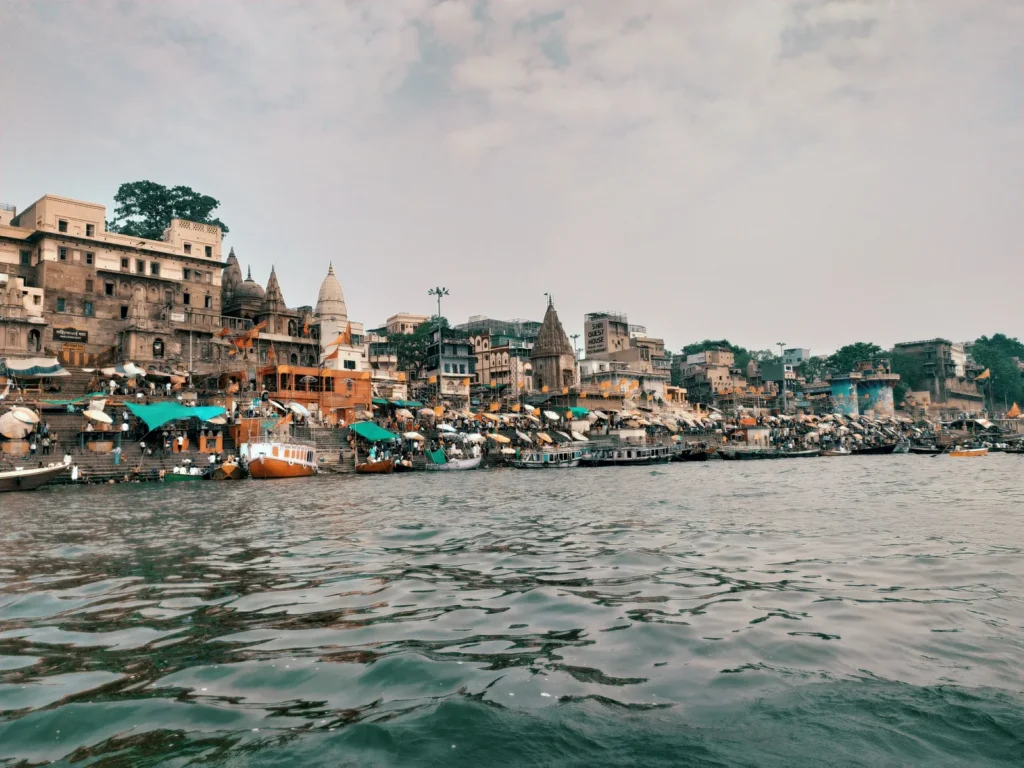
Varanasi Photography Guide and Responsible Photography Etiquette
Responsible photography begins with recognising that Varanasi is home and workplace as well as a destination. A compelling image should not depend on intrusion, pressure or unsafe positioning.
Explore guide →No matching guides. Try a broader search.
Locate the area
Open a place-name search and confirm the exact venue and approach before travelling. No unverified coordinates or embedded tracking map are used.
Open map search: Manikarnika Ghat, Varanasi, Uttar Pradesh, India ↗Explore the Hinduism knowledge portal
A journey shaped around you
Plan your time in Kashi
Tell us your dates, interests and travel needs. Request a tailored proposal with clear inclusions before confirming any service.
Enquiry only · Availability and prices require confirmation · No payment is taken here