
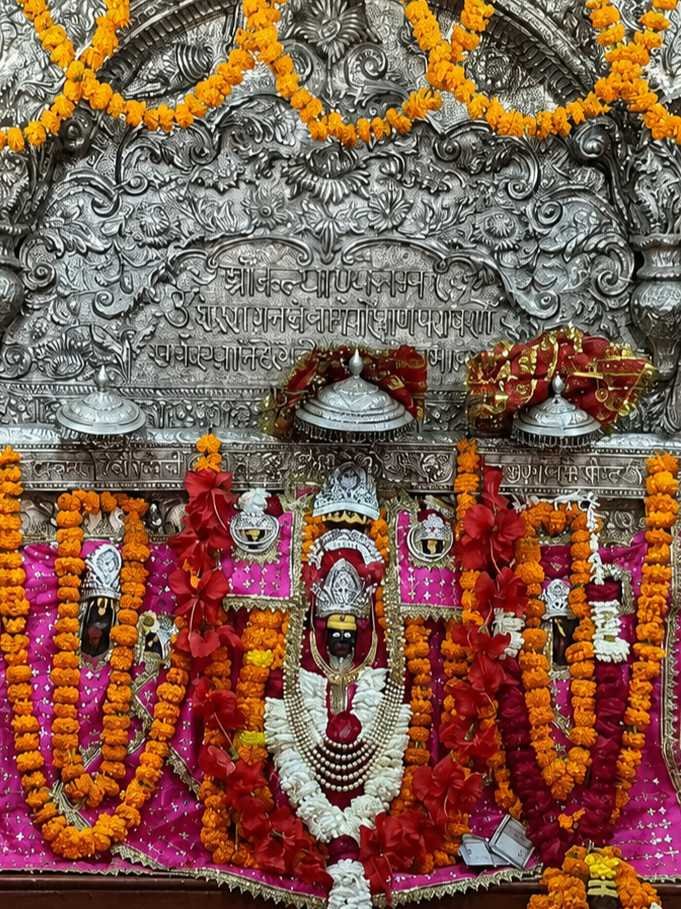
Kalyani Devi Temple, Prayagraj – A First-Time Visitor’s Complete Guide
If you have already heard of Triveni Sangam, Lalita Devi or Alopi Devi, then Kalyani Devi Temple is the next powerful stop on your Prayagraj spiritual journey. Calm yet deeply energetic, this Shakti Peeth is perfect for solo travellers and family groups who want both darshan and a relaxed local experience.
Why Kalyani Devi Temple Is Special
According to ancient Hindu beliefs and references found in religious texts such as the Padma Purana and Brahmavaivarta Purana, Maa Kalyani Devi is worshipped as a manifestation of Adi Shakti. According to belief, three fingers of Goddess Sati fell at this spot when Lord Shiva wandered with her body after the Daksha Yagna incident. From those three fingers, the divinity of Maa Kalyani manifested, and even today, devotees come here to seek strength, protection, and relief from problems.
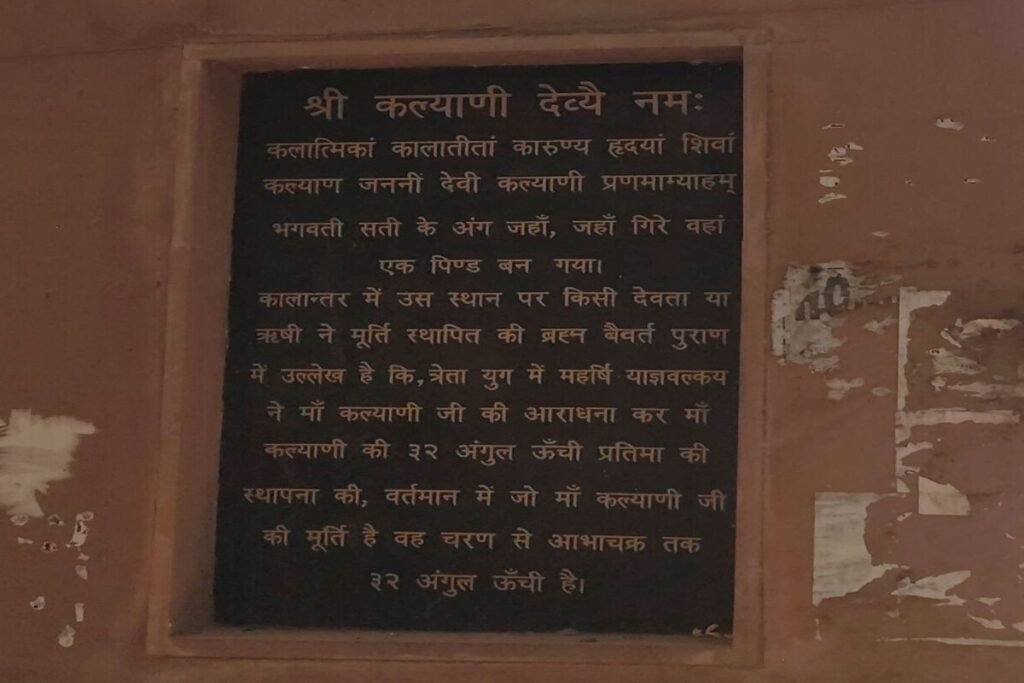
The inscription displayed inside the temple premises also mentions that the sacred place became spiritually powerful after a divine part of Goddess Sati fell here. According to local traditions, Maharishi Yajnavalkya worshipped Maa Kalyani at this holy site during the Treta Yuga and established the idol of the goddess. The current idol is believed to be approximately 32 angul (traditional unit) in height.
The present temple structure is said to have been built in the late 19th century, around 1883, though the idol of the goddess is believed to be much older—possibly dating back many centuries. Inside the main sanctum, three forms are worshipped together: Maa Kalyani in the centre, Shankar–Parvati on one side, and Chhinnamasta Devi on the other, giving the temple a strong Shakti–Shiva balance.
For a first-time visitor, knowing this background helps you connect more deeply while taking darshan, instead of feeling like you are just “visiting another temple”.
Location and How to Reach
Kalyani Devi Temple is located in the Kalyani Devi area of Prayagraj (earlier Allahabad), in the older part of the city. It is approximately 3 km from Prayagraj Junction railway station, so travel time is usually 10–20 minutes depending on traffic.
Best ways to reach for first-timers:
- Auto-rickshaw: The simplest option. From the station, bus stand, or Civil Lines area, just ask for “Kalyani Devi Mandir”. Most drivers know the route.
- Taxi/ride apps: You can book a cab and search for “Kalyani Devi Temple Prayagraj” as the destination in the app.
- Own vehicle: The roads are fairly accessible compared to some tighter areas in the city, but parking near the temple can still be limited during peak hours and festivals.
If you are doing a Shakti Peeth circuit in Prayagraj, you can easily combine Lalita Devi, Kalyani Devi, and Alopi Devi in one day with an auto or hired cab.
Temple Timings and Best Time to Visit
Timings can vary slightly from source to source and on festivals, but commonly:
- General darshan hours: Around 4:00 AM to 10:00 PM every day.
- Peak devotional time: Early morning and evening aarti times, especially on Tuesdays, Fridays, and during Navratri.
For a comfortable first visit:
- Morning visit: 6:00–9:00 AM – Cooler weather, easier darshan, good for elderly family members and kids.
- Evening visit: 5:00–8:00 PM – More vibrant atmosphere with lights and bhajans; expect more crowd.
During Navratri and special occasions, the temple can be packed, so start early and keep extra time in your schedule.
What to Expect When You Reach
As you approach the Kalyani Devi locality, you’ll notice the shift from modern Civil Lines to older, more traditional streets. The temple stands as a calm spiritual centre amid houses, shops, and daily city life.
Outside the temple:
- Small shops sell flowers, coconuts, chunri, prasad, and bangles. You can buy a simple thali for offering.
- Footwear stands or nearby shopkeepers usually keep your shoes for a small amount or as a gesture when you buy something.
Inside the complex:
- The main entrance leads into a spacious courtyard where you can pause, adjust to the atmosphere, and then move towards the sanctum.
- Queues are usually manageable on normal days, but Tuesdays, Fridays, and festivals can see long lines.
Tip: Keep your offerings light and easy to carry so that your hands are free while standing in the queue.
Darshan and Rituals for First-Timers
In the garbhagriha (inner sanctum), Maa Kalyani is worshipped in her powerful yet compassionate form. The idol is beautifully decorated with red cloth, ornaments, and fresh flowers. Devotees offer:
- Flowers and garlands
- Coconuts
- Prasad (sweets)
- Red chunri and bangles
There may be specific aartis during the day:
- Morning aarti (Mangala aarti) soon after opening
- Midday or special puja timings on certain days
- Evening aarti around sunset
If you are visiting for the first time, try to be present at least for one aarti. The combination of bells, conch sounds, and chanting creates a strong devotional vibration that many visitors remember long after they leave.
You can also request special pujas or sankalp through the temple priests for health, prosperity, or resolving personal issues. Many online puja services list Kalyani Devi for remote devotees as well.
Dress Code and Behaviour Tips
To keep your visit smooth and respectful:
- Dress modestly:
- Men: full pants or jeans and a shirt/t-shirt.
- Women: salwar suit, saree, or any decent dress that covers shoulders and knees.
- Remove footwear before entering the temple premises.
- Keep your phone on silent and avoid loud conversations inside.
Photography rules can vary, so always check for signboards or ask a local if photos are allowed in the courtyard. Avoid taking pictures directly inside the sanctum unless you see others doing so and there are no restrictions mentioned.
Ideal for Solo Travellers and Family Groups
Kalyani Devi Temple works beautifully for both solo and group trips:
For solo travellers:
- The temple gives a calm space for personal reflection and prayer.
- You can easily navigate by auto or cab, and locals are generally helpful if you ask directions.
- Combine your visit with nearby heritage and river spots to create a full spiritual-cum-cultural day.
For family and group trips:
- The temple is not extremely difficult to reach and is within 3 km of the main station, which is ideal for elders and children.
- You can plan a Shakti Peeth yatra in Prayagraj: Lalita Devi, Kalyani Devi, and Alopi Devi in one route, plus Triveni Sangam for a holy dip or boat ride.
- Add a picnic or relaxed walk at nearby parks or historical sites later in the day.
Nearby Places You Can Add to Your Trip
A first-time visitor can easily build a small itinerary around Kalyani Devi Temple. Some nearby and city attractions include:
- Lalita Devi Temple – Another Shakti Peeth in Prayagraj, often visited along with Kalyani Devi.
- Alopi Devi Temple – Unique temple where the deity is worshipped in a formless way; part of the Shakti triad.
- Triveni Sangam – Confluence of Ganga, Yamuna, and the mystical Saraswati; a must-visit for a holy bath or boat ride.
- Akbar Fort / Allahabad Fort (view from outside and from Sangam side, as access inside is restricted in parts).
- Chandrashekhar Azad Park, Khusro Bagh, Anand Bhawan Museum – Great for families, history lovers, and relaxed walks.
This mix makes Prayagraj a very good choice for both weekend solo travellers and full family trips.
Practical Tips for a Smooth Visit
- Best season: October to March – pleasant weather for queues and walking around the city.
- Peak days: Tuesdays, Fridays, Navratri, and major festivals – more spiritually charged but more crowded.
- Carry: A water bottle, small towel/handkerchief, some cash for autos, offerings, and small donations.
- Safety: Like any busy pilgrimage place, stay aware of your belongings, especially in crowd.
For more spiritual tours and Prayagraj temple guides, visit Prayagtourism.com
In short, Kalyani Devi Temple is not just for “hardcore pilgrims”. It is an accessible, peaceful, and deeply powerful place that suits solo seekers, couples, and full family groups equally well. With a little planning using the points above, your first visit can feel less confusing and more like what it is meant to be—a warm, direct meeting with Maa Kalyani in the heart of Prayagraj.