
Culture · Hinduism knowledge portal
Hindu Temple Architecture
Temple architecture reflects regional forms, materials, ritual needs and historical change.
1. Introduction and Sanskrit Etymology
Hindu Temple Architecture holds a foundational place within Hindu Culture and Heritage on the Prayag Hinduism Portal. In Sanskrit philology and religious studies, its meaning is rooted in precise linguistic usage: Known in Sanskrit architectural treatises (Vāstu Śāstra and Śilpa Śāstra) as Devālaya-Vāstu and Prāsāda-vidyā (‘The Sacred Science of Designing the Cosmic House of God’). Across Hindu tradition, Hindu Temple Architecture connects scriptural revelation (Śruti), remembered tradition (Smṛti), philosophical inquiry (Darśana), ritual practice (Upāsanā), and sacred geography (IGNCA – Coomaraswamy and Meister on Indian Temple Architectural Theory). Throughout the history of Indian civilization, spiritual and philosophical insights have found tangible expression in temple architecture, Sanskrit literature, classical sculpture, music, dance, ecological stewardship, and traditional sciences.
2. Historical and Traditional Background
Primary scriptures and classical treatises that document and illuminate Hindu Temple Architecture include: Bṛhat Saṃhitā of Varāhamihira (Ch. 56 – Prāsādalakṣaṇa); Agni, Matsya, and Garuḍa Purāṇas; Mānasāra; Mayamata; Samarāṅgaṇasūtradhāra of King Bhoja; Aparājitapṛcchā; Kāmikāgama. (IGNCA – Collected Works of Dr. Ananda K. Coomaraswamy). Its historical trajectory spans key epochs of Indian civilization: Traced from rock-cut cave sanctuaries (Udayagiri, Badami, Elephanta, Mamallapuram, and the monolithic Kailāsa Temple at Ellora) and early Gupta structural temples (Sanchi Temple 17, Tigawa, Nachna, Bhitargaon brick temple, and the Daśāvatāra Temple at Deogarh, c. 5th–6th century CE) to the monumental regional masterpieces of medieval and modern India. Academic scholarship reads these primary texts alongside epigraphic, archaeological, and manuscript evidence to distinguish traditional narrative, theological commentary, and historical chronology accurately.
“Vāstu-puruṣa-maṇḍale deva-prāsādam ārabhet” — “Upon the sacred geometric grid of the Cosmic Person (Vāstupuruṣa-maṇḍala), the temple of the Deity is raised as a microcosm of the universe.” (Classical Vāstu Śāstra Principle, IGNCA – Coomaraswamy and Meister on Indian Temple Architectural Theory)
3. Main Concepts and Philosophical Explanation
The core conceptual and theological structure of Hindu Temple Architecture has been articulated by sages (ṛṣis) and commentators (ācāryas) across centuries: Examines the sacred geometry and core structural anatomy of a Hindu temple: built upon the Vāstupuruṣa-maṇḍala (typically an 8×8 Maṇḍūka of 64 squares or 9×9 Paramaśāyika of 81 squares with Brahmasthāna at the center), every classical temple aligns horizontally along an east–west axis from the entrance porch (Ardha-maṇḍapa), assembly hall (Maṇḍapa / Mahāmaṇḍapa), and vestibule (Antarāla) to the dark, womb-like inner sanctum (Garbhagṛha, housing the primary deity), surrounded by a circumambulatory passage (Pradakṣiṇā-patha), while rising vertically from the moulded plinth (Jagatī / Adhiṣṭhāna) and wall (Jāṅghā / Bhitti) through the tower (Śikhara or Vimāna) to the crowning neck (Grīvā), ribbed disc or dome (Āmalaka or Stūpī), and golden finial pot (Kalaśa)—representing the cosmic mountain Mount Meru / Kailāsa linking earth and heaven. Within the pluralistic spectrum of Hinduism, Vaiṣṇava, Śaiva, Śākta, and Smārta lineages alongside the six classical darśanas (IEP – Hindu Philosophy) interpret these principles through complementary lenses of knowledge (jñāna), devotion (bhakti), righteous action (karma), and meditation (dhyāna).
4. Important Aspects, Classifications, and Editorial Scope
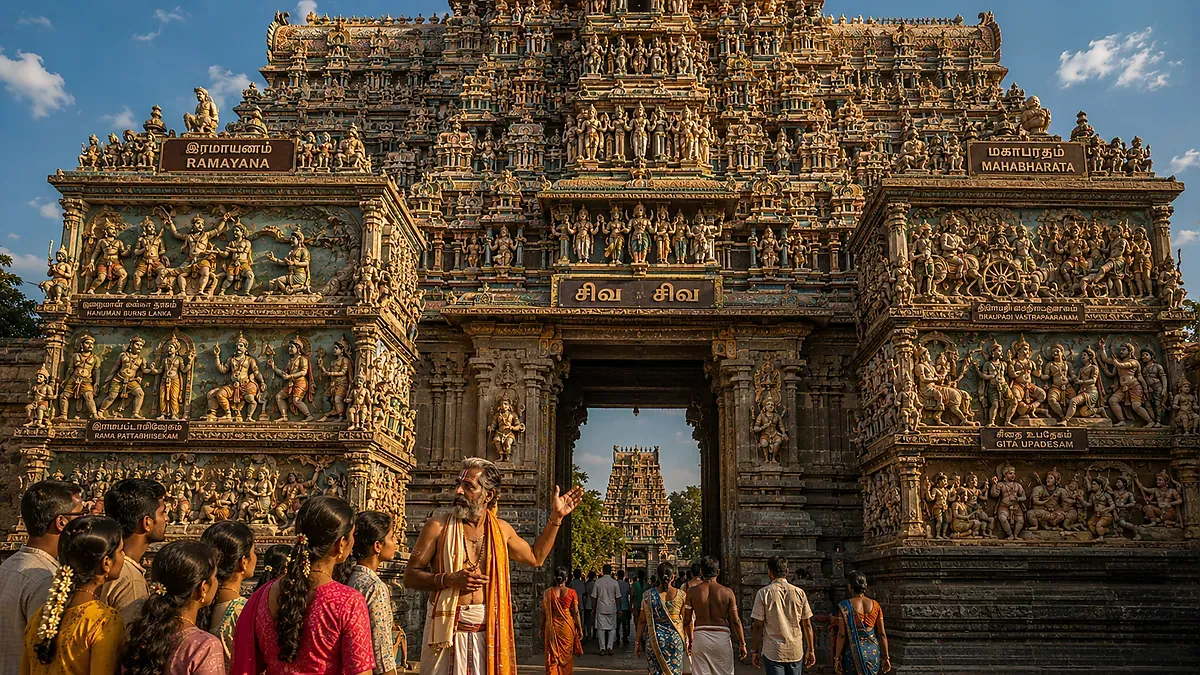
Key classifications, structural subdivisions, and traditional varieties of Hindu Temple Architecture include: Compares the Three Classical Architectural Styles codified in the Śilpa Śāstras: (1) Nāgara Style (North Indian, from the Himalayas to the Vindhyas): characterized by a curvilinear beehive-shaped spire (Rekhā-śikhara with uraḥśṛṅga subsidiary spires in Śekharī or Bhumija modes) crowned by a circular Āmalaka and Kalaśa, and cruciform pillared maṇḍapas, with regional sub-schools in Odisha / Kaliṅga (Rekha Deul, Pidha Deul / Jagamohana, and Khakhara Deul at Bhubaneswar Lingarāja, Puri Jagannātha, and Konark), Central India / Candela (Khajuraho Kandāriyā Mahādeva), and Western India / Māru-Gurjara (Solanki) (Modhera Sun Temple, Somnāth, Dvārakā, and Ayodhyā Rāma Janmabhūmi); (2) Drāviḍa Style (South Indian, between the Kṛṣṇā River and Kanyakumari): characterized by a stepped pyramidal tower (Vimāna) over the sanctum crowned by an octagonal/domed Śikhara/Stūpī, towering monumental gateway pyramids (Gopurams) along concentric enclosure walls (Prākāras), thousand-pillared halls (Sahasra-stambha Maṇḍapas), and sacred tanks (Kalyāṇī / Puṣkariṇī), evolving through the Pallava (Mamallapuram Shore Temple, Kanchipuram Kailāsanātha), Chola (Thanjavur Bṛhadīśvara, Gangaikondacholapuram, Darasuram), Pāṇḍya, Vijayanagara (Hampi Vitthala and Virupaksha), and Nāyaka (Madurai Mīnākṣī and Rāmeśvaram) eras; and (3) Vesara (Karṇāṭa-Drāviḍa) Style (Deccan Synthesis, between the Vindhyas and Kṛṣṇā): combining Nāgara and Drāviḍa features with star-shaped (Stellate) plans and lathe-turned soapstone pillars under the Chalukyas (Aihole, Badami, Pattadakal), Rashtrakutas (Ellora Kailāsa), and Hoysalas (Belur, Halebidu, and Somanathapura). Editorial differentiation within this portal: Strictly differentiated from Temple Worship (‘Temple Worship’ in Category 7, which covers liturgical schedules, Darśana, and visitor etiquette): Hindu Temple Architecture focuses on Vāstu Śāstra geometry, structural anatomy (Garbhagṛha, Maṇḍapa, Śikhara, Vimāna, Gopuram), and the Nāgara, Drāviḍa, and Vesara architectural traditions.
5. Regional Traditions and Contemporary Relevance
Across the diverse regions of India and the global diaspora, Hindu Temple Architecture is sustained through living customs, seasonal observances, and pilgrimage networks: Also notes distinct regional forms such as Kerala’s sloped-roof timber-and-laterite Kṣetras, Bengal’s curved Cālā and Ratna terracotta temples, and Himalayan pagoda/stone temples. At the sacred confluence city of Prayagraj (Tīrtharāja)—where the Gaṅgā, Yamunā, and invisible Sarasvatī meet at the Triveni Sangam—pilgrims, scholars, and monastic orders from every corner of India converge, keeping this heritage vibrant and relevant for contemporary seekers.
6. Frequently Asked Questions
What are the primary scriptural sources for Hindu Temple Architecture?
Primary sources include Bṛhat Saṃhitā of Varāhamihira (Ch. 56 – Prāsādalakṣaṇa); Agni, Matsya, and Garuḍa Purāṇas; Mānasāra; Mayamata; Samarāṅgaṇasūtradhāra of King Bhoja; Aparājitapṛcchā; Kāmikāgama., studied alongside classical Sanskrit commentaries and vernacular traditions (IGNCA – Coomaraswamy and Meister on Indian Temple Architectural Theory).
How do diverse Hindu traditions interpret Hindu Temple Architecture?
Different sampradāyas (Vaiṣṇava, Śaiva, Śākta, Smārta) and philosophical schools highlight distinct metaphysical, devotional, or ritual facets while sharing core commitments to dharma and mokṣa (IGNCA – Collected Works of Dr. Ananda K. Coomaraswamy).
How does this article differ from related portal pages?
Strictly differentiated from Temple Worship (‘Temple Worship’ in Category 7, which covers liturgical schedules, Darśana, and visitor etiquette): Hindu Temple Architecture focuses on Vāstu Śāstra geometry, structural anatomy (Garbhagṛha, Maṇḍapa, Śikhara, Vimāna, Gopuram), and the Nāgara, Drāviḍa, and Vesara architectural traditions.
7. Conclusion
In summary, Hindu Temple Architecture exemplifies the spiritual depth, intellectual rigor, and living diversity of Hinduism, offering enduring insight for students, pilgrims, and readers on PrayagTourism.com.
References and Further Reading
Primary Scriptures: Bṛhat Saṃhitā of Varāhamihira (Ch. 56 – Prāsādalakṣaṇa); Agni, Matsya, and Garuḍa Purāṇas; Mānasāra; Mayamata; Samarāṅgaṇasūtradhāra of King Bhoja; Aparājitapṛcchā; Kāmikāgama. (Classical Vāstu Śāstra Principle).
Academic & Institutional: IGNCA – Coomaraswamy and Meister on Indian Temple Architectural Theory; IGNCA – Collected Works of Dr. Ananda K. Coomaraswamy; GRETIL Archive; IIT Kanpur Gita Supersite.
Government & Heritage: IGNCA (Ministry of Culture); Vedic Heritage Portal; Prayag Tourism Heritage Guides.
Related pages
Related Prayag Tourism reading
Related Prayag Tourism reading
- Atharvaveda: Healing Wisdom and Daily Life
- Ahimsa in Sanatana Dharma
- Ayurveda and the Dharma of the Body
Sources and editorial context
Separate scriptural accounts, traditional beliefs, philosophical interpretations, historical evidence and modern scholarship. Attribute translations and quotations, avoid unsupported medical claims, and verify changing travel or festival details against current local sources.