
Prayag Tourism · Temple
Kashi Vishwanath Temple
Kashi Vishwanath is a major Shiva pilgrimage destination in the old city and is revered among the Jyotirlinga shrines. Its importance comes from continuing devotion as well as the temple precinct itself.
1. Introduction: The Devotional Fulcrum of Varanasi
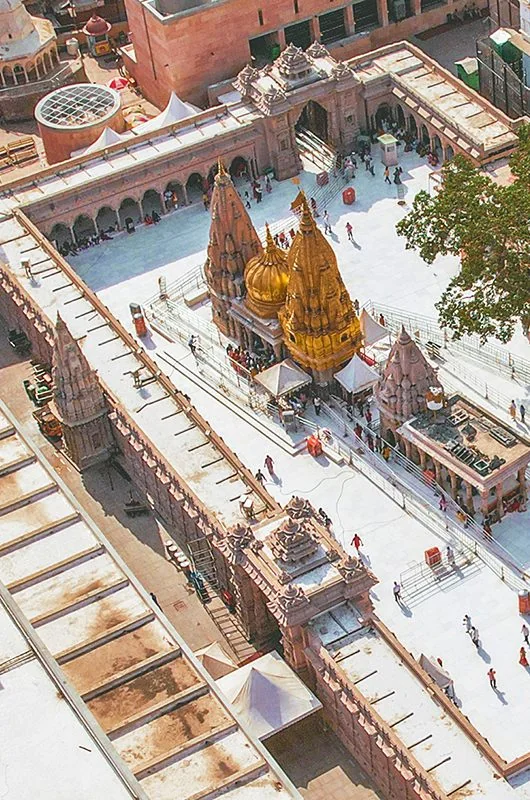
At the spiritual centre of Varanasi, rising above the western bank of the northward-flowing Ganga between Lalita Ghat and Manikarnika Ghat, stands Shri Kashi Vishwanath Temple—revered across the Hindu world as the supreme abode of Lord Shiva in his form as Vishwanatha or Vishweshwara, the “Ruler of the Universe” (Shri Kashi Vishwanath Official Web Portal). For centuries, pilgrims walking from the snow-clad Himalayas to the southern tip of Kanyakumari have considered a single glimpse (darshan) of its gleaming gold-plated shikhara and dark stone Jyotirlinga to be the culmination of a lifetime of faith (Temples Of Importance | District Varanasi).
Today, following the historic inauguration of the Shri Kashi Vishwanath Dham Corridor in December 2021, the ancient sanctum—once hidden deep inside congested two-metre-wide alleys—is directly linked by a monumental Chunar sandstone plaza to the waters of the River Ganga, allowing devotees to bathe in the sacred river and walk straight up to the sanctum sanctorum with unprecedented ease and dignity.
2. Religious Significance as One of the Twelve Jyotirlingas
In Hindu sacred literature—including the Shiva Purana (Kotirudra Samhita), the Kashi Khanda of the Skanda Purana, and Adi Shankaracharya’s 8th-century Dwadasha Jyotirlinga Stotram and Vishwanathashtakam—Shri Kashi Vishwanath holds a pre-eminent status among the twelve Jyotirlingas of India (1760321416169VettedStoriesofKashi-SarnathPoIs.pdf, Entry 1).
- The Pillar of Cosmic Light: According to Puranic tradition, when Lord Shiva manifested as a fiery, infinite column of light (Jyotirlinga) to dissolve the ego of Brahma and Vishnu, that supreme light broke through the earth’s crust at Kashi (Temples Of Importance | District Varanasi).
- Grantor of the Taraka Mantra: Unlike ordinary shrines where devotees pray primarily for worldly prosperity, Kashi Vishwanath is worshipped as the liberator from samsara (the cycle of birth and death). In the Vishwanathashtakam, Adi Shankaracharya extols Lord Vishwanath as the compassionate refuge who washes away accumulated sins and whispers the liberating Taraka Mantra into the ear of those who pass away in Kashi (1760321416169VettedStoriesofKashi-SarnathPoIs.pdf).
- The Kashi-Rameswaram Ritual Bond: Devotional custom links Kashi Vishwanath directly with Rameswaram in Tamil Nadu: pilgrims collect Ganga water after Vishwanath darshan in sealed copper vessels to pour over the Ramanathaswamy Jyotirlinga in the south (Kashi Yatra by Anu Shankar.pdf, p. 2).
3. Documented History: Cycles of Destruction, Resilience and Royal Reconstruction
While Puranic tradition regards the Adi Vishweshwara lingam as timeless, archaeological seals from Rajghat (dating to the Gupta era) and descriptions by 7th-century Chinese pilgrim Xuanzang attest to ancient Shiva temples flourishing in the city (VAR-003). Across the medieval era, the temple stood as a symbol of resilience through repeated cycles of destruction and reconstruction (1760321416169VettedStoriesofKashi-SarnathPoIs.pdf):
- 11th–12th Century Gahadavala Era & 1194 CE Demolition: Patronised by the Gahadavala kings, the grand medieval temple was demolished in 1194 CE by the Ghurid army of Qutb-ud-din Aibak. Rebuilt during the 13th century under Sultan Iltutmish’s reign by a Gujarati merchant, it was again razed during the 15th-century Sharqi/Lodi periods.
- 1585 CE Reconstruction under Todar Mal & Narayana Bhatta: During the reign of Mughal Emperor Akbar, Finance Minister Raja Todar Mal financed a magnificent reconstruction on the traditional site under the scholarly guidance of Pandit Narayana Bhatta.
- 1669 CE Demolition & Preservation in Gyan Vapi: In April 1669 CE, Emperor Aurangzeb issued an imperial farman ordering the demolition of the 1585 temple and erected the Gyanvapi Mosque on its plinth (Kashi Yatra by Anu Shankar.pdf, p. 6). According to deeply held local tradition, the temple’s head priest leaped into the adjacent Gyan Vapi (“Well of Knowledge”) holding the sacred Jyotirlinga to protect it from desecration.
- 1780 CE Reconstruction by Maharani Ahilyabai Holkar: Over a century later, in 1780 CE, the saintly Maratha ruler of Indore, Maharani Ahilyabai Holkar, commissioned and funded the construction of the present Shri Kashi Vishwanath Temple immediately adjacent to the Gyanvapi pavilion (1760321416169VettedStoriesofKashi-SarnathPoIs.pdf, Entry 1).
- 1835 CE Gold Plating by Maharaja Ranjit Singh: In 1835 CE, Maharaja Ranjit Singh, the Sikh ruler of Punjab, donated approximately 800 kilograms (nearly one tonne) of pure gold to plate the temple’s two main spires, earning the shrine its popular colonial-era moniker, the “Golden Temple of Benares” (Temples Of Importance | District Varanasi).
- 1983 Trust Administration & 2021 Dham Corridor: In 1983, administration of the temple was transferred to the statutory Shri Kashi Vishwanath Temple Trust under the Government of Uttar Pradesh. On December 13, 2021, the Shri Kashi Vishwanath Dham Corridor was inaugurated, expanding the temple precinct from a cramped 3,000 square feet to over 500,000 square feet (VAR-001).
4. Architecture, the Sanctum Sanctorum and the Vishwanath Dham Corridor
Architecturally, the 1780 CE temple built by Ahilyabai Holkar exemplifies classic North Indian Nagara architecture (1760321416169VettedStoriesofKashi-SarnathPoIs.pdf):
- The Three Domes and Spires: The superstructure comprises three distinct sections: a 15.5-metre-high carved shikhara (spire) rising directly over the garbhagriha (sanctum sanctorum), a domed mandapa (assembly hall) beside it—both sheathed in gold-plated copper sheets donated by Maharaja Ranjit Singh—and a third central bell-tower dome framing the main portal.
- The Inner Sanctum (Garbhagriha): Inside the square sanctum, set into a recessed silver-lined square argha (floor altar), rests the smooth, dark-brown/black stone Vishweshwara Jyotirlinga (approximately 60 cm tall and 90 cm in circumference). During general darshan hours (Jhanki Darshan), devotees view and pour milk, Ganga water, and bilva leaves toward the lingam from the four outer doorways of the sanctum, while during early morning post-Mangala Aarti windows and special periods, inner threshold worship is regulated by the Temple Trust.
- Subsidiary Shrines & Gyan Vapi: Within the inner quadrangle and corridor stand shrines to Dandapani, Avimukteshwara, Mahakala, Nikumbha Vinayak, Vishnu, Virupaksha Gauri, and Shanishwara, alongside the historic Gyan Vapi Well and a colossal stone statue of Nandi facing the original sanctum axis (Kashi Yatra by Anu Shankar.pdf, pp. 5–6). During construction of the Dham Corridor, over 40 ancient, long-encroached shrines (such as Manokameshwar, Gangeshwar, and Samudreshwar Mahadev) were rediscovered, conserved, and integrated into the open marble and pink sandstone courtyard.
- The Corridor & Ganga Dwar: Entering from Lalita Ghat on the riverfront, devotees ascend wide flights of Chunar sandstone steps (equipped with side escalators and ramps for senior citizens) through the monumental Ganga Dwar, passing a statue of Maharani Ahilyabai Holkar, Bharat Mata, and Adi Shankaracharya, plus the Mandir Chowk, Vedic library, tourist facilitation centre (Mumukshu Bhavan), and locker complexes.
5. Verified Daily Schedule, Five Aartis and Ticket Tariffs
According to the official Shri Kashi Vishwanath Temple Daily Schedule & Important Notices (verified November 2026; note that timings are subject to change on Purnima, eclipses, Shravan Mondays, and Maha Shivaratri):
- Temple Opening: Daily at 2:30 AM – 2:45 AM (Important Notices | Kashi Vishwanath).
- Mangala Aarti (2:45 AM / 3:00 AM to 4:00 AM): The auspicious pre-dawn Brahma Muhurta awakening ritual. Official Ticket Tariff: ₹500 per person (on normal days; advance online booking and hard-copy ticket + original photo ID mandatory; Daily Schedule | Kashi Vishwanath).
- General Darshan – Morning Session (4:00 AM to 11:00 AM): Open free to all devotees (with a dedicated local devotee window from 4:00 AM to 5:00 AM).
- Mid-Day Bhog Aarti (11:15 AM / 11:30 AM to 12:20 PM / 12:30 PM): The noon offering of bhog prasadam. Official Ticket Tariff: ₹300 per person (Book Sugam Darshan & Aarti | Kashi Vishwanath).
- General Darshan – Afternoon Session (12:20 PM to 7:00 PM): Continuous free darshan; Sugam Darshan (assisted priority entry, ₹300 per person) and Rudrabhishek pujas (4:00 AM to 6:00 PM; assigned a Shastri via the SKVT Helpdesk near Shapuri Mall, Bansphatak) operate during daytime slots (Pooja Details | Kashi Vishwanath).
- Sapta Rishi Aarti (7:00 PM to 8:15 PM): A 750-year-old tradition in which seven Shastris/Purohits belonging to seven different gotras simultaneously perform aarti representing the celestial Saptarishis. Devotees with tickets (₹300) must enter by 6:30 PM; on Purnima (full moon) days, Sapta Rishi Aarti starts one hour earlier (Book Sapt Rishi Aarti | Kashi Vishwanath).
- Shringar / Bhog Aarti (9:00 PM to 10:15 PM): The ornate evening royal decoration of Baba Vishwanath. Official Ticket Tariff: ₹300 per person (Pooja Details | Kashi Vishwanath).
- Shayan Aarti & Closing (10:30 PM to 11:00 PM): The final night hymn placing the Lord to rest (Free entry from courtyard), followed by temple closing at 11:00 PM (Daily Schedule | Kashi Vishwanath).
C. Practical Visitor Information
- Location: Lahori Tola, Vishwanath Gali / Lalita Ghat, Varanasi, Uttar Pradesh – 221001 (Shri Kashi Vishwanath Official Web Portal)
- Entry Gates: Gate No. 1 (Dhundiraj Ganesh Gali); Gate No. 2 (Saraswati Phatak); Gate No. 4 (Chhattadwar – Main VIP/Sugam & General road entry near Godowlia–Maidagin road); Ganga Dwar (Direct riverfront entry from Lalita Ghat).
- Timings: 2:45 AM to 11:00 PM Daily (General Darshan: 4:00 AM–11:00 AM, 12:20 PM–7:00 PM, 8:15 PM–9:00 PM).
- Entry & Aarti Fees: General Darshan: Free. Sugam Darshan: ₹300 (6:00 AM–6:00 PM). Mangala Aarti: ₹500. Mid-Day Bhog, Sapta Rishi & Shringar Aarti: ₹300 each. Shayan Aarti: Free. Children under 12 years: Free with parents (Daily Schedule | Kashi Vishwanath).
- Strict Security Restrictions: Prohibited inside inner sanctum zone: Mobile phones, cameras, smartwatches, earphones, car remotes, pens, lighters, matchboxes, tobacco, and leather items. Deposit at free corridor lockers or leave in your hotel/cab. Carry physical Aadhaar / Passport + printed ticket for paid pujas.
- Official Helpdesk: SKVT Helpdesk near Shapuri Mall, Bansphatak (for Sugam Darshan, Rudrabhishek Shastri allocation, and wheelchair/golf-cart assistance) (Pooja Details | Kashi Vishwanath).
- Duration Required: 1.5 to 3 Hours (Estimated on regular days; 4+ hours on Mondays, Shravan, and festival days).
- Nearby Attractions: Annapurna Devi Temple (50 m), Dhundiraj & Sakshi Vinayak (50 m), Vishalakshi Shaktipeeth (250 m), Manikarnika Ghat (200 m), Nepali Temple (150 m), Dashashwamedh Ghat (450 m).
D. Frequently Asked Questions (FAQs)
- How can I book Mangala Aarti, Sapta Rishi Aarti, or Sugam Darshan tickets for Kashi Vishwanath Temple?Official tickets should be booked only through the official temple trust website (shrikashivishwanath.org) or at the official SKVT Helpdesk near Shapuri Mall, Bansphatak. Always carry a printed hard copy of your ticket and the original government photo ID of every listed devotee (Book Sapt Rishi Aarti | Kashi Vishwanath).
- Which entry gate is best for senior citizens and families visiting Kashi Vishwanath Temple?Gate No. 4 (Chhattadwar) on the main Maidagin–Godowlia road and the Ganga Dwar (Lalita Ghat) riverfront entrance offer wide, step-free plaza access, escalators, ramps, and wheelchair/e-rickshaw support. Senior citizens opting for Sugam Darshan report to the SKVT Helpdesk near Shapuri Mall (VAR-062).
- Can I buy milk and offerings inside the Kashi Vishwanath Temple complex?Yes, an official Amul Milk Booth operates inside the temple premises where devotees performing abhishekam or Rudrabhishek can purchase pure milk (up to 5 litres for Rudrabhishek ticket holders), preventing adulterated outside offerings (Pooja Details | Kashi Vishwanath).
- What is the significance of the Sapta Rishi Aarti at 7:00 PM?Dating back more than 750 years, the Sapta Rishi Aarti is performed every evening from 7:00 PM to 8:15 PM by seven hereditary priests (Shastris), each belonging to a different gotra, who simultaneously chant Vedic hymns and wave lamps in unison, symbolising the seven celestial sages (Saptarishis) worshipping Lord Shiva (Book Sugam Darshan & Aarti | Kashi Vishwanath).
- Why does Sapta Rishi Aarti timing change on Purnima (Full Moon) days?According to official temple trust notices, on the day of Purnima (Full Moon), eclipses, and certain major festivals, the Sapta Rishi Aarti begins one hour earlier than its regular 7:00 PM schedule. Always verify the day’s notice on arrival (Book Sapt Rishi Aarti | Kashi Vishwanath).
- Is there any difference between Kashi Vishwanath Temple and New Vishwanath Temple at BHU?Yes. Shri Kashi Vishwanath Temple (VAR-008) in the Old City is the ancient, primary Jyotirlinga shrine rebuilt in 1780 CE by Maharani Ahilyabai Holkar. New Vishwanath Temple (Birla Mandir) (VAR-014) is a modern 20th-century marble-and-sandstone temple built between 1931 and 1966 inside the Banaras Hindu University campus, about 6 km south (1760321416169VettedStoriesofKashi-SarnathPoIs.pdf).
Choose your next chapter
Continue your journey
Religious and Spiritual Significance of Kashi
For many Hindu pilgrims, Kashi is associated with Shiva, the Ganga and the hope of liberation. These beliefs help explain journeys made here, but they should be presented as religious traditions rather than promises of a measurable outcome.
Explore guide →Annapurna Devi Temple
Annapurna Devi is revered as a goddess of nourishment, linking the practical act of feeding people with religious life in Kashi. The shrine belongs to the old-city devotional landscape near Vishwanath.
Explore guide →Temple Darshan and Kashi Pilgrimage Experiences
A Kashi darshan visit should begin with the traveller's devotional priorities. Some pilgrims follow inherited family customs, while others seek an introduction to the city's principal shrines.
Explore guide →
Varanasi Tour Packages
Varanasi tour packages should be compared by their actual scope, pace and terms. The ideas in this portal are proposed service categories and itinerary starting points, not a live inventory of confirmed departures.
Explore guide →No matching guides. Try a broader search.
Locate the area
Open a place-name search and confirm the exact venue and approach before travelling. No unverified coordinates or embedded tracking map are used.
Open map search: Kashi Vishwanath Temple, Varanasi, Uttar Pradesh, India ↗A journey shaped around you
Plan your time in Kashi
Tell us your dates, interests and travel needs. Request a tailored proposal with clear inclusions before confirming any service.
Enquiry only · Availability and prices require confirmation · No payment is taken here