
Prayag Tourism · Experience
Temple Darshan and Kashi Pilgrimage Experiences
A Kashi darshan visit should begin with the traveller's devotional priorities. Some pilgrims follow inherited family customs, while others seek an introduction to the city's principal shrines.
1. Introduction: Navigating Sacred Kashi with Confidence and Devotion
For a Hindu pilgrim (Tirthayatri), arriving in Varanasi is the fulfilment of a lifelong spiritual aspiration (PrayagTourism Hinduism Portal). Yet the sheer density of temples, varying security protocols, seasonal crowd surges, and freelance pandas (ritual priests) on the ghats can easily overwhelm first-time visitors. Knowing the traditional scriptural sequence of darshan, how to book official temple passes without middlemen, what dress code and locker rules apply, and how traditional Vedic rites (Sankalpa, Abhishekam, Pancha Tirthi, and Shraddha) are conducted ensures that your pilgrimage remains peaceful, authentic, and deeply spiritually rewarding (Shri Kashi Vishwanath Official Portal).
2. The Traditional Scriptural Sequence of Kashi Darshan
According to the Kashi Khanda and centuries-old pilgrimage custom (VAR-006, VAR-008), a complete Kashi Darshan follows a purposeful five-step order rather than visiting shrines at random (Vetted Stories of Kashi & Sarnath PoIs):
- Step 1 – Ganga Snan & Sankalpa (Purification & Vow): The pilgrimage begins at dawn with a ritual dip (or sprinkling of sacred water over the head, Marjana) in the River Ganga at Dashashwamedh Ghat (VAR-019), Assi Ghat (VAR-020), or Manikarnika Ghat (VAR-021), accompanied by a mental or verbal Sankalpa (statement of spiritual intention).
- Step 2 – Seek Permission from Dhundiraj Ganesh & Dandapani: Before approaching Lord Vishwanath, pilgrims bow to Dhundiraj Ganesh (VAR-015, near Gate No. 1 in Vishwanath Gali)—the remover of obstacles who “finds” and guides devotees in Kashi—and Dandapani, the staff-bearing guardian of spiritual discipline.
- Step 3 – Register Attendance with Kaal Bhairav (The Kotwal of Kashi) (VAR-015): Tradition holds that no pilgrimage to Kashi is complete without seeking the permission and blessing of Kaal Bhairav at Bhaironath (VAR-015), either at the start of your stay or before departing the city.
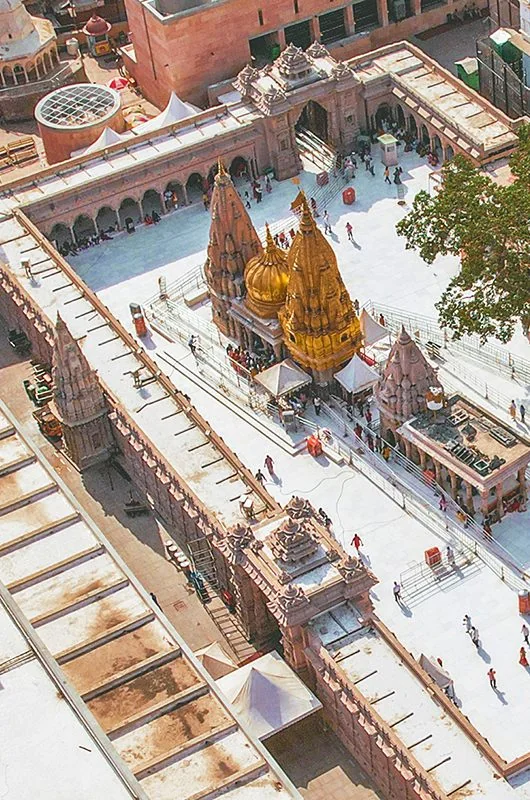
- Step 4 – Main Jyotirlinga Darshan at Shri Kashi Vishwanath Dham (VAR-007): Enter the golden sanctum to offer Gangajal, raw milk, Belpatra (three-leaved wood-apple leaves), Dhatura, and white Madar flowers to the Vishweshwara Jyotirlinga.
- Step 5 – Seek Nourishment from Goddess Annapurna (VAR-014) & Shakti from Vishalakshi (VAR-014), Durga (VAR-010) & Sankat Mochan (VAR-009): Complete your core darshan by bowing to Mother Annapurna and Vishalakshi Shakti Peetha adjacent to the main temple, followed by the southern guardian shrines of Sankat Mochan Hanuman and Durga Kund.
3. Official Booking Guide: General Darshan vs. Sugam Darshan vs. Aarti & Rudrabhishek
At Shri Kashi Vishwanath Temple (VAR-007), all ticketing is managed transparently by the Shri Kashi Vishwanath Special Area Development Board / Temple Trust (Shri Kashi Vishwanath Official Pooja List):
- General Darshan (Free): Open daily from 4:00 AM to 11:00 PM (pausing briefly during scheduled Aarti closures). During non-peak mid-morning or afternoon hours, queues move through the shaded corridor in 30–60 minutes; on Mondays, Purnima, Shravan (VAR-053), and Maha Shivaratri, queues can take 2 to 4+ hours.
- Sugam Darshan (Fast-Track Assisted Entry – ₹300 per person): Operates from 6:00 AM to 6:00 PM (Sugam Darshan Official Page). Provides a dedicated queue without long waiting lines, accompanied by an official temple Shastri and a complimentary box of Mahaprasad. Free for accompanying children under 12 years; note that Sugam Darshan is suspended on peak festival days.
- Ticketed Daily Aartis:
- Mangala Aarti (3:00 AM – 4:00 AM; Entry 2:15–2:45 AM): ₹500 per person (Mangala Aarti Official Page).
- Mid-Day Bhog Aarti (11:15 AM – 12:20 PM): ₹300 per person.
- Sapta Rishi Aarti (7:00 PM – 8:15 PM): ₹300 per person (Sapta Rishi Aarti Official Page).
- Shringar / Bhog Aarti (9:00 PM – 10:15 PM): ₹300 per person.
- Rudrabhishek Puja (4:00 AM – 6:00 PM): Can be booked for 1 Shastri (₹450), 5 Shastris (₹1,380/₹2,100), or 11 Shastris (₹2,600/₹3,000) either online at https://shrikashivishwanath.org/ or in person with original Aadhaar/Passport ID at the SKVT Helpdesk near Shapuri Mall, Bansphatak.
4. Dress Code, Sparsh Darshan Rules & Prohibited Items Checklist
- General Dress Code: Modest, clean attire covering shoulders and knees (kurta-pyjama, dhoti, trousers/shirt for men; saree, salwar-kameez, or long modest dress for women).
- Mandatory Traditional Attire for Sparsh Darshan (Touching the Jyotirlinga inside the Sanctum): When Sparsh Darshan is permitted by the temple administration (typically for early-morning Mangala Aarti ticket holders between 4:00 AM and 5:00 AM or designated slots), men must wear an unstitched traditional Dhoti-Kurta and women must wear a traditional Saree; visitors in jeans, trousers, skirts, or western suits are directed to view from the threshold (Jhanki Darshan) rather than entering the inner Garbhagriha pit.
- Strictly Prohibited Items Inside Kashi Vishwanath Dham (VAR-007) & Kal Bhairav Inner Security: Mobile phones, smartwatches, Bluetooth earphones, cameras, power banks, USB drives, leather belts/wallets, tobacco/gutkha, lighters, matchboxes, pens, and bags. Free digital lockers are available at all entry gates of Kashi Vishwanath Dham.
5. Special Pilgrimage Rites: Kashi-Rameswaram Yatra, Pancha Tirthi & Ancestral Shraddha
Many Hindu families travel to Varanasi to perform specific life-cycle or multi-tirtha Vedic rituals (Kashi Yatra by Anu Shankar):
- The Traditional Kashi–Prayagraj–Gaya–Rameswaram Circuit: In classic South and North Indian pilgrimage tradition, devotees first collect sacred sand (Setu Matti) from Dhanushkodi / Rameswaram, bring it to Triveni Sangam in Prayagraj (Triveni Sangam Guide) and Manikarnika/Asi in Varanasi for ritual immersion, collect sealed copper pots (Kalash) of Gangajal from Varanasi, and carry that Ganga water back to perform Abhishekam of the Ramanathaswamy Jyotirlinga at Rameswaram.
- The 5-Stop Pancha Tirthi Snan & Shraddha (VAR-015): Pilgrims performing the Pancha Tirthi ritual take a boat from south to north, bathing and offering Tarpana (sesame-and-water libations) at five riverine tirthas in a single morning: (1) Assi Ghat, (2) Dashashwamedh Ghat, (3) Adi Keshav (Varuna Sangam), (4) Panchganga Ghat, and (5) Manikarnika Ghat (Chakrapushkarini Kund), concluding with darshan of Sakshi Vinayak (VAR-015).
- Pind Daan, Narayan Bali & Asthi Visarjan: Varanasi (specifically Manikarnika Ghat, Harishchandra Ghat, Kedar Ghat, and Pishach Mochan Kund) is one of the primary sites in Hinduism alongside Prayagraj and Gaya for performing Asthi Visarjan (immersion of cremated ashes in the Ganga), Pind Daan (rice-ball offerings to ancestors during Pitru Paksha in September/October), and Narayan Bali rites. Always arrange ancestral rituals through verified, transparent Vedic Acharyas with clearly agreed dakshina and material (samagri) lists in advance rather than negotiating with aggressive touts on the street.
6. Conclusion
Approaching Varanasi’s temples with the right preparation—storing electronics at the hotel or official lockers, booking Sugam Darshan or Aarti passes through the official portal, and following the time-honoured sequence from Mother Ganga to Dhundiraj Ganesh, Kaal Bhairav, Vishwanath, and Annapurna—turns your pilgrimage into an effortless communion with the divine.
C. Practical Visitor Information
- Location: Major pilgrimage hubs at Shri Kashi Vishwanath Dham (VAR-007), Kaal Bhairav Temple (VAR-015), Annapurna Mandir (VAR-014), Sankat Mochan (VAR-009), Pishach Mochan Kund, and the Riverfront Ghats (VAR-018), Varanasi, Uttar Pradesh (Shri Kashi Vishwanath Official Portal).
- How to Reach: E-rickshaws and auto-rickshaws connect all major temple zones via Maidagin, Godowlia, Sonarpura, and Lanka; water taxis connect Assi Ghat (VAR-020) and Namo Ghat (VAR-028) directly to the Ganga Dwar (Lalita Ghat) of Kashi Vishwanath Dham.
- Best Time to Visit: Year-round; Mid-week (Tuesday to Friday) mornings (4:00 AM – 8:00 AM) or afternoons (2:00 PM – 4:30 PM) experience the shortest general darshan queues.
- Visiting Hours: Shri Kashi Vishwanath Dham is open 2:45 AM (Mangala Aarti) / 4:00 AM (General Darshan) to 11:00 PM daily; SKVT Offline Helpdesk at Bansphatak operates during daytime hours (8:00 AM – 8:00 PM).
- Entry Fee: General Darshan at all temples in Varanasi is Free; official SKVT Sugam Darshan is ₹300, Mangala Aarti is ₹500, and other Aartis are ₹300 (Shri Kashi Vishwanath Official Pooja List).
- Duration Required: 1 to 3 days depending on the number of temples and Vedic rituals undertaken (estimated).
- Nearby Attractions: Vindhyachal Shakti Peetha (VAR-074, 70 km) and Triveni Sangam Prayagraj (VAR-075, 125 km).
- Visitor Advice: Carry your original Aadhaar Card or Passport when attending any pre-booked Aarti or Rudrabhishek at Kashi Vishwanath Temple, as security checks the printed/digital pass against the attendee’s photo ID.
D. Frequently Asked Questions (FAQs)
1. What is the correct order to visit temples in Varanasi on a pilgrimage?Traditionally, pilgrims first bathe or sprinkle water at the River Ganga (VAR-019/VAR-020), bow to Dhundiraj Ganesh (VAR-015), seek permission at Kaal Bhairav Temple (VAR-015), perform darshan at Shri Kashi Vishwanath Temple (VAR-007), and then visit Annapurna Mandir and Vishalakshi Shakti Peetha (VAR-014), followed by Sankat Mochan (VAR-009) and Durga Kund (VAR-010).
2. Where is the official offline booking counter for Kashi Vishwanath Sugam Darshan and Rudrabhishek?If online slots at https://shrikashivishwanath.org/ are full, visit the official SKVT Helpdesk located near Shapuri Mall at Bansphatak (between Godowlia and Gate No. 4) with your original government photo ID (Shri Kashi Vishwanath Official Portal).
3. Can senior citizens and wheelchair users get special darshan assistance at Kashi Vishwanath Dham?Yes, the Shri Kashi Vishwanath Dham Corridor provides free wheelchair assistance, golf-cart buggies on the upper plaza, ramps, and escalators at the Ganga Dwar (Lalita Ghat) entrance for senior citizens and Divyangjan pilgrims (VAR-070).
4. What is the dress code for Sparsh Darshan (touching the Shiva Lingam) at Kashi Vishwanath Temple?To enter the inner sanctum pit for Sparsh Darshan during designated early-morning slots, men must wear traditional Dhoti-Kurta and women must wear a Saree.
5. Where are Pind Daan and Narayan Bali ancestral rituals performed in Varanasi?Pind Daan and Tarpana are performed along the Ganga at Manikarnika Ghat, Kedar Ghat, Dashashwamedh Ghat, and Assi Ghat, while special Tripindi Shraddha and Narayan Bali rites for ancestral peace are traditionally performed at the ancient sacred tank of Pishach Mochan Kund near Chetganj.
6. Can PrayagTourism arrange multi-city pilgrimage logistics covering Prayagraj, Varanasi, Vindhyachal, and Ayodhya?Yes! PrayagTourism specializes in complete pilgrimage circuits linking Triveni Sangam (Prayagraj), Vindhyachal, Kashi (Varanasi), Gaya, and Ayodhya (VAR-066, VAR-068, VAR-069).
Choose your next chapter
Continue your journey
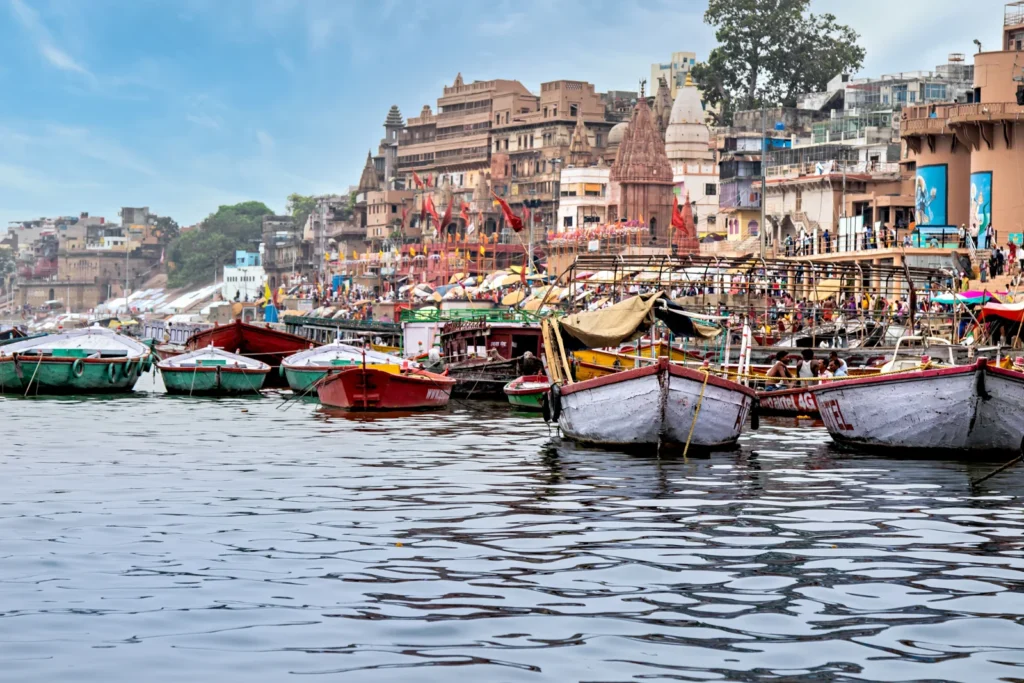
Varanasi for First-Time Visitors
A first visit works best when you decide what matters most before arriving. Choose a central temple experience, time beside the Ganga and one cultural or archaeological visit, then leave space for meals and rest.
Explore guide →Varanasi Travel Tips, Safety and Visitor Etiquette
A comfortable Varanasi visit depends on awareness of shared space: lanes carry deliveries, ghats host worship and work, and temples have their own rules. Courtesy and preparation help avoid unnecessary friction.
Explore guide →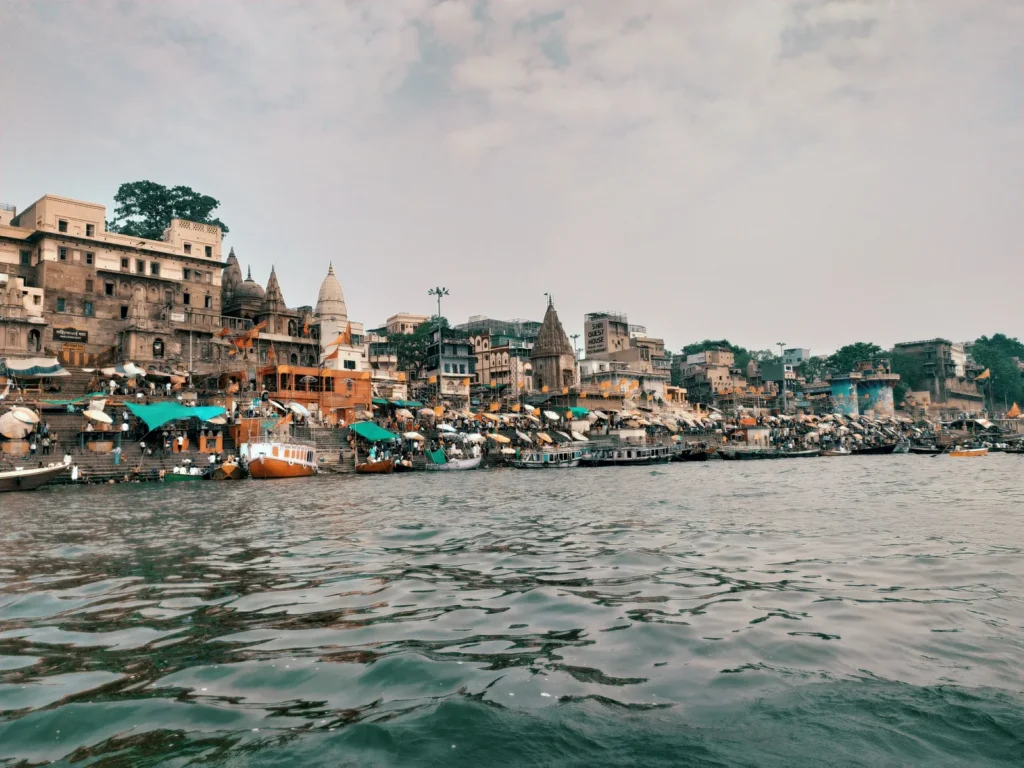
Varanasi Tour Packages
Varanasi tour packages should be compared by their actual scope, pace and terms. The ideas in this portal are proposed service categories and itinerary starting points, not a live inventory of confirmed departures.
Explore guide →No matching guides. Try a broader search.
Explore the Hinduism knowledge portal
A journey shaped around you
Plan your time in Kashi
Tell us your dates, interests and travel needs. Request a tailored proposal with clear inclusions before confirming any service.
Enquiry only · Availability and prices require confirmation · No payment is taken here