
Prayag Tourism · Travel
Religious and Spiritual Significance of Kashi
For many Hindu pilgrims, Kashi is associated with Shiva, the Ganga and the hope of liberation. These beliefs help explain journeys made here, but they should be presented as religious traditions rather than promises of a measurable outcome.
1. Introduction: Why Kashi Is Revered as the Spiritual Axis of India
In the sacred literature of Sanatana Dharma, certain landscapes are understood as tirthas—spiritual fords or crossing places where the boundary between mortal existence (samsara) and transcendent liberation (moksha) grows thin (Plan a Complete Tīrtha Yātrā in Uttar Pradesh.docx). If Prayagraj is celebrated as Tirtharaja—the King of Tirthas where pilgrims purify their karma in the confluence of three rivers—Kashi (Varanasi) is revered as the ultimate destination of the soul’s journey. According to Hindu theological belief, while austerity, yoga, and ritual purity elsewhere may lead a seeker gradually toward higher realms, Kashi is the city where Lord Shiva himself resides eternally to whisper the liberating Taraka Mantra into the ear of every departing being (Temples Of Importance | District Varanasi).
At the same time, the spiritual significance of the Varanasi region is not confined to a single sectarian tradition. Within a ten-kilometre radius from the southern ghats of Assi to the deer park of Sarnath, four major world religious traditions—Hinduism, Buddhism, Jainism, and Sikhism/Bhakti panths—anchor foundational moments of their sacred history.
2. Puranic Cosmology: Kashi on the Trident of Lord Shiva (Avimukta Kshetra)
The primary scriptural text celebrating the religious geography of Varanasi is the Kashi Khanda (comprising 100 chapters within the Skanda Purana), alongside passages in the Matsya Purana, Linga Purana, Padma Purana, and Kurma Purana. In this Puranic cosmology:
- Resting on Shiva’s Trishula: Devotional tradition holds that Kashi does not rest upon the ordinary crust of the earth (Prithvi), which is subject to periodic cosmic dissolution (Pralaya), but is held aloft upon the three prongs of Lord Shiva’s trident (Trishula). Topographically, traditional scholars correlate these three prongs with the three elevated mounds along the western riverbank: Omkareshwar in the north, Vishweshwar in the centre, and Kedareshwar in the south (1760321416169VettedStoriesofKashi-SarnathPoIs.pdf).
- The First Fiery Pillar of Light (Jyotirlinga): According to the Shiva Purana and Kashi Khanda, when Lord Brahma and Lord Vishnu once debated their supremacy, Lord Shiva manifested between them as an infinite, blazing column of light (Jyotirlinga) piercing heaven and earth. Where that cosmic light cooled and settled on earth arose Kashi—meaning “The Shining One”—making Shri Kashi Vishwanath the archetypal Jyotirlinga (Temples Of Importance | District Varanasi).
- Avimukta (“Never Forsaken”): Even when the legendary righteous King Divodasa temporarily persuaded the gods to leave Kashi so he could govern undisturbed, Shiva could not bear separation from his beloved city, sending the 64 Yoginis, Surya (the twelve Adityas), Brahma (who performed ten horse sacrifices at Dashashwamedh Ghat), Ganesha (the 56 Vinayakas), and Vishnu (at Adi Keshav and Bindu Madhav) before returning permanently (1760321416169VettedStoriesofKashi-SarnathPoIs.pdf).
3. “Kashyam Maranam Muktih”: Death, the Taraka Mantra and Liberation
Nowhere in the world is the relationship between human society and mortality transformed as profoundly as in Kashi. A celebrated Sanskrit aphorism declares:Kāśyāṃ hi maraṇān muktiḥ (“Dying in Kashi is assured liberation.”)
In traditional Hindu belief, when a person breathes their last within the sacred boundary of Kashi (Kashi Kshetra), Lord Vishwanath himself leans down and imparts the Taraka Mantra (the “Ferrying Mantra,” traditionally identified with the sacred name of Rama) into the dying person’s right ear, while Goddess Annapurna / Parvati fans the soul with her garment and Kal Bhairav absorbs the person’s accumulated karmic debts (Bhairavi Yatana) in a brief moment of purification (1760321416169VettedStoriesofKashi-SarnathPoIs.pdf). Even Yamaraja (Dharmaraja, the God of Death), whose shrine stands beside the Dharmakupa near Vishalakshi Temple, is believed in the Kashi Khanda to relinquish his jurisdiction over souls who pass away inside Kashi.
This theological conviction explains why elderly devotees once moved to Kashi Labh hospice homes to spend their final days near the Ganga, and why families bring the mortal remains of loved ones from across India to the perpetual fires of Manikarnika Ghat (associated with the legend of Vishnu digging the Chakra Pushkarini kund with his discus and Shiva’s or Parvati’s jewelled ear-ornament, Manikarnika, falling into its waters) and Harishchandra Ghat (Kashi Yatra by Anu Shankar.pdf).
4. The Sacred Mandala: Guardian Deities, Pancha Tirthi and Ancestral Rites
Kashi is structured as an intricate geometric mandala guarded by concentric rings of deities (1760321416169VettedStoriesofKashi-SarnathPoIs.pdf):
- The 56 Vinayakas (Forms of Ganesha): Arranged in seven concentric spirals of eight directional guardians (Ashta Vinayakas), led by Dhundiraj Vinayak at the entrance to Vishwanath and Dehli Vinayak at the outer threshold, plus Sakshi Vinayak, who serves as the official divine “witness” certifying that a pilgrim has completed their Kashi pilgrimage (Kashi Yatra by Anu Shankar.pdf).
- The 8 Bhairavas (Ashta Bhairava): Headed by Kal Bhairav (the Kotwal or divine police chief of Kashi) and Dandapani (“Wielder of the Staff”), along with Batuk Bhairav, Laat Bhairav, and Ruru Bhairav.
- The 9 Durgas, 64 Yoginis & 12 Adityas: Protecting the city through feminine Shakti (including the Shaktipeeth of Kashi Vishalakshi and Annapurna) and solar shrines such as Lolark Aditya.
- The Pancha Tirthi & Ancestral Rites (Shraddha, Pind Daan, Tarpan): Devout Hindu pilgrims perform a ritual boat journey along the five supreme riverfront tirthas—Assi Ghat, Dashashwamedh Ghat, Adi Keshav (or Trilochana) Ghat, Panchganga Ghat, and Manikarnika Ghat—and offer sesame-water oblations (tarpan) and rice balls (pind daan) at Pishach Mochan Kund and the Ganga ghats for the peace of departed ancestors (Kashi Yatra by Anu Shankar.pdf). Furthermore, the pan-Indian Kashi–Rameswaram Yatra links northern and southern India: pilgrims carry sacred sand from Dhanushkodi/Rameswaram to immerse in the Triveni Sangam and Ganga at Kashi, and carry sealed copper pots of Kashi Ganga water back to perform abhishekam to Lord Ramanathaswamy at Rameswaram.
5. Multi-Faith Sacred Heritage: Buddhism, Jainism, Sikhism and Bhakti Saints
Beyond Puranic Shaivism, Kashi’s spiritual magnetism encompasses four major traditions (1760321416169VettedStoriesofKashi-SarnathPoIs.pdf):
- Buddhism at Sarnath: Revered as one of the four supreme pilgrimage sites set forth by the Buddha himself in the Mahaparinibbana Sutta (alongside Lumbini, Bodh Gaya, and Kushinagar), Sarnath is where the Buddha taught the Dhammacakkappavattana Sutta (the Four Noble Truths and Noble Eightfold Path) and the Anattalakkhana Sutta (VAR-030 at /varanasi/attractions/sarnath/).
- Jainism (Birthplace of Four Tirthankaras): Jainism reveres Varanasi as a major Tirtha Kshetra because four of the twenty-four Tirthankaras experienced their Chyavana (conception), Janma (birth), Diksha (renunciation), and Kevala Jnana (omniscience) here: the 7th Tirthankara Suparshvanath (at Bhadaini / Jain Ghat), the 8th Tirthankara Chandraprabhu (at Chandrawati, 20 km north), the 11th Tirthankara Shreyanshnath (at Sarnath Digambar Jain Temple), and the 23rd Tirthankara Parshvanath (at Bhelupur Jain Tirth).
- Sikhism: In 1507 CE (on Maha Shivaratri), Guru Nanak Dev Ji camped at Guru Ka Bagh in Kamachha, engaging Banaras pandits in spiritual dialogue; later, the ninth Guru Guru Tegh Bahadur Ji (who meditated in an underground cellar at Nichibagh) and the tenth Guru Guru Gobind Singh Ji visited the city, sending five Sikhs to Kashi to master Sanskrit scholarship.
- Bhakti and Aghor Traditions: The city nurtured the निर्गुण (Nirguna) monotheism and social equality of Sant Kabir and Guru Ravidas, the Saguna Rama-bhakti of Ramananda and Goswami Tulsidas, and the non-dualistic healing service of Baba Keenaram’s Aghor Peeth at Kreem Kund in Bhelupur.
C. Practical Visitor Information
Spiritual Tradition
Key Sacred Sites & Ritual Centres in Varanasi
Hinduism (Shaiva, Shakta, Vaishnava)
Shri Kashi Vishwanath, Annapurna Devi, Vishalakshi Shaktipeeth, Kal Bhairav, Sankat Mochan, Bindu Madhav, Adi Keshav, Gauri Kedareshwar, and the Pancha Tirthi Ghats (Kashi Yatra by Anu Shankar.pdf).
Ancestral Rites (Pind Daan / Tarpan)
Manikarnika Ghat, Dashashwamedh / Prayag Ghat, Assi Ghat, Panchganga Ghat, and Pishach Mochan Kund (consult registered local purohits or established mutts such as Kanchi Shankara Math at Hanuman Ghat).
Buddhism
Dhamek Stupa, Mulagandha Kuti Vihara, Chaukhandi Stupa, and International Buddhist Monasteries at Sarnath (10 km northeast of city centre) (VAR-030).
Jainism
Parshvanath Jain Temple (Bhelupur), Suparshvanath Jain Temple (Bhadaini/Jain Ghat), Shreyanshnath Jain Temple (Sarnath), and Chandraprabhu Temple (Chandrawati) (1760321416169VettedStoriesofKashi-SarnathPoIs.pdf).
Sikhism & Bhakti Panths
Gurdwara Guru Ka Bagh (Kamachha), Gurdwara Bari Sangat (Nichibagh), Shri Guru Ravidas Janam Asthan (Seer Govardhanpur), Kabir Chaura Math & Lahartara, and Baba Keenaram Ashram (Kreem Kund).
Visitor Etiquette
Maintain silence inside sanctums; remove footwear at designated stands; dress modestly; never intrude upon families performing shraddha or cremation ceremonies.
D. Frequently Asked Questions (FAQs)
- Why do Hindus believe that dying in Varanasi grants Moksha?According to Puranic scriptures such as the Kashi Khanda, Kashi is the Avimukta Kshetra (“Never-Forsaken Zone”) of Lord Shiva. Devotees believe that when a soul leaves its body in Kashi, Lord Vishwanath himself whispers the liberating Taraka Mantra into the dying person’s ear, freeing the soul from the cycle of rebirth (samsara) (1760321416169VettedStoriesofKashi-SarnathPoIs.pdf).
- What is the traditional sequence of temples to visit during a Kashi Yatra?Traditionally, after taking a purifying dip (snan) in the Ganga, pilgrims seek permission from Kal Bhairav (the Kotwal of Kashi) and bow to Dhundiraj Vinayak before having darshan of Shri Kashi Vishwanath, Annapurna Devi, and Vishalakshi Devi, concluding their circuit by registering their pilgrimage before Sakshi Vinayak and Chozhi (Kauri) Mata (Kashi Yatra by Anu Shankar.pdf).
- What are the five ghats of the Pancha Tirthi Yatra in Varanasi?The five sacred riverfront fords (Pancha Tirthi) visited sequentially by boat from south to north (ending at the centre) are Assi Ghat, Dashashwamedh Ghat, Adi Keshav Ghat (or Trilochana Ghat in some regional manuals), Panchganga Ghat, and Manikarnika Ghat (Kashi Yatra by Anu Shankar.pdf).
- Which four Jain Tirthankaras were born in Varanasi?Jain sacred history records that four of the 24 Tirthankaras were born in the Kashi region: the 7th Tirthankara Suparshvanath (at Bhadaini/Jain Ghat), the 8th Chandraprabhu (at Chandrawati), the 11th Shreyanshnath (at Sarnath), and the 23rd Parshvanath (at Bhelupur) (1760321416169VettedStoriesofKashi-SarnathPoIs.pdf).
- How is the Kashi Yatra connected to Prayagraj, Gaya, and Rameswaram?In classical Hindu tradition, a complete ancestral and devotional pilgrimage connects Prayagraj (for Triveni Sangam Snan and Veni Daan), Kashi (for Pancha Tirthi Shraddha and Vishwanath Darshan), Gaya in Bihar (for Vishnupad and Akshayavat Pind Daan), and Rameswaram in Tamil Nadu (where Ganga water from Kashi is offered to the Ramanathaswamy Jyotirlinga) (Kashi Yatra by Anu Shankar.pdf).
- Can non-Hindus visit the temples and spiritual sites of Varanasi?Yes, almost all ghats, Sarnath Buddhist monuments, Jain temples, Gurdwaras, Bharat Mata Mandir, New Vishwanath Temple (BHU), and the outer courtyards of old city shrines welcome visitors of all faiths who dress modestly and follow security and photography rules (verify inner-sanctum entry rules at individual shrines on arrival).
Choose your next chapter
Continue your journey
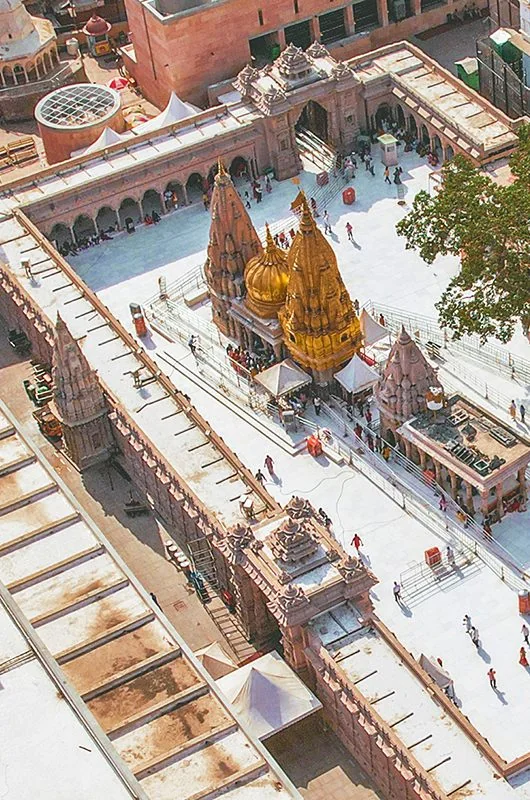
Temples of Varanasi
Varanasi's temples form a network of different deities, neighbourhoods and devotional practices. Kashi Vishwanath is a major focus, but smaller shrines reveal the diversity of the city's sacred life.
Explore guide →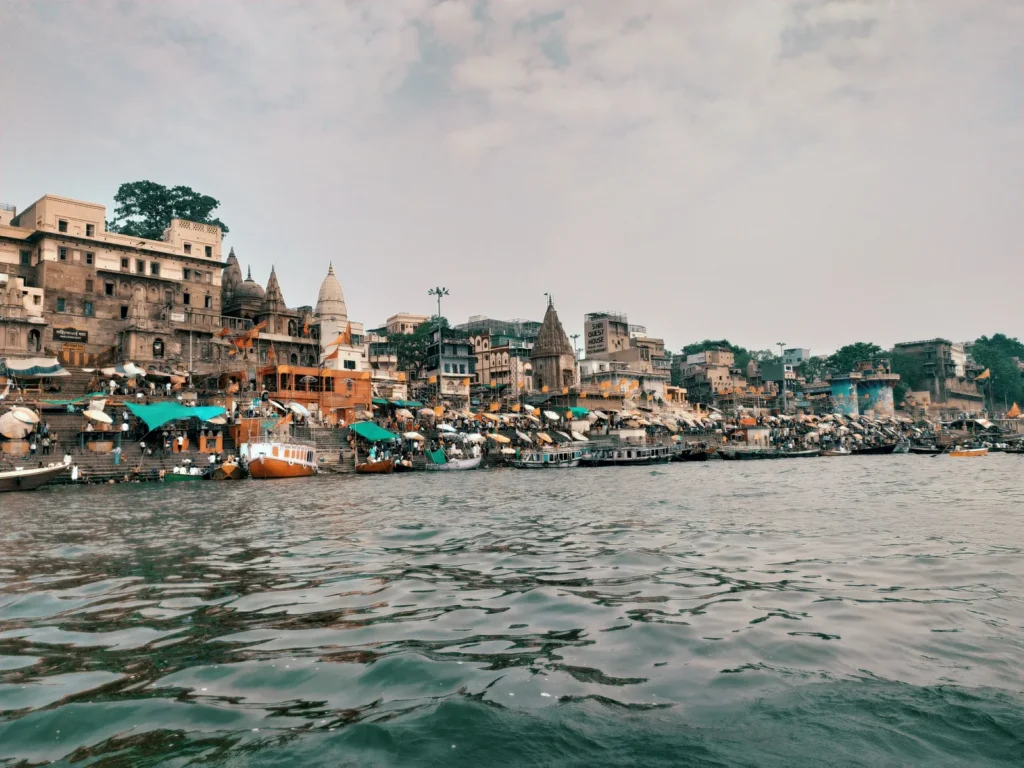
Ghats of Varanasi
The ghats are the city's meeting place with the Ganga: stepped river edges used for worship, movement, gathering and everyday work. They are connected, but each has a name and history worth learning.
Explore guide →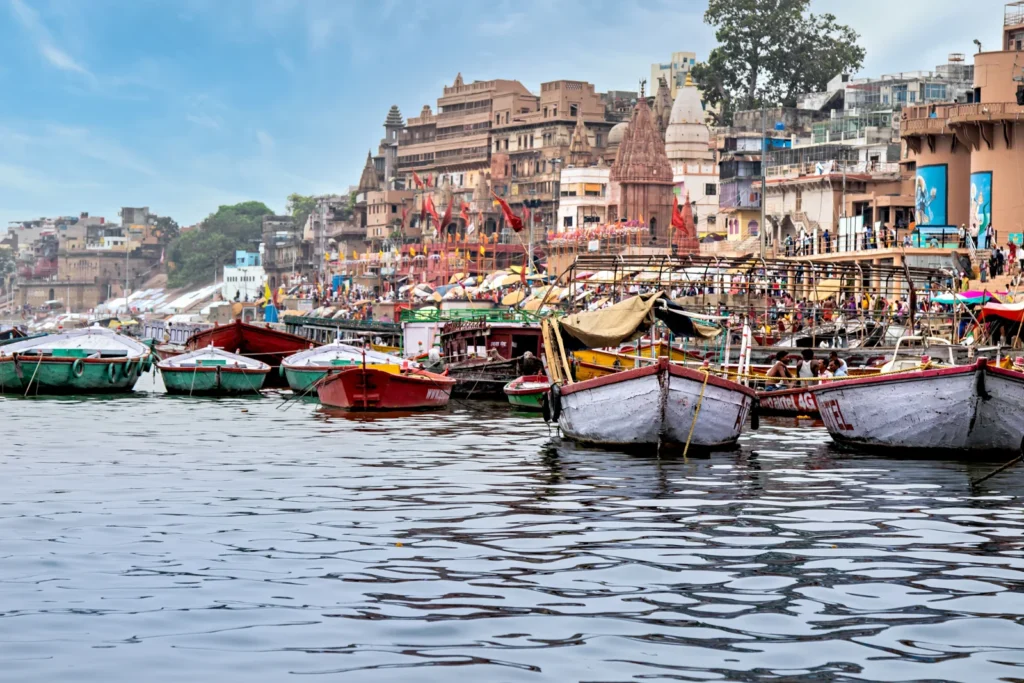
Things to Do in Varanasi
Things to do in Varanasi range from quiet observation to structured visits. The best selection depends on whether your interest is pilgrimage, history, culture, food or time beside the river.
Explore guide →No matching guides. Try a broader search.
Explore the Hinduism knowledge portal
A journey shaped around you
Plan your time in Kashi
Tell us your dates, interests and travel needs. Request a tailored proposal with clear inclusions before confirming any service.
Enquiry only · Availability and prices require confirmation · No payment is taken here