
Prayag Tourism · Attraction
Banaras Hindu University and New Vishwanath Temple
Banaras Hindu University adds an important educational chapter to a Varanasi itinerary. It is a working university, and its appeal should be understood alongside the daily needs of students and staff.
1. Introduction: The "Capital of Knowledge" in Southern Varanasi
Passing through the grand semi-circular arch of the Singhdwar (Lanka Gate) in southern Varanasi feels like stepping into another world. Behind you lies the bustling urban energy of Lanka Chowk; ahead stretches Banaras Hindu University (BHU)—one of the largest residential universities in Asia, spanning a magnificent 1,300-acre (5.3 sq km) tree-canopied campus laid out in the geometric pattern of a rising sun (Banaras Hindu University Official Website; District Varanasi Official Portal).
Founded in 1916 by the Bharat Ratna visionary nationalist and educationist Mahamana Pandit Madan Mohan Malaviya (with the foundational support of Dr. Annie Besant, Maharaja Rameshwar Singh of Darbhanga, and Maharaja Prabhu Narayan Singh of Kashi), BHU was conceived as a modern reincarnation of ancient Indian universities like Takshashila and Nalanda—synthesizing classical Sanskrit philosophy, Ayurveda, music, and fine arts with cutting-edge engineering (IIT-BHU), medicine (IMS-BHU), agriculture, and modern sciences. For travellers, BHU is not merely a university; it is a peaceful, green heritage sanctuary housing two of Varanasi’s premier attractions: the New Vishwanath Temple (Birla Mandir) (VAR-012) and the Bharat Kala Bhavan Art and Archaeological Museum (VAR-035).
2. Historical Genesis: Mahamana Malaviya's Vision & the 1916 Foundation
The story of Banaras Hindu University is one of the most inspiring chapters of the Indian independence movement (BHU Official Website). In 1904, at a meeting at the Mint House in Varanasi presided over by Maharaja Prabhu Narayan Singh of Kashi, Pandit Madan Mohan Malaviya first articulated his blueprint for a national residential university that would cultivate both scientific inquiry and character rooted in Indian civilization. Parallel efforts by Dr. Annie Besant (who had established the Central Hindu College at Kamachha in 1898) and Maharaja Rameshwar Singh of Darbhanga (Sharda Vishwa Vidyapith) converged in 1911 into the unified Hindu University Society.
When the Kashi Naresh (Maharaja Prabhu Narayan Singh) generously donated the vast 1,300-acre tract of land in the Nagwa–Lanka area along the southern bank of the Ganga, Malaviya traveled across the length and breadth of India raising public donations from princes, industrialists, farmers, and students. On 4 February 1916 (Vasant Panchami), the foundation stone of BHU was formally laid in a historic ceremony attended by Mahatma Gandhi (who delivered his famous first major public political speech in India after returning from South Africa at the BHU opening), Annie Besant, Rabindranath Tagore, Jagadish Chandra Bose, C.V. Raman, and rulers from across India.
3. The Iconic "Rising Sun" Campus Layout & Indo-Deco Temple Architecture
What immediately captivates architecture enthusiasts visiting BHU is its radial urban masterplan:
- Radial Concentric Roads (The Rays of the Rising Sun): Taking the Singhdwar (Main Lanka Gate) as the focal point on the eastern edge, the entire 1,300-acre campus radiates outward in concentric semi-circular ring roads intersected by straight tree-lined avenues lined with towering banyan, mango, mahogany, gulmohar, and ashoka trees—resembling the rays of the rising sun (Udayachal).
- Temple-Inspired Indo-Deco Faculty Buildings: Under Malaviya’s direction, every early college and hostel building erected between 1916 and the 1940s—including the Faculty of Arts (1921), Chemistry and Physics Departments, Central Library (Sayajirao Gaekwad Library, 1927–1941) modeled after the British Museum Reading Room in London, Broacha Hostel, Birla Hostel, and Raja-Ki-Kothi—was built in warm red-and-ochre cream stone crowned with classical Hindu temple spires (Shikharas), chhatris, and arched verandahs.
4. Top Sights for Visitors Inside the BHU Campus
Whether you enter on foot, by cycle-rickshaw, e-rickshaw, or private car, a 2-to-3-hour tour of the BHU campus should include these five stops:
1. Shri Vishwanath Mandir (New Vishwanath Temple / Birla Mandir) (VAR-012): Situated at the geometric heart of the campus, this white marble monument built by the Birla family (1931–1966) boasts one of the tallest temple spires in the world at 250 feet (76 metres) and is open to people of all faiths and nationalities daily from 5:00 AM – 12:00 PM and 1:00 PM – 7:30 PM (BHU Sri Vishwanath Temple Timings).
2. Bharat Kala Bhavan Museum (VAR-035): Located just 300 metres east of the main Lanka Gate inside the campus, housing over 100,000 priceless Indian miniature paintings, sculptures, textiles, and archaeological treasures (open 10:30 AM – 4:30 PM Monday to Saturday; closed Sundays) (BHU Bharat Kala Bhavan Official Page).
3. Malaviya Bhavan (Mahamana’s Residence & Memorial): The serene white bungalow near the Lanka entrance where Pandit Madan Mohan Malaviya lived, worked, and passed away in 1946. Today it preserves his personal bedroom, study, spectacles, books, letters from Mahatma Gandhi, and the Gita Samiti hall where weekly Bhagavad Gita discourses are held.
4. Sayajirao Gaekwad Central Library & Amphitheatre Grounds: Funded by Maharaja Sayajirao Gaekwad III of Baroda after admiring the circular reading room of the British Museum, the Central Library holds over 1.5 million volumes and rare Sanskrit manuscripts (note: interior reading rooms require university ID or prior academic permission, though the exterior architecture may be admired from the avenue).
5. The Campus Cold Coffee & Samosa Stalls near VT (Vishwanath Temple): Directly outside the New Vishwanath Temple garden gates sits the legendary VT Plaza, a beloved student hangout where visitors can enjoy affordable, hygienic cold coffee, hot samosas, masala dosa, and fruit juices under the shade of ancient trees.
5. Visitor Guidance, Campus Etiquette & Best Time to Visit
Because BHU is a living residential university and hosts the major Sir Sunderlal Hospital (IMS-BHU) near the Lanka gate, visitors should respect campus speed limits (20–30 km/h), avoid honking near lecture halls or hospital wards, and never litter on the lawns. If you visit Varanasi on Vasant Panchami (January/February, VAR-053), you can witness the spectacular BHU Foundation Day Parade, when every faculty and school builds elaborate floral and artistic floats that process through the radial avenues.
6. Conclusion
A morning or afternoon stroll through the leafy avenues of Banaras Hindu University offers a refreshing contrast to the narrow medieval lanes of old Kashi—revealing how Varanasi remains as vibrant a centre of modern scholarship today as it was in the age of the Upanishads.
C. Practical Visitor Information
- Location: Banaras Hindu University (BHU), Lanka, Southern Varanasi, Uttar Pradesh – 221005 (BHU Official Website; How to Reach BHU Guide).
- How to Reach:
- From Assi Ghat (VAR-020): Only 1.5 km south (~5 minutes by auto/e-rickshaw or 15 minutes on foot) to BHU’s main Lanka Gate (Singhdwar).
- From Banaras Railway Station (BSBS, Manduadih): ~4.8 km (15–20 minutes by cab/auto).
- From Varanasi Junction (BSB, Cantt): ~9 to 10 km (30–40 minutes by cab/auto).
- From Pt. Deen Dayal Upadhyaya Junction (DDU): ~17 km via Ramnagar / Samne Ghat Bridge.
- From Varanasi Airport (VNS): ~30 km (50–60 minutes via NH-31 / Outer Ring Road).
- Best Time to Visit: Year-round; mornings (7:00 AM – 11:30 AM) for walking/cycling and temple darshan, or midday (10:30 AM – 4:30 PM, Mon–Sat) to combine New Vishwanath Temple (VAR-012) with Bharat Kala Bhavan Museum (VAR-035). Note that the New Vishwanath Temple closes between 12:00 PM and 1:00 PM.
- Visiting Hours:
- BHU Campus Avenues: Open daily for visitors from 5:00 AM to 9:00 PM.
- New Vishwanath Temple (VAR-012): 5:00 AM – 12:00 PM and 1:00 PM – 7:30 PM daily (BHU Temple Timings).
- Bharat Kala Bhavan Museum (VAR-035): 10:30 AM – 4:30 PM Monday to Saturday (Closed Sundays & BHU Holidays) (BHU Bharat Kala Bhavan).
- Entry Fee: Free for campus entry, New Vishwanath Temple, and Malaviya Bhavan (small entry ticket applies only for Bharat Kala Bhavan Museum).
- Duration Required: 2 to 3 hours (including New Vishwanath Temple and Bharat Kala Bhavan, estimated).
- Nearby Attractions: Sankat Mochan Hanuman Temple (VAR-009, 1.2 km north of Lanka Gate), Tulsi Manas Mandir (VAR-011, 1.8 km north), Assi Ghat (VAR-020, 1.5 km northeast), and Ramnagar Fort (VAR-033, 4 km east across Samne Ghat bridge).
- Visitor Advice: Take an e-rickshaw inside the campus if you are visiting with senior citizens, as the distance from the Lanka Gate (Singhdwar) to the New Vishwanath Temple is approximately 1.5 kilometres along the central avenue.
D. Frequently Asked Questions (FAQs)
1. Can tourists and non-students enter the Banaras Hindu University (BHU) campus?Yes, tourists and pilgrims are warmly welcomed inside the BHU campus to visit the New Vishwanath Temple (VAR-012), Bharat Kala Bhavan Museum (VAR-035), Malaviya Bhavan, and the scenic campus avenues.
2. Are cars and e-rickshaws allowed inside the BHU campus?Yes, private cars, cabs, auto-rickshaws, and campus e-rickshaws can drive through the main Lanka Gate (Singhdwar) all the way to the parking zones outside Bharat Kala Bhavan and the New Vishwanath Temple.
3. Who founded Banaras Hindu University and in which year?Banaras Hindu University was founded in 1916 (foundation stone laid on Vasant Panchami, 4 February 1916) by Mahamana Pandit Madan Mohan Malaviya with the support of Dr. Annie Besant, Maharaja Rameshwar Singh of Darbhanga, and Maharaja Prabhu Narayan Singh of Kashi (BHU Official Website).
4. How big is the BHU campus in Varanasi?The main BHU campus in southern Varanasi covers approximately 1,300 acres (5.3 square kilometres)—Wait: additionally, BHU operates the 2,700-acre Rajiv Gandhi South Campus at Barkachha in Mirzapur district.
5. What is the best time of day to visit both the BHU Temple and the BHU Museum?Arrive around 10:00 AM from Monday to Saturday: visit the New Vishwanath Temple first between 10:00 AM and 11:30 AM (before it closes for its 12:00 PM–1:00 PM midday break), enjoy a snack at VT Plaza, and then visit Bharat Kala Bhavan Museum between 12:00 PM and 2:00 PM.
6. How far is BHU from Assi Ghat?BHU’s main Lanka Gate is only 1.5 kilometres from Assi Ghat—about 5 minutes by e-rickshaw.
Choose your next chapter
Continue your journey
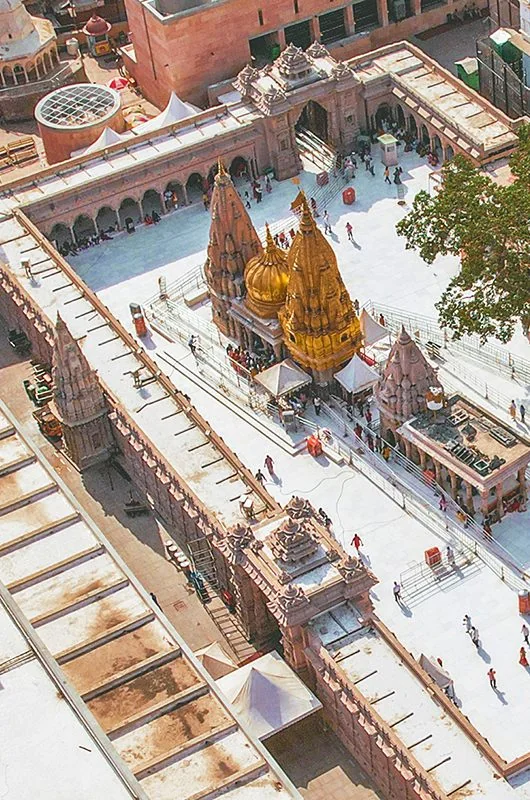
Temples of Varanasi
Varanasi's temples form a network of different deities, neighbourhoods and devotional practices. Kashi Vishwanath is a major focus, but smaller shrines reveal the diversity of the city's sacred life.
Explore guide →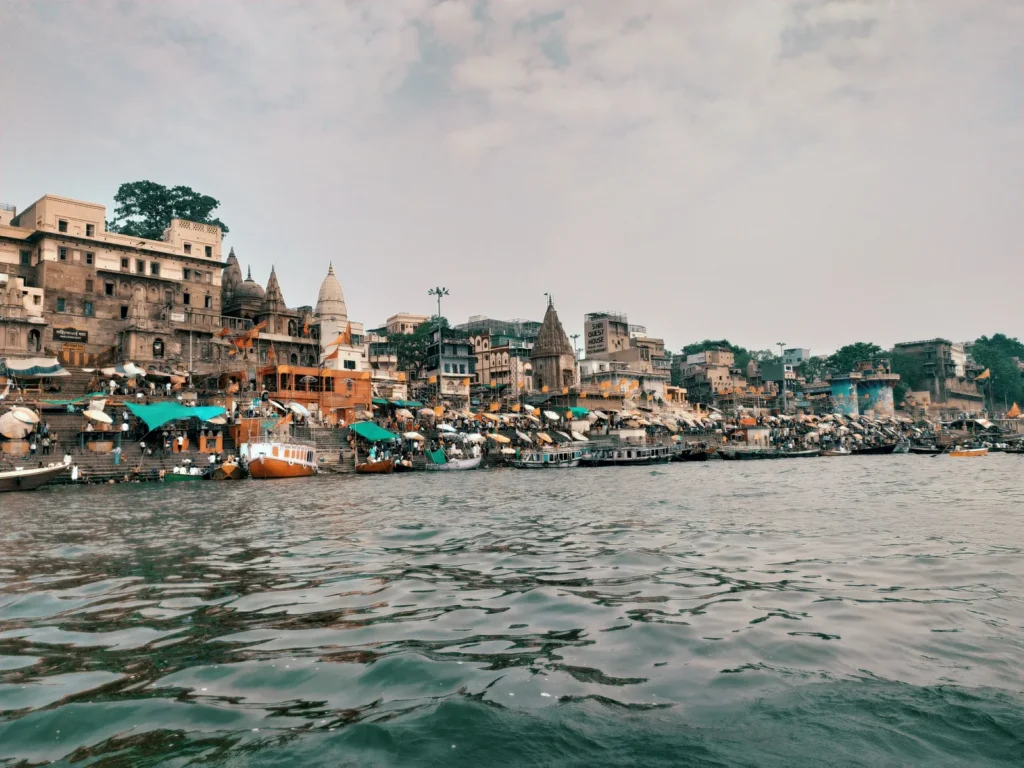
Ghats of Varanasi
The ghats are the city's meeting place with the Ganga: stepped river edges used for worship, movement, gathering and everyday work. They are connected, but each has a name and history worth learning.
Explore guide →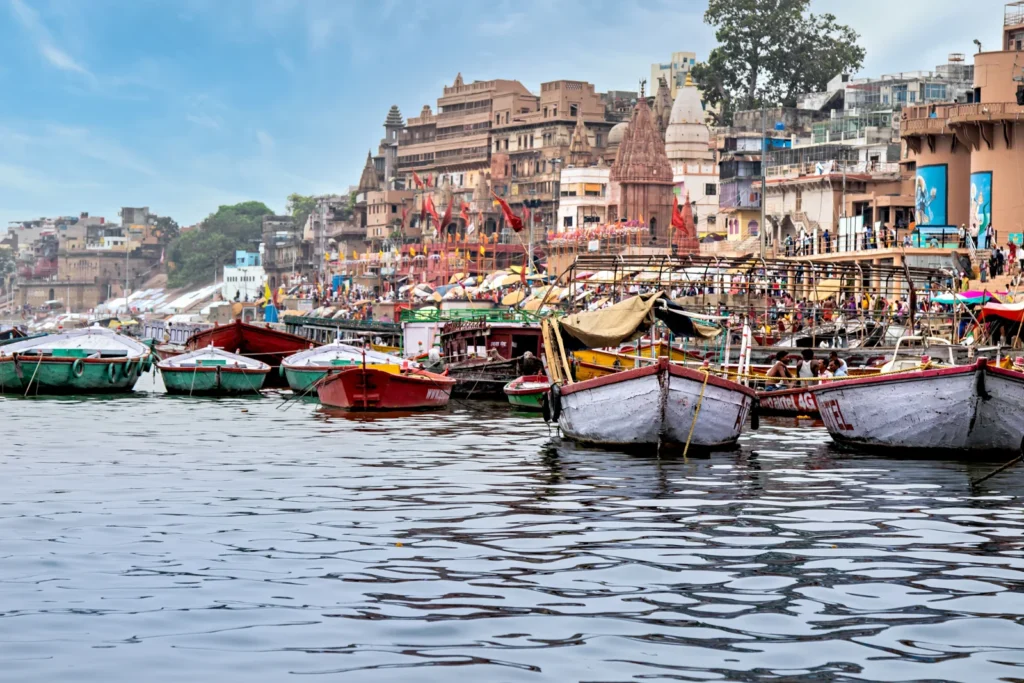
Things to Do in Varanasi
Things to do in Varanasi range from quiet observation to structured visits. The best selection depends on whether your interest is pilgrimage, history, culture, food or time beside the river.
Explore guide →No matching guides. Try a broader search.
Locate the area
Open a place-name search and confirm the exact venue and approach before travelling. No unverified coordinates or embedded tracking map are used.
Open map search: Banaras Hindu University and New Vishwanath Temple, Varanasi, Uttar Pradesh, India ↗Explore the Hinduism knowledge portal
A journey shaped around you
Plan your time in Kashi
Tell us your dates, interests and travel needs. Request a tailored proposal with clear inclusions before confirming any service.
Enquiry only · Availability and prices require confirmation · No payment is taken here