
Prayag Tourism · Travel
Seasonal Travel Guide
Seasonal planning changes the shape of a Varanasi day more than the basic list of attractions. Heat, rain, river level, visibility and crowd patterns affect when and how a place can be visited.
1. Introduction: Choosing the Ideal Season for Your Kashi Journey
Situated in the subtropical middle Gangetic plain at an elevation of 80.71 metres (VAR-005), Varanasi experiences three distinct climatic seasons across the year, with ambient temperatures ranging from 5 degrees Celsius on crisp January mornings to 43–45 degrees Celsius on peak May afternoons (Varanasi UP Tourism Brochure; District Varanasi Official Portal).
According to official Uttar Pradesh Tourism guidance (Varanasi UP Tourism Brochure), the overall best time to visit Varanasi is from October to March, when pleasant daytime sunshine, calm river levels, migratory Siberian birds, winter delicacies like Malaiyyo (VAR-051), and flagship festivals (VAR-053) converge. However, because Shri Kashi Vishwanath Dham (VAR-007) is a 365-day pilgrimage hub, every season—including the quieter summer mornings of April–June and the spiritually charged monsoon month of Shravan (July–August)—offers unique advantages if you plan your daily schedule wisely.
2. The Three Seasons of Varanasi Compared in Detail
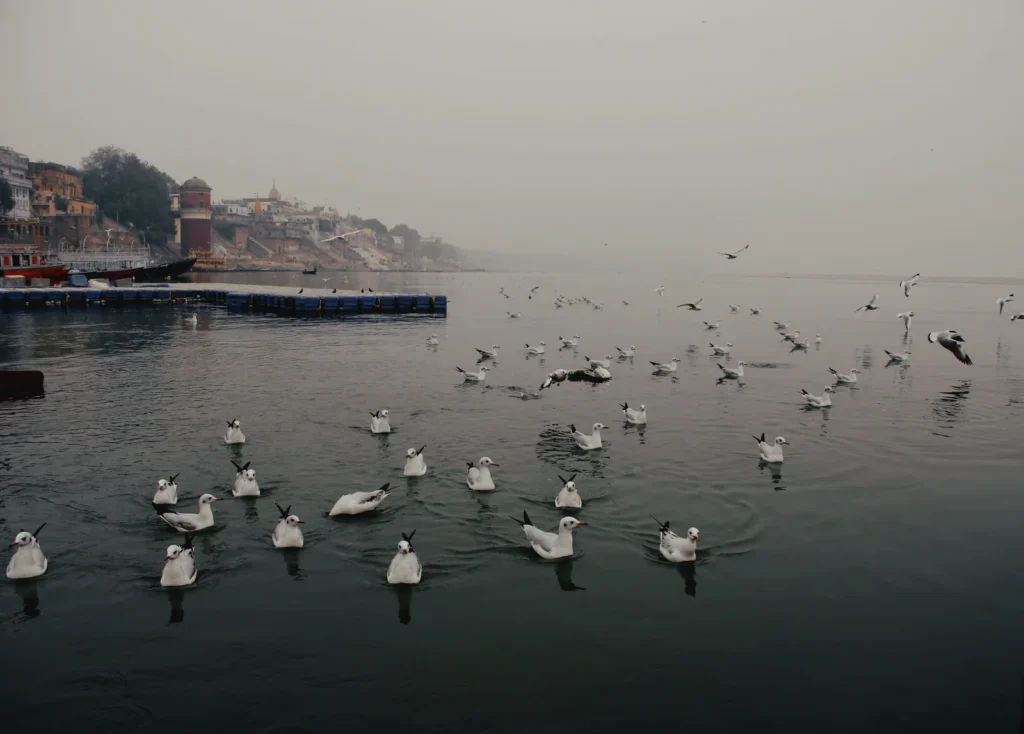
- Season 1 – Peak Winter and Pleasant Autumn/Spring (October to March, 5 C to 30 C): This is the golden window for visiting Varanasi. After the monsoon waters recede in October, all 84 ghats (VAR-018) are dry and connected for walking (VAR-042). From November to February, white migratory Siberian gulls flock over the Ganga (VAR-040), winter saffron Malaiyyo and Choora Matar (VAR-051) appear in the morning lanes, and major festivals like Ramlila, Chhath Puja, Dev Deepawali, Maha Shivaratri, and Holi take place. Note that between 20 December and 15 January, morning Gangetic fog can drop predawn temperatures to 5 C to 8 C and occasionally delay early flights (VAR-056) or trains, so pack warm woollens and windproof layers.
- Season 2 – Summer (April to June, 24 C to 43 C): While midday afternoons between 12:00 PM and 4:00 PM are intensely hot, early mornings (5:00 AM – 9:30 AM) and evenings (5:00 PM – 8:30 PM) along the River Ganga remain breezy and pleasant. Summer offers the shortest weekday darshan queues at Shri Kashi Vishwanath Dham (VAR-007), calm river waters for boating, and 25%–40% lower hotel tariffs (VAR-055). Simply spend midday hours indoors at air-conditioned museums like Deendayal Hastkala Sankul (VAR-036) or Bharat Kala Bhavan (VAR-035).
- Season 3 – Monsoon and Sacred Shravan (July to September, 26 C to 34 C): July–August corresponds to the sacred Hindu month of Shravan (Sawan), when millions of saffron-clad Kanwariyas bring Gangajal to Lord Shiva (VAR-053), Sarnath (VAR-030) and BHU (VAR-034) turn lush green, and the nearby Rajdari and Devdari Waterfalls (VAR-078) roar in full spate. Be aware that in late July, August, and early September, the River Ganga rises 10–15 metres, submerging the lower connecting steps of the ghats and occasionally prompting temporary Jal Police suspensions of small boat rides (VAR-040), though the evening Ganga Aarti (VAR-039) continues uninterrupted on the upper balconies of Dashashwamedh Ghat.
3. Month-by-Month Quick Planning Reference
- October (22 C to 33 C): Post-monsoon clear skies; Ramlila, Dussehra, and Diwali/Annakut; river levels receding (Excellent).
- November (15 C to 29 C): Crisp golden mornings; Chhath Puja, Ganga Mahotsav, Dev Deepawali, and arrival of migratory gulls plus Malaiyyo (Peak Best Month).
- December (9 C to 24 C): Cool, comfortable daytime sightseeing; cosy winter street food; light morning mist (Excellent).
- January (5 C to 21 C): Coldest month with early morning fog; Makar Sankranti kite flying (Very Good – Pack Heavy Winter Layers).
- February (11 C to 26 C): Sunny, pleasant spring days; Vasant Panchami, Ravidas Jayanti, and Maha Shivaratri (Peak Best Month).
- March (16 C to 33 C): Warm days and breezy evenings; Rangbhari Ekadashi and Holi (Very Good).
- April (22 C to 38 C): Warm mornings, hot afternoons; Sankat Mochan Music Festival (Good for Morning/Evening Schedule).
- May and June (27 C to 43 C): Hot summer; Buddha Purnima at Sarnath and Ganga Dussehra (Budget/Low-Crowd Season – Use Split Schedule).
- July and August (26 C to 34 C): Monsoon rains and high Ganga levels; sacred Shravan Maas and roaring Chandraprabha waterfalls (Spiritual Pilgrimage Season).
- September (25 C to 33 C): Retreating monsoon; Lolark Shashthi, Pitru Paksha Pind Daan, and start of Ramnagar Ramlila (Good Shoulder Month).
4. Best Time to Visit for Specific Traveller Profiles
- For Senior Citizens and Families with Young Children (VAR-070): Mid-October to Mid-December and February to Mid-March (mild 22 C to 28 C temperatures without extreme January cold or May heat; avoid the single peak crowd nights of Dev Deepawali and Maha Shivaratri if mobility is limited).
- For Photographers and Cultural Enthusiasts: November (Dev Deepawali and migratory gulls) and February/March (Maha Shivaratri, Dhrupad Mela, and Holi).
- For Buddhist Pilgrims Visiting Sarnath (VAR-067): November to February (cool garden weather) and Kartik Purnima (November) / Buddha Purnima (May) when the sacred relics at Mulagandha Kuti Vihara are displayed.
5. Conclusion
Whenever your calendar brings you to Kashi, matching your packing list and daily sightseeing hours to the season ensures a comfortable, memorable journey. Next, explore Where to Stay in Varanasi (VAR-055) to choose the right neighbourhood for your trip.
C. Practical Visitor Information
- Location: Varanasi District, Middle Gangetic Plain, Uttar Pradesh (Elevation: 80.71m above sea level) (Varanasi UP Tourism Brochure).
- How to Reach: Well connected year-round by air (VNS), rail (BSB, BSBS, DDU), and national highways (VAR-056); in late Dec–Jan, book midday flights (12:00 PM – 5:00 PM) rather than early morning flights to avoid winter fog delays.
- Best Time to Visit: October to March (overall best weather); November and February (ideal temperature and culture balance).
- Visiting Hours: In Winter (Oct–Mar), sightsee comfortably all day (5:30 AM – 8:30 PM); in Summer (Apr–Jun), sightsee 5:00 AM – 9:30 AM and 4:30 PM – 8:30 PM.
- Entry Fee: N/A.
- Duration Required: 2 to 4 days recommended across all seasons.
- Nearby Attractions: Sarnath (VAR-030), Chandraprabha Waterfalls (VAR-078, best in July–Oct), and Prayagraj (VAR-075).
- Visitor Advice: Always pack a warm windproof jacket, muffler/shawl, and socks for dawn boat rides between November and February; pack cotton clothing, sunglasses, sunscreen, and ORS electrolyte packets between April and September.
D. Frequently Asked Questions (FAQs)
1. Which are the best months to visit Varanasi for pleasant weather?October, November, December, February, and March offer the most pleasant weather in Varanasi, with sunny daytime temperatures between 20 C and 30 C and cool evenings (Varanasi UP Tourism Brochure).
2. When can I see the white migratory Siberian birds on the River Ganga?Migratory gulls arrive on the River Ganga in early November and remain through late February / early March (VAR-040).
3. Is it safe to visit Varanasi in July and August during the monsoon?Yes, the city, temples (VAR-007), and Sarnath (VAR-030) are completely safe and vibrant with Shravan pilgrims. However, because the River Ganga rises 10–15 metres in late July and August, lower ghat steps are submerged and boat rides (VAR-040) may be temporarily paused by the Jal Police during peak high-water weeks.
4. How cold does Varanasi get in December and January?Minimum night and predawn temperatures in late December and January drop to 5 C to 9 C (Varanasi UP Tourism Brochure), and morning fog over the river feels brisk—bring proper winter layers.
5. What are the best days of the week to avoid heavy temple crowds in Varanasi?Tuesday, Wednesday, Thursday, and Friday experience noticeably lighter crowds at Shri Kashi Vishwanath Dham (VAR-007) compared to Saturdays, Sundays, Mondays (Lord Shiva’s sacred day), and Purnima/Ekadashi dates.
6. Can I visit Varanasi in May or June with my family?Yes, provided you book an air-conditioned hotel (VAR-055) and AC cab (VAR-072), complete your boat ride and temple darshan between 5:00 AM and 9:30 AM, rest indoors during midday heat, and go out again at 5:00 PM for the evening Ganga Aarti.
Choose your next chapter
Continue your journey
Varanasi for First-Time Visitors
A first visit works best when you decide what matters most before arriving. Choose a central temple experience, time beside the Ganga and one cultural or archaeological visit, then leave space for meals and rest.
Explore guide →Varanasi Travel Tips, Safety and Visitor Etiquette
A comfortable Varanasi visit depends on awareness of shared space: lanes carry deliveries, ghats host worship and work, and temples have their own rules. Courtesy and preparation help avoid unnecessary friction.
Explore guide →
Varanasi Tour Packages
Varanasi tour packages should be compared by their actual scope, pace and terms. The ideas in this portal are proposed service categories and itinerary starting points, not a live inventory of confirmed departures.
Explore guide →No matching guides. Try a broader search.
Explore the Hinduism knowledge portal
A journey shaped around you
Plan your time in Kashi
Tell us your dates, interests and travel needs. Request a tailored proposal with clear inclusions before confirming any service.
Enquiry only · Availability and prices require confirmation · No payment is taken here