
Ritual · Hinduism knowledge portal
Yajna and Havan
Fire rituals with diverse textual, household and ceremonial contexts.
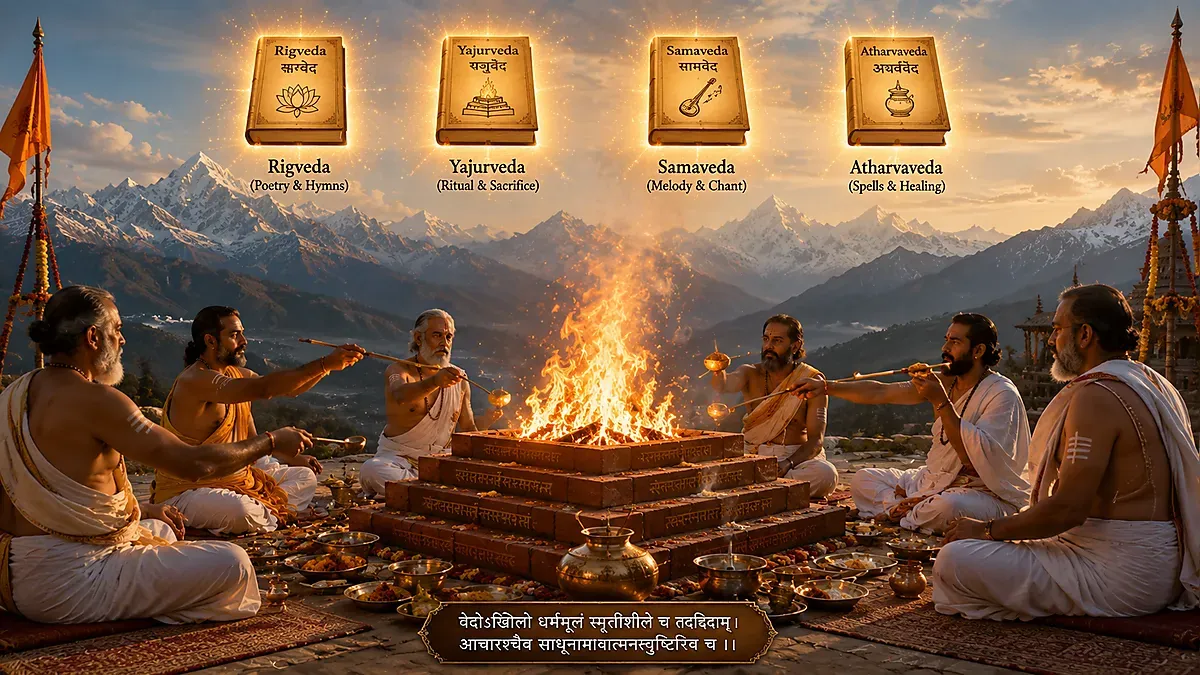
1. Introduction and Sanskrit Etymology
Yajna and Havan holds a foundational place within Hindu Rituals and Practices on the Prayag Hinduism Portal. In Sanskrit philology and religious studies, its meaning is rooted in precise linguistic usage: Yajña derives from the Sanskrit verbal root yaj (‘to worship, adore, unite/harmonize, and offer in sacrifice’), while Havan / Homa derives from the root hu (‘to pour or offer oblations into the consecrated fire’). Across Hindu tradition, Yajna and Havan connects scriptural revelation (Śruti), remembered tradition (Smṛti), philosophical inquiry (Darśana), ritual practice (Upāsanā), and sacred geography (Encyclopaedia Britannica – Yajna (Vedic Sacrifice)). Across both domestic household altars (gṛha-pūjā) and public temple sanctuaries (mandira-pūjā), this liturgical practice transforms external sensory offerings and disciplined vows into an inward cultivation of mindfulness, gratitude, and mental purity (citta-śuddhi).
2. Historical and Traditional Background
Primary scriptures and classical treatises that document and illuminate Yajna and Havan include: Ṛgveda (1.1.1, 10.90.16); Śatapatha Brāhmaṇa; Āśvalāyana Śrautasūtra and Gṛhyasūtra; Kātyāyana Śulbasūtra; Bhagavad Gītā (3.9–16, 4.24–33). (Encyclopaedia Britannica – Puja and Hindu Ritual Practice). Its historical trajectory spans key epochs of Indian civilization: Forms the oldest continuous ritual tradition in the world—spanning from the solemn Vedic Śrauta fire rituals (Agnihotra, Darśapūrṇamāsa, Somayāga, Agnicayana) and domestic Gṛhya / Smārta fire ceremonies (Homa / Havan) to the philosophical interiorization of Yajña in the Upaniṣads and Bhagavad Gītā. Academic scholarship reads these primary texts alongside epigraphic, archaeological, and manuscript evidence to distinguish traditional narrative, theological commentary, and historical chronology accurately.
“Brahmārpaṇaṃ brahma havir brahmāgnau brahmaṇā hutam / brahmaiva tena gantavyaṃ brahma-karma-samādhinā” — “Brahman is the offering ladle; Brahman is the oblation; into the fire of Brahman it is poured by Brahman; Brahman alone is reached by one who meditates on Brahman in every action.” (Bhagavad Gītā 4.24, Encyclopaedia Britannica – Yajna (Vedic Sacrifice))
3. Main Concepts and Philosophical Explanation
The core conceptual and theological structure of Yajna and Havan has been articulated by sages (ṛṣis) and commentators (ācāryas) across centuries: Examines the liturgical structure and cosmic philosophy of Yajña and Havan: (1) *The Fire Altar (Vedi / Havan-kuṇḍa) and Implements: constructed with precise geometric proportions (Śulbasūtras) and stepped bricks (mekhalā), using sacred woods (Samidhā: mango, palāśa, pīpal/aśvattha, śamī, gūlar) and wooden ladles (sruk and sruva); (2) Agni as Purohita and Dūta: invoking Agni as the purifying mouth of all the Devas (agnir mukhaṃ prathamo devatānām); and (3) Āhuti and the Refrain ‘Svāhā’ and ‘Idaṃ Na Mama’: pouring pure cow’s ghī and herbal/grain mixture (Havan-sāmagrī: sesame, barley, rice, guggulu, sandalwood, camphor, and medicinal herbs) into the fire with each Vedic mantra ending in Svāhā (‘rightly offered’), immediately followed by the transformative ethical declaration Idaṃ Agnayē (or Indrāya/Sūryāya/Prajāpataye), Idaṃ Na Mama—’This offering is for the Divine; this is not mine’—training the human heart to relinquish egoic possessiveness (mamakāra*). Within the pluralistic spectrum of Hinduism, Vaiṣṇava, Śaiva, Śākta, and Smārta lineages alongside the six classical darśanas (IEP – Hindu Philosophy) interpret these principles through complementary lenses of knowledge (jñāna), devotion (bhakti), righteous action (karma), and meditation (dhyāna).
4. Important Aspects, Classifications, and Editorial Scope
Key classifications, structural subdivisions, and traditional varieties of Yajna and Havan include: Analyzes the Five Daily Household Sacrifices (Pañca-mahāyajña) incumbent upon every householder (Śatapatha Brāhmaṇa 11.5.6.1; Manusmṛti 3.69–71): Brahma-yajña (study and teaching of scriptures), Deva-yajña (fire homa and worship), Pitṛ-yajña (tarpaṇa and honoring parents/ancestors), Manuṣya/Nṛ-yajña (feeding guests and the hungry), and Bhūta-yajña (feeding birds, animals, and caring for nature)—alongside Kṛṣṇa’s teaching in Bhagavad Gītā 3.9–16 that the entire ecology of rain, food, and society revolves around the wheel of mutual sacrifice (yajña-cakra) and that every selfless act (yajñārthāt karma) liberates. Editorial differentiation within this portal: Focuses specifically on the Vedic and domestic fire liturgy of Yajna and Havan, the Havan-kuṇḍa implements, the ethical formula ‘Idaṃ Na Mama’, Pañca-mahāyajña, and the Gītā’s philosophy of Yajña.
5. Regional Traditions and Contemporary Relevance
Across the diverse regions of India and the global diaspora, Yajna and Havan is sustained through living customs, seasonal observances, and pilgrimage networks: Performed at every Hindu life-cycle saṃskāra (especially marriage vivāha around the sacred fire), Navrātri conclusion (pūrṇāhuti), temple consecrations, and at Prayagraj—whose very name Pra-yāga means ‘The Place of Supreme Yajña’ where Lord Brahmā performed the primordial sacrifice! At the sacred confluence city of Prayagraj (Tīrtharāja)—where the Gaṅgā, Yamunā, and invisible Sarasvatī meet at the Triveni Sangam—pilgrims, scholars, and monastic orders from every corner of India converge, keeping this heritage vibrant and relevant for contemporary seekers.
6. Frequently Asked Questions
What are the primary scriptural sources for Yajna and Havan?
Primary sources include Ṛgveda (1.1.1, 10.90.16); Śatapatha Brāhmaṇa; Āśvalāyana Śrautasūtra and Gṛhyasūtra; Kātyāyana Śulbasūtra; Bhagavad Gītā (3.9–16, 4.24–33)., studied alongside classical Sanskrit commentaries and vernacular traditions (Encyclopaedia Britannica – Yajna (Vedic Sacrifice)).
How do diverse Hindu traditions interpret Yajna and Havan?
Different sampradāyas (Vaiṣṇava, Śaiva, Śākta, Smārta) and philosophical schools highlight distinct metaphysical, devotional, or ritual facets while sharing core commitments to dharma and mokṣa (Encyclopaedia Britannica – Puja and Hindu Ritual Practice).
How does this article differ from related portal pages?
Focuses specifically on the Vedic and domestic fire liturgy of Yajna and Havan, the Havan-kuṇḍa implements, the ethical formula ‘Idaṃ Na Mama’, Pañca-mahāyajña, and the Gītā’s philosophy of Yajña.
7. Conclusion
In summary, Yajna and Havan exemplifies the spiritual depth, intellectual rigor, and living diversity of Hinduism, offering enduring insight for students, pilgrims, and readers on PrayagTourism.com.
References and Further Reading
Primary Scriptures: Ṛgveda (1.1.1, 10.90.16); Śatapatha Brāhmaṇa; Āśvalāyana Śrautasūtra and Gṛhyasūtra; Kātyāyana Śulbasūtra; Bhagavad Gītā (3.9–16, 4.24–33). (Bhagavad Gītā 4.24).
Academic & Institutional: Encyclopaedia Britannica – Yajna (Vedic Sacrifice); Encyclopaedia Britannica – Puja and Hindu Ritual Practice; GRETIL Archive; IIT Kanpur Gita Supersite.
Government & Heritage: IGNCA (Ministry of Culture); Vedic Heritage Portal; Prayag Tourism Heritage Guides.
Related pages
Related Prayag Tourism reading
Related Prayag Tourism reading
- Understanding Om in Sanatana Dharma
- Daily Spiritual Practices in Hinduism
- Meaning of Aarti in Hinduism
- The 16 Samskaras in Hinduism
Sources and editorial context
Separate scriptural accounts, traditional beliefs, philosophical interpretations, historical evidence and modern scholarship. Attribute translations and quotations, avoid unsupported medical claims, and verify changing travel or festival details against current local sources.