
Prayag Tourism · Attraction
Ramnagar Fort and Museum
Ramnagar Fort offers a view of Varanasi's royal and cultural history from across the Ganga. Its river-facing architecture and museum collections make it a different experience from a central ghat walk.
1. Introduction: The Riverfront Citadel of the Kashi Naresh
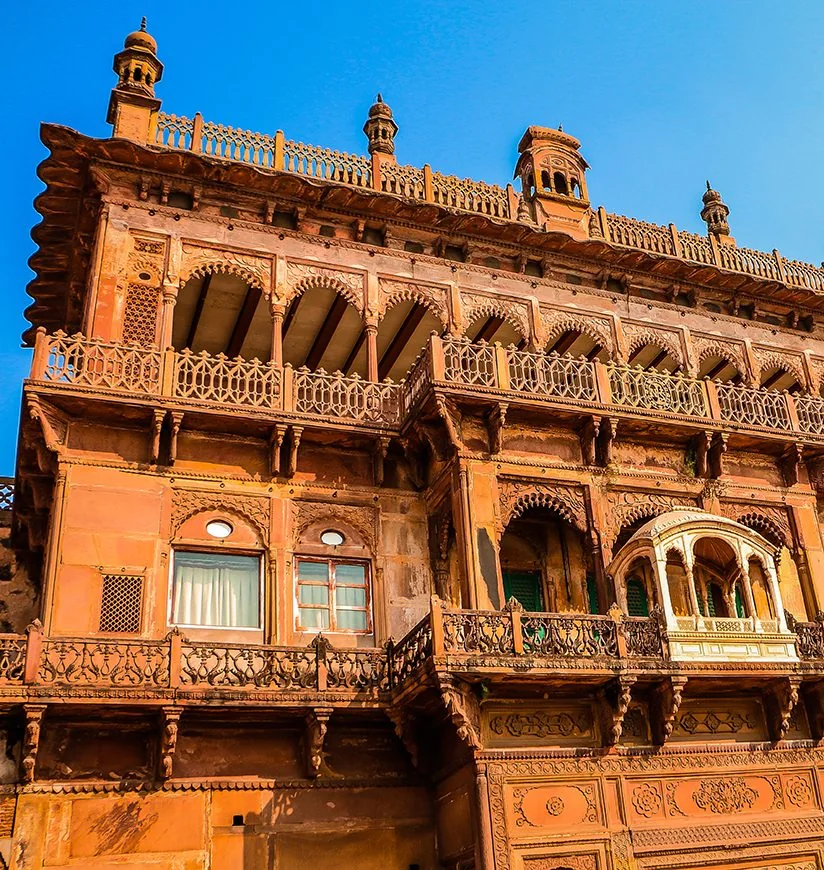
Rising majestically above the eastern bank of the River Ganga directly opposite Tulsi and Assi Ghats, Ramnagar Fort is the eighteenth-century ancestral seat of the Maharaja of Banaras (Kashi Naresh) (Kashi Official Portal – Ramnagar Fort; Varanasi Tourism – Ramnagar Fort). While almost the entire built heritage of Varanasi clings to the western crescent of the river, Ramnagar stands proudly on the high eastern bluff above the flood line, its creamy Chunar sandstone ramparts, scalloped Mughal arches, and carved Rajput balconies (jharokhas) glowing amber in the late-afternoon sun.
For travellers, a visit to Ramnagar Fort offers two extraordinary experiences in one: the Saraswati Bhawan Royal Museum—famed for its eccentric and priceless collection of vintage American and European royal motorcars, jewel-encrusted ivory palanquins, Mughal and Rajput weaponry, and an 1852 astronomical clock—and the sacred riverfront pavilion housing the Veda Vyasa Temple (Vyasa Kashi) overlooking the broad sweep of the Ganga (Kashi Yatra by Anu Shankar).
2. Historical Background & Indo-Islamic Rajput Architecture
The foundations of the modern Kingdom of Banaras were laid in the early eighteenth century under Mansa Ram of the Bhumihar Brahmin Narayan dynasty, and consolidated by his son Maharaja Balwant Singh (r. 1738–1770 CE), who shifted his capital from Gangapur to Ramnagar and constructed Ramnagar Fort in 1750 CE (Ramnagar Fort Experience Guide). Situated on elevated ground safe from seasonal floods and naturally defended on the west by the deep channel of the Ganga, the fortress served as both a military stronghold and the ceremonial court of the dynasty through the reigns of Maharaja Chet Singh, Maharaja Ishwari Prasad Narayan Singh, Maharaja Prabhu Narayan Singh, and the late scholarly Kashi Naresh Dr. Vibhuti Narayan Singh (whose descendants still reside in the private residential wing of the palace).
Architecturally, the fort exemplifies the composite Mughal-Rajput (Indo-Saracenic) style of eighteenth-century North India: built entirely of buff Chunar sandstone, it features massive fortified outer gateways with iron-spiked doors (designed to deter war elephants), open landscaped courtyards, a white-stuccoed Diwan-e-Aam (Public Audience Hall), carved marble and sandstone pavilions overlooking the river, and the residential palace complex next to the Dakshinamukhi Hanuman shrine.
3. Inside the Saraswati Bhawan Royal Museum: Key Galleries
Converted into a public museum in the mid-twentieth century, the Saraswati Bhawan Museum spans the historic Durbar Hall and adjoining court wings (Kashi Official Portal – Ramnagar Fort; Kashi Yatra by Anu Shankar):
- Vintage Royal Automobiles & Silver Coach Gallery: Displays rare early twentieth-century luxury automobiles belonging to the Maharajas, including an American Graham-Paige, Cadillac, Buick, Mercedes-Benz, and Ford tourer, alongside a ceremonial horse-drawn silver-plated state carriage and ornate elephant howdahs (ambari) crafted from silver and carved ivory.
- Palanquins (Palkis), Textiles & Royal Costumes: Showcases silk-and-brocade Kimkhab royal robes (VAR-047), zari-embroidered turbans, ladies’ veiled palanquins, ivory chess sets, and rosewater sprinklers.
- The Royal Armoury (Shastragar): One of the largest private weapons collections in Uttar Pradesh, exhibiting Damascus steel swords (talwars), curved khandas, rhino-hide shields, matchlock and flintlock muskets stretching up to three metres long, revolvers disguised as walking sticks and pocket books, ivory-hilted daggers (katars), and full chain-mail suits.
- The 1852 Astronomical Clock (Dharmaghadi): Mounted in the courtyard wall is a celebrated mechanical astronomical clock built in 1852 by court clockmaker Mulchand, which simultaneously displays not only the hours, minutes, and seconds, but also the day of the week, month, phase of the moon, position of the sun in the zodiac, and traditional Hindu Panchang planetary alignments.
- Illuminated Manuscripts: Houses rare handwritten manuscripts, including a treasured seventeenth-century illuminated copy of Goswami Tulsidas’s Ramcharitmanas and royal farmans signed by Mughal emperors and British governors-general.
4. Sacred Shrines on the River Ramparts: Veda Vyasa Temple ( Vyasa Kashi )
Walking through the narrow stone archway at the western edge of the fort leads onto a dramatic riverside bastion perched high above the Ganga (Vetted Stories of Kashi & Sarnath PoIs):
- Veda Vyasa Temple & Legend of Vyasa Kashi: According to the Skanda Purana, when the great sage Maharshi Veda Vyasa (compiler of the Vedas and author of the Mahabharata) failed to receive alms in Varanasi while testing its householders, he raised his hand to curse the city. Lord Shiva and Goddess Annapurna appeared before him, fed him sumptuously, and banished the hot-tempered sage from entering Kashi proper—permitting him to reside across the eastern bank at Ramnagar (Vyasa Kashi) and visit the main city only on the eighth and fourteenth lunar days (Ashtami and Chaturdashi).
- Rambagh & Sumeru Temple (Nearby): Located just 1.5 km from the fort is the eighteenth-century Sumeru / Durga Temple at Rambagh (VAR-017), renowned for its intricate multi-tiered stone carvings of deities and musicians.
5. Cultural Legacy: The World-Famous 31-Day Ramnagar Ramlila
Ramnagar is globally famous for the Ramnagar Ramlila (VAR-053), initiated in the early nineteenth century under Maharaja Udit Narayan Singh and Maharaja Ishwari Prasad Narayan Singh and inscribed on UNESCO’s Representative List of the Intangible Cultural Heritage of Humanity (Varanasi UP Tourism Brochure). Performed across 31 consecutive evenings in September–October (from Anant Chaturdashi to Sharad Purnima), this environmental theatre transforms the entire town around Ramnagar Fort into the mythical landscape of Ayodhya, Janakpur, Chitrakoot, Panchavati, Kishkindha, and Lanka—performed entirely without electric microphones or stage spotlights, illuminated only by handheld flares (mehtabi) and oil petromax lamps as tens of thousands of devotees (nemis) follow the child actors (Swarups) on foot from site to site alongside the Kashi Naresh seated atop his royal elephant.
6. Visitor Guidance and Sunset River Views
Plan your visit to Ramnagar Fort between 2:30 PM and 5:00 PM. After touring the Saraswati Bhawan galleries (allow ~60–75 minutes), walk out onto the western river terrace beside the Veda Vyasa Temple around 4:30 PM to enjoy an unforgettable panoramic view looking westward across the Ganga toward the distant skyline of Banaras Hindu University and the southern ghats, followed by a bowl of famous Ramnagar Lassi (served in clay kulhads topped with thick rabri and malai) at the historic lassi shops right outside the main fort gate (VAR-050).
7. Conclusion
Combining royal quirkiness, military history, Puranic mythology, and sweeping Ganga vistas, Ramnagar Fort provides a fascinating look at the princely heritage that shaped modern Varanasi. Pair it effortlessly with a morning or midday tour of Banaras Hindu University (VAR-034) just across the Samne Ghat bridge.
C. Practical Visitor Information
- Location: Ramnagar Fort, Eastern Bank of the River Ganga (opposite Samne Ghat / Assi Ghat), Ramnagar, Varanasi, Uttar Pradesh – 221008 (Kashi Official Portal – Ramnagar Fort).
- How to Reach:
- By Road (Fastest): Drive across the Samne Ghat Bridge (just south of Assi Ghat and adjacent to BHU Lanka Gate; ~4 km / 15 minutes from BHU, or ~14 km / 35–45 minutes from Varanasi Junction BSB).
- By Boat: Hire a motorboat from Assi Ghat (VAR-020) or Dashashwamedh Ghat (VAR-019) directly across the Ganga to the Ramnagar Fort steps (note: boat landing at the fort steps is suspended during high monsoon water levels from July to September, though the seasonal pontoon bridge operates in winter/summer).
- Best Time to Visit: October to March; visit during September–October (Pitru Paksha to Dussehra) if you wish to witness the evening Ramnagar Ramlila.
- Visiting Hours: Open daily from 10:00 AM to 5:00 PM (all 7 days a week; ticket counter closes around 4:30 PM) (Kashi Official Portal – Ramnagar Fort; Varanasi Tourism – Ramnagar Fort).
- Entry Fee: Approximately ₹50 to ₹80 for Indian citizens and ₹150 to ₹200 for foreign nationals (confirm exact combined museum + armoury ticket rates at the royal trust ticket window; photography inside the indoor museum galleries is strictly prohibited).
- Duration Required: 1.5 to 2 hours (estimated).
- Nearby Attractions: Banaras Hindu University (VAR-034, 4 km across Samne Ghat bridge), Bharat Kala Bhavan (VAR-035), Assi Ghat (VAR-020), and Sumeru Temple at Rambagh (VAR-017, 1.5 km).
- Visitor Advice: Photography is allowed in the outer courtyards and on the riverside Veda Vyasa bastion, but strictly forbidden inside the Saraswati Bhawan museum halls; don’t miss tasting the famous rabri-malai lassi outside the fort gate at the end of your visit.
D. Frequently Asked Questions (FAQs)
1. What are the timings and closed days of Ramnagar Fort and Museum?Ramnagar Fort and its Saraswati Bhawan Museum are open every day of the week from 10:00 AM to 5:00 PM (Kashi Official Portal – Ramnagar Fort).
2. Who built Ramnagar Fort and when?Ramnagar Fort was built in 1750 CE by Kashi Naresh Maharaja Balwant Singh using cream-coloured Chunar sandstone (Ramnagar Fort Experience Guide).
3. Does the royal family of Varanasi still live inside Ramnagar Fort?Yes, the present titular Maharaja of Banaras (Kashi Naresh) and members of the royal family reside in a private cordoned residential wing of the fort, while the public courtyards, Durbar Hall, museum galleries, and riverside temple are open to visitors.
4. How do I reach Ramnagar Fort from Assi Ghat or BHU?You can either take a 15-minute auto-rickshaw or cab ride across the permanent Samne Ghat Bridge (located between Assi and BHU), walk across the seasonal winter pontoon bridge, or take a 20-minute boat ride across the Ganga from Assi Ghat.
5. What is the Veda Vyasa Temple inside Ramnagar Fort?Located on the western riverside bastion of the fort, the Veda Vyasa Temple (Vyasa Kashi) commemorates the sage Maharshi Veda Vyasa, who according to the Skanda Purana took up residence on the eastern bank opposite Kashi (Vetted Stories of Kashi & Sarnath PoIs).
6. When is the famous Ramnagar Ramlila held?The 31-day open-air Ramnagar Ramlila takes place annually during September and October (starting on Anant Chaturdashi and concluding on Sharad Purnima after Vijayadashami).
Choose your next chapter
Continue your journey
Temples of Varanasi
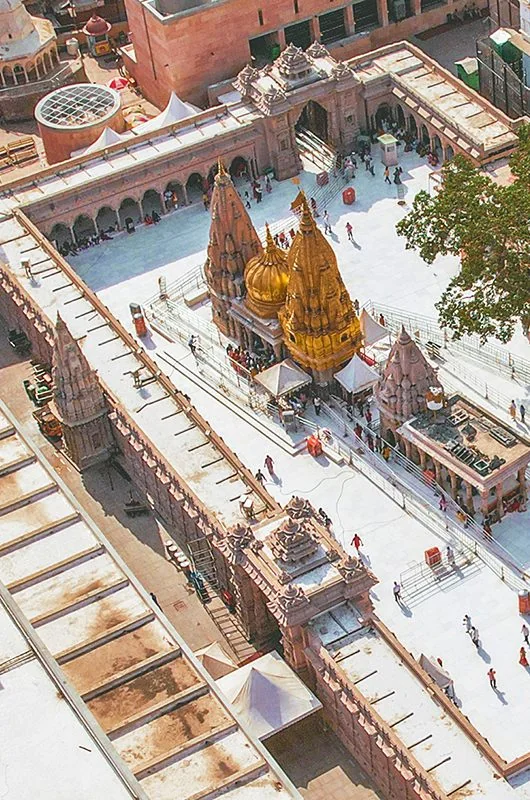
Varanasi's temples form a network of different deities, neighbourhoods and devotional practices. Kashi Vishwanath is a major focus, but smaller shrines reveal the diversity of the city's sacred life.
Explore guide →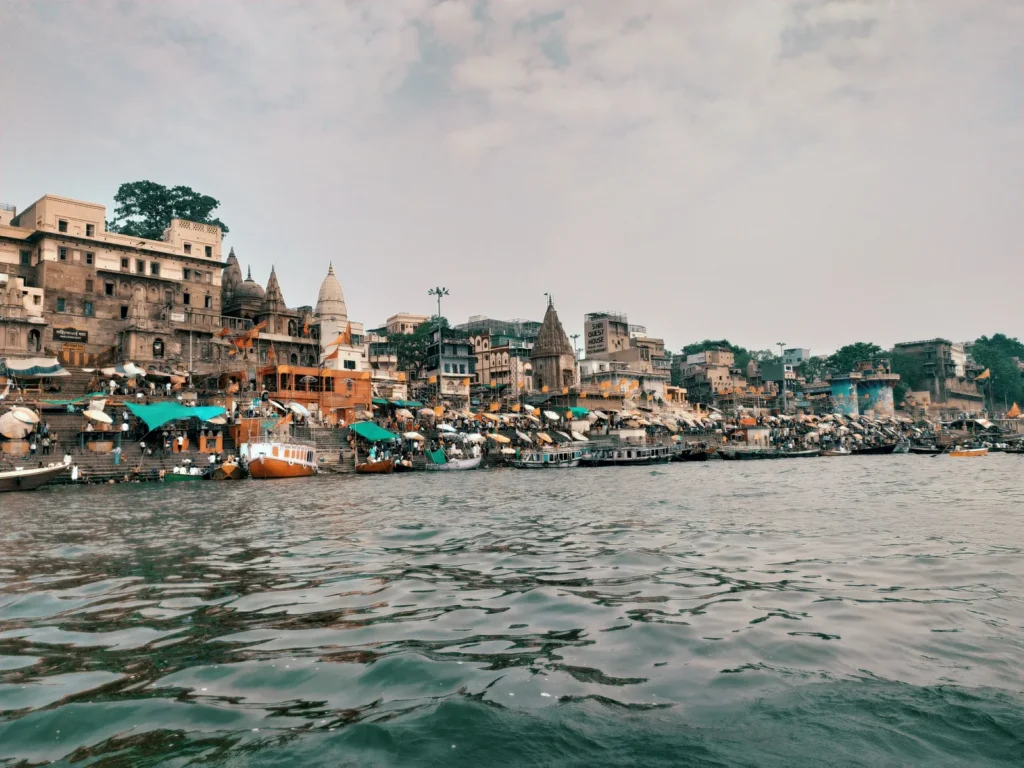
Ghats of Varanasi
The ghats are the city's meeting place with the Ganga: stepped river edges used for worship, movement, gathering and everyday work. They are connected, but each has a name and history worth learning.
Explore guide →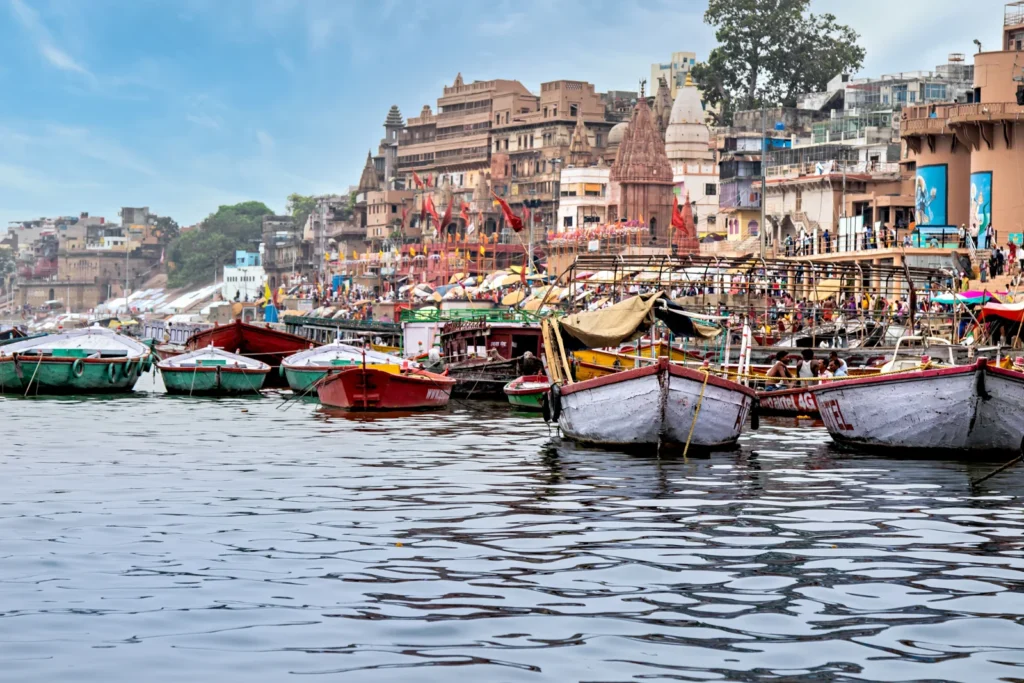
Things to Do in Varanasi
Things to do in Varanasi range from quiet observation to structured visits. The best selection depends on whether your interest is pilgrimage, history, culture, food or time beside the river.
Explore guide →No matching guides. Try a broader search.
Locate the area
Open a place-name search and confirm the exact venue and approach before travelling. No unverified coordinates or embedded tracking map are used.
Open map search: Ramnagar Fort and Museum, Varanasi, Uttar Pradesh, India ↗A journey shaped around you
Plan your time in Kashi
Tell us your dates, interests and travel needs. Request a tailored proposal with clear inclusions before confirming any service.
Enquiry only · Availability and prices require confirmation · No payment is taken here