
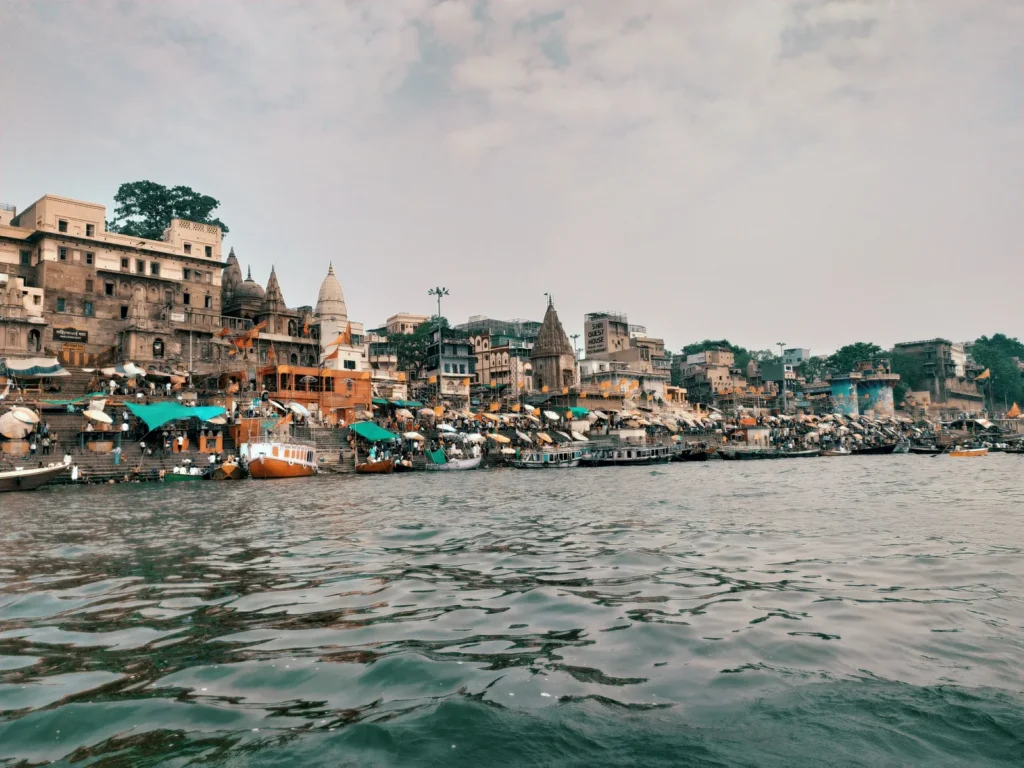
Prayag Tourism · Travel
About Varanasi
Kashi, Banaras and Varanasi are names encountered throughout a visit, each carrying associations with devotion, culture and place. They refer to a city that is simultaneously a pilgrimage destination, a centre of learning and a working urban community.
1. Introduction: Why One City Carries Three Distinct Names
Travel across northern India and listen carefully to how people speak of this riverfront city: a Sanskrit pandit performing sandhyavandanam on the steps of Panchganga Ghat invokes Kashi; an elderly handloom master in Madanpura or a classical tabla maestro in Kabir Chaura speaks affectionately of Banaras; and an official railway timetable, highway milestone, or district magistrate’s gazetteer records Varanasi (Culture & Heritage | District Varanasi). Far from being mere historical synonyms, these three names—Kashi, Varanasi, and Banaras—act as lenses that illuminate three distinct dimensions of the same urban civilisation: its transcendent spiritual luminescence, its sacred riverine geography, and its warm, syncretic everyday cultural ethos.
For visitors arriving in the city for the first time, understanding the relationship between Kashi, Banaras, and Varanasi transforms a sightseeing trip into a coherent cultural encounter. Rather than seeing a bewildering maze of crowded alleys, ringing temple bells, and riverside pyres, you begin to recognise how ancient cosmology and modern civic life coexist on the western bank of the Ganga.
2. Etymology and Scriptural Names: Kashi, Varanasi, Banaras, Avimukta and Anandakanana
Each name of the city is rooted in specific linguistic, geographical, or Puranic traditions documented in Sanskrit, Pali, and medieval historical texts (Varanasi Ghats Book (Final).pdf; Varanasi UP tousim2.pdf):
- Kashi (काशी – The City of Light): Derived from the Sanskrit verbal root kāś (काश्), meaning “to shine,” “to be luminous,” or “to radiate.” In Hindu philosophical and Puranic literature—most notably the Kashi Khanda of the Skanda Purana—Kashi is the city where the supreme light of consciousness (Prakasha) and the fiery pillar of Shiva’s Jyotirlinga illuminate the cosmos. It is the preferred name when referring to pilgrimage (Kashi Yatra), scriptural liberation (Kashi Labh), and the presiding deity (Kashi Vishwanath).
- Varanasi (वाराणसी – Between the Varuna and Assi Rivers): The geographical and official constitutional name of the city. Traditional etymology, preserved in Puranic texts and official Uttar Pradesh Tourism records (Varanasi UP tousim2.pdf), derives Varanasi from the two tributaries that bound the historic sacred zone as they join the Ganga: the Varuna River on the northern edge (near Adi Keshav / Rajghat) and the Assi stream (Assi Nala) on the southern edge (at Assi Ghat). Early Buddhist Jataka tales and Pali literature also refer to the kingdom as Kashi with its capital at Baranasi. In May 1956, the Government of Uttar Pradesh formally restored Varanasi as the official administrative name of the city and district.
- Banaras / Benares (बनारस – The Cultural Heartbeat): Evolving through Prakrit and Pali (Baranasi) into Hindustani Banaras—and anglicised during the British colonial era as Benares (Book on Kashi.pdf)—this name evokes the sensory, artistic, musical, and culinary character of the city. When locals speak of Banarasi saree, Banarasi paan, Banarasi thumri, or Subah-e-Banaras, they never use the word Varanasi; “Banaras” represents the lived human warmth, wit, and craftsmanship of its people.
- Puranic Epithets (Avimukta, Anandakanana, Mahashmashana, Kasika): The Kashi Khanda and traditional pilgrimage compendia celebrate the city through four additional poetic titles: Avimukta (“The Never-Forsaken,” because Lord Shiva and Goddess Parvati never abandon this territory even during cosmic dissolution), Anandakanana (“The Forest of Bliss,” recalling the ancient sacred groves, lotus ponds, and gardens that once shaded its shrines), Mahashmashana (“The Great Cremation Ground,” where the elements of the mortal body dissolve back into the cosmos), and Rudravasa (“The Abode of Rudra”).
3. Kashi Among the Sapta Puri (Seven Sacred Cities of India)
In classical Hindu pilgrimage tradition, Kashi stands foremost among the Sapta Puri—the seven sacred cities revered as grantors of spiritual liberation (moksha). An ancient Sanskrit verse recited by pilgrims across the subcontinent links these seven centres:Ayodhyā Mathurā Māyā Kāśī Kāñcī Avantikā | Purī Dvārāvatī caiva saptaitā mokṣadāyikāḥ ||(“Ayodhya, Mathura, Maya [Haridwar], Kashi, Kanchi [Kanchipuram], Avantika [Ujjain], and Puri Dwaravati [Dwarka]—these seven cities are the bestowers of liberation.”)
Within this sacred heptad—architecturally symbolised inside Varanasi itself by the eight-gated octagonal Gurudham Temple built in 1814 CE (1760321416169VettedStoriesofKashi-SarnathPoIs.pdf)—Kashi functions as a microcosm of the entire Indian sacred landscape. Through the medieval tradition of spatial transposition, virtually every major Himalayan shrine, southern Shaktipeeth, sacred river, and Jyotirlinga has a corresponding replica shrine within the lanes of Varanasi: pilgrims unable to trek to Kedarnath worship at Gauri Kedareshwar Temple on Kedar Ghat; those honoring Rameshwaram visit Rameshwar on the Panchkroshi trail; and all twelve Jyotirlingas are represented inside the Panchkroshi Temple in Gola Gali (1760321416169VettedStoriesofKashi-SarnathPoIs.pdf).
4. The Intellectual Capital: “Sarva Vidya Ki Rajdhani”
Banaras has long carried the title Sarva Vidya Ki Rajdhani—the Capital of All Knowledge (Culture & Heritage | District Varanasi). For over two thousand years, scholars from across India—from Tamil Nadu and Maharashtra to Bengal and Kashmir—travelled to Kashi to test their philosophical treatises in rigorous public debates known as Shastrarthas.
- Ancient Philosophy, Grammar and Medicine: Tradition links the city to Sushruta, the ancient pioneer of surgery and author of the Sushruta Samhita, as well as the grammarian Patanjali and the great 8th-century Advaita Vedanta philosopher Adi Shankaracharya, who debated scholars here and composed the Vishwanathashtakam and Annapurna Stotra (District Varanasi Official Portal).
- Modern Universities and Pathshalas: In the modern era, this intellectual lineage crystallised into world-renowned institutions: Sampurnanand Sanskrit Vishwavidyalaya (originating as the Government Sanskrit College founded in 1791 CE, housed in a striking Victorian Gothic building at Jagatganj), Banaras Hindu University (BHU) (founded in 1916 CE by Bharat Ratna Pandit Madan Mohan Malaviya as Asia’s largest residential university), Mahatma Gandhi Kashi Vidyapith (established in 1921 CE during the Non-Cooperation Movement), and the Central Institute of Higher Tibetan Studies (CIHTS) at Sarnath (Varanasi UP tousim2.pdf; Banaras Hindu University Official Portal).
5. “Banarasiya” Philosophy: Mauj, Masti and Fakkadpan
To understand Banaras beyond its temples, one must understand the distinctive temperament of its residents, known locally as Banarasiyas. Living daily alongside the cremation fires of Manikarnika and the eternal flow of the Ganga has fostered a philosophical fearlessness toward mortality. Rather than producing gloom, this proximity to death generates an extraordinary celebration of the present moment—encapsulated in the local concepts of Mauj (serene joy), Masti (playful exuberance), and Fakkadpan (unattached, carefree self-reliance, epitomised by Saint Kabir).
Whether it is the morning routine of chhan-pakwan (bathing in the Ganga, exercising with wooden clubs at a neighbourhood akhara, and sharing hot kachoris and jalebis), the unhurried afternoon conversations at paan shops and tea stalls (addas), or the composite Hindu-Muslim brotherhood (Ganga-Jamuni tehzeeb) where Muslim Ansari weavers craft silk vestments for Hindu deities and Ustad Bismillah Khan played his shehnai facing the Vishwanath and Balaji temples, the spirit of Banaras welcomes every outsider who approaches it with humility and curiosity.
C. Practical Visitor Information
Information
Details
Official Name
Varanasi (District and Municipal Corporation, Uttar Pradesh) (District Varanasi Official Portal)
Traditional & Cultural Names
Kashi (Scriptural/Pilgrimage name); Banaras / Benares (Cultural/Historical name); Avimukta, Anandakanana, Mahashmashana (Puranic epithets).
Geographical Boundaries
Bounded historically by the Varuna River in the north, the Assi Stream in the south, the River Ganga in the east, and the Panchkroshi Marg in the west (Varanasi UP tousim2.pdf).
Best Way to Experience
Combine an early morning heritage walk through the southern ghats (Assi to Kedar Ghat) with a visit to BHU and Sarnath to see all three facets—Kashi, Banaras, and Varanasi—in action.
Visiting Hours & Entry Fee
Open year-round; civic streets and riverfront ghats have 24-hour free public access.
Duration Required
2 to 4 Days (Estimated) to experience both the sacred shrines of Kashi and the artistic, academic, and culinary neighbourhoods of Banaras.
Primary Languages Spoken
Hindi, Bhojpuri (Kashika dialect), Sanskrit (in traditional pathshalas), Urdu, and English (widely understood at hotels, universities, and tourist hubs).
Visitor Advice
Embrace the unhurried pace of the old city; engage respectfully with local shopkeepers, boatmen (mallahs), and weavers without rushing transactions.
D. Frequently Asked Questions (FAQs)
- Are Varanasi, Kashi, and Banaras the same city?Yes, all three names refer to the exact same city on the western bank of the River Ganga in Uttar Pradesh. Kashi is its ancient scriptural and pilgrimage name (“City of Light”), Banaras is its beloved cultural and historical name, and Varanasi is its geographical and official administrative name derived from the Varuna and Assi rivers (Varanasi UP tousim2.pdf).
- When did Benares officially become Varanasi?During British colonial administration, the city was officially spelled Benares (an anglicisation of Banaras). Following Indian independence, the Government of Uttar Pradesh officially restored the ancient geographical name Varanasi in May 1956.
- What does the famous Mark Twain quote about Banaras mean?During his 1896 visit to India (recorded in Following the Equator, 1897), American author Mark Twain remarked: “Benares is older than history, older than tradition, older even than legend, and looks twice as old as all of them put together” (Varanasi UP tousim2.pdf). He was describing the city’s unbroken continuity of ancient rituals and layered stone architecture.
- What is the local dialect spoken in Varanasi?While standard Hindi is the official language, the local vernacular spoken in the markets, ghats, and neighbourhoods of Banaras is Kashika, a vibrant regional variety of Bhojpuri known for its warm cadence, humorous idioms, and respectful address (“Guru” or “Maharaj”).
- Why is Varanasi called a microcosm of India?For centuries, royal dynasties and pilgrim communities from Bengal, Maharashtra, Tamil Nadu, Karnataka, Andhra Pradesh, Gujarat, Rajasthan, Punjab, and Nepal built their own ghats, temples, mutts, and residential neighbourhoods (mohallas such as Bengali Tola, Maharashtra Mandal, and Kedar Ghat) along the Ganga, creating a living miniature of the entire subcontinent (1760321416169VettedStoriesofKashi-SarnathPoIs.pdf).
- What is the difference between Kashi Khanda and Kedar Khanda inside Varanasi?In traditional sacred geography, the riverfront city is divided into three main devotional sectors (khandas): Omkareshwar Khanda in the north, Kashi / Vishweshwar Khanda in the central zone around Kashi Vishwanath, and Kedar Khanda in the south centred around Kedar Ghat (1760321416169VettedStoriesofKashi-SarnathPoIs.pdf).
Choose your next chapter
Continue your journey
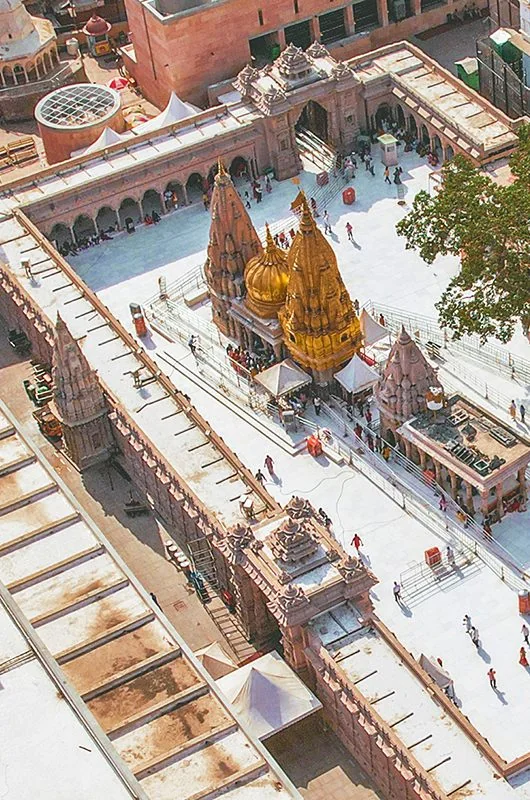
Temples of Varanasi
Varanasi's temples form a network of different deities, neighbourhoods and devotional practices. Kashi Vishwanath is a major focus, but smaller shrines reveal the diversity of the city's sacred life.
Explore guide →Ghats of Varanasi
The ghats are the city's meeting place with the Ganga: stepped river edges used for worship, movement, gathering and everyday work. They are connected, but each has a name and history worth learning.
Explore guide →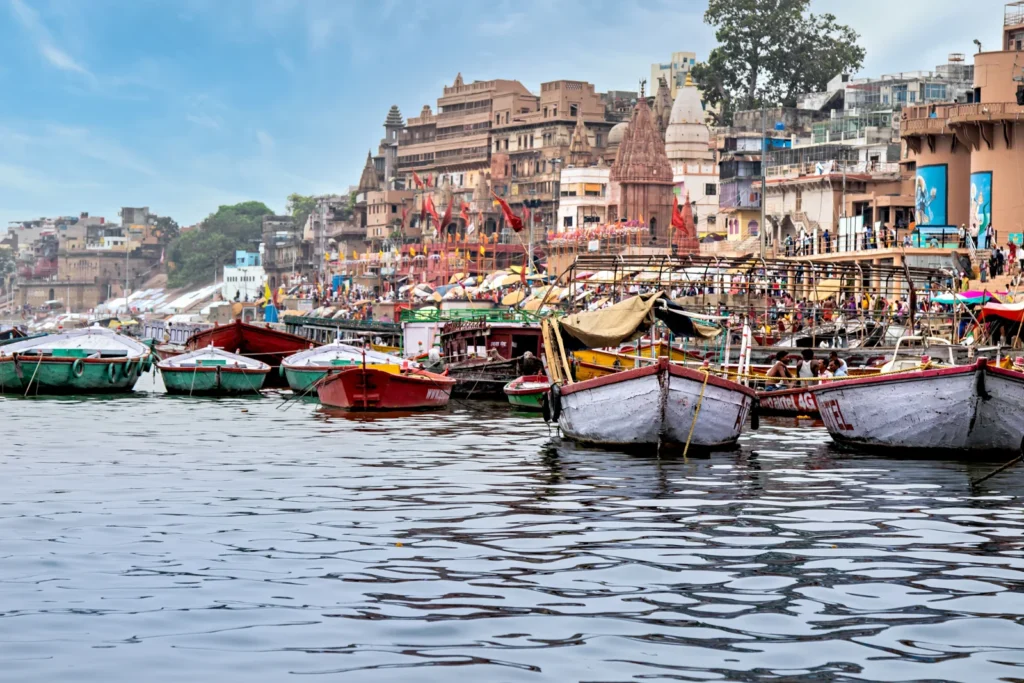
Things to Do in Varanasi
Things to do in Varanasi range from quiet observation to structured visits. The best selection depends on whether your interest is pilgrimage, history, culture, food or time beside the river.
Explore guide →No matching guides. Try a broader search.
Existing Prayag Tourism guides and trips
These links preserve the existing website content. Trip details and availability belong to the established booking system.
A journey shaped around you
Plan your time in Kashi
Tell us your dates, interests and travel needs. Request a tailored proposal with clear inclusions before confirming any service.
Enquiry only · Availability and prices require confirmation · No payment is taken here