

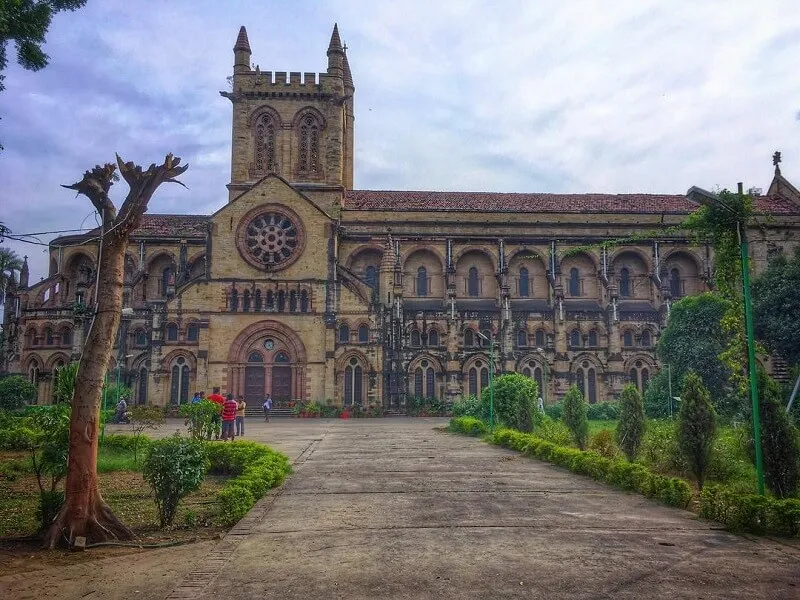
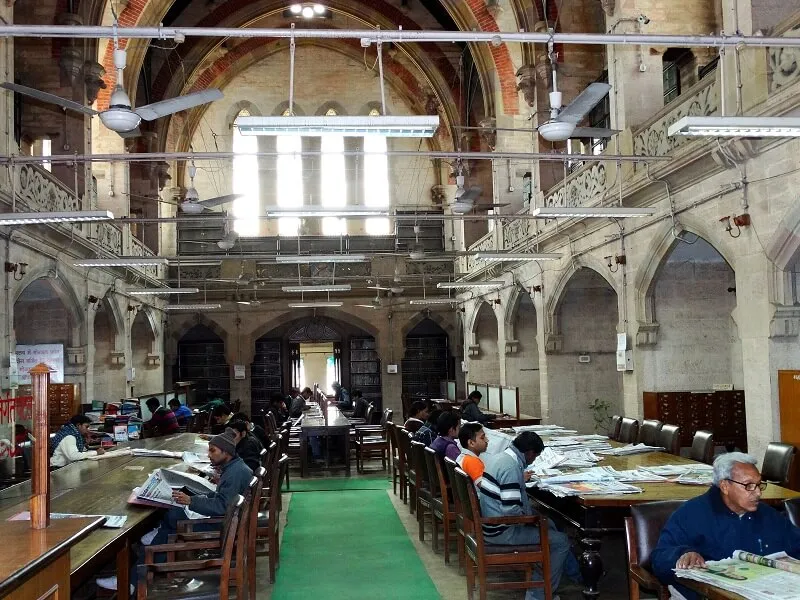
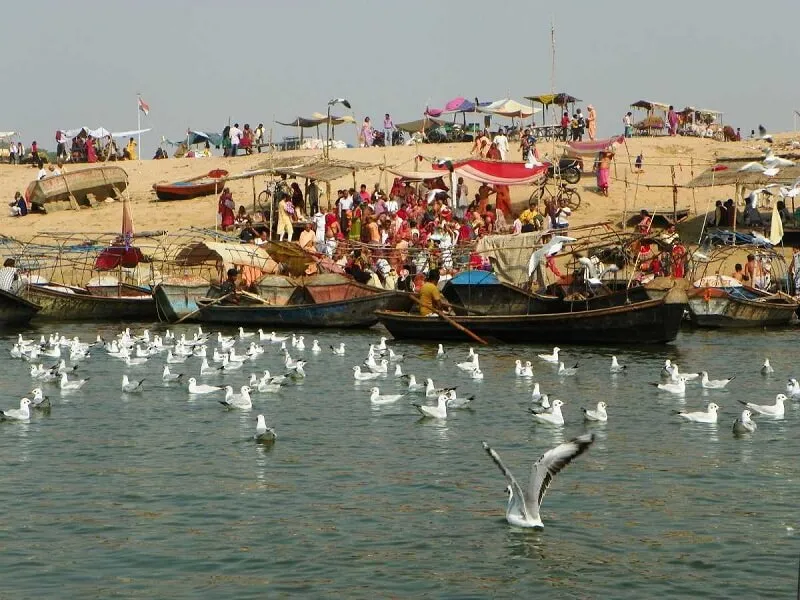
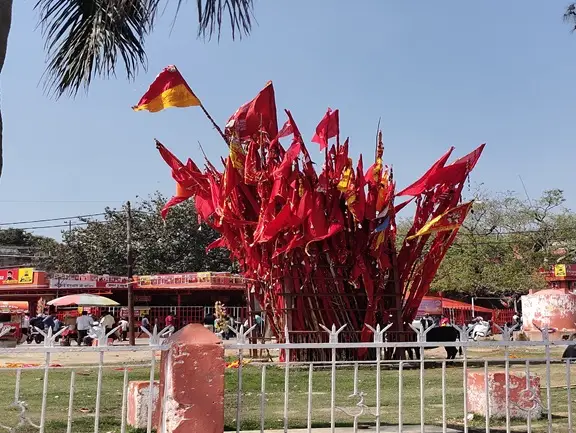
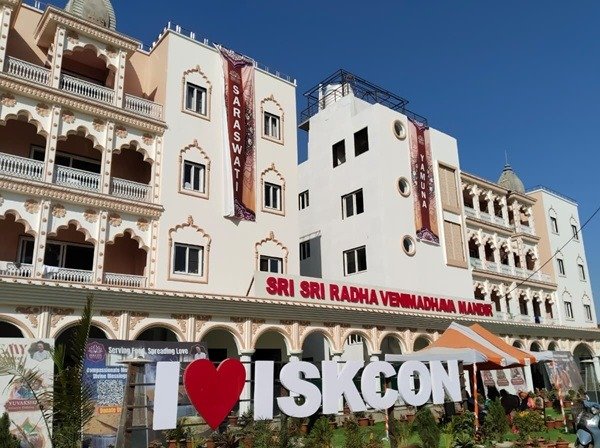
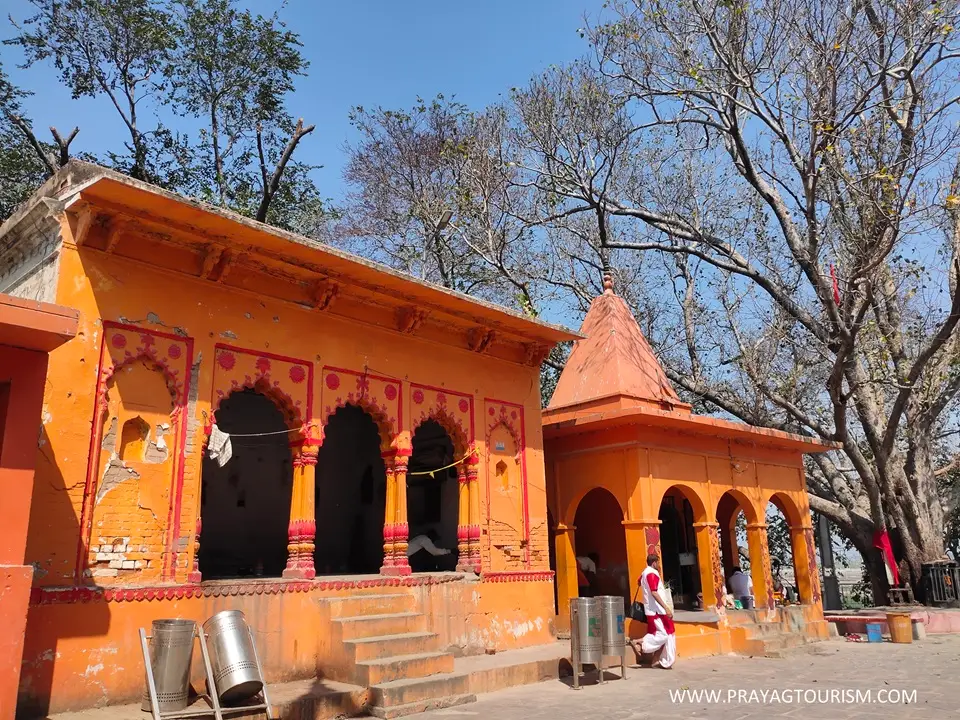
Prayagraj is an ancient holy city of India mentioned in the Vedic scriptures and texts. It lies close to Triveni Sangam, the “three-river confluence” of the Ganges, Yamuna and Sarasvati rivers. It plays a central role in Hindu scriptures. The city finds its earliest reference as one of the world’s oldest known cities in Hindu texts and has been venerated as the holy city of Prayāga in the ancient Vedas. Prayagraj was also known as Kosambi in the late Vedic period, named by the Kuru rulers of Hastinapur, who developed it as their capital. Kosambi was one of the greatest cities in India from the late Vedic period until the end of the Maurya Empire, with occupation continuing until the Gupta Empire. Since then, the city has been a political, cultural and administrative centre of the Doab region.
Although initially named Ilahabad the name later became Allahabad in an anglicized version in Roman script. In 2018 the name of the city was changed to Prayagraj by the State government ruled by CM Yogi Adityanath
History of Prayagraj
In Ancient Time, the Doab region, including Prayaga, was controlled by several empires and dynasties in the ages to come. It became a part of the Mauryan and Gupta empires of the east and the Kushan empire of the west before becoming part of the Kannauj empire. Objects unearthed in Prayaga (now Prayagraj) indicate that it was part of the Kushana empire in the 1st century AD. According to Rajtarangini of Kalhana, in 780 CE, Prayag was also an important part of the kingdom of Karkota king of Kashmir, Jayapida. Jayapida constructed a monument at Prayag, which existed at Kalhana’s time.
In his memoirs on India, Huien Tsang, the Chinese Buddhist monk and chronicler who travelled through India during Harshavardhana’s reign (A.D. 607–647), writes that he visited Prayaga in A.D. 643.
Medieval period
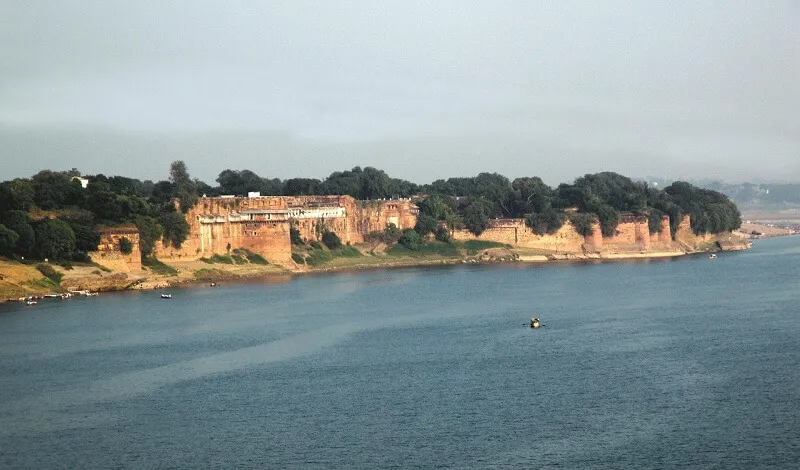
Mughal emperor Akbar founded a great city in Prayag which he called Ilahabas. Akbar’s fort was built between 1574 and 1583. The Akbarnama states that, “For a long time [Akbar’s] desire was to found a great city in the town of Prayag, where the rivers Ganges and Jamna join, which is regarded by the people of India with great reverence and which is a place of pilgrimage for ascetics of that country, and to build a choice fort there.” He had been impressed with its strategic position, as it sat on the confluence of Ganga and Yamuna, with the fort allowing for any movement along both. It is said that Akbar was so impressed by its strategic site after visiting it in 1575 that he ordered that a fort be constructed and renamed it Illahabas or Abode of God by 1584, later changed to Allahabad.
British rule
In 1765, the combined forces of the Nawab of Awadh and the Mughal emperor Shah Alam II lost the Battle of Buxar to the British. Although the British did not take over their states at that time, they established a garrison at Fort Allahabad, understanding its strategic position as the gateway to the northwest. Governor General Warren Hastings later took Allahabad from Shah Alam and gave it to Awadh, alleging that he had placed himself in the power of the Marathas.
In 1801 the Nawab of Awadh ceded the city to the British East India Company. Gradually the other parts of Doab and adjoining regions to its west (including the Delhi and Ajmer-Merwara regions) were won by the British. These northwestern areas were made into a new province called the North-Western Provinces, with its capital at Agra. Allahabad was located in this province.
In 1834, Allahabad became the seat of the Government of Agra Province and a High Court was established. A year later both were relocated to Agra.
In 1857, Allahabad was active in the Indian Mutiny. After the mutiny, the British truncated the Delhi region of the state, merging it with Punjab, and transferred the capital of the North-Western Provinces to Allahabad, where it remained for the next twenty years. After the Mutiny was quelled, the British established the High Court, the Police Headquarters and the Public Service Commission in the city. This transformed Allahabad into an administrative center, a status that it enjoys to this day.
In 1877 the two provinces of Agra and Awadh were merged to form a new state which was called the United Provinces of Agra and Oudh. Allahabad was the capital of this new state till the 1920s.
Allahabad, the freedom struggle, and Indian politics
During the Mutiny of 1857, Allahabad had only a small garrison of European troops. Taking advantage of this, the rebels brought Allahabad under their control. Maulvi Liaquat Ali, one of the prominent leaders of the rebellion, was a native of the village of Mahgaon near Allahabad.
Mohandas K. Gandhi attends a Congress Working Committee meeting at Anand Bhavan. Vallabhbhai Patel is to his left, Vijaya Lakshmi Pandit to his right. January 1940.
The fourth and eighth session of the Indian National Congress was held in the city in 1888 and 1892 respectively on the extensive grounds of Darbhanga Castle, Allahabad.[28][29] At the turn of the century, Allahabad also became a nodal point for the revolutionaries.
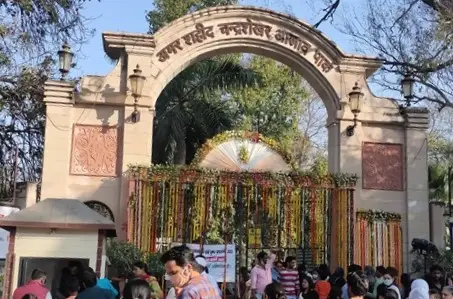
In 1931, at Alfred Park in Allahabad, the revolutionary Chandrashekhar Azad killed himself when surrounded by the British Police. The Nehru family homes of Anand Bhavan and Swaraj Bhavan, both in Allahabad, were at the center of the political activities of the Indian National Congress. In the years of the struggle for Indian independence, thousands of satyagrahis (nonviolent resistors), led by Purshottam Das Tandon, Bishambhar Nath Pande and Narayan Dutt Tiwari, went to jail. The first Prime Minister of India, Jawaharlal Nehru, as well as several Union ministers such as Mangla Prasad, Muzaffar Hasan, K. N. Katju, and Lal Bahadur Shastri, were natives of Allahabad.
Historical and archaeological sites
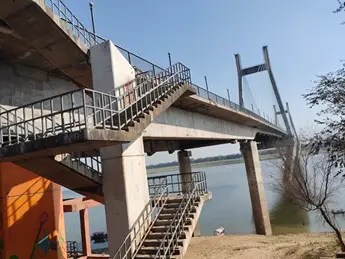
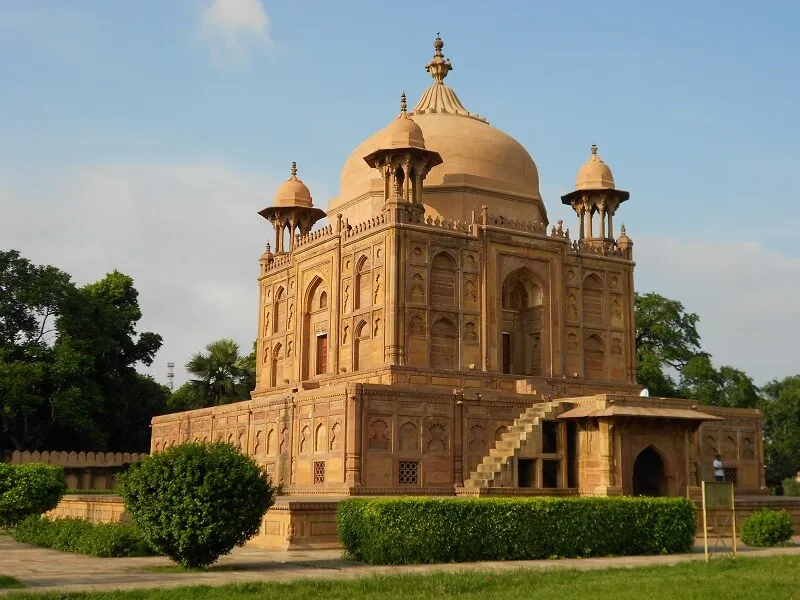
Prayagraj has many sites of interest to tourists and archaeologists. Forty-eight kilometres to the southwest, on the banks of the Yamuna River, are the ruins of Kaushambi, which was the capital of the Vatsa kingdom and a thriving center of Buddhism. On the eastern side, across the river Ganges and connected to the city by the Shastri Bridge is Pratisthan Pur, capital of the Chandra dynasty. About 58 kilometres northwest is the medieval site of Kara with its impressive wreckage of Jaichand of Kannauj’s fort. Shringaverpur, another ancient site discovered relatively recently, has become a major attraction for tourists and antiquarians alike. On the southwestern extremity of Prayagraj lies Khusrobagh; it has three mausoleums, including that of Jahangir’s first wife, Shah Begum.
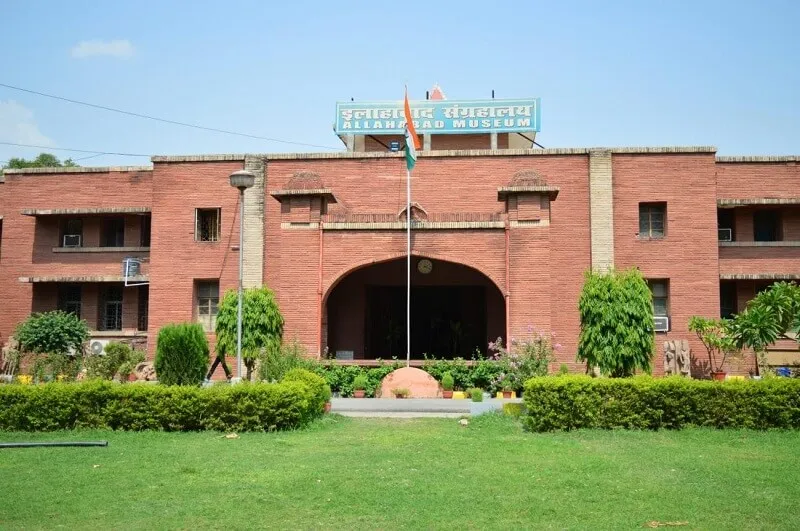
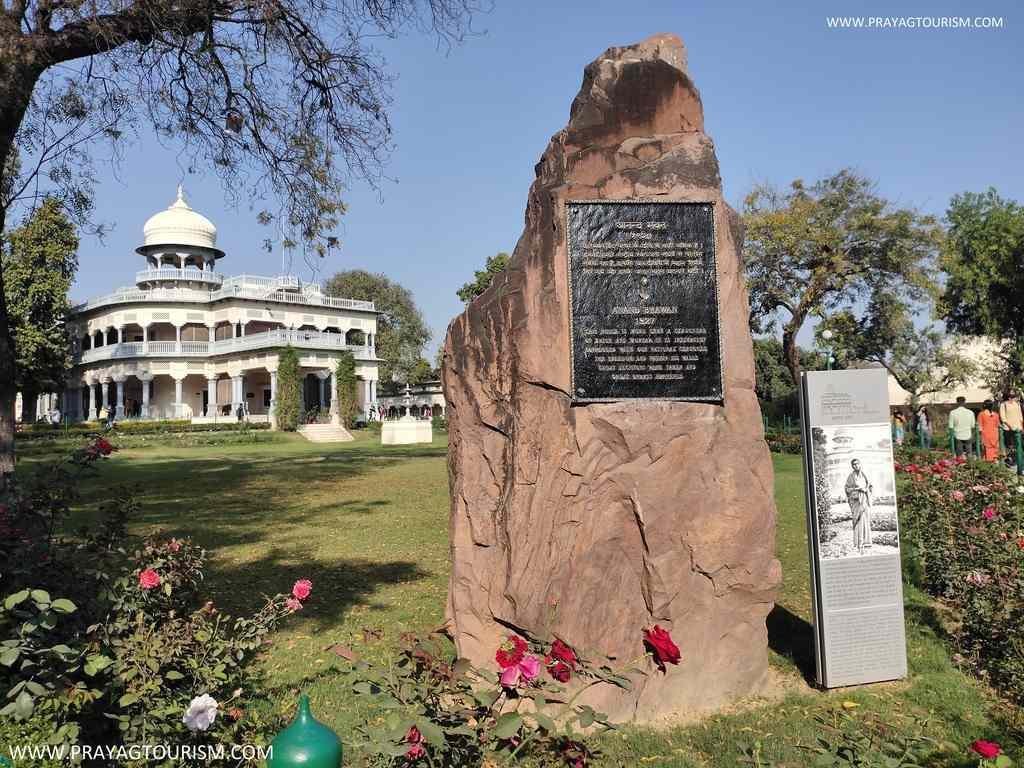
Prayagraj is also the birthplace of Jawaharlal Nehru, and the Nehru family estate, called Anand Bhavan, is now a museum. It is also the birthplace of Indira Gandhi, and the home of Lal Bahadur Shastri, both later Prime Ministers of India. Vishwanath Pratap Singh and Chandra Shekhar were also associated with Allahabad. Thus, Allahabad has the distinction of being the home of several Prime Ministers in India’s post-independence history.
An ancient seat of learning
Prayaga was a well-known centre of education (dating from the time of the Buddha), and into modern times. Allahabad University was founded on 23 September 1887, making it the fourth oldest university in India. It has been granted Central University status. Allahabad University is a major literary centre for Hindi studies. Many Bihari, Bengali and Gujarati scholars spent their lives here, propagated their works in Hindi and enriched the literature. In the 19th century, Allahabad University earned the epithet of ‘Oxford of the East’. The founder of the International Society for Krishna Consciousness A. C. Bhaktivedanta Swami Prabhupada attained sainthood in this place.
Literary past
Many famous writers of Hindi and Urdu literature have a connection with the city. Notable amongst them are Munshi Premchand, Mahadevi Varma, Sumitranandan Pant, Suryakant Tripathi ‘Nirala’, Subhadra Kumari Chauhan, Upendra Nath ‘Ashk’ and Harivansh Rai Bachchan. This is the literary Hindi heartland. The culture of Allahabad is based on Hindi literature. Maithili Sharan Gupt was also associated with this literary Hindi soil in many ways.
The famous English author and Nobel Laureate (1907) Rudyard Kipling spent time at Allahabad working for The Pioneer as an assistant editor and overseas correspondent.