
Scripture · Hinduism knowledge portal
Samaveda
A Vedic collection closely associated with liturgical chant and musical recitation.
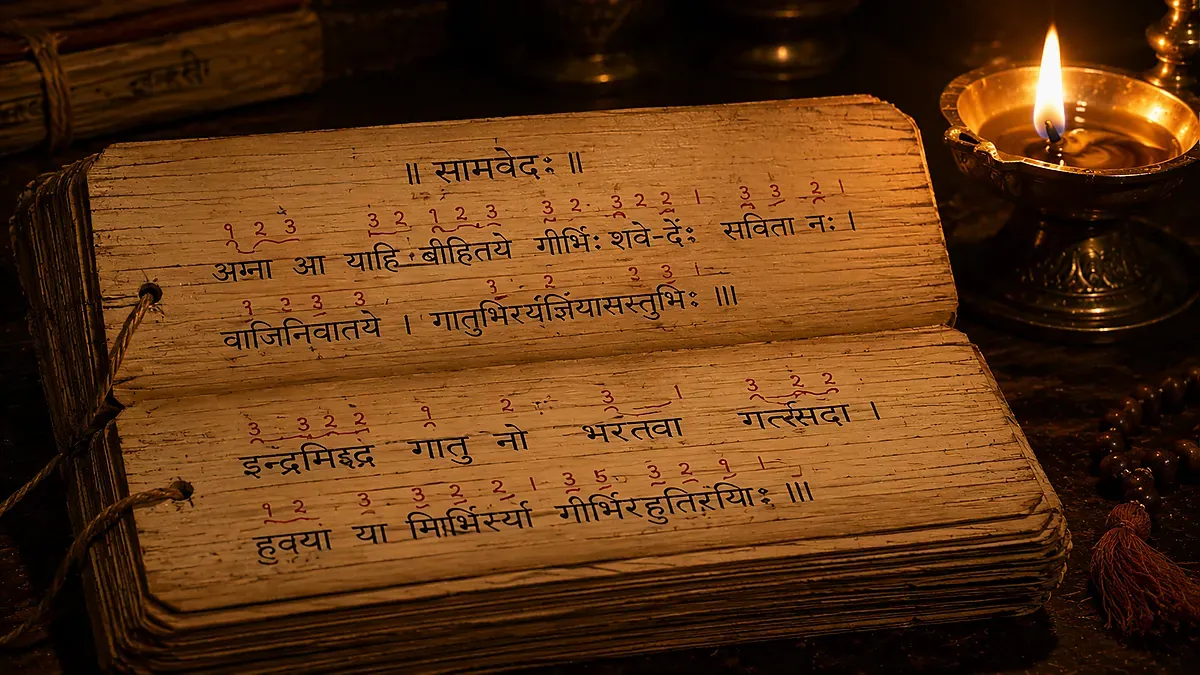
1. Introduction and Sanskrit Etymology
Samaveda holds a foundational place within Sacred Books of Hinduism on the Prayag Hinduism Portal. In Sanskrit philology and religious studies, its meaning is rooted in precise linguistic usage: From sāman (‘melodic chant, song, or soothing harmony’) and veda (‘knowledge’), signifying the ‘Veda of Sacred Chants and Melodies’. Across Hindu tradition, Samaveda connects scriptural revelation (Śruti), remembered tradition (Smṛti), philosophical inquiry (Darśana), ritual practice (Upāsanā), and sacred geography (Vedic Heritage Portal – Samaveda). Within the canonical hierarchy of Hindu sacred literature, this textual tradition illustrates the dynamic interplay between oral preservation, philological precision, commentarial exegesis (bhāṣya), and lived liturgical or ethical application across diverse sampradāyas.
2. Historical and Traditional Background
Primary scriptures and classical treatises that document and illuminate Samaveda include: Sāmaveda Saṃhitā (Kauthuma, Rāṇāyanīya, and Jaiminīya recensions; ~1,875 verses divided into Pūrvārcika and Uttarārcika); Pañcaviṃśa (Tāṇḍya Mahā), Ṣaḍviṃśa, and Jaiminīya Brāhmaṇas; Chāndogya and Kena Upaniṣads. (IGNCA – A Glimpse of Vedic Literature). Its historical trajectory spans key epochs of Indian civilization: Compiled closely following the Ṛgveda (c. 1200–1000 BCE) as the liturgical songbook of the Udgātṛ priest and his assistants (Prastotṛ and Pratihartṛ) for the pressing and offering of Soma. Academic scholarship reads these primary texts alongside epigraphic, archaeological, and manuscript evidence to distinguish traditional narrative, theological commentary, and historical chronology accurately.
“Vedānāṃ sāmavedo ‘smi” — “Among the Vedas, I am the Sāmaveda.” (Bhagavad Gītā 10.22, Vedic Heritage Portal – Samaveda)
3. Main Concepts and Philosophical Explanation
The core conceptual and theological structure of Samaveda has been articulated by sages (ṛṣis) and commentators (ācāryas) across centuries: Explains how textual stanzas (ṛc, mostly drawn from Maṇḍalas 8 and 9 of the Ṛgveda along with 75 independent verses) are transformed into musical chants (sāman) through melodic extensions, Prolonged vowels, and liturgical syllables (stobhas such as hau, hai, atha, iḍā, and oṃ), laying the foundation of the seven-note Indian musical scale (saptasvara) and Gandharvaveda. Within the pluralistic spectrum of Hinduism, Vaiṣṇava, Śaiva, Śākta, and Smārta lineages alongside the six classical darśanas (IEP – Hindu Philosophy) interpret these principles through complementary lenses of knowledge (jñāna), devotion (bhakti), righteous action (karma), and meditation (dhyāna).
4. Important Aspects, Classifications, and Editorial Scope
Key classifications, structural subdivisions, and traditional varieties of Samaveda include: Structured into two main verse divisions—the Pūrvārcika (arranged by deity: Āgneya, Aindra, Pāvamāna, and Āraṇya parvans) and the Uttarārcika (arranged by ritual sequence for specific Soma sacrifices)—accompanied by four melody books (Grāmegeyagāna, Āraṇyegeyagāna, Ūhagāna, and Ūhyagāna). Editorial differentiation within this portal: Focuses on the musical notation, gāna chant collections, stobha syllables, Udgātṛ liturgy, and Chāndogya/Kena philosophical legacy of the Sāmaveda.
5. Regional Traditions and Contemporary Relevance
Across the diverse regions of India and the global diaspora, Samaveda is sustained through living customs, seasonal observances, and pilgrimage networks: Three surviving śākhās are practiced today: Kauthuma (Gujarat, Uttar Pradesh, Bihar, Tamil Nadu), Rāṇāyanīya (Maharashtra, Karnataka), and Jaiminīya/Talavakāra (Kerala and Tamil Nadu). At the sacred confluence city of Prayagraj (Tīrtharāja)—where the Gaṅgā, Yamunā, and invisible Sarasvatī meet at the Triveni Sangam—pilgrims, scholars, and monastic orders from every corner of India converge, keeping this heritage vibrant and relevant for contemporary seekers.
6. Frequently Asked Questions
What are the primary scriptural sources for Samaveda?
Primary sources include Sāmaveda Saṃhitā (Kauthuma, Rāṇāyanīya, and Jaiminīya recensions; ~1,875 verses divided into Pūrvārcika and Uttarārcika); Pañcaviṃśa (Tāṇḍya Mahā), Ṣaḍviṃśa, and Jaiminīya Brāhmaṇas; Chāndogya and Kena Upaniṣads., studied alongside classical Sanskrit commentaries and vernacular traditions (Vedic Heritage Portal – Samaveda).
How do diverse Hindu traditions interpret Samaveda?
Different sampradāyas (Vaiṣṇava, Śaiva, Śākta, Smārta) and philosophical schools highlight distinct metaphysical, devotional, or ritual facets while sharing core commitments to dharma and mokṣa (IGNCA – A Glimpse of Vedic Literature).
How does this article differ from related portal pages?
Focuses on the musical notation, gāna chant collections, stobha syllables, Udgātṛ liturgy, and Chāndogya/Kena philosophical legacy of the Sāmaveda.
7. Conclusion
In summary, Samaveda exemplifies the spiritual depth, intellectual rigor, and living diversity of Hinduism, offering enduring insight for students, pilgrims, and readers on PrayagTourism.com.
References and Further Reading
Primary Scriptures: Sāmaveda Saṃhitā (Kauthuma, Rāṇāyanīya, and Jaiminīya recensions; ~1,875 verses divided into Pūrvārcika and Uttarārcika); Pañcaviṃśa (Tāṇḍya Mahā), Ṣaḍviṃśa, and Jaiminīya Brāhmaṇas; Chāndogya and Kena Upaniṣads. (Bhagavad Gītā 10.22).
Academic & Institutional: Vedic Heritage Portal – Samaveda; IGNCA – A Glimpse of Vedic Literature; GRETIL Archive; IIT Kanpur Gita Supersite.
Government & Heritage: IGNCA (Ministry of Culture); Vedic Heritage Portal; Prayag Tourism Heritage Guides.
Related pages
Related Prayag Tourism reading
Sources and editorial context
Separate scriptural accounts, traditional beliefs, philosophical interpretations, historical evidence and modern scholarship. Attribute translations and quotations, avoid unsupported medical claims, and verify changing travel or festival details against current local sources.