
Hinduism knowledge portal
Hindu Learning Resources
A developing directory of introductions, glossaries, reading lists and carefully attributed learning resources.
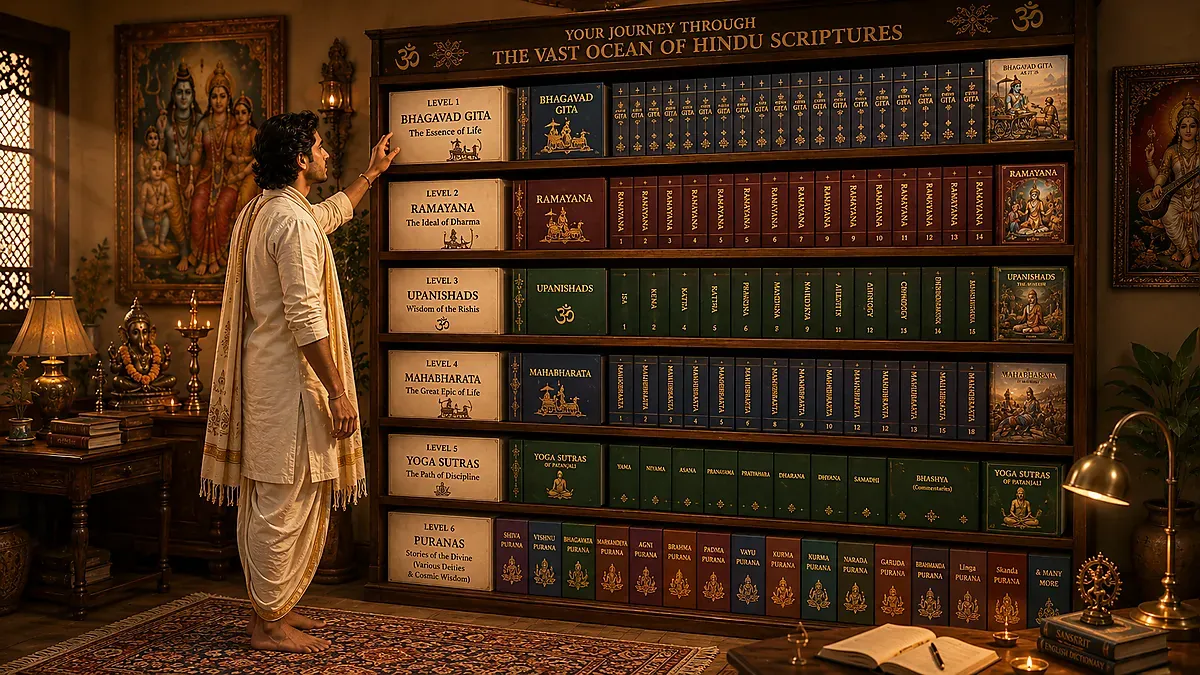
Explore this subject
Topics and guides
Start with a short introduction, then follow the links to related topics and sources.
Topic pages are being prepared for editorial review.
1. Introduction and Sanskrit Etymology
Hindu Learning Resources holds a foundational place within Main Portal and Subject Landing Pages on the Prayag Hinduism Portal. In Sanskrit philology and religious studies, its meaning is rooted in precise linguistic usage: Svādhyāya (‘self-study and recitation of sacred texts’) and Vidyā (‘clear, liberating knowledge’, from vid, ‘to know’). Across Hindu tradition, Hindu Learning Resources connects scriptural revelation (Śruti), remembered tradition (Smṛti), philosophical inquiry (Darśana), ritual practice (Upāsanā), and sacred geography (Vedic Heritage Portal – Ministry of Culture, Government of India). As one of the eleven foundational subject gateways of the Prayag Hinduism Portal, this page provides visitors, students, pilgrims, and researchers with a structured roadmap connecting primary scriptural sources with living practice across the Indian subcontinent.
2. Historical and Traditional Background
Primary scriptures and classical treatises that document and illuminate Hindu Learning Resources include: Taittirīya Upaniṣad (Śīkṣāvallī); Chāndogya and Kaṭha Upaniṣads; Nirukta of Yāska; Subhāṣitaratnabhāṇḍāgāra. (Encyclopaedia Britannica – Hinduism Overview). Its historical trajectory spans key epochs of Indian civilization: Combines the classical Indian pedagogical triad of Śravaṇa (attentive listening/reading), Manana (critical reflection), and Nididhyāsana (assimilative contemplation) with modern digital philology and open-access manuscript archives. Academic scholarship reads these primary texts alongside epigraphic, archaeological, and manuscript evidence to distinguish traditional narrative, theological commentary, and historical chronology accurately.
“Na hi jñānena sadṛśaṃ pavitram iha vidyate” — “Verily, there is no purifier in this world comparable to true knowledge.” (Bhagavad Gītā 4.38, Vedic Heritage Portal – Ministry of Culture, Government of India)
3. Main Concepts and Philosophical Explanation
The core conceptual and theological structure of Hindu Learning Resources has been articulated by sages (ṛṣis) and commentators (ācāryas) across centuries: Provides structured reference tools—glossaries, IAST Sanskrit transliteration guides, chronological timelines, curated scriptural narratives, verified verse anthologies, beginner orientations, thematic study syllabi, and links to peer-reviewed digital libraries. Within the pluralistic spectrum of Hinduism, Vaiṣṇava, Śaiva, Śākta, and Smārta lineages alongside the six classical darśanas (IEP – Hindu Philosophy) interpret these principles through complementary lenses of knowledge (jñāna), devotion (bhakti), righteous action (karma), and meditation (dhyāna).
4. Important Aspects, Classifications, and Editorial Scope
Key classifications, structural subdivisions, and traditional varieties of Hindu Learning Resources include: Introduces the ten educational hubs of Category 11: Glossary of Hindu Terms, Sanskrit Terminology, Hindu History Timeline, Stories from Scriptures, Teachings and Quotations, Hinduism for Beginners, Study Guides, Recommended Reading, External Scripture Libraries, and Frequently Asked Questions. Editorial differentiation within this portal: Acts as the educational and reference hub of the portal, equipping beginners, travelers, and researchers with verified study aids.
5. Regional Traditions and Contemporary Relevance
Across the diverse regions of India and the global diaspora, Hindu Learning Resources is sustained through living customs, seasonal observances, and pilgrimage networks: Connects global learners with institutional repositories such as GRETIL (Göttingen), the IIT Kanpur Gita Supersite, the Ministry of Culture’s Vedic Heritage Portal, and Sanskrit Documents. At the sacred confluence city of Prayagraj (Tīrtharāja)—where the Gaṅgā, Yamunā, and invisible Sarasvatī meet at the Triveni Sangam—pilgrims, scholars, and monastic orders from every corner of India converge, keeping this heritage vibrant and relevant for contemporary seekers.
6. Frequently Asked Questions
What are the primary scriptural sources for Hindu Learning Resources?
Primary sources include Taittirīya Upaniṣad (Śīkṣāvallī); Chāndogya and Kaṭha Upaniṣads; Nirukta of Yāska; Subhāṣitaratnabhāṇḍāgāra., studied alongside classical Sanskrit commentaries and vernacular traditions (Vedic Heritage Portal – Ministry of Culture, Government of India).
How do diverse Hindu traditions interpret Hindu Learning Resources?
Different sampradāyas (Vaiṣṇava, Śaiva, Śākta, Smārta) and philosophical schools highlight distinct metaphysical, devotional, or ritual facets while sharing core commitments to dharma and mokṣa (Encyclopaedia Britannica – Hinduism Overview).
How does this article differ from related portal pages?
Acts as the educational and reference hub of the portal, equipping beginners, travelers, and researchers with verified study aids.
7. Conclusion
In summary, Hindu Learning Resources exemplifies the spiritual depth, intellectual rigor, and living diversity of Hinduism, offering enduring insight for students, pilgrims, and readers on PrayagTourism.com.
References and Further Reading
Primary Scriptures: Taittirīya Upaniṣad (Śīkṣāvallī); Chāndogya and Kaṭha Upaniṣads; Nirukta of Yāska; Subhāṣitaratnabhāṇḍāgāra. (Bhagavad Gītā 4.38).
Academic & Institutional: Vedic Heritage Portal – Ministry of Culture, Government of India; Encyclopaedia Britannica – Hinduism Overview; GRETIL Archive; IIT Kanpur Gita Supersite.
Government & Heritage: IGNCA (Ministry of Culture); Vedic Heritage Portal; Prayag Tourism Heritage Guides.
SECTION 4 – Sacred Books of Hinduism
Category 2 – Sacred Books of Hinduism (Pages 012–026)
Related pages
How to explore this subject
Texts, practices and interpretations vary by region, lineage, philosophical school and historical setting. This overview is a starting point, not a single authoritative account. Review sources and image rights before publishing each draft.