
Prayag Tourism · Experience
Ganga Aarti in Varanasi
Ganga Aarti is an act of reverence to the river, and attending it should begin with that understanding. Lamps, sound and coordinated ritual create a powerful public gathering, especially at well-known riverfront locations.
1. Introduction: The Symphony of Fire, Conch Shells, and Devotion
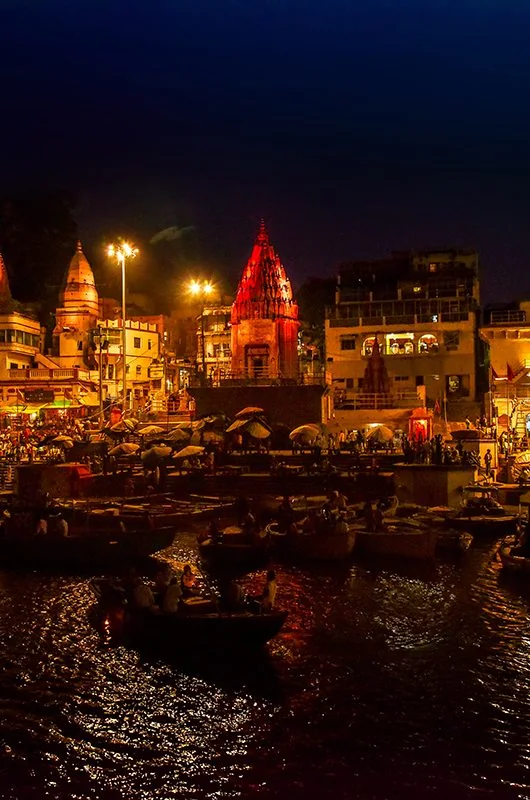
Every evening as twilight settles over the eastern sandbanks of the River Ganga, the stone amphitheatres of Varanasi transform into stages of elemental worship. Conch shells (shankha) sound a deep, resonant note across the water, hundreds of brass temple bells ring in rhythmic cadence, and young Vedic priests dressed in identical saffron-and-cream silk dhotis and kurtas raise heavy, multi-tiered brass fire lamps (Panch-Aarti and Naag-Deepam) toward the flowing river (District Varanasi Official Portal – Ganga Ghat).
Attending the Ganga Aarti in Varanasi is one of the most iconic spiritual experiences on earth. Yet many first-time travellers do not realize that Ganga Aarti takes place at multiple ghats across the city—both at sunset and at sunrise—each offering a distinct atmosphere, crowd level, and viewing angle. This complete editorial guide explains the exact seasonal timings, the step-by-step meaning of the ritual, the best ghats to choose from, and practical strategies for securing the best seat on the steps or on a boat.
2. Exact Seasonal Timings of Ganga Aarti in Varanasi (Summer vs. Winter)
Because the Hindu liturgical day follows the solar horizon (Suryasta and Suryodaya), the start time of Ganga Aarti shifts by roughly 45 to 60 minutes between summer and winter:
2.1 Evening Ganga Aarti Timings (Every Day of the Year)
- Winter Schedule (October to February):
- Priests’ Preparation & Sankalpa Puja: ~5:30 PM – 5:45 PM
- Main Synchronized Ganga Aarti Ceremony: 6:00 PM to 6:45 PM (sometimes starting at 5:45 PM during the shortest days of December/January).
- Summer & Monsoon Schedule (March to September):
- Priests’ Preparation & Sankalpa Puja: ~6:15 PM – 6:30 PM
- Main Synchronized Ganga Aarti Ceremony: 6:45 PM to 7:30 PM (around 6:30 PM in March/September and 6:45 PM–7:00 PM in May/June) (Dashashwamedh Ghat Guide).
2.2 Morning (Sunrise) Ganga Aarti Timings at Assi Ghat (VAR-041)
- Summer Schedule (March to October): 5:00 AM to 6:30 AM (Aarti at ~5:30 AM).
- Winter Schedule (November to February): 5:30 AM to 7:00 AM (Aarti at ~6:00 AM) (Subah-e-Banaras Official Portal).
3. Comparing the Top 5 Locations to Watch Ganga Aarti in Varanasi
While Dashashwamedh Ghat is the grandest, choosing the right ghat for your group can transform your experience:
1. Dashashwamedh Ghat & Prayag Ghat (VAR-019) – The Grand Flagship Spectacle:
- Organisers: Two parallel 7-priest ceremonies take place side-by-side: one conducted by the Ganga Seva Nidhi (founded 1997) at main Dashashwamedh Ghat, and the other by the Gangotri Seva Samiti (founded 1991) on the adjacent Prayag/Rajendra Prasad Ghat platform.
- Vibe: Monumental, theatrical, electrifying energy; attended by 3,000 to 10,000 spectators nightly on the steps, rooftop balconies, and hundreds of boats anchored in a semi-circle on the river.
2. Assi Ghat (VAR-020) – Spacious, Family-Friendly & Morning + Evening:
- Organisers: Subah-e-Banaras committee (Subah-e-Banaras Official Website) at dawn, and local temple trusts in the evening.
- Vibe: Wide open clay-and-stone amphitheatre with easy road access right up to Assi Crossing; far less claustrophobic than Dashashwamedh, making it the #1 choice for families with young children, senior citizens, and sunrise seekers.
3. Rajendra Prasad Ghat (Immediately North of Dashashwamedh): Shares the same riverside stage zone as Dashashwamedh with tiered municipal steps overlooking the water.
4. Kedar Ghat (VAR-025) & Ahilyabai Ghat (VAR-027) – Intimate & Devotional: Performed by 1 to 3 local priests right at the water’s edge with only a few dozen neighbourhood devotees; ideal for travellers seeking quiet meditation rather than megaphones and crowds.
5. Namo Ghat (VAR-028) – Modern, Wheelchair-Accessible & Easy Parking: Features a choreographed evening Aarti (6:00 PM – 6:45 PM winter / 7:00 PM – 7:45 PM summer) on a barrier-free modern sandstone plaza beneath the illuminated 75-foot Namaste sculpture, with direct car parking (Namo Ghat Guide).
4. Step-by-Step Breakdown: What Happens During the 45-Minute Ceremony?
Understanding the Vedic symbolism behind each stage of the Dashashwamedh Ganga Aarti deepens its spiritual resonance:
1. Ganga Pujan & Achamana (First 10 Minutes): The seven priests sit cross-legged at the water’s edge (or on elevated wooden chowkis when monsoon waters rise) with a senior Acharya chanting Sanskrit mantras invoking Mother Ganga (Bhagirathi), offering milk (dugdha), curd, honey, ghee, vermilion (kumkum), and marigold garlands directly to the river.
2. Shankha Naad (Blowing of the Conch Shells): All seven priests stand on their octagonal wooden platforms beneath towering brass-ribbed umbrellas (chhatris) and blow white spiral conch shells simultaneously toward the four cardinal directions—purifying the atmosphere with the primordial vibration of Om.
3. Dhupa & Pushpa Offering (Incense Sticks & Camphor Censers): The priests wave brass incense censers (dhupadani) releasing fragrant clouds of sandalwood, guggal, and frankincense in slow clockwise circles, symbolising the element of Air (Vayu).
4. The Multi-Tiered Naag-Deepam & Panch-Aarti (Element of Fire / Agni): This is the visual climax of the evening. Each priest lifts a heavy brass Panch-Aarti lamp weighing 4 to 7 kilograms—adorned with a protective cobra hood (Sheshnaag) and holding 108 blazing cotton wicks soaked in clarified butter—and moves it in sweeping, synchronized circular arcs while amplified devotional hymns (Har Har Gange and Adi Shankaracharya’s Ganga Stotram) fill the night air and the entire crowd claps in rhythm.
5. Karpura Aarti (Large Camphor Flame Bowl): A single blazing brass bowl of pure camphor (kapur) is waved before Mother Ganga, symbolizing the dissolution of the human ego without leaving any ash behind.
6. Jal Kalash, Peacock-Feather Fan (Mayur Pankh) & Chawar Whisk: The priests wave silver-handled yak-tail whisks (chawar) and large circular fans of iridescent peacock feathers—traditional royal insignia (Rajopachara) honouring Mother Ganga as a reigning empress—followed by pouring sacred water from a brass kalash and bowing down in full prostration (Sashtanga Pranam).
7. Distribution of Aarti Flame & Prasad: Priests bring the warm brass lamps down toward the front rows so devotees can cup their hands over the flame and touch their foreheads to receive Mother Ganga’s blessing.
5. Watching from the Steps vs. Watching from a Boat: Which Is Better?
- Watching from the Ghat Steps / Rooftop Balconies (Free):
- Pros: Completely free of charge; you are surrounded by local devotees chanting and clapping; elevated stone balconies and steps give a dramatic bird’s-eye angle over the priests’ shoulders toward the river; no risk of boat rocking or views being blocked by other boats.
- Cons: To get a front- or middle-row seat at Dashashwamedh Ghat, you must arrive 60 to 90 minutes before the Aarti starts (by 4:30 PM in winter or 5:15 PM in summer).
- Watching from a Boat on the River (VAR-040):
- Pros: You face the priests from the front with the illuminated palace facades and thousands of spectators rising like a stadium behind them; you combine the Aarti with a scenic sunset cruise past Manikarnika and Harishchandra Ghats.
- Cons: Costs money (shared boat seats or private boat charter); during peak festivals, hundreds of boats raft together 3 to 6 rows deep—unless your boatman arrives by 5:00 PM to secure a front-row mooring rope, you may be looking across several other boats.
6. What Happens During the Monsoon Floods (July to September)?
Every year during July, August, and September, the River Ganga rises 10 to 15 metres, submerging the lower stone steps and wooden octagonal platforms at Dashashwamedh and Assi Ghats (VAR-054). The Ganga Aarti never stops—not even for a single day. Instead, the Ganga Seva Nidhi and Gangotri Seva Samiti shift the ceremony upward onto the high stone balconies and rooftops overlooking Dashashwamedh Ghat, preserving an unbroken daily tradition that has continued through floods, storms, and pandemics.
7. Conclusion
Whether you sit shoulder-to-shoulder with pilgrims on the steps of Dashashwamedh Ghat, watch from a wooden boat rocking gently on the dark river, or greet the rising sun at Assi Ghat’s Subah-e-Banaras (VAR-041), the Ganga Aarti is the spiritual heartbeat of Varanasi. Arrive early, silence your phone, and let the sound of the conch shells and temple bells carry you into the timeless rhythm of Kashi.
C. Practical Visitor Information
- Location: Primary venue at Dashashwamedh Ghat / Prayag Ghat (VAR-019); secondary major venues at Assi Ghat (VAR-020), Kedar Ghat (VAR-025), and Namo Ghat (VAR-028), Varanasi, Uttar Pradesh (District Varanasi Official Portal – Ganga Ghat).
- How to Reach: For Dashashwamedh Ghat, take an auto/e-rickshaw to Godowlia Crossing and walk 650 metres east (~8–10 minutes on foot) down Dashashwamedh Road, or board an evening boat from Assi Ghat or Namo Ghat by 4:45 PM.
- Best Time to Visit: Daily year-round; arrive by 4:30 PM – 4:45 PM in winter (Oct–Feb) or 5:15 PM – 5:30 PM in summer (Mar–Sep) to secure good seating at Dashashwamedh Ghat.
- Visiting Hours:
- Evening Ganga Aarti: 6:00 PM – 6:45 PM (Winter); 6:45 PM – 7:30 PM (Summer).
- Morning Ganga Aarti (Assi Ghat): 5:00 AM – 6:30 AM (Summer); 5:30 AM – 7:00 AM (Winter) (Subah-e-Banaras Official Portal).
- Entry Fee: 100% Free to watch from all public ghat steps, platforms, and amphitheatres (beware of street touts trying to sell fake “VIP step tickets”; only official boat rides VAR-040 or charitable trust donor receipts at the official Ganga Seva Nidhi office desk involve payment).
- Duration Required: 90 to 120 minutes (including early arrival for seating and the 45-minute ceremony, estimated).
- Nearby Attractions: Shri Kashi Vishwanath Dham (VAR-007, 300m north), Man Mandir Observatory (VAR-027, 100m north), and Godowlia Street Food Hub (VAR-051, 600m west).
- Visitor Advice: When the Aarti ends at Dashashwamedh around 6:45 PM / 7:30 PM, thousands of people exit simultaneously toward Godowlia—wait 10–15 minutes by the water’s edge to float a leaf lamp and let the initial crowd disperse before walking up the lane.
D. Frequently Asked Questions (FAQs)
1. Is there any ticket or entry fee required to attend the Ganga Aarti in Varanasi?No! Watching the Ganga Aarti from the stone steps, plazas, and public viewing tiers at Dashashwamedh Ghat, Assi Ghat, Kedar Ghat, and Namo Ghat is completely free for everyone. You only pay if you choose to hire a boat on the river (VAR-040).
2. What is the exact time of the evening Ganga Aarti at Dashashwamedh Ghat?In winter (October to February), the main Aarti runs from approximately 6:00 PM to 6:45 PM. In summer and monsoon (March to September), it runs from approximately 6:45 PM to 7:30 PM (Dashashwamedh Ghat Guide).
3. How early should I reach Dashashwamedh Ghat to get a good seat?On normal weekdays, arrive 45 to 60 minutes early (around 5:00 PM in winter or 5:30 PM in summer). On weekends, Purnima (full moon) nights, or festival weeks, arrive 75 to 90 minutes early.
4. Which ghat has the best Ganga Aarti for senior citizens or families who want to avoid heavy crowds?Assi Ghat (VAR-020) and Namo Ghat (VAR-028) are much more spacious, have direct vehicle drop-off close to the river, and offer comfortable seating without the dense crowd crush of Dashashwamedh Road.
5. Does Ganga Aarti also happen in the morning in Varanasi?Yes! Every morning before sunrise (5:00 AM in summer / 5:30 AM in winter), a deeply peaceful morning Ganga Aarti is performed at Assi Ghat as part of Subah-e-Banaras (VAR-041, Subah-e-Banaras Official Portal).
6. Who organizes the famous evening Ganga Aarti at Dashashwamedh Ghat?The two adjacent evening ceremonies at Dashashwamedh and Prayag Ghats are organized daily by two registered charitable trusts: the Ganga Seva Nidhi and the Gangotri Seva Samiti.
Choose your next chapter
Continue your journey
Dashashwamedh Ghat
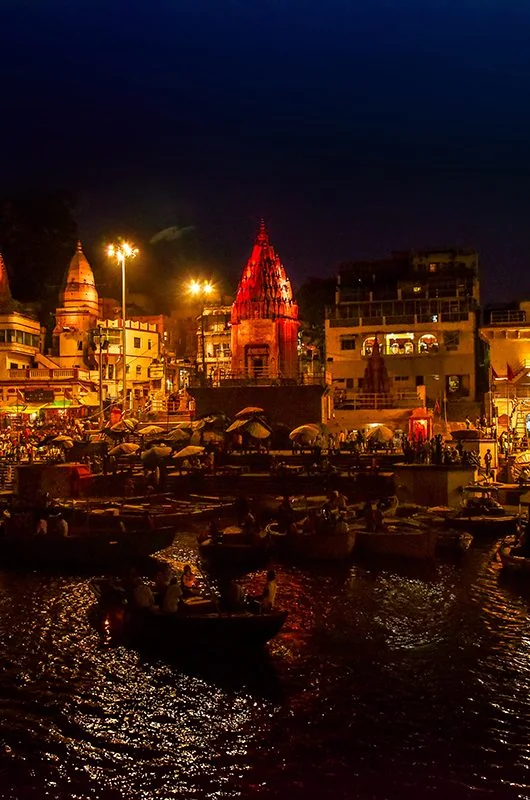
Dashashwamedh Ghat is one of the riverfront's best-known gathering places and is closely associated with Ganga Aarti. Its central setting makes it an important orientation point, but also a place where crowd management matters.
Guide awaiting publicationAssi Ghat
Assi Ghat is a major southern riverfront gathering place associated with the Assi and Ganga and with the morning cultural programme Subah-e-Banaras. It is a useful starting point for a slower introduction to the city.
Guide awaiting publication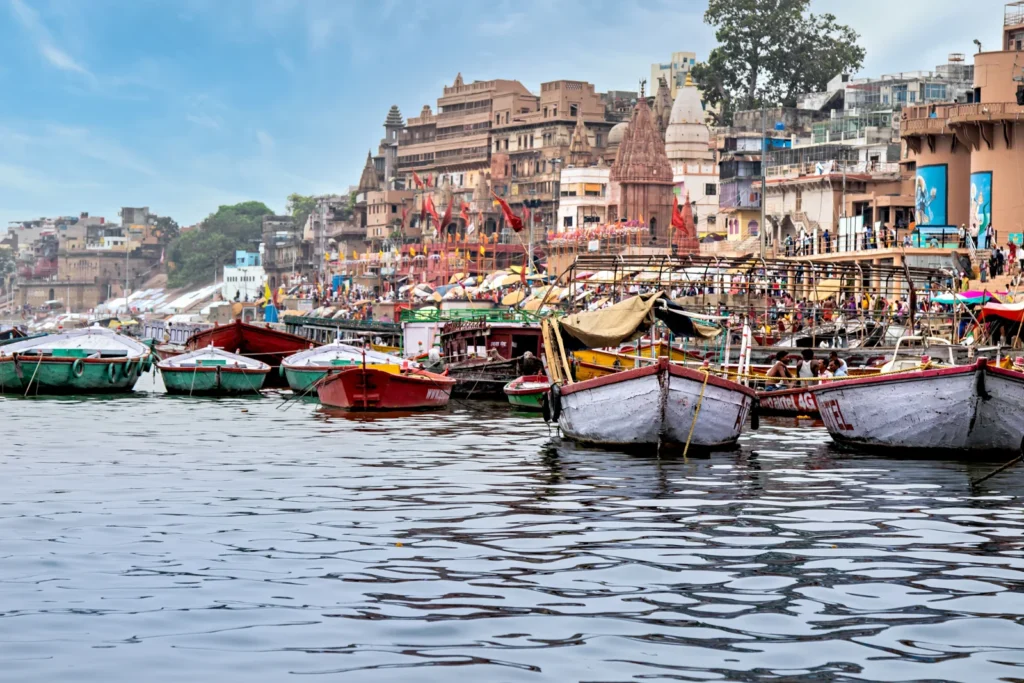
Ganga Boat Ride
A Ganga boat ride offers a broad view of the ghats, showing how temples, palaces and steps relate to the river. Sunrise and sunset produce different light and activity, but the safest route depends on conditions rather than a fixed promotional promise.
Explore guide →No matching guides. Try a broader search.
Explore the Hinduism knowledge portal
A journey shaped around you
Plan your time in Kashi
Tell us your dates, interests and travel needs. Request a tailored proposal with clear inclusions before confirming any service.
Enquiry only · Availability and prices require confirmation · No payment is taken here