
Prayag Tourism · Temple
Durga Kund Temple
Durga Kund brings together a Goddess temple and its associated tank in southern Varanasi. It is a useful stop for understanding Shakta worship alongside the city's better-known Shiva traditions.
1. Introduction: A Masterpiece of Red-Ochre Nagara Architecture
Travelling south along the main road from Bhelupur toward Sankat Mochan and Banaras Hindu University, one’s eye is immediately arrested by a striking crimson-and-ochre temple complex mirrored in the still waters of a massive, stone-stepped rectangular tank. This is Shree Durga Mata Mandir—universally known as the Durga Kund Temple (Temples Of Importance | District Varanasi). Painted in deep vermilion red to symbolise the fierce, protective Shakti (cosmic energy) of the Divine Mother, the temple and its adjoining masonry kund form one of the most photogenic and historically significant architectural ensembles in southern Varanasi (1760321416169VettedStoriesofKashi-SarnathPoIs.pdf, Entry 21).
2. Puranic Legend, Kushmanda Devi and the Self-Manifested (Swayambhu) Icon
The sacredness of the Durga Kund site predates its 18th-century stone superstructure by many centuries (1760321416169VettedStoriesofKashi-SarnathPoIs.pdf, Entry 21):
- The Legend of the Kashi Khanda: According to the Kashi Khanda of the Skanda Purana (and the ancient story of Prince Sudarsana of Ayodhya documented in classical Kashi lore), Goddess Durga manifested here to vanquish the demons Shumbha and Nishumbha (and the demon named Durga), after which she rested beside this water tank to guard the southern boundary of Kashi.
- Kushmanda Form of Nava Durga: Within the nine-day Navratri pilgrimage circuit of Varanasi (Nava Durga Yatra), the presiding deity of Durga Kund is worshipped on the fourth day (Chaturthi) as Maa Kushmanda, the radiant cosmic mother whose gentle smile generated the solar system.
- Swayambhu (Self-Manifested) Presence: Devotional tradition holds that the central icon of the Goddess inside the garbhagriha—adorned with a gleaming silver mask, multiple arms bearing celestial weapons, and riding her lion mount—was not carved by human hands, but appeared as a Swayambhu (self-manifested) form (1760321416169VettedStoriesofKashi-SarnathPoIs.pdf, Entry 21).
3. History: The 18th-Century Patronage of Rani Bhavani of Natore
The existing temple structure and the masonry embankments of the adjoining Durga Kund were commissioned in the mid-18th century by Maharani Bhavani of Natore (Bengal) (1716–1795 CE) (1760321416169VettedStoriesofKashi-SarnathPoIs.pdf, Entries 20 & 21). After the passing of her husband Raja Ramakanta Ray of the Natore Raj estate in Bengal, Rani Bhavani resided in Varanasi between 1752 and 1758 CE, dedicating vast philanthropic revenues to restoring Kashi’s sacred hydrology and temples—including the Kardama Kund at Kandwa, the Panchkroshi rest stops, and the grand Durga Mandir and tank at Durgakund.
During the 19th century, colonial writers and artists frequently referred to the Durga Kund shrine as the “Monkey Temple” because hundreds of rhesus monkeys inhabited the banyan trees overhanging the courtyard and tank walls (Temples Of Importance | District Varanasi).
4. Architectural Highlights: Multi-Tiered Nagara Shikhara and the Stepped Kund
Architecturally, the Durga Kund Temple is widely cited by art historians and the District Varanasi Official Portal as one of the finest surviving examples of 18th-century North Indian Nagara Shilp (Nagara temple architecture) in the Gangetic plain:
- The Clustered Urushringa Spire: Built on a high square stone plinth inside a walled courtyard, the main shikhara rises through dozens of miniature replica spires (urushringas) that cluster tightly around the central tower, symbolising the many cosmic manifestations of Shakti converging into the One Supreme Mother, capped by a traditional fluted amalaka and golden kalasha.
- Carved Pillared Mandapa & Brass Lions: In front of the sanctum stands an ornate multi-pillared mandapa (pavilion) added in the 19th century, featuring scalloped arches, floral stone reliefs, brass bells, and statues of Durga’s lion vehicle (Simha Vahana).
- The Stepped Durga Kund Tank: Directly adjacent to the northern wall of the temple lies the deep rectangular Durga Kund, enclosed by four stone staircases and corner kiosks (chhatris). Historically connected by a subterranean channel to the River Ganga, its waters were revered for their medicinal and purifying properties (1760321416169VettedStoriesofKashi-SarnathPoIs.pdf, Entry 21). Today, the kund is surrounded by a paved walking promenade and illuminated with decorative lights in the evening.
5. Festivals: Navratri, Sawan Mela and Tuesday-Saturday Devotion
While Durga Kund Temple maintains a calm, contemplative rhythm on ordinary weekday mornings, it transforms into a dazzling epicentre of faith during major festivals:
- Chaitra & Sharadiya Navratri (Especially Day 4 – Kushmanda Puja): Hundreds of thousands of devotees queue from midnight to offer red hibiscus flowers, chunri (scarves), coconuts, and halwa-puri to the Goddess.
- The Month-Long Sawan Mela: Every July–August during the monsoon month of Shravan, a vibrant traditional fair (mela) fills the lanes around Durgakund with musical evenings, swings, and craft stalls.
C. Practical Visitor Information
- Location: C14/160-36-A, Naipokhari, Durgakund Road, Chetganj / Bhelupur, Varanasi – 221005 (Temples Of Importance | District Varanasi)
- How to Reach: Located on the main Bhelupur–Lanka arterial road (~200 metres from Tulsi Manas Mandir; ~700 metres from Sankat Mochan Temple; ~1.5 km from Assi Ghat; ~6.5 km from Varanasi Junction BSB). Direct cab and auto-rickshaw drop-off right outside the entrance gate.
- Best Time to Visit: Morning (6:00 AM – 10:00 AM) or Early Evening (4:30 PM – 7:30 PM) when the red temple spire and stepped Durga Kund are illuminated against the sky.
- Visiting Hours: 5:00 AM – 12:00 Noon and 4:00 PM – 9:00 PM daily (Closed midday from 12:00 PM to 4:00 PM; extended hours during Navratri) (Temples Of Importance | District Varanasi).
- Entry Fee: Free for all visitors.
- Duration Required: 30 to 45 Minutes (Easily paired with a walk to Tulsi Manas Mandir 200 metres away).
- Nearby Attractions: Tulsi Manas Temple (200 m), Kurukshetra Kund & Anand Park (150 m), Sankat Mochan Hanuman Temple (700 m), Assi Ghat (1.5 km), BHU Campus (2 km).
- Visitor Advice: Unlike Kashi Vishwanath and Sankat Mochan, you can carry your mobile phone into the outer courtyard and around the Durga Kund promenade for architectural photography (avoid flash or photography directly inside the inner garbhagriha doorway).
D. Frequently Asked Questions (FAQs)
- Who built the Durga Kund Temple in Varanasi and when?The present red sandstone temple and the masonry steps of the adjacent Durga Kund tank were built in the mid-18th century (1750s) by Rani Bhavani of Natore, a devout Hindu queen and philanthropist from Bengal (1760321416169VettedStoriesofKashi-SarnathPoIs.pdf, Entries 20 & 21).
- What are the daily opening and closing timings of Durga Kund Temple?According to official district tourism records, the temple is open daily from 5:00 AM to 12:00 Noon in the morning and from 4:00 PM to 9:00 PM in the evening, remaining closed between 12:00 Noon and 4:00 PM (Temples Of Importance | District Varanasi).
- Why is the Durga Kund Temple painted completely red?In Hindu Shakta symbolism, deep vermilion red (sindoor / rakta varna) represents dynamic cosmic energy (Shakti), auspiciousness, courage, and the fierce protective grace of Goddess Durga as the vanquisher of evil (1760321416169VettedStoriesofKashi-SarnathPoIs.pdf, Entry 21).
- Which form of Nava Durga is worshipped at Durga Kund Temple during Navratri?During the nine days of Navratri in Varanasi, the presiding deity of Durga Kund Temple is worshipped on the fourth day (Chaturthi) as Maa Kushmanda.
- Can I walk from Durga Kund Temple to Tulsi Manas Mandir and Sankat Mochan Temple?Yes! Tulsi Manas Mandir (VAR-013) is less than a 3-minute walk (200 metres) south along the same road, and Sankat Mochan Hanuman Temple (VAR-011) is another 7–8 minutes’ walk (700 metres) further south.
Choose your next chapter
Continue your journey
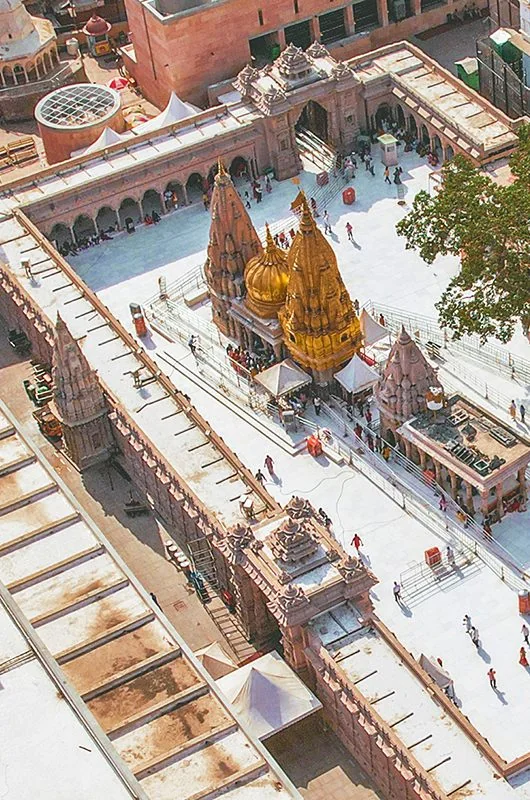
Temples of Varanasi
Varanasi's temples form a network of different deities, neighbourhoods and devotional practices. Kashi Vishwanath is a major focus, but smaller shrines reveal the diversity of the city's sacred life.
Explore guide →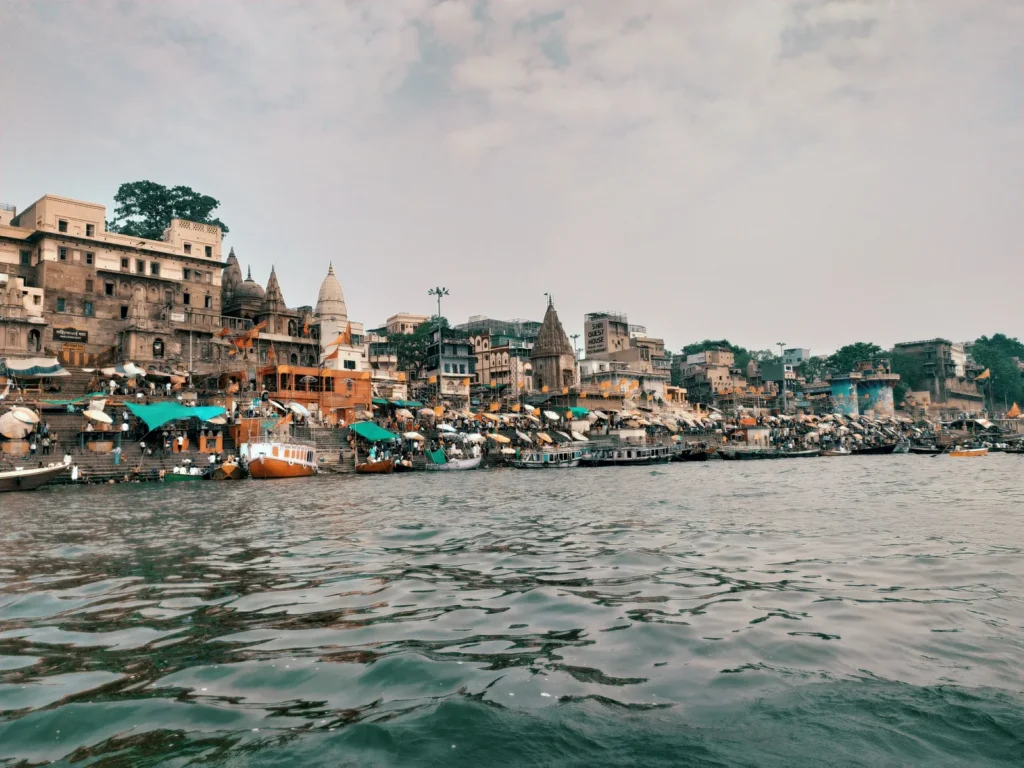
Ghats of Varanasi
The ghats are the city's meeting place with the Ganga: stepped river edges used for worship, movement, gathering and everyday work. They are connected, but each has a name and history worth learning.
Explore guide →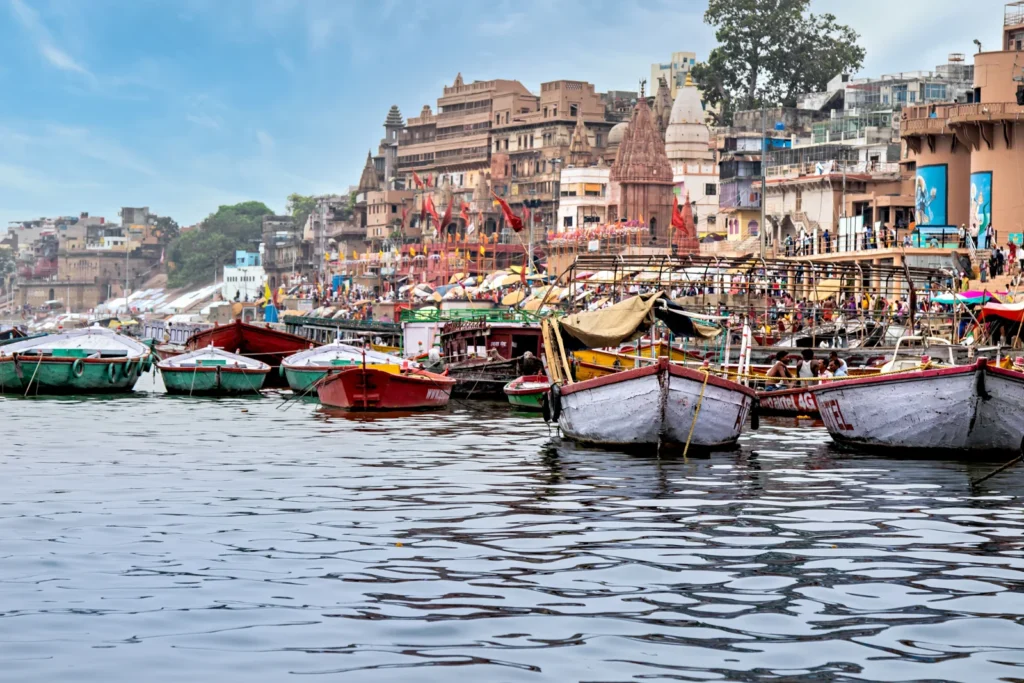
Things to Do in Varanasi
Things to do in Varanasi range from quiet observation to structured visits. The best selection depends on whether your interest is pilgrimage, history, culture, food or time beside the river.
Explore guide →No matching guides. Try a broader search.
Locate the area
Open a place-name search and confirm the exact venue and approach before travelling. No unverified coordinates or embedded tracking map are used.
Open map search: Durga Kund Temple, Varanasi, Uttar Pradesh, India ↗Explore the Hinduism knowledge portal
A journey shaped around you
Plan your time in Kashi
Tell us your dates, interests and travel needs. Request a tailored proposal with clear inclusions before confirming any service.
Enquiry only · Availability and prices require confirmation · No payment is taken here