
Prayag Tourism · Temple
Annapurna Devi Temple
Annapurna Devi is revered as a goddess of nourishment, linking the practical act of feeding people with religious life in Kashi. The shrine belongs to the old-city devotional landscape near Vishwanath.
1. Introduction: The Compassionate Heart Beside Kashi Vishwanath
Step out of the western courtyard of Shri Kashi Vishwanath Temple into the flagstone lane of Vishwanath Gali, and within fifty paces you enter the serene, marigold-scented compound of Maa Annapurna Devi Temple (also revered as Annapurna Bhavani Mandir) (Temples Of Importance | District Varanasi). If Lord Vishwanath embodies transcendent spiritual liberation (moksha) and ascetic detachment, Goddess Annapurna—whose Sanskrit name combines anna (food, grain, nourishment) and purna (complete, abundant, fulfilled)—embodies the maternal grace that sustains every living creature on earth (1760321416169VettedStoriesofKashi-SarnathPoIs.pdf, Entry 5).
In Kashi, the two deities are inseparable. A timeless local adage declares that while Baba Vishwanath grants liberation after death, Maa Annapurna ensures that not a single person in Kashi ever goes to sleep hungry in life. Every day, thousands of pilgrims bow before her sanctum, tie a sacred thread of abundance, and partake in the free, freshly cooked vegetarian feast (mahaprasad) served in the temple’s Annakshetra (Kashi Yatra by Anu Shankar.pdf, pp. 8–9).
2. Puranic Legend and the “Annapurna Stotram” of Adi Shankaracharya
The theological bond between Shiva and Annapurna is celebrated in the Kashi Khanda and oral Puranic narratives (1760321416169VettedStoriesofKashi-SarnathPoIs.pdf, Entry 5):
- When Shiva Begged for Alms (Bhiksha): According to legend, Lord Shiva once declared in philosophical discourse that the entire material world—including food (anna) and physical nourishment—is mere maya (illusion). To teach the cosmos that material sustenance is the sacred vessel required for spiritual practice, Goddess Parvati—the embodiment of Prakriti (nature and energy)—withdrew from the world. Immediately, a terrible famine gripped the earth and even the gods grew weak with hunger. Only in Kashi did a divine kitchen appear, presided over by Parvati in the form of Maa Annapurna, holding a jewelled cooking pot in one hand and a golden ladle sprinkled with rice in the other. Humbled, Lord Shiva himself came to her threshold holding his mendicant’s skull-bowl (kapala) to ask for alms, acknowledging that spiritual wisdom (jnana) cannot exist without physical nourishment.
- Adi Shankaracharya’s Hymn: In the 8th century CE, the great philosopher-saint Adi Shankaracharya composed the immortal Sanskrit hymn Annapurna Stotram here, culminating in its famous refrain: “Annapurne sadapurne shankarapranavallabhe | Jnanavairagyasiddhyartham bhiksham dehi ca parvati ||” (“O Annapurna, ever-full, beloved life-consort of Shankara! For the attainment of supreme knowledge and renunciation, grant me alms, O Mother Parvati!”)
3. History and Architecture: The 1729 CE Maratha Sanctuary
While the worship of Goddess Annapurna in Kashi is ancient, the present temple structure was built in 1729 CE by the Maratha Peshwa Bajirao I (and subsequently supported by the Amritrao Peshwa Annapurna Trust and the Annapurna Math) (1760321416169VettedStoriesofKashi-SarnathPoIs.pdf, Entries 5 & 68).
Architecturally, the temple is set within a spacious quadrangular courtyard surrounded by colonnaded verandas. At the centre stands the main shrine crafted in classic Nagara style, featuring an intricately carved shikhara (spire), a domed mandapa (pillared porch), and silver-plated sanctuary doors. Devotees traditionally perform pradakshina (circumambulation) around the central sanctum—the Kashi Khanda recommends circling the shrine 8 or 108 times while chanting the goddess’s names (1760321416169VettedStoriesofKashi-SarnathPoIs.pdf, Entry 5). Around the outer courtyard walls sit subsidiary shrines dedicated to Surya, Ganesh, Hanuman, Gauri Shankar, and Narasimha.
4. The Sanctum Icons and the Annual Dhanteras & Annakoot Golden Darshan
The Annapurna Temple preserves two distinct icons of the Divine Mother (Kashi Yatra by Anu Shankar.pdf, pp. 8–9; 1760321416169VettedStoriesofKashi-SarnathPoIs.pdf, Entry 5):
1. The Daily Worshipped Sanctum Idol: Inside the ground-floor garbhagriha stands the permanent black-stone idol of Maa Annapurna in a graceful standing posture, holding her cooking pot and ladle, draped daily in vibrant Banarasi silk sarees and adorned with a gleaming silver mask and floral garlands during general darshan hours.
2. The Pure Gold Idol (Swarna Annapurna): Housed on the upper floor of the sanctum is an extraordinary tableau crafted in solid gold: Maa Annapurna seated at the centre with her pot and ladle, flanked on her left by Mahalakshmi (Sridevi, Goddess of Wealth) and on her right by Bhudevi (Goddess of the Earth), while Lord Shiva crafted in silver stands before her holding his begging bowl (Kashi Yatra by Anu Shankar.pdf, p. 8).
- Exclusive Annual Opening (Dhanteras to Annakoot): This golden chamber opens to the public only for a few days once a year during the five-day Deepawali festival—beginning on Dhanteras (when the temple priest distributes blessed khazaana coins and unbroken grains of paddy/dhan to devotees to keep in their home safes) and culminating on Annakoot (the day after Diwali). On Annakoot, a literal “mountain of food” comprising 56 varieties (Chhappan Bhog) of quintals of sweets, savouries, rice preparations, and fruits is arranged throughout the courtyard and distributed as prasadam (1760321416169VettedStoriesofKashi-SarnathPoIs.pdf, Entry 5).
5. The Daily Free Annakshetra (Mahaprasad Feast) and Visitor Experience
No visit to the Annapurna Devi Temple is complete without experiencing its living tradition of Annadaan (sacred gift of food). Operated by the Kashi Annapurna Annakshetra Trust in the multi-storey dining halls behind the temple, the Annakshetra serves thousands of pilgrims, students, sadhus, and needy residents completely free of cost every single day (Kashi Yatra by Anu Shankar.pdf, p. 9).
- How to Partake in the Prasad: Devotees can collect a free meal token from the temple office counter during morning/midday dining hours (typically 11:00 AM to 3:00 PM and evening hours) and sit in neat rows to receive a wholesome, piping-hot sattvic Banarasi meal of rice, dal, seasonal vegetables, and sweets.
- The Tradition of Seva: Following an inspiring local custom, many visiting pilgrims volunteer for ten minutes to serve water or a ladle of rice to fellow devotees before sitting down to eat themselves—honoring the belief that Maa Annapurna partakes of her meal only after every guest in her courtyard has been fed (Kashi Yatra by Anu Shankar.pdf, p. 9).
C. Practical Visitor Information
- Location: Vishwanath Gali (Approx. 50 metres west of Shri Kashi Vishwanath Temple Gate No. 1), Lahori Tola, Varanasi – 221001 (Temples Of Importance | District Varanasi)
- How to Reach: Walk 500–600 metres from Godowlia Chauraha or Bansphatak via Gate No. 1 / Dhundiraj Gali, or exit directly from Kashi Vishwanath Temple into Vishwanath Gali.
- Best Time to Visit: Early morning (after Kashi Vishwanath darshan) or midday (10:30 AM – 1:30 PM) to witness the morning Abhishekam and partake in the free Annakshetra lunch prasad. Visit on Dhanteras / Annakoot (Oct–Nov) for the annual Golden Idol darshan.
- Visiting Hours: Approx. 4:00 AM – 11:30 AM and 1:30 PM – 10:00 PM daily (Brief midday closure for Bhog; confirm exact seasonal aarti timings at the temple notice board).
- Entry Fee: Free for all devotees. Special Abhishekam or Kumkumarchana pujas can be booked exclusively at the official Annapurna Math / Temple Office counter inside the courtyard (Kashi Yatra by Anu Shankar.pdf, p. 9).
- Duration Required: 30 to 45 Minutes for darshan and circumambulation (Allow 1 to 1.5 hours if joining the Annakshetra prasad meal).
- Nearby Attractions: Shri Kashi Vishwanath Temple (50 m), Dhundiraj & Sakshi Vinayak (40 m), Vishalakshi Shaktipeeth (250 m), Dashashwamedh Ghat (450 m).
- Visitor Advice: Because the temple is in the immediate high-security perimeter of Kashi Vishwanath, visit both temples together while your mobile phone, camera, and leather items are stored in the official lockers.
D. Frequently Asked Questions (FAQs)
- Where is Annapurna Devi Temple located in relation to Kashi Vishwanath Temple?Annapurna Devi Temple is located right next to Shri Kashi Vishwanath Temple in Vishwanath Gali (near Gate No. 1 / Dhundiraj Ganesh lane), less than a two-minute walk from the Vishwanath courtyard (Temples Of Importance | District Varanasi).
- Can anyone eat the free prasad meal at the Annapurna Temple Annakshetra?Yes, the Kashi Annapurna Annakshetra welcomes all pilgrims and visitors regardless of background. Simply obtain a free coupon from the temple office counter and follow the seating instructions in the dining hall behind the temple (Kashi Yatra by Anu Shankar.pdf, p. 9).
- When can devotees see the pure gold idol of Maa Annapurna?The first-floor chamber housing the solid gold idol of Maa Annapurna (flanked by Lakshmi and Bhudevi, with silver Shiva asking for alms) opens only once a year during the Deepawali festival period—specifically from Dhanteras through Annakoot (the day after Diwali) (1760321416169VettedStoriesofKashi-SarnathPoIs.pdf, Entry 5).
- What should devotees bring home from the Annapurna Temple?Devotees traditionally receive a few blessed grains of unbroken rice (akshat or dhan) and a sacred red/yellow thread from the temple to keep inside their home kitchen grain container (bhandar) or safe, symbolising that the household will never lack nourishment.
- How can I book an Abhishekam puja at Annapurna Devi Temple without middlemen?Always walk directly to the official Annapurna Math / Temple Office inside the temple compound, check the notice board indicating the day’s officiating schedule, and obtain a printed official receipt for your Abhishekam (typically performed around 10:30 AM) (Kashi Yatra by Anu Shankar.pdf, p. 9).
Choose your next chapter
Continue your journey
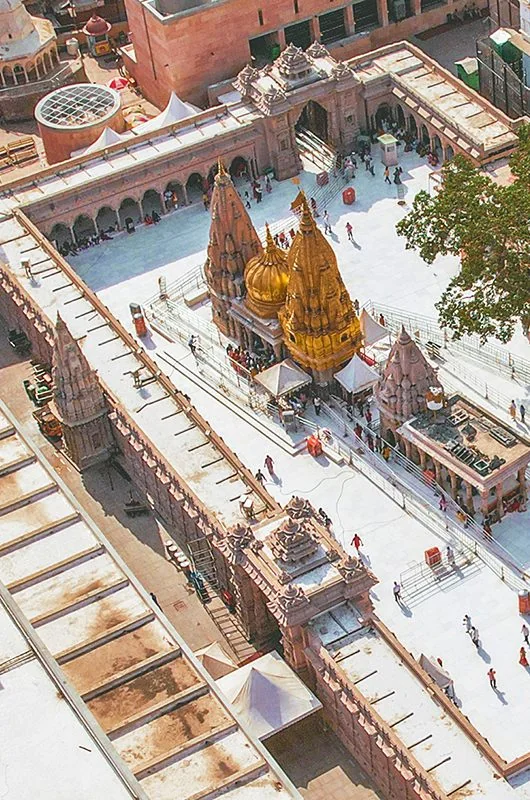
Temples of Varanasi
Varanasi's temples form a network of different deities, neighbourhoods and devotional practices. Kashi Vishwanath is a major focus, but smaller shrines reveal the diversity of the city's sacred life.
Explore guide →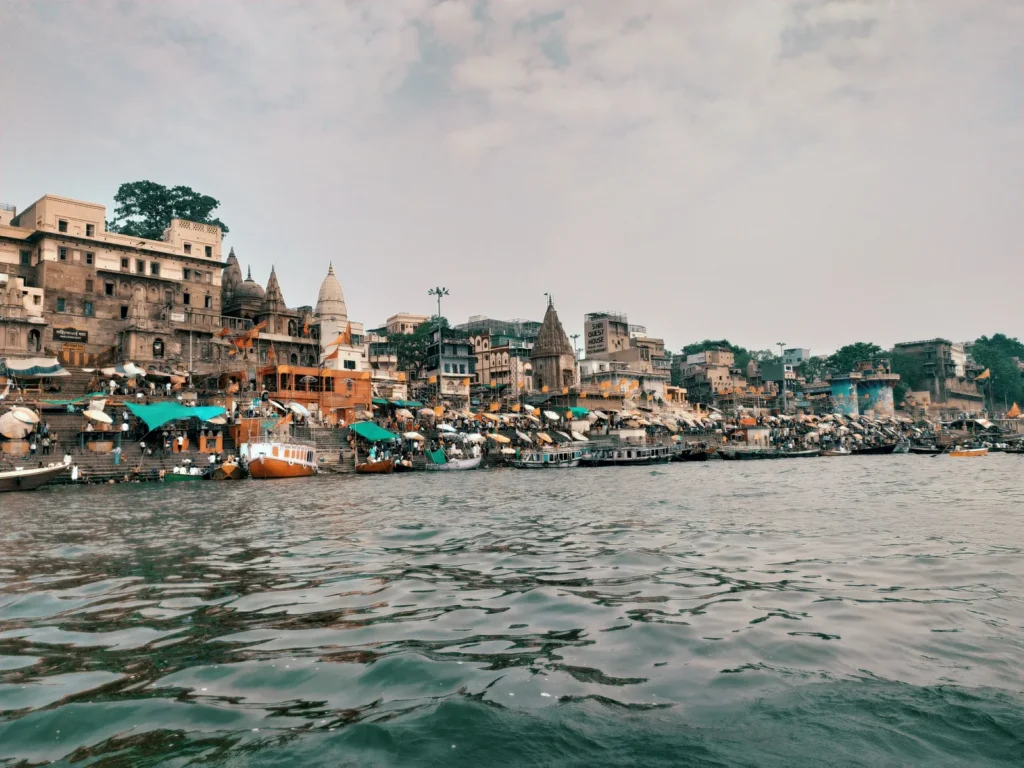
Ghats of Varanasi
The ghats are the city's meeting place with the Ganga: stepped river edges used for worship, movement, gathering and everyday work. They are connected, but each has a name and history worth learning.
Explore guide →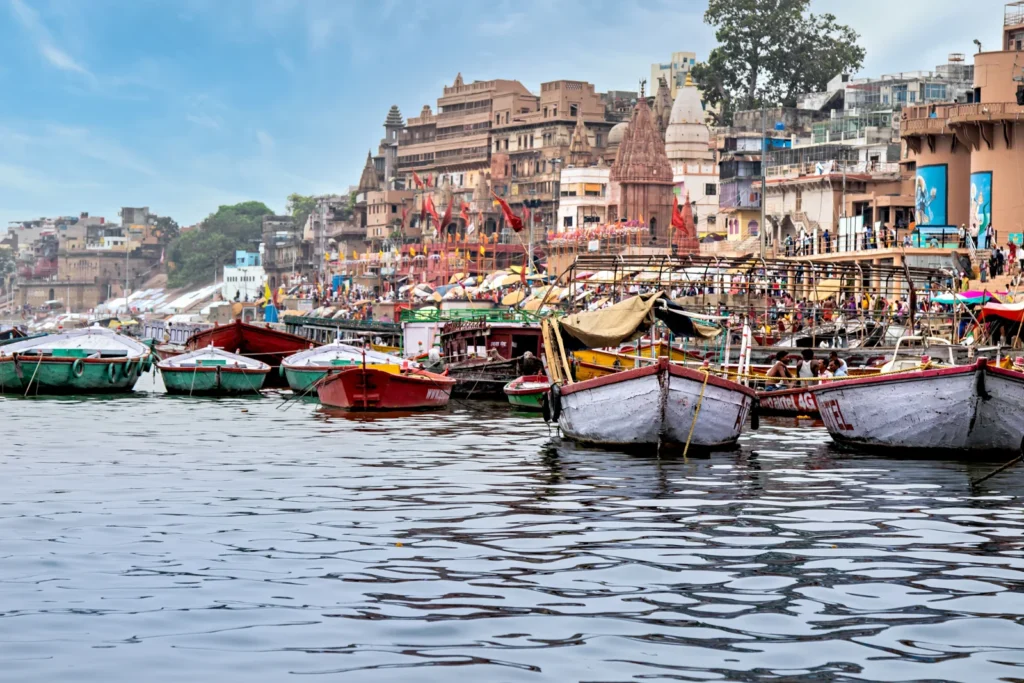
Things to Do in Varanasi
Things to do in Varanasi range from quiet observation to structured visits. The best selection depends on whether your interest is pilgrimage, history, culture, food or time beside the river.
Explore guide →No matching guides. Try a broader search.
Locate the area
Open a place-name search and confirm the exact venue and approach before travelling. No unverified coordinates or embedded tracking map are used.
Open map search: Annapurna Devi Temple, Varanasi, Uttar Pradesh, India ↗Explore the Hinduism knowledge portal
A journey shaped around you
Plan your time in Kashi
Tell us your dates, interests and travel needs. Request a tailored proposal with clear inclusions before confirming any service.
Enquiry only · Availability and prices require confirmation · No payment is taken here