
Prayag Tourism · Travel
History of Varanasi
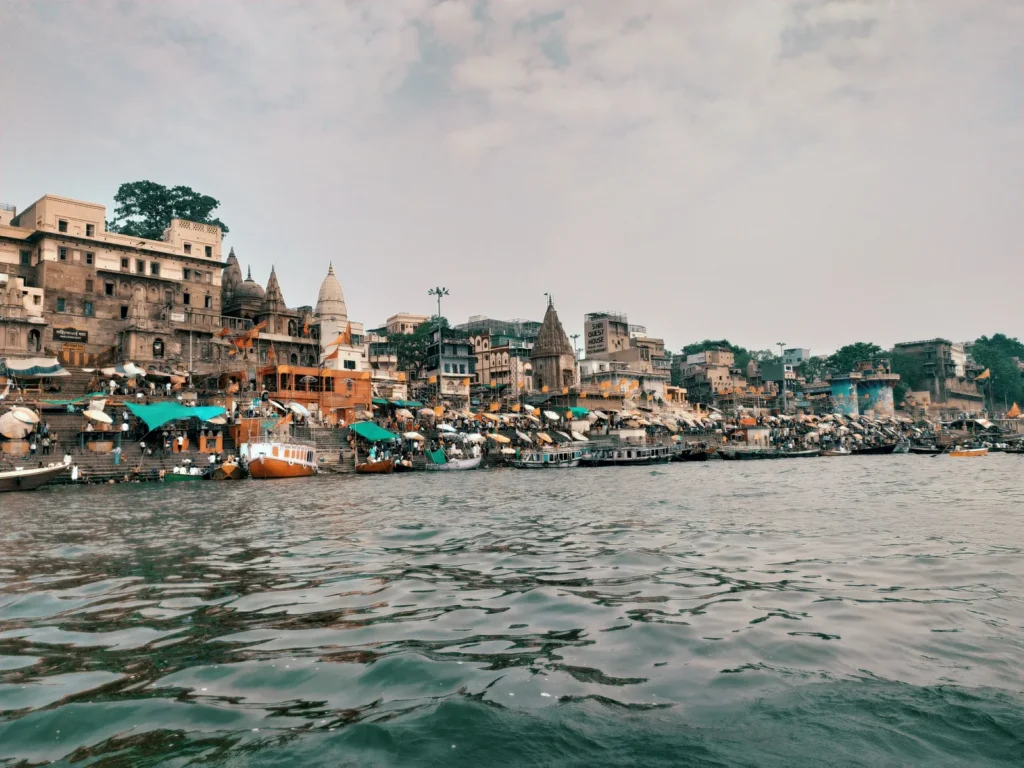
Varanasi's history is best read as a series of overlapping landscapes rather than one uninterrupted architectural period. Sacred narratives, archaeological sites, patron-built ghats and modern institutions each offer a different kind of evidence.
1. Introduction: Separating Mythic Time from Archaeological Chronology
Few cities on earth challenge the historian quite like Varanasi. In Hindu sacred cosmology, Kashi exists outside ordinary historical time—revered as the primordial ground created at the dawn of the universe where Lord Shiva and Goddess Parvati first set foot (VAR-004 at /varanasi/spiritual-significance/). At the same time, modern archaeology, epigraphy, numismatics, and foreign travellers’ chronicles reveal a verifiable, unbroken material timeline of urban settlement stretching back roughly three thousand years (Culture & Heritage | District Varanasi). Understanding the history of Varanasi requires honoring both dimensions while keeping them distinct: appreciating how scriptural memory inspired generations of kings, saints, and artisans to rebuild the city repeatedly after floods, wars, and imperial upheavals.
2. Proto-Historic Origins and the Rajghat Archaeological Excavations (c. 1200–600 BCE)
For decades, historians knew of ancient Kashi primarily through literary references in the late Vedic texts (Atharvaveda, Shatapatha Brahmana, and Brihadaranyaka Upanishad), where kings such as Ajatashatru of Kashi engaged in profound metaphysical dialogues on the nature of Brahman and consciousness. In 1940, when railway engineering works inadvertently exposed ancient brick structures on the high plateau of Rajghat—located at the northern extremity of the city right beside the confluence of the Varuna and Ganga rivers—systematic archaeological excavations conducted by the Archaeological Survey of India (ASI) and Banaras Hindu University (under scholars such as Prof. A.K. Narain) uncovered the physical foundations of earliest Varanasi (Varanasi Ghats Book (Final).pdf).
The Rajghat stratigraphy revealed continuous occupation across six distinct cultural periods:
- Period I (c. 800–600 BCE, with pre-NBPW Black-and-Red Ware layers reaching back toward c. 1000 BCE): Characterised by iron implements, bone points, terracotta beads, and massive mud-embankment fortifications erected along the riverfront to protect the settlement from seasonal Ganga floods.
- Period II (c. 600–200 BCE): Marked by the zenith of Northern Black Polished Ware (NBPW)—a lustrous, metallic-sheen luxury ceramic associated with the rise of urbanism in the middle Gangetic basin—alongside punch-marked silver and copper coins and baked-brick drainage systems.
3. The Kashi Mahajanapada and the Age of the Buddha and Tirthankaras (6th–4th Centuries BCE)
By the 6th century BCE, the Kingdom of Kashi stood as one of the sixteen Mahajanapadas (great territorial states) of ancient India, with its capital at Baranasi. Buddhist Jataka stories and Jain canonical texts consistently praise Baranasi as the wealthiest, most populous commercial emporium of northern India, famous for Kasi-kuttama (exquisite Kashi muslin and silk fabrics that were used to wrap the mortal remains of kings and sages), ivory carving, and sandalwood perfumes (Varanasi UP tousim2.pdf).
Politically, the fertile Gangetic trade routes sparked prolonged rivalry between Kashi and its northern neighbour Kosala (whose capital was Shravasti/Ayodhya), and later with the rising imperial power of Magadha under kings Bimbisara and Ajatashatru. Yet even as Kashi was absorbed into the Kosalan and Magadhan empires, its prestige as an intellectual and spiritual magnet only intensified:
- Jain Heritage: Two historical Jain Tirthankaras had direct ties to the city—Parshvanath (the 23rd Tirthankara, generally dated by historians to the 8th century BCE), who was born to King Ashvasena at Bhelupur in Varanasi (1760321416169VettedStoriesofKashi-SarnathPoIs.pdf), and Mahavira (the 24th Tirthankara), who visited Kashi during his ascetic wanderings.
- Gautama Buddha at Sarnath: Around the late 6th or 5th century BCE, Siddhartha Gautama walked from Bodh Gaya to the Deer Park (Mrigadava / Isipatana) at Sarnath, 10 km northeast of the city, to deliver his first discourse (Dharmachakra Pravartana) to his five former ascetic companions and establish the first Buddhist Sangha (Sarnath Museum | Incredible India).
4. Mauryan, Shunga, Kushan and Gupta Golden Ages (3rd Century BCE – 7th Century CE)
Under the Mauryan Emperor Ashoka (r. c. 268–232 BCE), Sarnath was transformed into a monumental imperial pilgrimage complex. Ashoka erected the Dharmarajika Stupa, the original core of the Dhamek Stupa, and the polished Chunar sandstone pillar crowned by the Lion Capital—bearing his Schism Edict warning against division in the monastic order (VAR-032 at /varanasi/attractions/sarnath-museum/).
In the early centuries CE, after the Kushan period (represented at Sarnath by the colossal red sandstone standing Bodhisattva dedicated by Friar Bala in the third regnal year of Emperor Kanishka), the Bharshiva Naga rulers—according to historical traditions cited in district gazetteers—celebrated their victory over Kushan forces by performing ten horse sacrifices (Dashashwamedha Yajnas) on the banks of the Ganga at what is now Dashashwamedh Ghat (1760321416169VettedStoriesofKashi-SarnathPoIs.pdf).
During the Gupta Empire (4th to 6th centuries CE), both Hindu Kashi and Buddhist Sarnath experienced an artistic and literary Golden Age. Temple seals excavated at Rajghat bear inscriptions to Avimukteshwara, confirming that Shiva worship in the Avimukta zone was already thriving alongside the Sarnath ateliers that carved the world-famous wet-drapery sandstone image of the Preaching Buddha. When the Chinese Buddhist pilgrim Xuanzang (Hiuen Tsang) visited Varanasi in the 7th century CE during the reign of Emperor Harshavardhana, he recorded a bustling, densely populated city along the Ganga containing over a hundred Deva temples—predominantly dedicated to Maheshvara (Shiva), including a colossal copper image—alongside thirty Buddhist monasteries housing some 3,000 monks at Sarnath (Varanasi Ghats Book (Final).pdf).
5. The Gahadavala Dynasty and Medieval Transformations (11th – 17th Centuries CE)
In the late 11th and 12th centuries CE, the Gahadavala dynasty—founded by King Chandradeva (who left a dated 1091 CE inscription at Chandrawati) and reaching its peak under King Govindachandra—made Varanasi their secondary ritual capital (1760321416169VettedStoriesofKashi-SarnathPoIs.pdf). Copper-plate land grants record royal baths and charitable donations at specific ghats including Adi Keshav (Vedeshwara), Panchganga, Manikarnika, Dashashwamedh, and Lolark. The surviving 12th-century Kardameshwar Mahadev Temple at Kandwa stands today as the finest intact stone monument of Gahadavala architecture in the city.
In 1194 CE, following the defeat of King Jayachandra by the Ghurid forces of Qutb-ud-din Aibak, the city’s major temples and the monasteries of Sarnath suffered widespread destruction. Yet Kashi’s scholarly and devotional life repeatedly regenerated:
- Late 16th Century Mughal Revival: Under Emperor Akbar’s policy of religious accommodation, Raja Todar Mal (Akbar’s finance minister) and the great Maharashtrian Sanskrit scholar Narayana Bhatta (author of the Tristhalisetu) rebuilt the Kashi Vishwanath Temple in 1585 CE, while Raja Man Singh of Amber built the palatial Man Mandir Ghat (1585–1600 CE) and Mansarovar Ghat (1760321416169VettedStoriesofKashi-SarnathPoIs.pdf).
- The Bhakti Renaissance: Simultaneously, the 15th and 16th centuries saw an extraordinary vernacular spiritual awakening led by Sant Kabir (at Kabir Chaura), Guru Ravidas (at Seer Govardhanpur), Vallabhacharya (at Hanuman Ghat), and Goswami Tulsidas, who composed the Awadhi Ramcharitmanas at Tulsi Ghat and founded the Sankat Mochan Temple (District Varanasi Official Portal).
- 17th Century Upheaval: In 1669 CE, Emperor Aurangzeb ordered the demolition of the 16th-century Vishwanath Temple and the grand Bindu Madhav Temple at Panchganga Ghat, erecting the Gyanvapi and Alamgir mosques over their foundations (Kashi Yatra by Anu Shankar.pdf).
6. The 18th-Century Maratha & Royal Revival and the Kingdom of Kashi
As Mughal imperial control waned in the early 18th century, two historical forces reshaped Varanasi into the architectural city visitors see today:
- The Royal House of Kashi (Narayan Dynasty): Founded by Mansa Ram (1730s) and consolidated by his son Raja Balwant Singh (r. 1738–1770 CE), who built the riverfront Ramnagar Fort across the Ganga in 1750 CE and fortified Shivala/Chet Singh Ghat (1760321416169VettedStoriesofKashi-SarnathPoIs.pdf). In August 1781 CE, his son Maharaja Chet Singh fought a famous pitched battle at Chet Singh Ghat against the troops of British Governor-General Warren Hastings after refusing extortionate East India Company tribute demands—an early act of anti-colonial resistance still commemorated on the ghat’s stone ramparts.
- Pan-Indian Maratha and Royal Patronage: Beginning with Peshwa Bajirao I (who built Annapurna Temple in 1729 CE) and Peshwa Balaji Bajirao (who reconstructed Dashashwamedh Ghat in 1748 CE), Maratha leaders poured resources into restoring Kashi. In 1780 CE, Maharani Ahilyabai Holkar of Indore built the present Shri Kashi Vishwanath Temple and reconstructed Manikarnika and Ahilyabai Ghats; in 1817 CE, Bajirao Peshwa II rebuilt Kal Bhairav Temple; and in 1835 CE, Maharaja Ranjit Singh of Punjab donated nearly a tonne of gold to plate Vishwanath’s twin domes (1760321416169VettedStoriesofKashi-SarnathPoIs.pdf).
7. Colonial Era, Independence Movement and 21st-Century Urban Renewal
During the 19th and early 20th centuries, Varanasi became a crucible of modern Hindi journalism, nationalist education, and the Indian freedom struggle—from Rani Lakshmibai of Jhansi (born at Assi/Bhadaini in 1828 CE) and Bharatendu Harishchandra (the father of modern Hindi literature) to the founding of Banaras Hindu University by Pandit Madan Mohan Malaviya in 1916 CE and the inauguration of Bharat Mata Mandir by Mahatma Gandhi in 1936 CE (Temples Of Importance | District Varanasi).
In the 21st century, major heritage infrastructure initiatives—including the Deendayal Hastkala Sankul craft museum (2017), the Shri Kashi Vishwanath Dham Corridor (2021), Namo Ghat (2023), and the UNESCO World Heritage inscription of Sarnath (July 25, 2026)—have integrated modern pilgrim amenities with the preservation of Kashi’s ancient heritage.
C. Practical Visitor Information
Historical Era
Key Surviving Landmarks to Visit in Varanasi
Ancient & Mauryan–Gupta Era (800 BCE – 600 CE)
Rajghat Archaeological Plateau (near Malviya Bridge); Dhamek Stupa, Ashoka Pillar, and Sarnath Archaeological Museum (9:00 AM–5:00 PM, closed Fridays) (Sarnath Museum | Incredible India).
Gahadavala Period (11th–12th Century CE)
Kardameshwar Mahadev Temple at Kandwa (first halt of the Panchkroshi Yatra; oldest surviving stone temple in Varanasi) (1760321416169VettedStoriesofKashi-SarnathPoIs.pdf).
Bhakti & Late 16th Century Era
Tulsi Ghat (memorabilia of Goswami Tulsidas), Sankat Mochan Temple, Kabir Chaura Math, Seer Govardhanpur, and Man Mandir Ghat & Observatory (10:00 AM–5:00 PM, closed Fridays; Varanasi UP tousim2.pdf).
18th–19th Century Maratha & Royal Revival
Shri Kashi Vishwanath Temple (1780 CE), Annapurna Temple (1729 CE), Durga Kund Temple (18th c.), Ramnagar Fort & Museum (1750 CE), Chet Singh Ghat, Ahilyabai Ghat, and Nepali Temple (1843 CE).
20th–21st Century Modern Heritage
Banaras Hindu University & Bharat Kala Bhavan (1916/1920 CE), Bharat Mata Temple (1936 CE), Tulsi Manas Mandir (1964 CE), Kashi Vishwanath Dham Corridor (2021 CE), and Namo Ghat (2023 CE).
Recommended Duration
2 to 3 Days (Estimated) for a chronological history and archaeology trail across Sarnath, the old city ghats, Ramnagar, and BHU.
D. Frequently Asked Questions (FAQs)
- How old is the city of Varanasi according to archaeological evidence?Scientific excavations at the Rajghat plateau near the Varuna-Ganga confluence confirm continuous urban habitation, earthen fortifications, and ceramic cultures dating back to at least 800–1000 BCE (roughly 2,800 to 3,000 years ago), making Varanasi one of the oldest continuously inhabited cities in the world (Varanasi Ghats Book (Final).pdf).
- Which is the oldest surviving Hindu stone temple standing in Varanasi today?While the sacred sites and Jyotirlinga of Kashi are ancient, most central city temples were rebuilt in the 18th and 19th centuries. The oldest intact medieval stone temple structure surviving in Varanasi is the Kardameshwar Mahadev Temple at Kandwa (built during the 12th-century Gahadavala period), located along the Panchkroshi Yatra route (1760321416169VettedStoriesofKashi-SarnathPoIs.pdf).
- Who rebuilt the present Kashi Vishwanath Temple and when?The current structure of Shri Kashi Vishwanath Temple was commissioned and built in 1780 CE by Maharani Ahilyabai Holkar, the Maratha ruler of Indore. In 1835 CE, Maharaja Ranjit Singh of Punjab donated approximately 800 kg of gold to plate its spires (1760321416169VettedStoriesofKashi-SarnathPoIs.pdf).
- Why do so many ghats in Varanasi have Maratha, Rajasthani, or Bengali names?During the 18th and 19th centuries, royal families and philanthropists from across India—including the Peshwas of Pune, Holkars of Indore, Scindias of Gwalior, Bhonsles of Nagpur, Maharajas of Jaipur, Udaipur, Darbhanga, Mysore, and Vijayanagaram, and Rani Bhavani of Natore (Bengal)—funded the construction of permanent stone (pucca) ghats and riverside palaces (Ganga Ghat | District Varanasi).
- What happened at Chet Singh Ghat in 1781?In August 1781, a fierce battle broke out at Shivala/Chet Singh Fort when Maharaja Chet Singh of Banaras resisted British Governor-General Warren Hastings’ demands for excessive war levies and troops. Chet Singh’s guards defeated the British detachment before the Maharaja escaped across the river, and the ghat was subsequently named Chet Singh Ghat in his memory (1760321416169VettedStoriesofKashi-SarnathPoIs.pdf).
- Where can visitors see excavated archaeological artefacts from ancient Varanasi?Visitors can view excavated sculptures, coins, and inscriptions at two premier museums: the Sarnath Archaeological Museum (for Mauryan to Pala-period Buddhist and Hindu antiquities) and Bharat Kala Bhavan inside the Banaras Hindu University campus (for Rajghat terracotta, coins, miniature paintings, and sculptures) (Bharat Kala Bhawan | BHU).
Choose your next chapter
Continue your journey
Temples of Varanasi
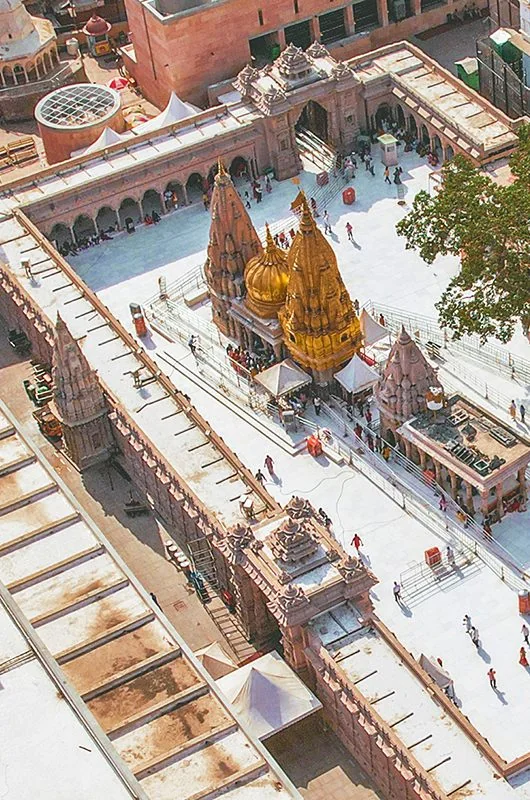
Varanasi's temples form a network of different deities, neighbourhoods and devotional practices. Kashi Vishwanath is a major focus, but smaller shrines reveal the diversity of the city's sacred life.
Explore guide →Ghats of Varanasi
The ghats are the city's meeting place with the Ganga: stepped river edges used for worship, movement, gathering and everyday work. They are connected, but each has a name and history worth learning.
Explore guide →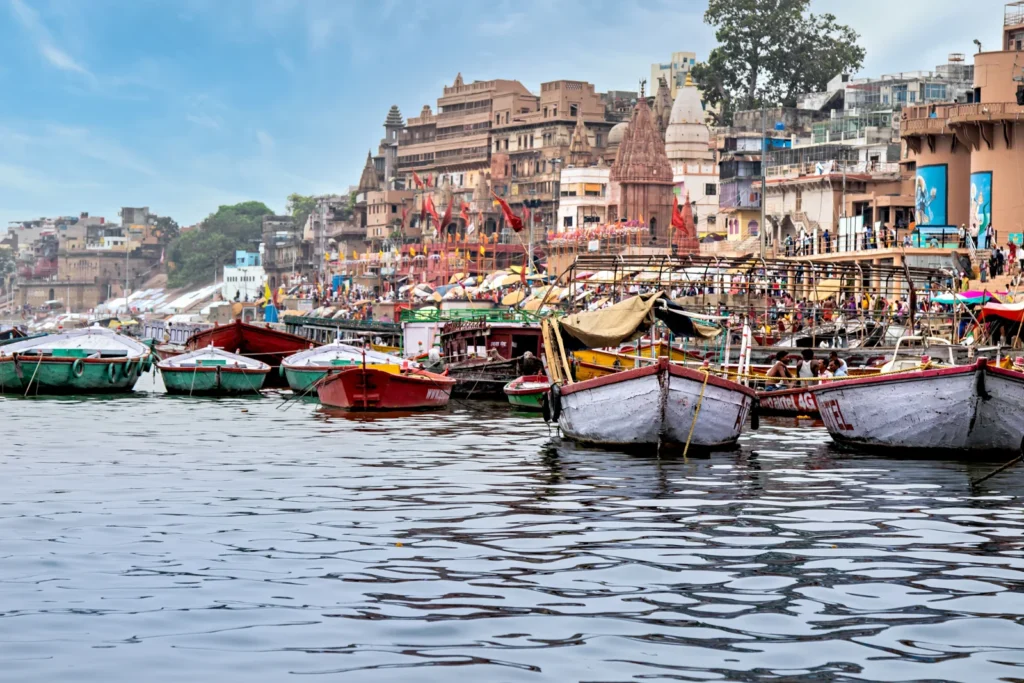
Things to Do in Varanasi
Things to do in Varanasi range from quiet observation to structured visits. The best selection depends on whether your interest is pilgrimage, history, culture, food or time beside the river.
Explore guide →No matching guides. Try a broader search.
Explore the Hinduism knowledge portal
A journey shaped around you
Plan your time in Kashi
Tell us your dates, interests and travel needs. Request a tailored proposal with clear inclusions before confirming any service.
Enquiry only · Availability and prices require confirmation · No payment is taken here